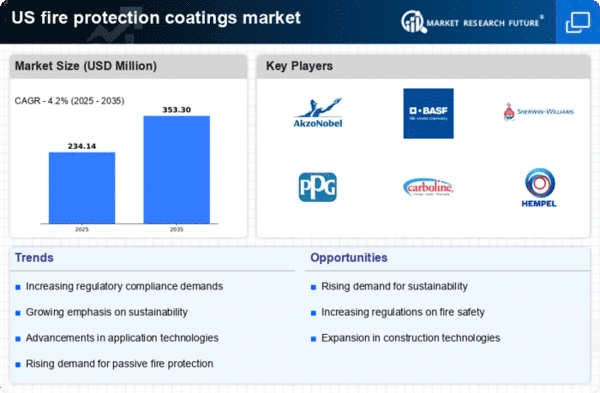
The fire protection-coatings market exhibits a dynamic competitive landscape, characterized by a blend of innovation, strategic partnerships, and regional expansion. Key players such as Sherwin-Williams (US), PPG Industries (US), and AkzoNobel (NL) are actively shaping the market through their distinct operational focuses. Sherwin-Williams (US) emphasizes innovation in product development, particularly in eco-friendly coatings, which aligns with the growing demand for sustainable solutions. PPG Industries (US) has adopted a strategy of regional expansion, enhancing its manufacturing capabilities across North America to better serve local markets. Meanwhile, AkzoNobel (NL) is leveraging digital transformation initiatives to streamline operations and improve customer engagement, thereby enhancing its competitive positioning. Collectively, these strategies contribute to a competitive environment that is increasingly focused on sustainability and technological advancement.The business tactics employed by these companies reflect a concerted effort to optimize supply chains and localize manufacturing processes. The market structure appears moderately fragmented, with several key players holding substantial market shares while also facing competition from smaller, specialized firms. This fragmentation allows for a diverse range of products and services, catering to various customer needs. The influence of major players is significant, as their strategic decisions often set industry standards and trends, thereby shaping the overall market dynamics.
In October PPG Industries (US) announced the launch of a new line of fire-resistant coatings designed specifically for the construction sector. This strategic move is likely to enhance PPG's market share by addressing the increasing regulatory requirements for fire safety in building materials. The introduction of these innovative products not only reinforces PPG's commitment to safety but also positions the company as a leader in compliance-driven solutions, which could attract new clients seeking reliable fire protection.
In September Sherwin-Williams (US) expanded its partnership with a leading construction firm to provide customized fire protection coatings for large-scale projects. This collaboration is indicative of Sherwin-Williams' strategy to deepen its market penetration through tailored solutions that meet specific client needs. By aligning with major construction players, the company enhances its visibility and strengthens its reputation as a trusted provider of fire protection solutions, potentially leading to increased sales and market loyalty.
In August AkzoNobel (NL) unveiled a new digital platform aimed at improving customer interaction and streamlining the ordering process for fire protection coatings. This initiative reflects a broader trend towards digitalization within the industry, as companies seek to enhance customer experience and operational efficiency. By investing in technology, AkzoNobel positions itself to respond more effectively to market demands, thereby gaining a competitive edge in an increasingly digital marketplace.
As of November current trends in the fire protection-coatings market are heavily influenced by digitalization, sustainability, and the integration of advanced technologies such as AI. Strategic alliances are becoming increasingly vital, as companies recognize the need to collaborate to enhance innovation and market reach. The competitive landscape is shifting from a focus on price-based competition to one that prioritizes technological advancement, product innovation, and supply chain reliability. This evolution suggests that companies that can effectively differentiate themselves through unique offerings and robust partnerships will likely thrive in the future.