Advancements in Biotechnology
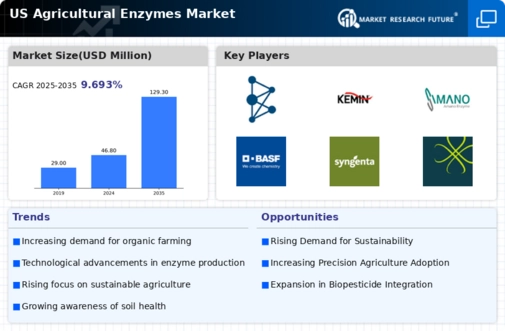
The US agricultural enzymes market is significantly influenced by advancements in biotechnology. Innovations in enzyme production and genetic engineering have led to the development of more efficient and targeted enzymes. These advancements enable the production of enzymes that can withstand varying environmental conditions, thereby enhancing their effectiveness in diverse agricultural settings. The USDA has noted that biotechnological applications in agriculture are expected to increase, with a focus on improving crop resilience and yield. As these biotechnological innovations continue to emerge, they are likely to drive the growth of the agricultural enzymes market, as farmers seek to leverage these tools for improved agricultural outcomes.
Growing Awareness of Soil Health
The growing awareness of soil health among US farmers is emerging as a significant driver for the agricultural enzymes market. Farmers are recognizing the critical role that soil microbiomes play in crop productivity and sustainability. Agricultural enzymes contribute to soil health by facilitating nutrient cycling and improving soil structure. The USDA has reported that healthy soils can lead to increased crop yields and resilience against pests and diseases. As educational programs and resources become more accessible, farmers are likely to adopt agricultural enzymes to enhance soil health. This trend indicates a shift towards more holistic farming practices, which could substantially boost the agricultural enzymes market in the coming years.
Integration with Precision Agriculture
The integration of agricultural enzymes with precision agriculture technologies is transforming the US agricultural enzymes market. Precision agriculture utilizes data analytics, GPS, and IoT devices to optimize farming practices. Enzymes play a crucial role in this ecosystem by improving nutrient availability and enhancing soil microbiome health. As farmers increasingly rely on data-driven decisions, the demand for enzymes that can be tailored to specific soil and crop conditions is likely to rise. The USDA reports that precision agriculture technologies are projected to grow at a compound annual growth rate of 12% through 2026. This integration not only enhances productivity but also promotes sustainable practices, making it a key driver for the agricultural enzymes market.
Rising Demand for Sustainable Agriculture
The US agricultural enzymes market is experiencing a notable shift towards sustainable agricultural practices. Farmers are increasingly adopting enzymes to enhance soil health and crop yield while minimizing chemical inputs. This trend aligns with the growing consumer preference for organic and sustainably produced food. According to the USDA, organic farming has seen a steady increase, with over 3 million acres dedicated to organic crops in 2022. This rising demand for sustainable solutions is likely to drive the adoption of agricultural enzymes, as they contribute to more environmentally friendly farming practices. Furthermore, the US government has been promoting sustainable agriculture through various initiatives, which may further bolster the market for agricultural enzymes.
Government Support and Regulatory Framework
Government support and a favorable regulatory framework are pivotal drivers for the US agricultural enzymes market. The USDA has implemented various programs aimed at promoting the use of biopesticides and biostimulants, which include agricultural enzymes. These initiatives not only provide financial assistance to farmers but also encourage research and development in enzyme applications. Additionally, the regulatory environment is becoming increasingly conducive to the approval of new enzyme products, which may enhance market growth. As the government continues to advocate for sustainable agricultural practices, the agricultural enzymes market is likely to benefit from increased funding and support, fostering innovation and adoption.