×
Request Free Sample ×

Kindly complete the form below to receive a free sample of this Report

* Please use a valid business email

Leading companies partner with us for data-driven Insights

clients tt-cursor
Hero Background

UK Tahini Market

ID: MRFR/FnB/45070-HCR
128 Pages
Snehal Singh
February 2026

UK Tahini Market Size, Share, Industry Trend & Analysis Research Report By packaging type (Conventional, Organic), By Category (Bottles Jars, Tubs, Others), and By Distribution channel (Store, Non-store) - Forecast to 2035

Share:
Download PDF ×

We do not share your information with anyone. However, we may send you emails based on your report interest from time to time. You may contact us at any time to opt-out.

UK Tahini Market Infographic
Purchase Options

UK Tahini Market Summary

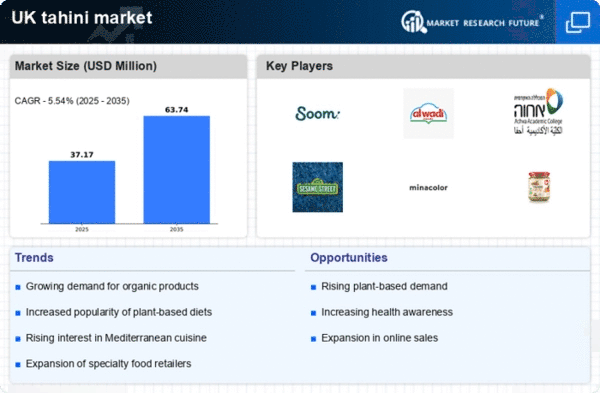
As per Market Research Future analysis, the UK tahini market Size was estimated at 35.22 $ Million in 2024. The UK tahini market is projected to grow from 37.17 $ Million in 2025 to 63.74 $ Million by 2035, exhibiting a compound annual growth rate (CAGR) of 5.5% during the forecast period 2025 - 2035

Key Market Trends & Highlights

The UK tahini market is experiencing a robust growth trajectory driven by health trends and culinary innovation.

  • Health consciousness among consumers is propelling the demand for tahini as a nutritious ingredient.
  • Culinary innovation is leading to diverse applications of tahini in various cuisines, particularly in the UK.
  • The largest segment in the UK tahini market is the retail sector, while the fastest-growing segment is the food service industry.
  • Rising demand for plant-based products and increased awareness of nutritional benefits are key drivers of market growth.

Market Size & Forecast

2024 Market Size 35.22 (USD Million)
2035 Market Size 63.74 (USD Million)
CAGR (2025 - 2035) 5.54%

Major Players

Soom Foods (US), Al Wadi Al Akhdar (LB), Achva (IL), Sesame Street (US), Mina (US), Tahin (TR), Ziyad (US), Hulled Sesame (IL)

Our Impact
Enabled $4.3B Revenue Impact for Fortune 500 and Leading Multinationals
Partnering with 2000+ Global Organizations Each Year
30K+ Citations by Top-Tier Firms in the Industry

UK Tahini Market Trends

The tahini market in the UK is currently experiencing a notable evolution, driven by increasing consumer awareness regarding health and nutrition. This shift appears to be fostering a growing demand for tahini, which is recognized for its rich nutritional profile, including healthy fats, protein, and essential vitamins. As consumers become more health-conscious, they are likely to seek out tahini as a versatile ingredient that can be incorporated into various dishes, from dips to dressings. Furthermore, the rise of plant-based diets seems to be contributing to the popularity of tahini, as it serves as an excellent alternative to dairy and other animal-based products. In addition to health trends, the tahini market is also influenced by culinary innovation and the exploration of diverse cuisines. The increasing interest in Middle Eastern and Mediterranean foods has led to a broader acceptance of tahini in mainstream cooking. Retailers are responding to this trend by expanding their product offerings, including organic and specialty varieties. This diversification may attract a wider audience, including those who may not have previously considered tahini as a staple in their kitchens. Overall, the tahini market in the UK appears poised for growth, driven by health trends and culinary exploration.

Health Consciousness

The rising awareness of health and nutrition among consumers is significantly impacting the tahini market. As individuals seek healthier food options, tahini is increasingly recognized for its nutritional benefits, including healthy fats and protein.

Culinary Innovation

The tahini market is benefiting from a surge in culinary creativity, with consumers exploring diverse cuisines. This trend is leading to greater acceptance of tahini in various dishes, enhancing its visibility in the food landscape.

Product Diversification

Retailers are responding to changing consumer preferences by offering a wider range of tahini products, including organic and specialty varieties. This diversification is likely to attract new customers and expand the market.

UK Tahini Market Drivers

Expansion of Retail Channels

The tahini market is benefiting from the expansion of retail channels, which enhances product accessibility for consumers. Supermarkets, health food stores, and online platforms are increasingly stocking tahini products, making them more readily available to a wider audience. Recent data suggests that online grocery shopping has surged, with e-commerce sales in the food sector growing by approximately 30% in the past year. This trend is particularly advantageous for niche products like tahini, which may not have been widely available in traditional retail settings. The tahini market is thus likely to see increased sales as consumers find it easier to purchase tahini through various channels. This expansion not only boosts visibility but also encourages new consumers to try tahini, further driving market growth.

Sustainability and Ethical Sourcing

The tahini market is increasingly influenced by consumer demand for sustainability and ethical sourcing practices. As awareness of environmental issues grows, consumers are more inclined to support brands that prioritize sustainable production methods. This trend is reflected in the food industry, where a significant % of consumers express a preference for products that are ethically sourced. Tahini producers are responding by adopting sustainable practices, such as sourcing sesame seeds from responsible farms and implementing eco-friendly packaging solutions. This commitment to sustainability not only appeals to environmentally conscious consumers but also enhances brand loyalty. The tahini market is thus likely to benefit from this shift, as consumers are willing to pay a premium for products that align with their values, potentially driving growth in the sector.

Rising Demand for Plant-Based Products

The tahini market in the UK is experiencing a notable increase in demand for plant-based products. This trend is largely driven by a growing consumer preference for vegan and vegetarian diets, which are perceived as healthier and more sustainable. According to recent data, the plant-based food sector has seen a growth rate of approximately 20% annually, indicating a shift in consumer behavior. As tahini is a versatile ingredient that aligns with these dietary preferences, its popularity is likely to rise. The tahini market is thus positioned to benefit from this trend, as more consumers seek out plant-based alternatives for cooking and snacking. This shift not only enhances the market potential for tahini but also encourages manufacturers to innovate and expand their product lines to cater to this evolving consumer base.

Increased Awareness of Nutritional Benefits

The tahini market is witnessing a surge in consumer awareness regarding the nutritional benefits of tahini. Rich in healthy fats, protein, and essential vitamins, tahini is increasingly recognized as a superfood. Recent studies indicate that tahini can contribute to heart health and provide a good source of calcium, which is particularly appealing to health-conscious consumers. This heightened awareness is likely to drive sales within the tahini market, as more individuals incorporate tahini into their diets for its health benefits. The industry is responding by promoting these nutritional advantages through marketing campaigns, thereby attracting a broader audience. As consumers become more informed about the health implications of their food choices, the tahini market is expected to grow, reflecting a shift towards healthier eating habits.

Culinary Trends Favoring Middle Eastern Cuisine

The tahini market is experiencing growth due to the rising popularity of Middle Eastern cuisine in the UK. As consumers become more adventurous in their culinary choices, they are increasingly seeking out authentic flavors and ingredients. Tahini, a staple in Middle Eastern dishes such as hummus and baba ghanoush, is gaining traction among food enthusiasts. Recent surveys indicate that interest in Middle Eastern cooking has increased by over 25% in the last year, suggesting a shift in consumer preferences. This trend presents a significant opportunity for the tahini market, as restaurants and home cooks alike incorporate tahini into their recipes. The growing fascination with diverse cuisines is likely to sustain the demand for tahini, positioning it as a key ingredient in the evolving culinary landscape.


Market Segment Insights

By Category: Conventional (Largest) vs. Organic (Fastest-Growing)

In the UK tahini market, Conventional tahini currently dominates the category segment with a significant share, driven by established consumer preferences and widespread availability. Organic tahini, although smaller in market share, is gaining traction among health-conscious consumers seeking natural and organic food products. This trend is contributing to a more competitive landscape between the two categories. The growth trends in this segment are notably favorable for Organic tahini, which is experiencing rapid expansion as more consumers become aware of the benefits of organic products. Factors such as increasing demand for clean-label foods, a shift toward healthier eating habits, and greater availability in mainstream grocery stores are propelling the growth of Organic tahini, securing its position as the fastest-growing category in the market.

Conventional (Dominant) vs. Organic (Emerging)

Conventional tahini remains the dominant force in the UK tahini market, appealing to a broad demographic with its affordability and familiarity. It is widely stocked in various retail outlets, including large supermarkets and health food stores. On the other hand, Organic tahini is emerging as a key player, primarily targeting health-conscious consumers who prioritize sustainability and nutritional value. Although it is priced higher than Conventional options, the increasing consumer preference for organic products is fostering a growing niche market. The distinct branding, often associated with higher quality, further enhances Organic tahini's appeal as it captures market share from the conventional segment.

By Packaging Type: Bottles & Jars (Largest) vs. Tubs (Fastest-Growing)

In the UK tahini market, the packaging type segment exhibits a diverse distribution characterized by Bottles & Jars holding the largest share. Their convenience and reusability cater to a broad consumer base, further contributing to sustained demand. Tubs, although currently a smaller segment, are rapidly gaining traction due to their suitability for both individual and bulk consumption, appealing to health-conscious consumers and culinary professionals alike. Growth trends indicate a shift towards sustainable and eco-friendly packaging across the segment. As health awareness rises, consumers are increasingly drawn to convenient, smaller packaging for on-the-go consumption. Innovations in packaging designs that enhance user experience, such as easy-open lids and portion-controlled containers, are driving growth in the Tubs segment, making it the fastest-growing category in the market.

Bottles & Jars: Dominant vs. Tubs: Emerging

Bottles & Jars are recognized as the dominant packaging type in the UK tahini market, favored for their versatility and ability to maintain product freshness. They appeal to consumers looking for premium options and single servings. In contrast, Tubs are emerging as a robust alternative, gaining popularity due to their practicality for foodservice and family usage. This segment promotes larger quantities at competitive prices, aligning with the rising trend of bulk purchases. While Bottles & Jars are primarily used in retail environments, Tubs have captured attention in commercial settings, further diversifying their market appeal and enhancing competition within the segment.

By Distribution Channel: Store Based (Largest) vs. Non-Store Based (Fastest-Growing)

In the UK tahini market, the Store Based distribution channel holds a significant portion of market share, catering to traditional retail outlets and established grocery chains. This channel benefits from consumer familiarity and the ability to provide a wide variety of tahini products to meet diverse customer preferences. Meanwhile, the Non-Store Based sector is witnessing rapid growth due to the increasing popularity of online shopping and home delivery services, drawing in tech-savvy consumers who prefer the convenience of purchasing tahini online. The growth trends for the distribution channels indicate a shift towards digital platforms, with Non-Store Based channels emerging as a vital player in the tahini market. Factors such as the proliferation of e-commerce, advancements in logistics, and changing consumer behavior have driven this growth. On the other hand, Store Based channels continue to maintain their stronghold through strategic partnerships and promotional initiatives that encourage in-store purchases, creating a balanced yet evolving competition between these two segments.

Store Based (Dominant) vs. Non-Store Based (Emerging)

The Store Based distribution channel remains dominant in the UK tahini market, leveraging established relationships with retailers and creating a robust presence in physical stores. It benefits from strong consumer trust and familiarity, allowing customers to explore different product offerings firsthand. With promotional activities and in-store experiences, this channel effectively drives sales. In contrast, the Non-Store Based segment is emerging rapidly, attributed to the growing trend of online shopping, where consumers increasingly prefer the ease of purchasing tahini from the comfort of their homes. This segment capitalizes on digital marketing strategies and direct-to-consumer models, appealing to younger demographics who prioritize convenience and variety.

Get more detailed insights about UK Tahini Market

Key Players and Competitive Insights

The tahini market exhibits a dynamic competitive landscape characterized by a blend of traditional and innovative players. Key growth drivers include the rising demand for plant-based products, health consciousness among consumers, and the increasing popularity of Mediterranean cuisine. Companies such as Soom Foods (US), Al Wadi Al Akhdar (LB), and Achva (IL) are strategically positioned to leverage these trends. Soom Foods (US) focuses on premium quality and sustainability, while Al Wadi Al Akhdar (LB) emphasizes regional authenticity and heritage. Achva (IL) is known for its extensive product range and innovation in flavors, collectively shaping a competitive environment that prioritizes quality and consumer engagement.In terms of business tactics, localizing manufacturing and optimizing supply chains are pivotal for these companies. The market structure appears moderately fragmented, with a mix of established brands and emerging players. The collective influence of key players fosters a competitive atmosphere where differentiation is essential. Companies are increasingly investing in local sourcing and production to enhance supply chain resilience and meet consumer preferences for locally produced goods.

In October Soom Foods (US) announced a partnership with a leading health food retailer to expand its distribution network across the UK. This strategic move is likely to enhance brand visibility and accessibility, aligning with the growing trend of health-conscious consumers seeking high-quality tahini products. The partnership underscores Soom's commitment to expanding its market presence while catering to evolving consumer preferences.

In September Al Wadi Al Akhdar (LB) launched a new line of organic tahini products, reflecting a shift towards sustainability and health-oriented offerings. This initiative not only diversifies their product portfolio but also positions the brand as a leader in the organic segment, appealing to environmentally conscious consumers. The introduction of organic options may strengthen customer loyalty and attract new demographics.

In August Achva (IL) unveiled a digital marketing campaign aimed at promoting its tahini products through social media platforms. This campaign leverages influencer partnerships to reach a broader audience, particularly younger consumers who are increasingly engaged in online shopping. The strategic focus on digital channels indicates a shift towards modern marketing techniques, enhancing brand engagement and driving sales.

As of November current competitive trends in the tahini market include a pronounced emphasis on digitalization, sustainability, and the integration of AI technologies in supply chain management. Strategic alliances are becoming increasingly important, enabling companies to pool resources and expertise to navigate market challenges. The competitive differentiation is likely to evolve from traditional price-based strategies to a focus on innovation, technology, and supply chain reliability, reflecting the changing landscape of consumer expectations and market dynamics.

Key Companies in the UK Tahini Market include

Industry Developments

The UK Tahini Market has seen significant developments recently, with increasing consumer demand for plant-based products driving growth. Notable players include Alfie’s Pantry, Morrisons, Yasmin, WholeFood Earth, Kohenoor, Ziyad, Belazu, Meridian, East End Foods, Al Wadi Al Akhdar, Pidy, Sadaf, and Teese. Recent trends indicate a notable rise in the market valuation of these companies, reflecting an increased interest in health-conscious eating. In the last couple of years, companies have focused on expanding their product lines, with new flavors and organic options being introduced.

As of October 2023, market analysts noted the expansion strategy of WholeFood Earth in launching new tahini products that cater to nutritional trends among UK consumers. There have been no significant merger or acquisition activities reported among the mentioned companies, but the competitive landscape remains active as firms strive to innovate and enhance their products to capture a larger market share. This evolution is likely to continue, influenced by changing consumer preferences towards healthier options and sustainable sourcing practices in the UK food sector.

Future Outlook

UK Tahini Market Future Outlook

The Tahini Market is projected to grow at a 5.54% CAGR from 2025 to 2035, driven by increasing health awareness, demand for plant-based products, and culinary trends.

New opportunities lie in:

  • Develop premium organic tahini lines targeting health-conscious consumers.
  • Expand distribution channels through e-commerce platforms and specialty food retailers.
  • Introduce innovative tahini-based products, such as sauces and snacks, to diversify offerings.

By 2035, the tahini market is expected to achieve robust growth, reflecting evolving consumer preferences.

Market Segmentation

UK Tahini Market Category Outlook

  • Conventional
  • Organic

UK Tahini Market Packaging Type Outlook

  • Bottles & Jars
  • Tubs
  • Others

UK Tahini Market Distribution Channel Outlook

  • Store Based
  • Non-Store Based

Report Scope

MARKET SIZE 2024 35.22(USD Million)
MARKET SIZE 2025 37.17(USD Million)
MARKET SIZE 2035 63.74(USD Million)
COMPOUND ANNUAL GROWTH RATE (CAGR) 5.54% (2025 - 2035)
REPORT COVERAGE Revenue Forecast, Competitive Landscape, Growth Factors, and Trends
BASE YEAR 2024
Market Forecast Period 2025 - 2035
Historical Data 2019 - 2024
Market Forecast Units USD Million
Key Companies Profiled Soom Foods (US), Al Wadi Al Akhdar (LB), Achva (IL), Sesame Street (US), Mina (US), Tahin (TR), Ziyad (US), Hulled Sesame (IL)
Segments Covered Category, Packaging Type, Distribution Channel
Key Market Opportunities Growing demand for plant-based products enhances opportunities in the tahini market.
Key Market Dynamics Rising consumer demand for plant-based products drives innovation and competition in the tahini market.
Countries Covered UK
Leave a Comment

FAQs

How is the regional performance of the UK Tahini Market expected to evolve?

The UK Tahini Market is expected to show robust growth across the region, driven by increasing product availability and consumer interest.

Download Free Sample

Kindly complete the form below to receive a free sample of this Report

Compare Licence

×
Features License Type
Single User Multiuser License Enterprise User
Price $4,950 $5,950 $7,250
Maximum User Access Limit 1 User Upto 10 Users Unrestricted Access Throughout the Organization
Free Customization
Direct Access to Analyst
Deliverable Format
Platform Access
Discount on Next Purchase 10% 15% 15%
Printable Versions