×
Request Free Sample ×

Kindly complete the form below to receive a free sample of this Report

* Please use a valid business email

Leading companies partner with us for data-driven Insights

clients tt-cursor
Hero Background

UK Protein Ingredients Market

ID: MRFR/FnB/47128-HCR
128 Pages
Snehal Singh
February 2026

UK Protein Ingredients Market Size, Share, Industry Trend & Analysis Research Report By Product Type (Plant Protein, Animal/Dairy Proteins, Microbe Protein, Others) and By Application (Food & Beverages, Infant Formulations, Clinical Nutrition, Animal Feed, Others) - Forecast to 2035

Share:
Download PDF ×

We do not share your information with anyone. However, we may send you emails based on your report interest from time to time. You may contact us at any time to opt-out.

UK Protein Ingredients Market Infographic
Purchase Options

UK Protein Ingredients Market Summary

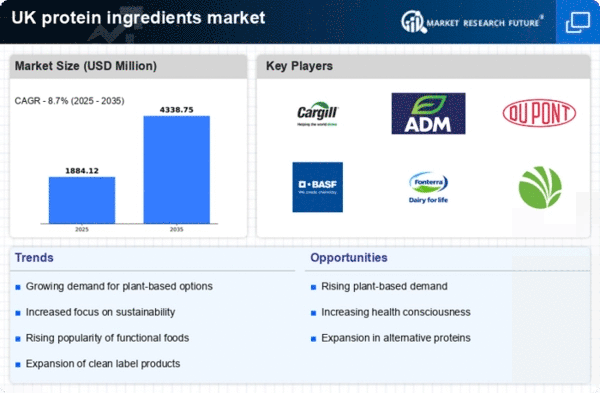
As per Market Research Future analysis, the UK protein ingredients market size was estimated at 1733.33 $ Million in 2024. The UK protein ingredients market is projected to grow from 1884.12 $ Million in 2025 to 4338.75 $ Million by 2035, exhibiting a compound annual growth rate (CAGR) of 8% during the forecast period 2025 - 2035

Key Market Trends & Highlights

The UK protein ingredients market is experiencing a dynamic shift towards plant-based options and innovative fortification methods.

  • The rise of plant-based proteins is reshaping consumer preferences, particularly in the largest segment of dietary supplements.
  • Innovation in protein fortification is driving growth in the fastest-growing segment of functional foods.
  • Sustainability and ethical sourcing are becoming increasingly important to consumers, influencing purchasing decisions across the market.
  • Key market drivers include growing health consciousness and increased demand for functional foods, which are propelling the market forward.

Market Size & Forecast

2024 Market Size 1733.33 (USD Million)
2035 Market Size 4338.75 (USD Million)
CAGR (2025 - 2035) 8.7%

Major Players

Cargill (US), Archer Daniels Midland (US), DuPont (US), BASF (DE), Fonterra (NZ), Ingredion (US), Tate & Lyle (GB), Kerry Group (IE), AGT Food and Ingredients (CA)

Our Impact
Enabled $4.3B Revenue Impact for Fortune 500 and Leading Multinationals
Partnering with 2000+ Global Organizations Each Year
30K+ Citations by Top-Tier Firms in the Industry

UK Protein Ingredients Market Trends

The protein ingredients market is evolving, driven by increasing consumer awareness regarding health and nutrition. This heightened focus on dietary choices has led to a surge in demand for protein-rich products across various sectors, including food and beverages, supplements, and animal feed. As consumers become more discerning, they seek high-quality, sustainable protein sources that align with their health goals. This trend is further supported by a growing interest in plant-based diets, which has prompted manufacturers to innovate and diversify their offerings. The market landscape is characterized by a blend of traditional animal-based proteins and emerging plant-based alternatives, reflecting a shift in consumer preferences. In addition, regulatory frameworks and industry standards are adapting to accommodate the evolving protein ingredients market. This includes initiatives aimed at ensuring product safety, quality, and transparency in labeling. As a result, companies are increasingly investing in research and development to enhance their product lines and meet the changing demands of consumers. The interplay between health consciousness, sustainability, and regulatory compliance is likely to shape the future trajectory of the protein ingredients market, presenting both challenges and opportunities for stakeholders in the industry.

Rise of Plant-Based Proteins

There is a notable shift towards plant-based protein sources, driven by consumer preferences for healthier and more sustainable options. This trend reflects a growing awareness of the environmental impact of animal agriculture and a desire for cleaner food labels.

Innovation in Protein Fortification

Manufacturers are increasingly focusing on fortifying products with protein to cater to health-conscious consumers. This innovation spans various categories, including snacks, beverages, and meal replacements, aiming to enhance nutritional profiles and meet dietary needs.

Sustainability and Ethical Sourcing

Sustainability has become a critical consideration in the protein ingredients market. Companies are prioritizing ethical sourcing practices and transparency in their supply chains, responding to consumer demand for responsibly produced ingredients.

UK Protein Ingredients Market Drivers

Rise of Sports Nutrition

The protein ingredients market is significantly influenced by the rise of sports nutrition, as more individuals engage in fitness and athletic activities. The UK has seen a notable increase in the number of fitness enthusiasts and athletes, leading to a heightened demand for protein supplements and fortified foods. This segment is projected to account for a substantial share of the protein ingredients market, with an estimated growth rate of 8% annually. Athletes and fitness-conscious consumers are increasingly turning to protein powders, bars, and ready-to-drink beverages to support their performance and recovery. Consequently, brands are focusing on developing high-quality protein ingredients that cater to this demographic, further propelling the market's expansion.

Growing Health Consciousness

The growing awareness of health among consumers is driving the protein ingredients market. As individuals become more health-conscious, they seek products that contribute to a balanced diet. This trend is reflected in the rising demand for protein-rich foods, perceived as essential for muscle maintenance and overall health. In the UK, the protein ingredients market is projected to grow at a CAGR of approximately 7% from 2025 to 2030. This growth is likely fueled by the popularity of high-protein diets, such as keto and paleo, which emphasize the importance of protein intake. Consequently, manufacturers are innovating to incorporate protein ingredients into various food products, including snacks, beverages, and supplements, to cater to this evolving consumer preference.

Innovation in Food Technology

Innovation in food technology is a key driver of the protein ingredients market, as advancements in processing and formulation techniques enable the development of new protein sources and products. The UK food industry is witnessing a wave of technological innovations, including the use of fermentation and enzymatic processes to enhance protein extraction and functionality. These innovations not only improve the nutritional profile of food products but also address consumer demands for clean label and sustainable ingredients. As a result, the protein ingredients market is likely to benefit from the introduction of novel protein sources, such as insect protein and lab-grown meat, which could reshape consumer perceptions and preferences. This ongoing evolution in food technology is expected to create new opportunities for growth within the protein ingredients market.

Shift Towards Clean Label Products

The protein ingredients market is being propelled by a shift towards clean label products, with consumers preferring transparency in food sourcing and ingredient lists. In the UK, there is a growing demand for products that are free from artificial additives and preservatives, leading manufacturers to reformulate their offerings. This trend is particularly relevant in the protein ingredients market, where consumers seek natural and minimally processed protein sources. According to industry reports, the clean label trend is expected to influence approximately 60% of new product launches in the coming years. As a result, brands are focusing on sourcing high-quality, traceable protein ingredients that align with consumer values, thereby enhancing their market position and driving growth in the protein ingredients market.

Increased Demand for Functional Foods

The protein ingredients market is experiencing a surge in demand for functional foods, which are designed to provide health benefits beyond basic nutrition. Consumers in the UK are increasingly seeking foods that support specific health goals, such as weight management, muscle recovery, and enhanced immunity. This trend is evident in the growing popularity of protein-enriched products, including bars, shakes, and dairy alternatives. According to recent data, the functional food sector is expected to reach a market value of £20 billion by 2026, with protein ingredients playing a crucial role in this expansion. As a result, food manufacturers are investing in research and development to create innovative formulations that meet consumer expectations for both taste and health benefits, thereby driving growth in the protein ingredients market.


Market Segment Insights

By Product: Plant Protein (Largest) vs. Animal/Dairy Proteins (Fastest-Growing)

The UK protein ingredients market shows a diverse distribution among segment values, with Plant Protein leading the charge as the largest segment, reflecting strong consumer demand for plant-based alternatives. Animal/Dairy Proteins follow closely behind, retaining a significant market share due to traditional dietary preferences and the rising popularity of dairy-based products among health-conscious consumers. Growth trends indicate that while Plant Protein holds the largest share, Animal/Dairy Proteins are projected as the fastest-growing segment, driven by increasing awareness of health benefits and the rising popularity of protein-rich diets. Additionally, rising consumer interest in sustainability and ethical sourcing continues to prop up the Plant Protein segment, suggesting a dynamic shift in market trends favoring alternative proteins.

Plant Protein (Dominant) vs. Animal/Dairy Proteins (Emerging)

Plant Protein plays a crucial role in the market as the dominant segment, catering to the growing number of consumers seeking vegan and vegetarian diets. Its versatility in applications, ranging from food to supplements, contributes to its strong market presence. Moreover, the rising focus on sustainability and health benefits further cements its position. In contrast, Animal/Dairy Proteins are emerging with renewed vigor due to preferences for high-quality animal-based sources. This segment capitalizes on the tradition of protein consumption, with increasing innovations in dairy products that appeal to both health-conscious and indulgent consumers. The competition between these segments highlights a significant evolution in dietary choices within the market.

By Application: Food & Beverages (Largest) vs. Clinical Nutrition (Fastest-Growing)

The UK protein ingredients market displays a varied distribution among its application segments. The Food & Beverages segment holds the largest share due to the increasing consumer demand for high-protein diets and health-conscious products. Meanwhile, Clinical Nutrition is rapidly gaining traction as healthcare professionals emphasize protein in recovery and treatment plans, showcasing significant market potential. Growth trends indicate that the Animal Feed segment remains steady, driven by livestock welfare requirements and nutritional enhancements. Conversely, Clinical Nutrition is anticipated to experience the most robust growth as innovations in protein formulations and tailored nutrition solutions emerge, increasing its relevance in healthcare settings. The Infant Formulations segment also presents opportunities, driven by rising awareness among parents about the significance of protein in early development.

Food & Beverages: Dominant vs. Clinical Nutrition: Emerging

The Food & Beverages segment is characterized by its broad application in various products, including protein bars, shakes, and dairy alternatives, catering to the rising trend of health and fitness. This segment thrives on consumer preferences for on-the-go nutritional solutions, integrating diverse protein sources such as whey, soy, and pea proteins. In contrast, Clinical Nutrition is emerging as a significant player, focusing on specialized formulations for medical needs, including dietary management for chronic illnesses. The innovation in this sector is propelled by an increasing emphasis on personalized nutrition and the collaboration between food manufacturers and healthcare providers to address patient-specific protein requirements, signaling a promising future for this segment.

Get more detailed insights about UK Protein Ingredients Market

Key Players and Competitive Insights

The protein ingredients market exhibits a dynamic competitive landscape, characterized by a blend of innovation, strategic partnerships, and regional expansion. Key players such as Cargill (US), DuPont (US), and Kerry Group (IE) are actively shaping the market through their distinct operational focuses. Cargill (US) emphasizes sustainability and has invested heavily in plant-based protein innovations, aiming to cater to the growing demand for alternative protein sources. Meanwhile, DuPont (US) has been enhancing its product portfolio through strategic acquisitions, focusing on high-quality protein ingredients that meet the evolving consumer preferences for health and wellness. Kerry Group (IE) is leveraging its expertise in flavor and nutrition to create tailored protein solutions, thereby positioning itself as a leader in the functional protein segment. Collectively, these strategies contribute to a competitive environment that is increasingly driven by consumer demand for sustainable and health-oriented products.The market's structure appears moderately fragmented, with a mix of large multinational corporations and smaller niche players. Key business tactics such as localizing manufacturing and optimizing supply chains are prevalent among major companies, allowing them to respond swiftly to regional market demands. This localized approach not only enhances operational efficiency but also fosters closer relationships with customers, thereby strengthening brand loyalty. The collective influence of these key players is significant, as they drive innovation and set industry standards that smaller competitors often strive to emulate.

In October Cargill (US) announced a partnership with a leading plant-based food startup to co-develop a new line of protein-rich products aimed at the health-conscious consumer segment. This collaboration is strategically important as it allows Cargill (US) to tap into the rapidly growing plant-based market while leveraging the startup's innovative capabilities. Such partnerships are likely to enhance Cargill's product offerings and strengthen its market position in the protein ingredients sector.

In September DuPont (US) completed the acquisition of a specialty protein company, which is expected to bolster its capabilities in delivering high-quality protein solutions. This acquisition aligns with DuPont's strategy to expand its portfolio and enhance its competitive edge in the protein ingredients market. By integrating the acquired company's technologies and expertise, DuPont (US) is poised to offer more diverse and innovative protein products, catering to the increasing consumer demand for functional ingredients.

In August Kerry Group (IE) launched a new range of protein ingredients designed specifically for the sports nutrition market. This strategic move reflects Kerry's commitment to innovation and its understanding of the growing consumer interest in fitness and health. By targeting this niche market, Kerry Group (IE) not only diversifies its product offerings but also positions itself as a key player in the rapidly expanding sports nutrition segment, which is expected to see substantial growth in the coming years.

As of November current trends in the protein ingredients market are increasingly defined by digitalization, sustainability, and the integration of artificial intelligence in product development. Strategic alliances among key players are shaping the competitive landscape, fostering innovation and enhancing supply chain efficiencies. Looking ahead, competitive differentiation is likely to evolve from traditional price-based competition to a focus on innovation, technology, and reliability in supply chains. Companies that can effectively leverage these trends will likely secure a stronger foothold in the market, catering to the sophisticated demands of modern consumers.

Key Companies in the UK Protein Ingredients Market include

Industry Developments

The UK Protein Ingredients Market has witnessed significant developments recently, particularly with the growing demand for plant-based proteins, reflecting a broader trend towards health and sustainability. In September 2023, GlaxoSmithKline announced its partnership with Oatly to explore the potential of oat-based protein in various applications, indicating a shift towards innovative blends in nutritional products. In terms of mergers and acquisitions, in August 2023, PepsiCo acquired a minority stake in Beyond Meat to strengthen its growing platform in plant-based offerings, enhancing PepsiCo’s position within the UK segment centered around protein-rich alternatives.

Additionally, BASF has expanded its focus on sustainable protein sources, aiming to tap into the burgeoning plant protein market in the UK. On the growth front, market valuations for companies like ADM and Nestle have seen an upward trend due to increasing consumer preferences for high-protein foods, impacting overall market dynamics. Over the past few years, the UK Protein Ingredients Market has been reshaped by consumer-driven innovations, regulatory shifts aimed at promoting healthier diets, and a notable rise in the production of plant and dairy proteins.

The market is expected to continue evolving as companies invest heavily in Research and Development initiatives focusing on protein functionality and sustainability.

Future Outlook

UK Protein Ingredients Market Future Outlook

The Protein Ingredients Market is projected to grow at an 8.7% CAGR from 2025 to 2035, driven by rising health consciousness, demand for plant-based proteins, and innovations in food technology.

New opportunities lie in:

  • Development of customized protein blends for specific dietary needs.
  • Expansion into alternative protein sources like insects and algae.
  • Investment in sustainable production technologies to reduce environmental impact.

By 2035, the protein ingredients market is expected to achieve substantial growth and diversification.

Market Segmentation

UK Protein Ingredients Market Product Outlook

  • Plant Protein
  • Animal/Dairy Proteins
  • Microbe Protein
  • Others

UK Protein Ingredients Market Application Outlook

  • Food & Beverages
  • Infant Formulations
  • Clinical Nutrition
  • Animal Feed
  • Others

Report Scope

MARKET SIZE 2024 1733.33(USD Million)
MARKET SIZE 2025 1884.12(USD Million)
MARKET SIZE 2035 4338.75(USD Million)
COMPOUND ANNUAL GROWTH RATE (CAGR) 8.7% (2025 - 2035)
REPORT COVERAGE Revenue Forecast, Competitive Landscape, Growth Factors, and Trends
BASE YEAR 2024
Market Forecast Period 2025 - 2035
Historical Data 2019 - 2024
Market Forecast Units USD Million
Key Companies Profiled Cargill (US), Archer Daniels Midland (US), DuPont (US), BASF (DE), Fonterra (NZ), Ingredion (US), Tate & Lyle (GB), Kerry Group (IE), AGT Food and Ingredients (CA)
Segments Covered Product, Application
Key Market Opportunities Growing demand for plant-based protein ingredients driven by health-conscious consumer preferences and sustainability trends.
Key Market Dynamics Rising consumer demand for plant-based protein ingredients drives innovation and competition in the market.
Countries Covered UK
Leave a Comment

FAQs

What is the expected market size of the UK Protein Ingredients Market in 2024?

The UK Protein Ingredients Market is expected to be valued at approximately 1.85 billion USD in 2024.

What is the projected market size of the UK Protein Ingredients Market by 2035?

By 2035, the market is projected to reach a valuation of about 5.99 billion USD.

What is the expected compound annual growth rate (CAGR) for the UK Protein Ingredients Market during the forecast period?

The expected CAGR for the UK Protein Ingredients Market from 2025 to 2035 is 11.275 percent.

Which product type dominates the UK Protein Ingredients Market?

Plant Protein is anticipated to dominate the market, valued at 0.7 billion USD in 2024 and projected to grow to 2.33 billion USD by 2035.

What are the key players in the UK Protein Ingredients Market?

Major players in the UK Protein Ingredients Market include GlaxoSmithKline, PepsiCo, Nestle, and Beyond Meat, among others.

How much is the Animal/Dairy Proteins segment expected to be valued in 2035?

The Animal/Dairy Proteins segment is projected to reach a value of 1.8 billion USD by 2035.

What is the expected market size for Microbe Protein in 2024?

The Microbe Protein segment is expected to be valued at approximately 0.35 billion USD in 2024.

What opportunities are present for growth in the UK Protein Ingredients Market?

Key growth opportunities include the rising demand for plant-based proteins and innovative product offerings from leading companies.

What challenges does the UK Protein Ingredients Market currently face?

Challenges include competition from alternative protein sources and regulatory hurdles in product development.

How is the UK Protein Ingredients Market expected to evolve by 2035?

The market is anticipated to experience significant growth, driven by increasing health awareness and consumer trends towards protein-rich diets.

Download Free Sample

Kindly complete the form below to receive a free sample of this Report

Compare Licence

×
Features License Type
Single User Multiuser License Enterprise User
Price $4,950 $5,950 $7,250
Maximum User Access Limit 1 User Upto 10 Users Unrestricted Access Throughout the Organization
Free Customization
Direct Access to Analyst
Deliverable Format
Platform Access
Discount on Next Purchase 10% 15% 15%
Printable Versions