×
Request Free Sample ×

Kindly complete the form below to receive a free sample of this Report

* Please use a valid business email

Leading companies partner with us for data-driven Insights

clients tt-cursor
Hero Background

UK Proptech Market

ID: MRFR/ICT/44815-HCR
200 Pages
Aarti Dhapte
February 2026

UK Proptech Market Research Report By Property Type (Residential, Commercial, Industrial), By Solution (Software, Services), By Deployment (Cloud-based, On-premises) andBy End User (Housing Associations, Property Managers/ Agents, Property Investors, Others)-Forecast to 2035

Share:
Download PDF ×

We do not share your information with anyone. However, we may send you emails based on your report interest from time to time. You may contact us at any time to opt-out.

UK Proptech Market Infographic
Purchase Options

UK Proptech Market Summary

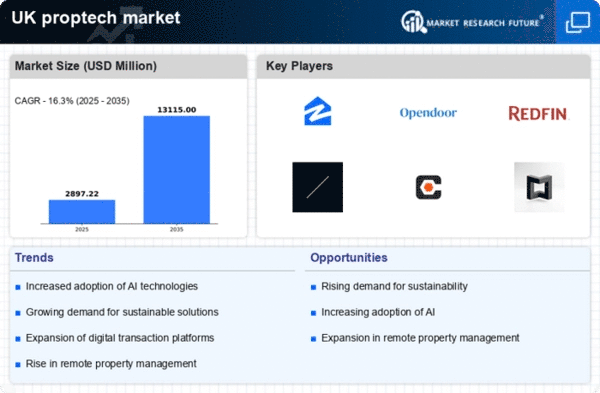
As per Market Research Future analysis, the UK proptech market Size was estimated at 2491.16 USD Million in 2024. The UK proptech market is projected to grow from 2897.22 USD Million in 2025 to 13115.0 USD Million by 2035, exhibiting a compound annual growth rate (CAGR) of 16% during the forecast period 2025 - 2035

Key Market Trends & Highlights

The UK proptech market is experiencing robust growth driven by technological advancements and evolving consumer preferences.

  • The largest segment in the UK proptech market is property management, while the fastest-growing segment is real estate investment platforms.
  • There is a notable increase in the adoption of digital platforms, enhancing user engagement and operational efficiency.
  • Integration of smart technologies is becoming prevalent, facilitating improved property management and tenant experiences.
  • Key market drivers include rising demand for remote property management and increased investment in proptech startups, fostering innovation.

Market Size & Forecast

2024 Market Size 2491.16 (USD Million)
2035 Market Size 13115.0 (USD Million)
CAGR (2025 - 2035) 16.3%

Major Players

Zillow Group (US), Opendoor Technologies (US), Redfin Corporation (US), Compass (US), Procore Technologies (US), Matterport (US), PropertyGuru (SG), Homie (US), LendInvest (GB)

Our Impact
Enabled $4.3B Revenue Impact for Fortune 500 and Leading Multinationals
Partnering with 2000+ Global Organizations Each Year
30K+ Citations by Top-Tier Firms in the Industry

UK Proptech Market Trends

The proptech market in the UK is currently experiencing a transformative phase, driven by advancements in technology and changing consumer preferences. Digital solutions are increasingly being adopted across various sectors, including residential, commercial, and industrial real estate. This shift is largely influenced by the demand for enhanced efficiency, transparency, and accessibility in property transactions. As a result, numerous startups and established firms are innovating to provide solutions that streamline processes, improve user experiences, and facilitate data-driven decision-making. Furthermore, the integration of artificial intelligence, big data, and blockchain technology is reshaping traditional practices, suggesting a future where property management and investment are more automated and informed. In addition, the regulatory environment in the UK appears to be evolving to accommodate these technological advancements. Government initiatives aimed at promoting digital innovation in the property sector are likely to encourage further investment and development. This supportive framework may lead to increased collaboration between tech firms and real estate stakeholders, fostering a more dynamic ecosystem. As the proptech market continues to mature, it is expected that the focus will shift towards sustainability and social impact, aligning with broader societal goals. Overall, the landscape is poised for significant growth, with various opportunities emerging for both new entrants and established players in the market.

Increased Adoption of Digital Platforms

There is a noticeable trend towards the adoption of digital platforms within the proptech market. These platforms facilitate seamless transactions, enhance property management, and improve customer engagement. As users become more accustomed to online services, the demand for user-friendly interfaces and efficient processes is likely to grow.

Integration of Smart Technologies

The integration of smart technologies into properties is becoming increasingly prevalent. This trend encompasses the use of IoT devices, smart home systems, and energy-efficient solutions. Such innovations not only enhance the living experience but also contribute to sustainability efforts, appealing to environmentally conscious consumers.

Focus on Data-Driven Decision Making

Data-driven decision making is emerging as a critical component in the proptech market. Companies are leveraging analytics to gain insights into market trends, consumer behavior, and property performance. This analytical approach enables stakeholders to make informed choices, potentially leading to improved investment outcomes.

UK Proptech Market Drivers

Growing Emphasis on Sustainability

Sustainability has become a central theme in the UK proptech market, as stakeholders increasingly prioritize environmentally friendly practices. The demand for energy-efficient buildings and sustainable development solutions is on the rise, with 70% of property developers now incorporating green technologies into their projects. This shift is not only driven by consumer preferences but also by regulatory pressures aimed at reducing carbon emissions. Proptech companies that offer innovative solutions for energy management, waste reduction, and sustainable construction are likely to thrive in this evolving landscape. The integration of sustainability into the proptech market is expected to reshape investment strategies and consumer choices, ultimately leading to a more responsible and resilient real estate sector.

Regulatory Changes Promoting Innovation

The UK government is actively implementing regulatory changes aimed at fostering innovation within the proptech market. Recent initiatives focus on simplifying the planning process and encouraging the adoption of digital technologies in real estate transactions. For instance, the introduction of digital land registration has streamlined property transfers, reducing the time and costs associated with traditional methods. These regulatory advancements are expected to enhance transparency and efficiency in the market, making it more attractive for both investors and consumers. As the proptech market adapts to these changes, companies that align their offerings with regulatory requirements may find new opportunities for growth and expansion.

Increased Investment in Proptech Startups

Investment in proptech startups within the UK has surged, reflecting a growing confidence in the potential of technology to transform the real estate sector. In 2025, venture capital funding for proptech companies reached £1.2 billion, indicating a 25% increase from the previous year. This influx of capital is enabling startups to develop innovative solutions that address various challenges in the property market, such as affordability, accessibility, and sustainability. Investors are particularly interested in technologies that enhance user experience and streamline processes, which could lead to significant advancements in the proptech market. As more investors recognize the value of proptech, the industry is likely to see continued growth and diversification, fostering a competitive landscape that benefits consumers and businesses alike.

Rising Demand for Remote Property Management

The proptech market in the UK is experiencing a notable increase in demand for remote property management solutions. This trend is driven by the need for landlords and property managers to efficiently oversee their assets without being physically present. As of November 2025, approximately 60% of property managers are utilizing digital tools to streamline operations, enhance tenant communication, and manage maintenance requests. This shift not only improves operational efficiency but also reduces costs associated with traditional management methods. The proptech market is thus evolving to accommodate these needs, with innovative platforms emerging to facilitate remote interactions and transactions. The growing reliance on technology in property management is likely to continue, suggesting a robust future for companies that can provide effective remote solutions.

Technological Advancements Enhancing User Experience

Technological advancements are significantly enhancing user experience within the proptech market in the UK. Innovations such as virtual reality (VR) and augmented reality (AR) are transforming property viewings, allowing potential buyers and tenants to explore spaces remotely. As of November 2025, around 40% of real estate agencies are utilizing VR and AR technologies to provide immersive experiences, which can lead to quicker decision-making and increased sales. Furthermore, the integration of artificial intelligence (AI) in property search platforms is improving the accuracy of property recommendations, catering to individual preferences. These technological enhancements are likely to redefine how consumers interact with the real estate market, making it more efficient and user-friendly.


Market Segment Insights

By Property Type: Residential (Largest) vs. Commercial (Fastest-Growing)

In the UK proptech market, the distribution of market share among property types reveals a strong preference for residential properties, which account for the largest share. Commercial properties follow closely, featuring a significant segment as businesses increasingly leverage technology solutions for property management and transactions. Industrial properties, while valuable, occupy a smaller portion of the market but are gaining attention due to evolving logistics and supply chain needs. Growth trends indicate that the residential property sector continues to dominate, driven by increasing demand for housing and innovative proptech solutions that enhance the buying and renting experience. Conversely, the commercial sector is emerging as the fastest-growing segment, fueled by advancements in digital platforms and a surge in flexible workspace solutions, particularly in the wake of changing work patterns post-pandemic.

Residential (Dominant) vs. Commercial (Emerging)

The residential property segment is characterized by a robust demand for housing solutions, supported by a growing population and a shift towards digital platforms that simplify buying, selling, and renting processes. Features like virtual tours, AI-driven property recommendations, and online transaction management have streamlined operations, making residential property attractive to both buyers and investors. On the other hand, the commercial property segment is evolving rapidly, focusing on flexible leasing, coworking spaces, and tech-driven management solutions. This emerging market is responding to the need for adaptable work environments and is increasingly leveraging data analytics to optimize space utilization and enhance tenant experiences.

By Solution: Software (Largest) vs. Services (Fastest-Growing)

In the UK proptech market, the Software segment holds a significant share, reflecting its essential role in driving innovation and efficiency across various property sectors. This segment includes property management systems, leasing software, and virtual tour platforms, which have become integral for stakeholders looking to streamline operations and enhance customer experiences. On the other hand, the Services segment is witnessing rapid growth, fueled by increasing demand for advisory, consulting, and technology integration services. This surge is driven by real estate companies seeking to adapt to digital transformation and enhance their operational effectiveness. Factors such as the rise of AI, big data analytics, and changing consumer behaviors are also contributing to this upward trend.

Software (Dominant) vs. Services (Emerging)

The Software segment plays a dominant role in the UK proptech market as it offers solutions that optimize property management and client interactions, making it a vital investment for property firms. These software solutions often include features like automated reporting, analytics, and user-friendly interfaces that cater to the growing tech-savvy clientele. In contrast, the Services segment is emerging swiftly as real estate firms are increasingly reliant on specialized services to navigate market complexities. These services encompass consultancy, technology implementation, and tailored training, which are critical for ensuring that companies can leverage newer technologies effectively and stay competitive in a fast-evolving marketplace.

By Deployment: Cloud-based (Largest) vs. On-premises (Fastest-Growing)

In the UK proptech market, the deployment segment is primarily dominated by cloud-based solutions, which have become the preferred choice among consumers due to their flexibility and scalability. Cloud deployment holds a significant market share as it meets the increasing demand for accessible and cost-effective technology in property management and real estate. On-premises solutions, while holding a smaller share, are witnessing growth as some businesses value control and security over their data and systems. The trend towards digital transformation is driving rapid growth in cloud-based deployment, characterized by increased investment in technology and innovation. The adoption of cloud services in property technology is propelling organizations to enhance operational efficiency and improve service delivery. Conversely, the growing interest in on-premises solutions reflects a segment of the market that prioritizes customized software viability and security, revealing emerging niches within the overall deployment landscape.

Cloud-based (Dominant) vs. On-premises (Emerging)

Cloud-based solutions in the UK proptech market are recognized for their robustness and adaptability, allowing users to access data and applications from any location. They are seen as a dominant force thanks to the vast advantages they offer, including cost-effectiveness and ease of updates. As businesses increasingly rely on data-driven insights, cloud solutions provide a comprehensive platform for managing operations efficiently. On the other hand, on-premises solutions are emerging as companies seek specialized control over their proprietary data and systems. While they traditionally represent a smaller segment, their customized nature appeals to organizations with stringent security requirements or specific operational needs, allowing them to maintain stability and control their technological infrastructure.

By End User: Housing Associations (Largest) vs. Property Managers/ Agents (Fastest-Growing)

In the UK proptech market, the distribution of market share among end user segments is distinct, with Housing Associations leading as the largest segment. This dominance can be attributed to their significant role in providing affordable housing and enhancing community engagement in the real estate ecosystem. Meanwhile, Property Managers and Agents are gaining traction and emerging as a rapidly expanding segment, as they leverage technology to streamline property management processes and improve client service delivery. The growth trends in the UK proptech market are primarily driven by technological advancements and heightened demand for efficient property management solutions. As the landscape evolves, Property Investors are also making notable strides, fueled by increasing awareness of the benefits of digital tools in property acquisition and management. Overall, the end user categories demonstrate diverse needs and preferences, shaping a dynamic market poised for innovation and growth.

Housing Associations (Dominant) vs. Property Managers/ Agents (Emerging)

Housing Associations serve as the dominant end user segment in the UK proptech market, characterized by their commitment to providing affordable housing solutions and social housing initiatives. Their established presence is coupled with an emphasis on community development and tenant satisfaction, fostering lasting relationships with residents. In contrast, Property Managers and Agents are emerging as pivotal players, adopting technology to enhance operational efficiency and client interactions. This segment is rapidly integrating advanced platforms to offer seamless experiences in property management, making significant inroads in the market. The evolving dynamics between these segments reveal varying strategies and focus areas that cater to distinct market demands, ultimately reflecting the broader transformation within the real estate sector.

Get more detailed insights about UK Proptech Market

Key Players and Competitive Insights

The UK proptech market exhibits a dynamic competitive landscape characterized by rapid technological advancements and evolving consumer preferences. Key growth drivers include the increasing demand for digital solutions in real estate transactions, enhanced user experiences, and the integration of artificial intelligence (AI) in property management. Major players such as Zillow Group (US), Redfin Corporation (US), and LendInvest (GB) are strategically positioned to leverage these trends. Zillow Group (US) focuses on innovation through its comprehensive online platform, while Redfin Corporation (US) emphasizes a technology-driven approach to streamline home buying and selling processes. LendInvest (GB) is carving a niche in the lending space, utilizing data analytics to optimize mortgage offerings, thereby collectively shaping a competitive environment that prioritizes efficiency and customer-centric solutions.
The business tactics employed by these companies reflect a nuanced understanding of market demands. For instance, localizing services to cater to regional preferences and optimizing supply chains for faster service delivery are prevalent strategies. The market structure appears moderately fragmented, with a mix of established players and emerging startups. This fragmentation allows for diverse offerings, yet the collective influence of key players like Zillow Group (US) and Redfin Corporation (US) is significant, as they set benchmarks for innovation and service quality.
In October 2025, Zillow Group (US) announced a partnership with a leading AI firm to enhance its property valuation algorithms. This strategic move is likely to bolster its competitive edge by providing more accurate pricing insights, thereby attracting a larger user base. The integration of advanced AI capabilities may also streamline operational efficiencies, allowing Zillow to respond more adeptly to market fluctuations.
In September 2025, Redfin Corporation (US) launched a new feature that allows users to conduct virtual home tours using augmented reality (AR). This initiative not only enhances the customer experience but also positions Redfin as a frontrunner in adopting cutting-edge technology in real estate. The strategic importance of this move lies in its potential to reduce the time and resources spent on physical showings, thus appealing to a tech-savvy demographic.
In August 2025, LendInvest (GB) expanded its product offerings by introducing a new line of green mortgages aimed at environmentally conscious consumers. This strategic action aligns with the growing trend towards sustainability in the housing market. By catering to this niche, LendInvest not only differentiates itself from competitors but also positions itself favorably in a market increasingly driven by eco-friendly initiatives.
As of November 2025, the competitive trends in the proptech market are heavily influenced by digitalization, sustainability, and AI integration. Strategic alliances among companies are shaping the landscape, fostering innovation and enhancing service delivery. The shift from price-based competition to a focus on technological advancement and supply chain reliability is evident. Moving forward, competitive differentiation will likely hinge on the ability to innovate and adapt to changing consumer expectations, with a strong emphasis on leveraging technology to enhance user experiences.

Key Companies in the UK Proptech Market include

Industry Developments

Recent developments in the UK Proptech Market have showcased significant growth and transformation in the sector. Notably, in November 2023, Zoopla announced its partnership with a major financial institution to enhance its mortgage comparison tools, facilitating easier property financing for users. In a similar trajectory, Rightmove experienced a 15% increase in market valuation driven by improved advertising strategies and technological advancements that optimize property searches. Amid these advancements, the Leasehold Advisory Service has been actively engaged in legislative discussions concerning leasehold reforms, indicating a proactive stance on consumer rights.

On the acquisition front, Glanty acquired key technological assets from a smaller startup in October 2023 to expand its software offerings. Additionally, in April 2023, Mortgage Brain secured a strategic investment to enhance its digital mortgage platform, catering to evolving customer needs. The rising integration of technology across platforms like Homemove and Foxtons is also enhancing efficiency in property transactions. Over the past two years, significant interest in Proptech investments surged, with 2022 marking a 30% rise in venture funding compared to previous years. These trends highlight the dynamic nature of the UK Proptech Market and its ongoing evolution.


Future Outlook

UK Proptech Market Future Outlook

The proptech market is projected to grow at a 16.3% CAGR from 2025 to 2035, driven by technological advancements, increased investment, and evolving consumer preferences.

New opportunities lie in:

  • Integration of AI-driven property management solutions
  • Development of blockchain-based transaction platforms
  • Expansion of virtual reality tools for property showcasing

By 2035, the proptech market is expected to achieve substantial growth and innovation.

Market Segmentation

UK Proptech Market End User Outlook

  • Housing Associations
  • Property Managers/ Agents
  • Property Investors
  • Others

UK Proptech Market Solution Outlook

  • Software
  • Services

UK Proptech Market Deployment Outlook

  • Cloud-based
  • On-premises

UK Proptech Market Property Type Outlook

  • Residential
  • Commercial
  • Industrial

Report Scope

MARKET SIZE 2024 2491.16(USD Million)
MARKET SIZE 2025 2897.22(USD Million)
MARKET SIZE 2035 13115.0(USD Million)
COMPOUND ANNUAL GROWTH RATE (CAGR) 16.3% (2025 - 2035)
REPORT COVERAGE Revenue Forecast, Competitive Landscape, Growth Factors, and Trends
BASE YEAR 2024
Market Forecast Period 2025 - 2035
Historical Data 2019 - 2024
Market Forecast Units USD Million
Key Companies Profiled Zillow Group (US), Opendoor Technologies (US), Redfin Corporation (US), Compass (US), Procore Technologies (US), Matterport (US), PropertyGuru (SG), Homie (US), LendInvest (GB)
Segments Covered Property Type, Solution, Deployment, End User
Key Market Opportunities Integration of artificial intelligence in property management enhances efficiency and tenant experience.
Key Market Dynamics Technological advancements drive innovation in property management solutions, reshaping consumer engagement and operational efficiency.
Countries Covered UK
Leave a Comment

FAQs

What is the expected market size of the UK Proptech Market in 2024?

The UK Proptech Market is expected to be valued at 3.32 USD Billion in 2024.

What is the projected market size of the UK Proptech Market by 2035?

By 2035, the UK Proptech Market is projected to reach a valuation of 25.08 USD Billion.

What is the expected CAGR for the UK Proptech Market from 2025 to 2035?

The UK Proptech Market is anticipated to grow at a CAGR of 20.181 % from 2025 to 2035.

Which companies are considered major players in the UK Proptech Market?

Major players in the UK Proptech Market include Realyse, Rightmove, Purplebricks, and Zoopla among others.

What is the expected market value for the Residential segment of the UK Proptech Market in 2024?

In 2024, the Residential segment of the UK Proptech Market is expected to be valued at 1.5 USD Billion.

How much is the Commercial segment of the UK Proptech Market projected to be worth in 2035?

The Commercial segment is projected to reach a value of 9.8 USD Billion by 2035.

What is the anticipated market size for the Industrial segment of the UK Proptech Market in 2024?

The Industrial segment is expected to have a market size of 0.52 USD Billion in 2024.

What are some of the key trends driving growth in the UK Proptech Market?

Key trends include increasing digitalization, a rise in remote transactions, and enhancements in property management technology.

What challenges does the UK Proptech Market currently face?

Challenges include regulatory hurdles and the need for cybersecurity in technology adoption.

How do market growth rates differ across segments in the UK Proptech Market?

The market growth rates vary, with Residential expected to grow significantly, reflecting broad demand across all types.

Download Free Sample

Kindly complete the form below to receive a free sample of this Report

Compare Licence

×
Features License Type
Single User Multiuser License Enterprise User
Price $4,950 $5,950 $7,250
Maximum User Access Limit 1 User Upto 10 Users Unrestricted Access Throughout the Organization
Free Customization
Direct Access to Analyst
Deliverable Format
Platform Access
Discount on Next Purchase 10% 15% 15%
Printable Versions