×
Request Free Sample ×

Kindly complete the form below to receive a free sample of this Report

* Please use a valid business email

Leading companies partner with us for data-driven Insights

clients tt-cursor
Hero Background

UK Mayonnaise Market

ID: MRFR/FnB/42868-HCR
128 Pages
Snehal Singh
February 2026

UK Mayonnaise Market Size, Share, Industry Trend & Analysis Research Report By Application (Flavoured, Plain), By Product Type (Egg Mayonnaise, Eggless Mayonnaise), By Packaging Type (Bottles, Pouches, Others) andBy Distribution Channel (Store Based, Non-Store-Based)- Forecast to 2035

Share:
Download PDF ×

We do not share your information with anyone. However, we may send you emails based on your report interest from time to time. You may contact us at any time to opt-out.

UK Mayonnaise Market Infographic
Purchase Options

UK Mayonnaise Market Summary

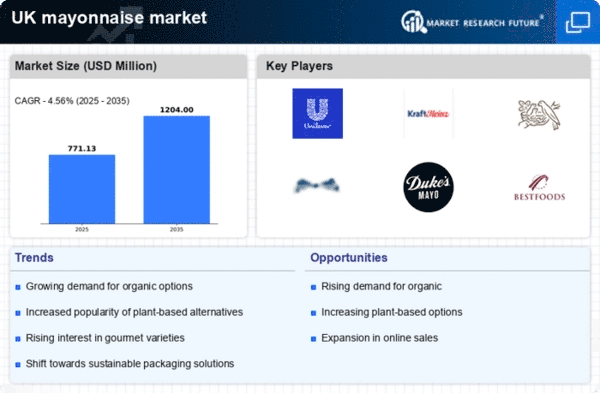
As per Market Research Future analysis, the UK mayonnaise market Size was estimated at 737.5 USD Million in 2024. The UK mayonnaise market is projected to grow from 771.13 USD Million in 2025 to 1204.0 USD Million by 2035, exhibiting a compound annual growth rate (CAGR) of 4.5% during the forecast period 2025 - 2035

Key Market Trends & Highlights

The UK mayonnaise market is experiencing a shift towards health-conscious and innovative products.

  • Health-conscious choices are driving the demand for lower-fat and organic mayonnaise options.
  • Plant-based innovations are emerging as a key trend, appealing to the growing vegan and vegetarian consumer base.
  • Convenience and accessibility are becoming increasingly important, with ready-to-use mayonnaise products gaining popularity.
  • Rising demand for gourmet products and the influence of food trends are major drivers shaping the market landscape.

Market Size & Forecast

2024 Market Size 737.5 (USD Million)
2035 Market Size 1204.0 (USD Million)
CAGR (2025 - 2035) 4.56%

Major Players

Unilever (GB), Kraft Heinz (US), Nestle (CH), Hellmann's (US), Duke's (US), Best Foods (US), Sir Kensington's (US), Miracle Whip (US)

Our Impact
Enabled $4.3B Revenue Impact for Fortune 500 and Leading Multinationals
Partnering with 2000+ Global Organizations Each Year
30K+ Citations by Top-Tier Firms in the Industry

UK Mayonnaise Market Trends

The mayonnaise market in the UK is currently experiencing a dynamic phase characterized by evolving consumer preferences and increasing demand for diverse product offerings. The market appears to be shifting towards healthier alternatives, with consumers showing a growing inclination for organic and low-fat options. This trend suggests a heightened awareness of health and wellness among the population, which may influence purchasing decisions. Additionally, the rise of plant-based diets seems to be impacting the types of mayonnaise products available, as manufacturers explore innovative formulations to cater to this demographic. Moreover, the convenience factor is becoming increasingly significant in the mayonnaise market. Ready-to-use products and single-serve packaging options are gaining traction, reflecting a broader trend towards convenience in food consumption. This shift may be driven by busy lifestyles and the desire for quick meal solutions. As a result, brands are likely to adapt their strategies to meet these changing consumer demands, potentially leading to a more competitive landscape in the coming years. Overall, the mayonnaise market in the UK is poised for growth, with opportunities for brands that can effectively align with these emerging trends.

Health-Conscious Choices

Consumers are increasingly prioritizing health in their food selections, leading to a rise in demand for organic and low-fat mayonnaise options. This trend indicates a shift towards healthier eating habits, prompting manufacturers to innovate and offer products that align with these preferences.

Plant-Based Innovations

The growing popularity of plant-based diets is influencing the mayonnaise market, as brands explore new formulations that cater to vegan and vegetarian consumers. This trend suggests a potential expansion of product lines to include plant-based mayonnaise alternatives.

Convenience and Accessibility

The demand for convenience is shaping the mayonnaise market, with an increase in ready-to-use and single-serve packaging options. This trend reflects changing consumer lifestyles, where quick and easy meal solutions are becoming more desirable.

UK Mayonnaise Market Drivers

Influence of Food Trends

The mayonnaise market in the UK is significantly influenced by broader food trends, particularly the rise of fusion cuisine and international flavors. As consumers become more exposed to global culinary practices, there is a growing interest in mayonnaise varieties that incorporate spices and ingredients from different cultures. For instance, sriracha mayonnaise and wasabi-infused options are gaining traction, appealing to consumers looking for new taste experiences. This trend is supported by market data indicating that specialty mayonnaise products have seen a growth rate of around 10% annually. The mayonnaise market is thus adapting to these trends, with manufacturers increasingly experimenting with flavors and formulations to meet consumer expectations.

Evolving Consumer Preferences

The mayonnaise market in the UK is adapting to evolving consumer preferences, particularly among younger demographics who are more health-conscious and ingredient-savvy. This demographic is increasingly scrutinizing product labels, seeking out mayonnaise that is free from artificial additives and preservatives. As a result, brands are reformulating their products to align with these preferences, leading to a rise in organic and clean-label mayonnaise options. Market analysis indicates that clean-label products are projected to grow by approximately 18% in the coming years. This shift in consumer behavior is prompting manufacturers to innovate and diversify their offerings, thereby influencing the overall dynamics of the mayonnaise market.

Increased Use in Food Service

The mayonnaise market in the UK is witnessing a surge in demand from the food service sector, particularly among restaurants and catering services. As establishments seek to enhance their menu offerings, mayonnaise is being utilized not only as a condiment but also as an ingredient in dressings, dips, and sauces. This trend is evidenced by a reported increase in mayonnaise consumption in the food service industry, which has risen by approximately 12% over the last year. The versatility of mayonnaise allows chefs to create innovative dishes, thereby driving its popularity. Consequently, the mayonnaise market is likely to benefit from this trend, as food service operators continue to explore new culinary applications.

Rising Demand for Gourmet Products

The mayonnaise market in the UK is experiencing a notable shift towards gourmet and artisanal products. Consumers are increasingly seeking high-quality, unique flavors that differentiate from traditional offerings. This trend is reflected in the growth of premium mayonnaise brands, which have seen sales increase by approximately 15% over the past year. The demand for gourmet mayonnaise is driven by a desire for culinary exploration and the incorporation of diverse ingredients, such as truffle oil and organic herbs. As consumers become more adventurous in their food choices, the mayonnaise market is likely to expand, catering to this evolving palate. This shift not only enhances the product range but also encourages manufacturers to innovate, thereby fostering a competitive landscape within the mayonnaise market.

Sustainability and Ethical Sourcing

Sustainability is becoming a pivotal driver in the mayonnaise market in the UK, as consumers increasingly prioritize ethically sourced ingredients. There is a growing awareness regarding the environmental impact of food production, leading to a demand for mayonnaise made from organic and sustainably sourced components. Brands that emphasize transparency in their sourcing practices are likely to resonate with eco-conscious consumers. Market data suggests that products labeled as organic have experienced a growth rate of around 20% in recent years. This shift towards sustainability not only influences purchasing decisions but also compels manufacturers to adapt their practices, thereby shaping the future landscape of the mayonnaise market.


Market Segment Insights

By Type: Egg Mayonnaise (Largest) vs. Eggless Mayonnaise (Fastest-Growing)

In the UK mayonnaise market, Egg Mayonnaise holds the largest share of the market due to its traditional preference among consumers. With its rich flavor and creamy texture, it remains a staple in households and culinary applications. In contrast, Eggless Mayonnaise is growing rapidly, appealing to health-conscious consumers and those with dietary restrictions, thereby capturing an increasing segment of the market. The growth trends in this segment are driven by rising awareness of vegan and vegetarian diets, leading to a shift towards Eggless Mayonnaise. This segment benefits from the increasing demand for plant-based products as consumers seek healthier and more sustainable options. Innovations in flavors and formulations are also contributing to the expansion of Eggless Mayonnaise in the market.

Mayonnaise Type: Egg Mayonnaise (Dominant) vs. Eggless Mayonnaise (Emerging)

Egg Mayonnaise is the dominant type in the UK mayonnaise market, celebrated for its smooth texture and rich taste, making it a preferred choice for traditional recipes and sandwiches. Its established presence ensures a loyal customer base. However, Eggless Mayonnaise is an emerging competitor, rapidly gaining traction as consumers become more health-conscious and aware of dietary preferences. With its egg-free formulation, Eggless Mayonnaise caters to vegans and those with egg allergies, appealing to a broader audience. The innovation in taste and ingredients in Eggless Mayonnaise has made it a popular choice, reflecting changing consumer preferences towards more inclusive dietary options.

By Category: Plain (Largest) vs. Flavoured (Fastest-Growing)

In the UK mayonnaise market, the distribution between Plain and Flavoured segments reflects consumer preferences for traditional versus innovative flavors. Plain mayonnaise holds the largest market share due to its wide acceptance and versatility in culinary applications, serving as a staple in many households. On the other hand, the Flavoured segment, while smaller, attracts a niche market that seeks novel taste experiences, contributing steadily to overall sales growth. Growth trends indicate that the Flavoured segment is expanding at a faster rate, driven by evolving consumer tastes towards gourmet and artisan products. The demand for unique flavor offerings, such as spicy or herb-infused mayonnaise, is on the rise as consumers increasingly experiment with food pairings. Factors such as the desire for more diverse dining experiences and the popularity of food trends on social media are propelling this growth.

Mayonnaise: Plain (Dominant) vs. Flavoured (Emerging)

Plain mayonnaise is characterized by its creamy texture and basic flavor profile, making it a versatile condiment for salads, sandwiches, and various dishes. It represents the dominant segment in the UK mayonnaise market, appealing to a broad consumer base seeking traditional flavors. Flavoured mayonnaise, however, is emerging rapidly, offering consumers unique taste sensations that cater to adventurous palates. Popular flavors may include garlic, sriracha, or herbed varieties. This segment garners attention from food enthusiasts who appreciate gourmet cooking and are willing to pay a premium for sophisticated flavors. As the culinary landscape evolves, both segments are likely to coexist, with Plain remaining a staple and Flavoured increasingly capturing market interest.

By Packaging Type: Bottles (Largest) vs. Pouches (Fastest-Growing)

In the UK mayonnaise market, the packaging type segment exhibits a diverse distribution, with bottles commanding the largest share due to their convenience and consumer preference for traditional packaging. Pouches are gaining traction, capturing an emerging market segment thanks to their lightweight and recyclable properties that appeal to environmentally conscious consumers. Other packaging types are present but hold a significantly smaller portion of the market. The growth trends in this segment indicate a robust demand for both bottles and pouches in the coming years. Bottles remain the go-to choice for most consumers, while pouches are positioned as the fastest-growing option, driven by innovation and sustainability trends. The shift towards eco-friendly packaging solutions is likely to bolster the market for pouches, while bottles will continue to dominate due to their established presence and reliability.

Bottles: Dominant vs. Pouches: Emerging

Bottles represent the dominant packaging type in the UK mayonnaise market, characterized by their sturdy design and consumer familiarity, making them a staple on supermarket shelves. They are often available in various sizes, catering to different household needs. On the other hand, pouches are an emerging option that has gained popularity for their convenience, portability, and reduced environmental impact, appealing to a younger demographic and eco-conscious consumers. The shift towards pouches is supported by advancements in packaging technology that enhance their functionality, making them a compelling alternative in a market increasingly focused on sustainability and convenience.

By Distribution Channel: Store Based (Largest) vs. Non-Store-Based (Fastest-Growing)

In the UK mayonnaise market, the distribution of the Store Based segment commands a significant share, being the largest source for consumer purchases. Traditional retail formats like supermarkets and local grocery stores remain essential for consumers, providing easy access and convenience. On the other hand, the Non-Store-Based segment, including e-commerce platforms, is rapidly gaining traction, especially among younger consumers who prefer online shopping for its efficiency and variety. Growth trends indicate a strong shift towards Non-Store-Based channels, driven by the increasing prevalence of digital shopping habits and the need for convenience. As more consumers turn to online platforms for their food purchases, brands that can effectively leverage e-commerce will likely see substantial growth. Meanwhile, Store Based channels will continue to thrive but may need to innovate to maintain their stronghold in the market.

Distribution Channels: Store Based (Dominant) vs. Non-Store-Based (Emerging)

The Store Based distribution channel in the UK mayonnaise market remains dominant due to its established presence and consumer trust. Shoppers appreciate the tactile experience of selecting products in-store, making it a favorable option for many. However, the Non-Store-Based channel is emerging as a strong competitor, appealing particularly to tech-savvy customers. This segment thrives on the convenience of online shopping, offering unique varieties and the ease of home delivery. With the rise of digital platforms, brands are increasingly investing in their online presence to capture a larger share of this segment, reflecting changing consumer preferences. As a result, the competition between these distribution channels is intensifying, shaping the future landscape of the market.

Get more detailed insights about UK Mayonnaise Market

Key Players and Competitive Insights

The mayonnaise market exhibits a dynamic competitive landscape characterized by a blend of established brands and emerging players. Key growth drivers include increasing consumer demand for convenience foods, health-conscious options, and innovative flavor profiles. Major companies such as Unilever (GB), Kraft Heinz (US), and Nestlé (CH) are strategically positioned to leverage these trends. Unilever (GB) focuses on sustainability and product innovation, while Kraft Heinz (US) emphasizes brand heritage and expansion into plant-based alternatives. Nestlé (CH) is enhancing its portfolio through acquisitions and health-oriented product lines, collectively shaping a competitive environment that prioritizes innovation and consumer engagement.In terms of business tactics, companies are increasingly localizing manufacturing to reduce supply chain vulnerabilities and enhance responsiveness to regional preferences. The market structure appears moderately fragmented, with a few dominant players exerting considerable influence. This fragmentation allows for niche brands to thrive, particularly those that cater to specific dietary needs or flavor innovations, thereby intensifying competition among key players.

In October Unilever (GB) announced a partnership with a local organic farm to source ingredients for its premium mayonnaise line. This strategic move not only enhances product quality but also aligns with the growing consumer preference for locally sourced and organic products. By integrating local supply chains, Unilever (GB) aims to bolster its sustainability credentials while appealing to environmentally conscious consumers.

In September Kraft Heinz (US) launched a new line of mayonnaise infused with superfoods, targeting health-conscious consumers. This initiative reflects a broader trend towards functional foods, where consumers seek products that offer health benefits beyond basic nutrition. The introduction of superfood-infused mayonnaise positions Kraft Heinz (US) as a leader in innovation, potentially attracting a new demographic of health-focused consumers.

In August Nestlé (CH) completed the acquisition of a small but innovative condiment brand specializing in vegan mayonnaise. This acquisition is indicative of Nestlé's strategy to diversify its product offerings and cater to the growing vegan market segment. By integrating this brand, Nestlé (CH) not only expands its portfolio but also enhances its competitive edge in a rapidly evolving market.

As of November current competitive trends are increasingly defined by digitalization, sustainability, and the integration of AI technologies in product development and marketing strategies. Strategic alliances are becoming more prevalent, allowing companies to pool resources and expertise to innovate more effectively. The competitive differentiation is likely to evolve from traditional price-based competition towards a focus on innovation, technology, and supply chain reliability, as companies strive to meet the changing demands of consumers.

Key Companies in the UK Mayonnaise Market include

Industry Developments

The UK mayonnaise market has recently seen some dynamic developments, with brands such as Hellmann's, Colman’s, and Stokes leading the charge in innovation and consumer engagement. As of October 2023, Hellmann's launched a new line of organic mayonnaise to cater to the rising demand for health-conscious and sustainable food options. The market is also impacted by the growth of plant-based alternatives, driven by consumers' increasing interest in vegan diets, which companies like Tesco and Sainsbury's are addressing by expanding their product ranges. In terms of market valuation, the UK mayonnaise market is expected to grow significantly, with estimates suggesting it could reach a value of 300 million by 2026, driven by innovative products and effective marketing strategies. Although there have not been notable mergers or acquisitions involving the mentioned companies within the last few months, the competitive landscape remains strong, with Unilever and Kraft Heinz consistently adapting to new market trends. Furthermore, in early 2022, multiple companies reported a rise in prices due to increased ingredient costs, reflecting the ongoing economic shifts within the UK that have affected the food industry.

Future Outlook

UK Mayonnaise Market Future Outlook

The Mayonnaise Market in the UK is projected to grow at 4.56% CAGR from 2025 to 2035, driven by health trends, product innovation, and increasing demand for convenience foods.

New opportunities lie in:

  • Expansion of organic and health-focused mayonnaise lines
  • Development of single-serve packaging for on-the-go consumption
  • Investment in e-commerce platforms for direct-to-consumer sales

By 2035, the mayonnaise market is expected to achieve robust growth and diversification.

Market Segmentation

UK Mayonnaise Market Type Outlook

  • Egg Mayonnaise
  • Eggless Mayonnaise

UK Mayonnaise Market Category Outlook

  • Flavoured
  • Plain

UK Mayonnaise Market Packaging Type Outlook

  • Bottles
  • Pouches
  • Others

UK Mayonnaise Market Distribution Channel Outlook

  • Store Based
  • Non-Store-Based

Report Scope

MARKET SIZE 2024 737.5(USD Million)
MARKET SIZE 2025 771.13(USD Million)
MARKET SIZE 2035 1204.0(USD Million)
COMPOUND ANNUAL GROWTH RATE (CAGR) 4.56% (2025 - 2035)
REPORT COVERAGE Revenue Forecast, Competitive Landscape, Growth Factors, and Trends
BASE YEAR 2024
Market Forecast Period 2025 - 2035
Historical Data 2019 - 2024
Market Forecast Units USD Million
Key Companies Profiled Unilever (GB), Kraft Heinz (US), Nestle (CH), Hellmann's (US), Duke's (US), Best Foods (US), Sir Kensington's (US), Miracle Whip (US)
Segments Covered Type, Category, Packaging Type, Distribution Channel
Key Market Opportunities Growing demand for plant-based mayonnaise alternatives driven by health-conscious consumer preferences.
Key Market Dynamics Shifting consumer preferences towards healthier options drive innovation in the mayonnaise market.
Countries Covered UK
Leave a Comment

FAQs

What is the expected market size of the UK Mayonnaise Market in 2024?

The UK Mayonnaise Market is expected to be valued at 950.0 USD Million in 2024.

What will the UK Mayonnaise Market be valued at by 2035?

By 2035, the UK Mayonnaise Market is projected to reach a value of 1350.0 USD Million.

What is the expected CAGR for the UK Mayonnaise Market from 2025 to 2035?

The expected CAGR for the UK Mayonnaise Market from 2025 to 2035 is 3.246%.

Which application segment is projected to have a higher market value in 2024 between flavoured and plain?

In 2024, the plain application segment is projected to have a higher market value at 550.0 USD Million compared to the flavoured segment at 400.0 USD Million.

What is the projected market value for the flavoured segment of the UK Mayonnaise Market by 2035?

The projected market value for the flavoured segment of the UK Mayonnaise Market by 2035 is 600.0 USD Million.

Who are the major players in the UK Mayonnaise Market?

Key players in the UK Mayonnaise Market include Stokes, Colman’s, Del Monte, and Hellmann's among others.

What will be the market value for the plain application segment by 2035?

The market value for the plain application segment is expected to reach 750.0 USD Million by 2035.

What are some of the emerging trends influencing the UK Mayonnaise Market?

Emerging trends in the UK Mayonnaise Market include a growing demand for healthier options and innovative flavours.

What challenges does the UK Mayonnaise Market face in terms of growth?

Challenges facing the UK Mayonnaise Market include increasing competition and changing consumer preferences.

How does the UK Mayonnaise Market size compare between 2024 and 2035?

The UK Mayonnaise Market is expected to grow from 950.0 USD Million in 2024 to 1350.0 USD Million by 2035.

Download Free Sample

Kindly complete the form below to receive a free sample of this Report

Compare Licence

×
Features License Type
Single User Multiuser License Enterprise User
Price $4,950 $5,950 $7,250
Maximum User Access Limit 1 User Upto 10 Users Unrestricted Access Throughout the Organization
Free Customization
Direct Access to Analyst
Deliverable Format
Platform Access
Discount on Next Purchase 10% 15% 15%
Printable Versions