×
Request Free Sample ×

Kindly complete the form below to receive a free sample of this Report

* Please use a valid business email

Leading companies partner with us for data-driven Insights

clients tt-cursor
Hero Background

UK Dry Shampoo Market

ID: MRFR/CG/44898-HCR
128 Pages
Pradeep Nandi
February 2026

UK Dry Shampoo Market Size, Share, Industry Trend & Analysis Research Report By Type (Spray, Powder), By Function (Anti-Dandruff, Color Protection, Hair Loss Protection, Daily Care, Multifunction) and By Distribution Channel (Store-Based, Non-Store-Based)-Forecast to 2035

Share:
Download PDF ×

We do not share your information with anyone. However, we may send you emails based on your report interest from time to time. You may contact us at any time to opt-out.

UK Dry Shampoo Market Infographic
Purchase Options

UK Dry Shampoo Market Summary

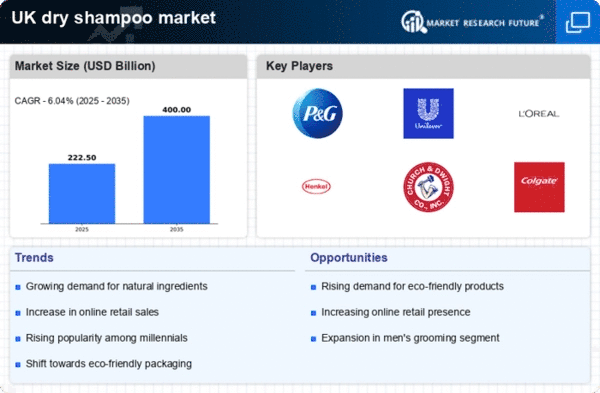
As per Market Research Future analysis, the UK dry shampoo market Size was estimated at 209.83 USD Billion in 2024. The UK dry shampoo market industry is projected to grow from 222.5 USD Billion in 2025 to 400.0 USD Billion by 2035, exhibiting a compound annual growth rate (CAGR) of 6.0% during the forecast period 2025 - 2035

Key Market Trends & Highlights

The UK dry shampoo market is experiencing notable growth driven by evolving consumer preferences and innovative product offerings.

  • The male grooming segment is emerging as the fastest-growing category within the UK dry shampoo market.
  • Eco-friendly products are increasingly influencing consumer choices, reflecting a broader trend towards sustainability.
  • Social media platforms are playing a pivotal role in shaping brand visibility and consumer engagement in the dry shampoo sector.
  • The rising demand for convenience and innovative formulations are key drivers propelling market expansion.

Market Size & Forecast

2024 Market Size 209.83 (USD Billion)
2035 Market Size 400.0 (USD Billion)
CAGR (2025 - 2035) 6.04%

Major Players

Procter & Gamble (US), Unilever (GB), L'Oreal (FR), Henkel (DE), Church & Dwight (US), Colgate-Palmolive (US), Burt's Bees (US), Klorane (FR), Batiste (GB)

Our Impact
Enabled $4.3B Revenue Impact for Fortune 500 and Leading Multinationals
Partnering with 2000+ Global Organizations Each Year
30K+ Citations by Top-Tier Firms in the Industry

UK Dry Shampoo Market Trends

The dry shampoo market is currently experiencing notable growth, driven by changing consumer preferences and lifestyle choices. Increasing awareness regarding personal grooming and convenience has led to a surge in demand for products that offer quick and effective solutions for hair care. Consumers are increasingly seeking alternatives to traditional washing methods, which often require significant time and effort. This shift is particularly evident among busy professionals and individuals with active lifestyles, who prioritize efficiency without compromising on appearance. Furthermore, the rise of social media and beauty influencers has played a pivotal role in promoting dry shampoo as a trendy and essential product in daily routines. In addition to convenience, the dry shampoo market is witnessing a growing emphasis on natural and organic ingredients. As consumers become more health-conscious, there is a marked preference for products that are free from harmful chemicals and synthetic additives. This trend aligns with broader movements towards sustainability and eco-friendliness, as many brands are now focusing on environmentally responsible practices. The combination of convenience and a desire for cleaner formulations suggests a promising future for the dry shampoo market, as it adapts to meet the evolving needs of consumers.

Rise of Eco-Friendly Products

There is a noticeable trend towards eco-friendly formulations within the dry shampoo market. Consumers are increasingly inclined to choose products that utilize sustainable ingredients and packaging. This shift reflects a broader societal movement towards environmental consciousness, prompting brands to innovate and offer greener alternatives.

Growth of Male Grooming Segment

The male grooming segment is expanding within the dry shampoo market, as more men recognize the benefits of these products. This trend indicates a shift in traditional grooming habits, with men seeking convenient solutions for maintaining their appearance, thus broadening the consumer base.

Influence of Social Media

Social media platforms are significantly impacting the dry shampoo market, as influencers and beauty enthusiasts promote these products. This trend highlights the power of digital marketing in shaping consumer preferences and driving product awareness, leading to increased sales and brand loyalty.

UK Dry Shampoo Market Drivers

Expansion of Retail Channels

The dry shampoo market industry in the UK benefits from the expansion of retail channels, including both online and brick-and-mortar stores. The rise of e-commerce platforms has made it easier for consumers to access a wide variety of dry shampoo products, often at competitive prices. In 2025, online sales are projected to account for around 30% of total sales in the dry shampoo market industry, reflecting a shift in consumer purchasing behavior. Additionally, traditional retailers are increasingly dedicating shelf space to dry shampoo products, enhancing visibility and accessibility. This expansion of retail channels is expected to further stimulate market growth and attract new consumers.

Increasing Demand for Convenience

The dry shampoo market in the UK experiences a notable surge in demand driven by the fast-paced lifestyle of consumers. As individuals seek convenience in their grooming routines, dry shampoo offers a quick solution for refreshing hair without the need for water. This trend is particularly prevalent among busy professionals and parents, who often have limited time for traditional hair washing. According to recent data, the convenience factor has contributed to a growth rate of approximately 15% in the dry shampoo market industry over the past year. This increasing demand for convenience is likely to continue influencing product development and marketing strategies within the industry.

Emergence of Innovative Formulations

The dry shampoo market industry in the UK is witnessing a wave of innovation as brands introduce new formulations to meet diverse consumer needs. Innovations such as tinted dry shampoos, which cater to various hair colors, and formulations designed for specific hair types, are becoming increasingly popular. This trend is supported by market data indicating that innovative products account for nearly 40% of total sales in the dry shampoo market industry. As consumers seek tailored solutions for their hair care routines, the emergence of these innovative formulations is likely to drive competition among brands and enhance overall market growth.

Influence of Health and Wellness Trends

The dry shampoo market industry in the UK is significantly influenced by the growing health and wellness trends among consumers. As individuals become more conscious of their personal care choices, there is a rising preference for products that promote hair health without the use of harsh chemicals. Many brands are responding to this demand by formulating dry shampoos with natural ingredients, appealing to health-conscious consumers. This shift is reflected in market data, which indicates that products marketed as organic or free from sulfates have seen a sales increase of approximately 20% in the past year. The alignment of dry shampoo products with health and wellness trends is likely to enhance their appeal and drive further growth.

Rising Popularity of Travel and On-the-Go Products

The dry shampoo market industry in the UK is experiencing growth due to the rising popularity of travel and on-the-go products. As more consumers engage in travel, whether for leisure or business, the demand for portable grooming solutions has increased. Dry shampoo serves as an ideal product for maintaining hair freshness during travel, appealing to consumers who prioritize convenience and efficiency. Market analysis suggests that travel-sized dry shampoo products are gaining traction, with sales in this segment expected to rise by 25% in the coming year. This trend indicates a shift in consumer preferences towards products that cater to a mobile lifestyle, further propelling the growth of the dry shampoo market industry.


Market Segment Insights

By Type: Spray (Largest) vs. Powder (Fastest-Growing)

In the UK dry shampoo market, the distribution of market share between the two major types reveals that spray products hold a significant portion, being favored by consumers for their convenience and ease of use. In contrast, the powder segment, while smaller, is gaining traction as consumers seek more natural and versatile options that offer targeted application and long-lasting results. The growth trends for these segments indicate that spray dry shampoos are benefiting from established brand loyalty and extensive marketing, making them a dominant force. However, the powder segment is emerging rapidly, driven by increasing consumer awareness regarding ingredient transparency and a shift towards sustainable and eco-friendly products. The demand for personal grooming solutions that align with lifestyle preferences is propelling its rapid growth.

Spray (Dominant) vs. Powder (Emerging)

Spray dry shampoos have established themselves as the dominant player in the UK dry shampoo market, primarily due to their user-friendly application and the rapid absorption of oils, making them popular for busy individuals. Consumers appreciate the quick refreshment these products provide without the need for water. On the other hand, powder dry shampoos are emerging as a valid alternative, appealing to consumers seeking clean beauty solutions. They often contain fewer synthetic ingredients and are viewed as more environmentally friendly. The powder formulation allows for precise application and can provide a longer-lasting effect, catering to a niche market that values sustainability and ingredient purity.

By Function: Anti-Dandruff (Largest) vs. Multifunction (Fastest-Growing)

In the UK dry shampoo market, the market share distribution slightly favors the Anti-Dandruff segment, which holds a significant proportion of the overall sales. Following closely are Daily Care and Color Protection segments, which collectively capture a robust share as consumers increasingly seek specialized products to address diverse hair concerns. Meanwhile, Hair Loss Protection has been a steady performer, though its prevalence pales in comparison to the leading segments. Growth trends indicate that Multifunction dry shampoos are rapidly gaining traction among consumers who favor convenience and versatility in their hair care products. The shift towards wellness and self-care has driven demand for products that offer multiple benefits in one application. Moreover, aggressive marketing strategies and the influence of social media on beauty trends play pivotal roles in boosting the awareness and sales of emerging segments, particularly Multifunction dry shampoos.

Anti-Dandruff: Dominant vs. Multifunction: Emerging

The Anti-Dandruff segment stands out as the dominant player in the UK dry shampoo market due to its effective formulation and targeted consumer appeal. Growing awareness of scalp health has made these products essential for many consumers. In contrast, the Multifunction category is emerging rapidly, appealing to those who seek flexibility in their grooming routines. It offers combined benefits such as cleaning, volumizing, and styling, attracting a younger demographic. The increasing trend of busy lifestyles propels the demand for such all-in-one solutions, allowing users to maintain hair health and style with minimal effort. Both segments reflect distinct consumer preferences, with Anti-Dandruff addressing specific concerns and Multifunction capitalizing on convenience.

By Distribution Channel: Store-Based (Largest) vs. Non-Store-Based (Fastest-Growing)

In the UK dry shampoo market, the Store-Based distribution channel holds the largest market share, reflecting consumer preference for traditional retail experiences. Shoppers continue to favor physical stores, where they can seek advice, test products, and enjoy immediate purchase gratification. This channel benefits from established brand presence and customer loyalty, leading to sustained sales figures. Conversely, the Non-Store-Based channel is emerging as the fastest-growing segment in the market, driven by the increasing popularity of online shopping and convenience-driven consumer behavior. The growth of e-commerce platforms and social media marketing has propelled brands into the spotlight, facilitating easy access to a wider audience. This shift is further supported by advancements in digital payment methods and enhanced delivery services, making online purchases more appealing and efficient.

Store-Based (Dominant) vs. Non-Store-Based (Emerging)

The Store-Based distribution channel remains dominant in the UK dry shampoo market, characterized by its extensive network of brick-and-mortar retailers, including drugstores, supermarkets, and beauty specialty shops. This segment benefits from direct customer engagement, allowing consumers to explore various options and benefit from personalized recommendations. On the other hand, the Non-Store-Based channel, represented by online retailers and direct-to-consumer brands, is emerging rapidly. Its rise can be attributed to changing consumer habits, where convenience and the ability to shop from home cater to a growing segment of tech-savvy consumers. The flexibility of shopping online, coupled with targeted social media campaigns, is driving significant growth in this segment, bridging the gap between brand awareness and consumer purchase.

Get more detailed insights about UK Dry Shampoo Market

Key Players and Competitive Insights

The dry shampoo market exhibits a dynamic competitive landscape characterized by rapid innovation and evolving consumer preferences. Key players such as Procter & Gamble (US), Unilever (GB), and Batiste (GB) are at the forefront, leveraging their extensive distribution networks and brand recognition to capture market share. Procter & Gamble (US) focuses on product diversification and sustainability, while Unilever (GB) emphasizes digital transformation and consumer engagement through social media platforms. Batiste (GB), known for its niche positioning, capitalizes on its strong brand loyalty and innovative formulations, collectively shaping a competitive environment that is increasingly driven by consumer-centric strategies.In terms of business tactics, companies are localizing manufacturing to enhance supply chain efficiency and reduce costs. The market structure appears moderately fragmented, with several players competing for dominance. This fragmentation allows for niche brands to thrive alongside established giants, creating a diverse array of product offerings that cater to varying consumer needs. The collective influence of these key players fosters a competitive atmosphere where innovation and responsiveness to market trends are paramount.

In October Unilever (GB) announced a partnership with a leading tech firm to integrate AI-driven analytics into its product development process. This strategic move aims to enhance consumer insights and streamline the innovation cycle, potentially positioning Unilever (GB) as a frontrunner in the market. By harnessing AI, the company could better anticipate consumer preferences and adapt its offerings accordingly, thereby reinforcing its competitive edge.

In September Procter & Gamble (US) launched a new line of eco-friendly dry shampoos, utilizing biodegradable packaging and natural ingredients. This initiative aligns with the growing consumer demand for sustainable products and reflects the company's commitment to environmental responsibility. The introduction of this product line not only enhances Procter & Gamble's (US) brand image but also addresses the increasing scrutiny on environmental practices within the beauty industry.

In August Batiste (GB) expanded its product range by introducing a new collection specifically designed for textured hair. This strategic expansion caters to a previously underserved market segment, demonstrating Batiste's (GB) agility in responding to diverse consumer needs. By broadening its product offerings, the company not only strengthens its market position but also enhances brand loyalty among consumers seeking tailored solutions.

As of November the competitive trends in the dry shampoo market are increasingly defined by digitalization, sustainability, and technological integration. Strategic alliances are becoming more prevalent, enabling companies to leverage complementary strengths and enhance their market presence. Looking ahead, competitive differentiation is likely to evolve from traditional price-based competition to a focus on innovation, technology, and supply chain reliability. This shift underscores the importance of adaptability and responsiveness in a rapidly changing market landscape.

Key Companies in the UK Dry Shampoo Market include

Industry Developments

The UK Dry Shampoo Market is experiencing notable developments, with key players such as Dove, Avon, Tresemme, and Batiste expanding their product lines amidst rising consumer demand for convenient hair care solutions. Recent trends indicate a significant increase in market valuation due to the growing popularity of dry shampoo among busy consumers seeking quick grooming options. In terms of mergers and acquisitions, Tresemme has been involved in discussions for strategic partnerships aimed at enhancing its market share. In July 2023, Unilever acquired a stake in a new dry shampoo brand focused on sustainable ingredients, indicating a shift towards eco-friendly products.

The market has also been influenced by shifting consumer preferences to cleaner beauty products, with Burt's Bees and Klorane gaining traction.

Furthermore, Colgate-Palmolive's investment in Research and Development for innovative formulations underlines the competitive landscape. Over the past two years, the UK Dry Shampoo Market has also witnessed a surge in sales, partly fueled by the increased focus on self-care during the pandemic. As of September 2023, many leading brands are expected to continue expanding their offerings to meet evolving consumer needs.

Future Outlook

UK Dry Shampoo Market Future Outlook

The Dry Shampoo Market is projected to grow at a 6.04% CAGR from 2025 to 2035, driven by increasing consumer demand for convenience and innovative product formulations.

New opportunities lie in:

  • Development of eco-friendly, biodegradable packaging solutions
  • Expansion into subscription-based delivery models for regular users
  • Introduction of specialized formulations targeting specific hair types and concerns

By 2035, the market is expected to achieve substantial growth, reflecting evolving consumer preferences.

Market Segmentation

UK Dry Shampoo Market Type Outlook

  • Spray
  • Powder

UK Dry Shampoo Market Function Outlook

  • Anti-Dandruff
  • Color Protection
  • Hair Loss Protection
  • Daily Care
  • Multifunction

UK Dry Shampoo Market Distribution Channel Outlook

  • Store-Based
  • Non-Store-Based

Report Scope

MARKET SIZE 2024 209.83(USD Billion)
MARKET SIZE 2025 222.5(USD Billion)
MARKET SIZE 2035 400.0(USD Billion)
COMPOUND ANNUAL GROWTH RATE (CAGR) 6.04% (2025 - 2035)
REPORT COVERAGE Revenue Forecast, Competitive Landscape, Growth Factors, and Trends
BASE YEAR 2024
Market Forecast Period 2025 - 2035
Historical Data 2019 - 2024
Market Forecast Units USD Billion
Key Companies Profiled Procter & Gamble (US), Unilever (GB), L'Oreal (FR), Henkel (DE), Church & Dwight (US), Colgate-Palmolive (US), Burt's Bees (US), Klorane (FR), Batiste (GB)
Segments Covered Type, Function, Distribution Channel
Key Market Opportunities Growing demand for eco-friendly formulations in the dry shampoo market presents significant opportunities for innovation.
Key Market Dynamics Rising consumer preference for eco-friendly formulations drives innovation in the dry shampoo market.
Countries Covered UK
Leave a Comment

FAQs

What is the expected market size of the UK Dry Shampoo Market in 2024?

The expected market size of the UK Dry Shampoo Market in 2024 is valued at 188.84 billion USD.

What will be the market size of the UK Dry Shampoo Market by 2035?

By 2035, the UK Dry Shampoo Market is expected to be valued at 390.0 billion USD.

What is the forecasted CAGR for the UK Dry Shampoo Market from 2025 to 2035?

The forecasted CAGR for the UK Dry Shampoo Market from 2025 to 2035 is 6.815%.

Which segments contribute to the UK Dry Shampoo Market based on product type?

The UK Dry Shampoo Market is divided into Spray and Powder segments.

What is the projected market size for Spray Dry Shampoo in 2024?

The projected market size for Spray Dry Shampoo in 2024 is 92.0 billion USD.

What is the expected market valuation for Powder Dry Shampoo by 2035?

The expected market valuation for Powder Dry Shampoo by 2035 is 200.0 billion USD.

Who are the key players in the UK Dry Shampoo Market?

Key players in the UK Dry Shampoo Market include Dove, Avon, Tresemme, and Unilever.

What are the growth drivers for the UK Dry Shampoo Market?

Growing consumer demand for convenience and time-saving hair care solutions are key growth drivers.

What challenges does the UK Dry Shampoo Market currently face?

Challenges include market saturation and competition among established brands.

How has the competitive landscape of the UK Dry Shampoo Market evolved?

The competitive landscape has evolved with increasing innovations and marketing strategies among leading brands.

Download Free Sample

Kindly complete the form below to receive a free sample of this Report

Compare Licence

×
Features License Type
Single User Multiuser License Enterprise User
Price $4,950 $5,950 $7,250
Maximum User Access Limit 1 User Upto 10 Users Unrestricted Access Throughout the Organization
Free Customization
Direct Access to Analyst
Deliverable Format
Platform Access
Discount on Next Purchase 10% 15% 15%
Printable Versions