×
Request Free Sample ×

Kindly complete the form below to receive a free sample of this Report

* Please use a valid business email

Leading companies partner with us for data-driven Insights

clients tt-cursor
Hero Background

UK Beauty Tools Market

ID: MRFR/CG/44913-HCR
128 Pages
Snehal Singh
February 2026

UK Beauty Tools Market Size, Share, Industry Trend & Analysis Research Report By Type (Hair Care Tools, Hair straighteners flat irons, Curling Irons, Hair Dryers, Others, Razors, Trimmers, Brushes Combs, Manicure Pedicure Tools, Nail File, Nail Cutter, Cuticle Pusher Nipper, Others), By End-Use (House Hold, Commercial) and By Distribution Channel (Store-Based, Non-Store-Based (Online/ E-Commerce)) - Forecast to 2035

Share:
Download PDF ×

We do not share your information with anyone. However, we may send you emails based on your report interest from time to time. You may contact us at any time to opt-out.

UK Beauty Tools Market Infographic
Purchase Options

UK Beauty Tools Market Summary

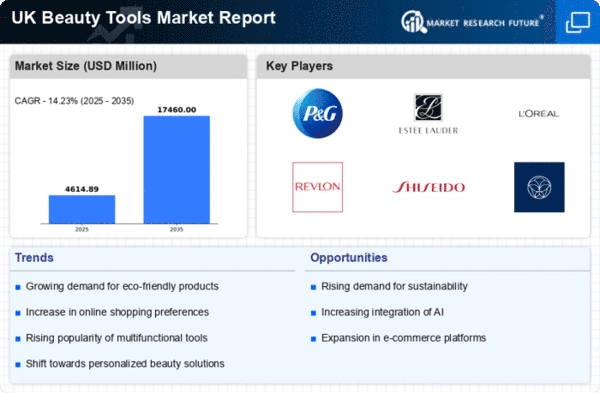
As per Market Research Future analysis, the UK beauty tools market size was estimated at 4040.0 USD Million in 2024. The UK beauty tools market is projected to grow from 4614.89 USD Million in 2025 to 17460.0 USD Million by 2035, exhibiting a compound annual growth rate (CAGR) of 14.2% during the forecast period 2025 - 2035

Key Market Trends & Highlights

The UK beauty tools market is experiencing a transformative shift towards innovation and sustainability.

  • The largest segment in the UK beauty tools market is the skincare tools segment, which continues to dominate sales.
  • Smart beauty tools are gaining traction, reflecting a broader trend towards technological integration in personal care.
  • E-commerce platforms are rapidly expanding, making beauty tools more accessible to consumers across the UK.
  • Technological advancements and the growing demand for eco-friendly products are key drivers propelling market growth.

Market Size & Forecast

2024 Market Size 4040.0 (USD Million)
2035 Market Size 17460.0 (USD Million)
CAGR (2025 - 2035) 14.23%

Major Players

Procter & Gamble (US), Estée Lauder (US), L'Oréal (FR), Revlon (US), Shiseido (JP), Coty (US), Mary Kay (US), Amway (US), Avon (GB)

Our Impact
Enabled $4.3B Revenue Impact for Fortune 500 and Leading Multinationals
Partnering with 2000+ Global Organizations Each Year
30K+ Citations by Top-Tier Firms in the Industry

UK Beauty Tools Market Trends

This market is currently experiencing a dynamic evolution, driven by changing consumer preferences and technological advancements. As individuals increasingly prioritize personal grooming and self-care, the demand for innovative and effective beauty tools continues to rise. This market is characterized by a diverse range of products, including skincare devices, makeup applicators, and hair styling tools, each designed to enhance the beauty regimen of consumers. The integration of smart technology into beauty tools appears to be a significant trend, as consumers seek products that offer convenience and efficiency in their daily routines. Furthermore, sustainability is becoming a focal point, with brands exploring eco-friendly materials and practices to appeal to environmentally conscious consumers. In addition, the beauty tools market is witnessing a shift towards online retail, as e-commerce platforms provide consumers with easy access to a wide variety of products. This trend is likely to continue, as digital shopping becomes increasingly popular among consumers. Social media also plays a crucial role in shaping consumer preferences, with influencers and beauty enthusiasts driving trends and product awareness. Overall, the beauty tools market is poised for continued growth, reflecting the evolving landscape of consumer needs and technological innovations.

Rise of Smart Beauty Tools

The integration of technology into beauty tools is becoming more prevalent, with smart devices offering features such as app connectivity and personalized settings. This trend indicates a shift towards more efficient and tailored beauty routines, appealing to tech-savvy consumers.

Sustainability in Product Development

There is a growing emphasis on sustainability within the beauty tools market, as brands increasingly adopt eco-friendly materials and practices. This trend reflects a broader consumer demand for environmentally responsible products, influencing purchasing decisions.

Growth of E-commerce Platforms

The shift towards online shopping is reshaping the beauty tools market, as consumers prefer the convenience of purchasing products through e-commerce platforms. This trend suggests that brands must enhance their online presence to meet changing consumer behaviors.

UK Beauty Tools Market Drivers

Increased Focus on Personal Grooming

There is a surge in demand driven by an increased focus on personal grooming among consumers. As societal norms evolve, individuals are placing greater emphasis on self-care and appearance. This cultural shift is reflected in the rising sales of grooming tools, with a reported increase of 20% in the last year alone. Consumers are investing in high-quality beauty tools that promise professional results at home, thereby expanding the market. The growing awareness of personal grooming's impact on self-esteem and confidence further fuels this trend, suggesting that the beauty tools market will continue to thrive as more individuals prioritize their grooming routines.

Growing Demand for Eco-Friendly Products

It is increasingly responding to consumer demand for eco-friendly products. As environmental awareness rises, consumers are seeking sustainable beauty tools made from biodegradable or recyclable materials. This shift is reflected in a growing segment of the market, with eco-friendly beauty tools experiencing a 25% increase in sales over the past year. Brands that prioritize sustainability are likely to attract environmentally conscious consumers, thereby enhancing their market position. The beauty tools market is thus evolving to incorporate sustainable practices, suggesting that companies focusing on eco-friendly innovations may gain a competitive edge in the industry.

Technological Advancements in Beauty Tools

The beauty tools market is experiencing a notable transformation due to rapid technological advancements. Innovations such as automated skincare devices and smart hair styling tools are becoming increasingly prevalent. These tools often incorporate artificial intelligence and machine learning, allowing for personalized beauty routines tailored to individual needs. The integration of technology not only enhances user experience but also drives consumer interest, as evidenced by a reported growth of 15% in sales of tech-enabled beauty tools in the past year. This trend indicates a shift towards more sophisticated products within the beauty tools market, appealing to tech-savvy consumers who seek efficiency and effectiveness in their beauty regimens.

Expansion of Retail Channels and Accessibility

The beauty tools market is benefiting from the expansion of retail channels, enhancing accessibility for consumers. Traditional brick-and-mortar stores are increasingly complemented by online platforms, allowing consumers to purchase beauty tools conveniently. This trend is supported by a reported 40% increase in online sales of beauty tools in the past year, indicating a shift in consumer shopping habits. The proliferation of retail options, including pop-up shops and subscription services, further diversifies the market landscape. As accessibility improves, the beauty tools market is likely to attract a broader audience, fostering growth and innovation within the industry.

Influence of Social Media and Beauty Influencers

The beauty tools market is significantly influenced by the rise of social media and beauty influencers. Platforms such as Instagram and TikTok have become vital channels for product promotion, where influencers showcase their beauty routines and recommend specific tools. This trend has led to a substantial increase in consumer engagement, with a reported 30% rise in online searches for beauty tools linked to influencer endorsements. The ability of influencers to create authentic connections with their audiences drives purchasing decisions, indicating that the beauty tools market is likely to benefit from continued collaboration with social media personalities. This dynamic relationship between influencers and consumers shapes market trends and product popularity.


Market Segment Insights

By Type: Hair Care Tools (Largest) vs. Razors (Fastest-Growing)

In the UK beauty tools market, Hair Care Tools represent the largest share, commanding a significant portion of the market due to the growing popularity of personal grooming and hairstyling. Other segments, such as Razors and Trimmers, follow closely, but their market shares are smaller in comparison. Collectively, these segment values reflect a vibrant market driven by diverse consumer preferences and needs. Growth trends indicate that while Hair Care Tools remain dominant, Razors are emerging as the fastest-growing segment due to increasing awareness of grooming habits among both men and women. Additionally, the rise of niche products, including eco-friendly and innovative designs, is fueling the growth of these segments. As consumers seek personalized and effective solutions, the market dynamics continue to evolve, paving the way for new entrants and product innovations.

Hair Care Tools: Dominant vs. Razors: Emerging

Hair Care Tools are characterized by a wide range of products including hair dryers, straighteners, and curling irons, making them the dominant force in the UK beauty tools market. Their popularity is driven by ongoing trends in hairstyling and personal expression. Conversely, Razors represent an emerging category that is gaining traction, particularly among younger demographics. With advancements in design and technology, modern razors offer superior performance and user-friendly features catering to a more discerning consumer base. This segment's growth is also supported by a surge in grooming awareness and an expanding market for male grooming products.

By End-Use: Household (Largest) vs. Commercial (Fastest-Growing)

In the UK beauty tools market, the household segment is the largest contributor, holding a significant market share driven by consumer demand for personal grooming and beauty maintenance at home. This segment has witnessed an increase in product offerings, catering to diverse consumer needs, from basic to advanced beauty tools. The commercial segment, while smaller in share, is catching up as professional services expand and innovate their beauty solutions, appealing to a growing clientele seeking enhanced beauty experiences. Growth trends in this market indicate a rising preference for high-quality beauty tools among consumers, alongside a surge in spending on beauty services. The commercial segment is experiencing the fastest growth due to rising trends in salon and spa environments where specialized tools are essential. Online retailing further boosts both segments, making beauty tools more accessible to a wider audience, thus fostering market expansion.

Household: Dominant vs. Commercial: Emerging

The household segment in the UK beauty tools market stands as the dominant force, characterized by a wide variety of tools tailored for individual use. Consumers prioritize convenience and quality, resulting in a flourishing market for beauty tools that are easy to use and maintain at home. This segment's success is largely influenced by increasing consumer awareness of personal grooming and the influence of social media on beauty trends. Conversely, the commercial segment is emerging rapidly, fueled by the demand for professional-grade tools in salons and spas. This segment thrives on innovation, with a focus on advanced technology and quality that meets the professional standards demanded by beauty experts, ensuring that both segments are integral to the overall market growth.

By Distribution Channel: Store-Based (Largest) vs. Non-Store-Based (Fastest-Growing)

In the UK beauty tools market, the distribution dynamics reveal that Store-Based channels command a significant market share due to established customer trust and the experiential shopping aspect they offer. Customers frequently prefer touching and testing products before purchase, leading to a substantial footprint of conventional retail outlets. Conversely, Non-Store-Based channels, particularly through online platforms, demonstrate a growing market share driven by convenience, a broad product range, and targeted marketing strategies that resonate with tech-savvy consumers. The growth trends indicate an increasing shift towards Non-Store-Based channels, particularly influenced by the rise of e-commerce and digital marketing. Factors such as social media influence, personalized online shopping experiences, and direct-to-consumer brands have accelerated this growth. As preferences evolve, retailers are expected to pivot towards an omnichannel approach, combining both Store-Based reliability with the convenience of online shopping, catering to diverse consumer preferences.

Store-Based (Dominant) vs. Non-Store-Based (Emerging)

Store-Based distribution in the UK beauty tools market continues to hold a dominant position due to its ability to provide customers with tactile experiences and immediate product access. Retail locations like beauty supply stores and department stores facilitate strong brand presence and customer loyalty. In contrast, Non-Store-Based channels are rapidly emerging as key players in the market, driven by technological advancements and changing consumer behaviors. These channels, primarily through online platforms, allow for expansive product offerings and can target niche markets effectively. With the rise of influencers and social media, many brands are leveraging Non-Store-Based strategies to engage customers directly, suggesting a strong future for e-commerce in the beauty tools segment.

Get more detailed insights about UK Beauty Tools Market

Key Players and Competitive Insights

The beauty tools market exhibits a dynamic competitive landscape characterized by rapid innovation and strategic maneuvering among key players. Major companies such as Procter & Gamble (US), L'Oréal (FR), and Estée Lauder (US) are at the forefront, each leveraging distinct strategies to enhance their market presence. Procter & Gamble (US) focuses on sustainability and eco-friendly product lines, which resonates with the growing consumer demand for environmentally conscious options. L'Oréal (FR) emphasizes digital transformation, investing heavily in e-commerce platforms and AI-driven beauty solutions, thereby enhancing customer engagement and personalization. Estée Lauder (US) is known for its aggressive expansion into emerging markets, particularly in Asia, which is expected to drive significant growth in the coming years. Collectively, these strategies not only shape their individual trajectories but also intensify the competitive environment within the market.Key business tactics employed by these companies include localizing manufacturing and optimizing supply chains to enhance efficiency and responsiveness to market demands. The competitive structure of the beauty tools market appears moderately fragmented, with a mix of established brands and emerging players vying for market share. The influence of key players is substantial, as their strategic initiatives often set industry standards and trends, compelling smaller companies to adapt or innovate in response.

In October L'Oréal (FR) announced a partnership with a leading tech firm to develop an AI-driven beauty assistant, which is poised to revolutionize customer interaction and product recommendations. This strategic move underscores L'Oréal's commitment to integrating technology into its offerings, potentially enhancing customer satisfaction and loyalty. The partnership may also position L'Oréal as a pioneer in the digital beauty space, setting a benchmark for competitors.

In September Estée Lauder (US) launched a new line of beauty tools designed specifically for the Asian market, reflecting its strategic focus on regional expansion. This initiative not only caters to local preferences but also demonstrates the company's agility in responding to diverse consumer needs. By tailoring products to specific markets, Estée Lauder is likely to strengthen its foothold in Asia, which is becoming increasingly lucrative for beauty brands.

In August Procter & Gamble (US) unveiled a new sustainability initiative aimed at reducing plastic waste in its beauty tools packaging. This move aligns with the growing consumer expectation for brands to adopt sustainable practices. By prioritizing eco-friendly solutions, Procter & Gamble may enhance its brand image and appeal to environmentally conscious consumers, potentially driving sales growth in a competitive market.

As of November current trends in the beauty tools market are increasingly defined by digitalization, sustainability, and the integration of AI technologies. Strategic alliances are becoming more prevalent, as companies recognize the value of collaboration in enhancing innovation and market reach. Looking ahead, competitive differentiation is likely to evolve, shifting from traditional price-based competition to a focus on innovation, technological advancements, and supply chain reliability. This transition may redefine how companies engage with consumers, ultimately shaping the future landscape of the beauty tools market.

Key Companies in the UK Beauty Tools Market include

Industry Developments

The UK Beauty Tools Market is experiencing noteworthy developments. April 2023 witnessed an increase in demand for eco-friendly beauty tools as consumers shift towards sustainability. Companies like Boots UK and L'Oreal are leading this trend by introducing biodegradable packaging and tools made from recycled materials. In September 2023, Avon launched a new line of beauty tools aimed at younger consumers, catering to the emerging market segment focusing on holistic beauty solutions. Additionally, mergers and acquisitions have shaped the market; notably, in June 2023, Coty acquired a leading innovator in skincare tools, reinforcing its position in the beauty industry.

Financial reports indicate that Johnson and Johnson's expansion into beauty tools has led to a significant valuation increase of about 15% in the past year. Major industry player Charlotte Tilbury has also reported growth driven largely by their innovative beauty tool offerings, which gained significant traction during the pandemic. The shift towards online shopping continues to influence market dynamics, with The Hut Group reporting a substantial rise in e-commerce sales for beauty tools over the last two years. Overall, the UK Beauty Tools Market is dynamically evolving, marked by sustainability trends, innovation, and digital transformation.

Future Outlook

UK Beauty Tools Market Future Outlook

The Beauty Tools Market is projected to grow at 14.23% CAGR from 2025 to 2035, driven by innovation, rising consumer demand, and e-commerce expansion.

New opportunities lie in:

  • Development of AI-driven personalized beauty tools
  • Expansion of subscription-based beauty tool services
  • Investment in eco-friendly and sustainable beauty tool materials

By 2035, the beauty tools market is expected to achieve substantial growth and innovation.

Market Segmentation

UK Beauty Tools Market Type Outlook

  • Hair Care Tools
  • Razors
  • Trimmers
  • Brushes & Combs
  • Manicure & Pedicure Tools
  • Nail File
  • Nail Cutter
  • Cuticle Pusher & Nipper

UK Beauty Tools Market End-Use Outlook

  • Household
  • Commercial

UK Beauty Tools Market Distribution Channel Outlook

  • Store-Based
  • Non-Store-Based (Online/ E-Commerce)

Report Scope

MARKET SIZE 2024 4040.0(USD Million)
MARKET SIZE 2025 4614.89(USD Million)
MARKET SIZE 2035 17460.0(USD Million)
COMPOUND ANNUAL GROWTH RATE (CAGR) 14.23% (2025 - 2035)
REPORT COVERAGE Revenue Forecast, Competitive Landscape, Growth Factors, and Trends
BASE YEAR 2024
Market Forecast Period 2025 - 2035
Historical Data 2019 - 2024
Market Forecast Units USD Million
Key Companies Profiled Procter & Gamble (US), Estée Lauder (US), L'Oréal (FR), Revlon (US), Shiseido (JP), Coty (US), Mary Kay (US), Amway (US), Avon (GB)
Segments Covered Type, End-Use, Distribution Channel
Key Market Opportunities Integration of smart technology in beauty tools enhances user experience and personalization.
Key Market Dynamics Rising consumer demand for sustainable beauty tools drives innovation and competition among manufacturers in the UK.
Countries Covered UK
Leave a Comment

FAQs

What was the projected market size of the UK Beauty Tools Market in 2024?

The UK Beauty Tools Market was expected to be valued at 5.0 billion USD in 2024.

What is the expected market size of the UK Beauty Tools Market by 2035?

By 2035, the UK Beauty Tools Market is projected to reach a valuation of 10.5 billion USD.

What is the expected CAGR for the UK Beauty Tools Market from 2025 to 2035?

The expected Compound Annual Growth Rate (CAGR) for the UK Beauty Tools Market from 2025 to 2035 is 6.978%.

Which segment is the largest within the UK Beauty Tools Market?

The Hair Care Tools segment holds significant value, projected at 1.5 billion USD in 2024.

What will be the market value for Hair straighteners flat irons in 2035?

The market value for Hair straightener flat irons in 2035 is expected to be 2.5 billion USD.

Who are the key players in the UK Beauty Tools Market?

Major players in the market include Avon, Boots UK, Estée Lauder, and L'Oreal, among others.

What was the expected value of the Hair Dryers segment in 2024?

The Hair Dryers segment was expected to be valued at 1.0 billion USD in 2024.

What challenges could impact the growth of the UK Beauty Tools Market?

Challenges such as fluctuating consumer preferences and competition among brands could impact market growth.

What was the projected value of the Curling Irons segment in 2024?

The Curling Irons segment was projected to be valued at 0.8 billion USD in 2024.

What growth drivers are influencing the UK Beauty Tools Market?

Factors driving growth include increasing demand for innovative beauty tools and rising awareness of personal grooming.

Download Free Sample

Kindly complete the form below to receive a free sample of this Report

Compare Licence

×
Features License Type
Single User Multiuser License Enterprise User
Price $4,950 $5,950 $7,250
Maximum User Access Limit 1 User Upto 10 Users Unrestricted Access Throughout the Organization
Free Customization
Direct Access to Analyst
Deliverable Format
Platform Access
Discount on Next Purchase 10% 15% 15%
Printable Versions