×
Request Free Sample ×

Kindly complete the form below to receive a free sample of this Report

* Please use a valid business email

Leading companies partner with us for data-driven Insights

clients tt-cursor
Hero Background

Spain Laxatives Market

ID: MRFR/HC/43489-HCR
200 Pages
Rahul Gotadki
February 2026

Spain Laxatives Market Research Report By Route of Administration (Oral, Rectal), By Indication (Chronic Constipation, Irritable Bowel Syndrome, Others), By Drug Type (Hyperosmotic, Bulk-Forming, Stool Softeners, Lubricants, Stimulants) and By End User (Hospitals Clinics, Research Institutes, Others) - Growth & Industry Forecast 2025 To 2035

Share:
Download PDF ×

We do not share your information with anyone. However, we may send you emails based on your report interest from time to time. You may contact us at any time to opt-out.

Spain Laxatives Market Infographic
Purchase Options

Spain Laxatives Market Summary

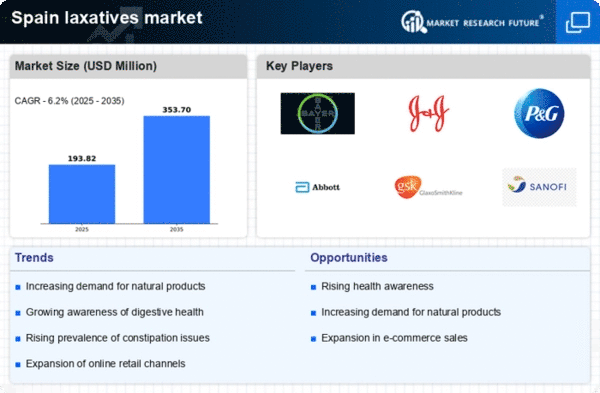
As per Market Research Future analysis, the Spain laxatives market Size was estimated at 182.5 USD Million in 2024. The Spain laxatives market is projected to grow from 193.82 USD Million in 2025 to 353.7 USD Million by 2035, exhibiting a compound annual growth rate (CAGR) of 6% during the forecast period 2025 - 2035

Key Market Trends & Highlights

The Spain laxatives market is experiencing a shift towards natural products and preventive healthcare.

  • The largest segment in the Spain laxatives market is the over-the-counter (OTC) laxatives, driven by consumer preference for self-medication.
  • The fastest-growing segment is the natural laxatives, reflecting a rising demand for organic and plant-based solutions.
  • The market is witnessing an increased regulatory focus, which may influence product formulations and marketing strategies.
  • Key drivers include growing health awareness and the rise in lifestyle-related disorders, which are shaping consumer choices.

Market Size & Forecast

2024 Market Size 182.5 (USD Million)
2035 Market Size 353.7 (USD Million)
CAGR (2025 - 2035) 6.2%

Major Players

Bayer AG (DE), Johnson & Johnson (US), Procter & Gamble Co (US), Abbott Laboratories (US), GlaxoSmithKline plc (GB), Sanofi S.A. (FR), Novartis AG (CH), Pfizer Inc. (US), Bristol-Myers Squibb Company (US)

Our Impact
Enabled $4.3B Revenue Impact for Fortune 500 and Leading Multinationals
Partnering with 2000+ Global Organizations Each Year
30K+ Citations by Top-Tier Firms in the Industry

Spain Laxatives Market Trends

The laxatives market in Spain is currently experiencing notable shifts driven by various factors. Consumer awareness regarding digestive health has increased, leading to a growing demand for effective laxative solutions. This trend appears to be influenced by a rise in lifestyle-related digestive issues, prompting individuals to seek remedies that offer relief. Additionally, the aging population in Spain is likely contributing to the expansion of this market, as older adults often face challenges related to bowel health. As a result, manufacturers are focusing on developing innovative products that cater to these specific needs, which may enhance their market presence. Moreover, the regulatory landscape surrounding laxatives is evolving, with authorities emphasizing safety and efficacy. This regulatory scrutiny could lead to a more competitive environment, as companies strive to meet stringent standards. Furthermore, the increasing popularity of natural and herbal laxatives suggests a shift in consumer preferences towards more holistic approaches to health. This trend may indicate a broader movement towards sustainable and organic products, reflecting changing attitudes among consumers. Overall, the laxatives market in Spain is poised for growth, driven by demographic changes, evolving consumer preferences, and regulatory developments.

Rising Demand for Natural Products

There is a noticeable shift towards natural and herbal laxatives within the laxatives market. Consumers are increasingly seeking products that align with their health-conscious lifestyles, favoring options perceived as safer and more effective. This trend suggests a growing preference for organic ingredients and formulations that minimize synthetic additives.

Aging Population Impact

The demographic shift towards an older population in Spain is significantly influencing the laxatives market. Older adults often experience digestive issues, leading to a heightened demand for laxative products. This trend indicates that manufacturers may need to tailor their offerings to meet the specific needs of this demographic.

Increased Regulatory Focus

The regulatory environment surrounding laxatives is becoming more stringent, with authorities emphasizing product safety and efficacy. This increased scrutiny may drive innovation within the laxatives market, as companies strive to comply with new standards while also addressing consumer concerns regarding product quality.

Spain Laxatives Market Drivers

Growing Health Awareness

The increasing health consciousness among the Spanish population appears to be a significant driver for the laxatives market. Consumers are becoming more aware of the importance of digestive health, leading to a rise in the demand for laxatives that promote regularity and overall well-being. This trend is reflected in the market data, which indicates that the sales of laxatives have seen a growth rate of approximately 5% annually in recent years. As individuals seek to manage their health proactively, the laxatives market is likely to benefit from this shift towards preventive healthcare. Furthermore, educational campaigns by health organizations are contributing to this awareness, encouraging consumers to consider laxatives as a viable option for maintaining digestive health.

Expansion of E-commerce Platforms

The rapid expansion of e-commerce platforms in Spain is reshaping the distribution landscape for the laxatives market. With more consumers opting for online shopping, the accessibility of laxative products has significantly improved. Data shows that online sales of health and wellness products, including laxatives, have surged by over 20% in the past year. This shift not only provides convenience for consumers but also allows for a wider variety of products to be available. As e-commerce continues to grow, it is likely that the laxatives market will experience increased competition and innovation, as brands seek to enhance their online presence and cater to the evolving shopping preferences of consumers.

Influence of Social Media Marketing

The role of social media marketing in shaping consumer perceptions and behaviors is becoming increasingly evident in the laxatives market. Brands are leveraging platforms like Instagram and Facebook to promote their products, often targeting younger demographics who are more engaged with digital content. This marketing strategy appears to be effective, as studies indicate that social media influences purchasing decisions for approximately 70% of consumers in Spain. As a result, companies in the laxatives market are likely to invest more in digital marketing campaigns to reach potential customers. This trend not only enhances brand visibility but also fosters a community around digestive health, encouraging discussions and sharing of experiences related to laxative use.

Rise in Lifestyle-Related Disorders

The prevalence of lifestyle-related disorders, such as obesity and sedentary behavior, is influencing the laxatives market in Spain. As more individuals experience digestive issues linked to poor dietary habits and lack of physical activity, the demand for laxatives is expected to rise. Recent statistics suggest that nearly 30% of the Spanish population suffers from some form of digestive discomfort, which may lead to increased laxative usage. This trend indicates a potential growth opportunity for manufacturers to develop products that cater to this demographic. Additionally, the laxatives market may see innovations in formulations that address specific lifestyle-related concerns, thereby attracting a broader consumer base.

Increased Focus on Preventive Healthcare

The growing emphasis on preventive healthcare in Spain is driving changes in consumer behavior towards the laxatives market. As healthcare systems shift towards preventive measures, individuals are more inclined to seek solutions that promote digestive health and prevent issues before they arise. This trend is supported by data indicating that preventive healthcare spending has increased by 15% over the last few years. Consequently, the laxatives market is likely to see a rise in demand for products that are marketed as preventive solutions rather than just reactive treatments. This shift could lead to the development of new product lines that focus on maintaining digestive health, thereby expanding the market's reach and appeal.


Market Segment Insights

By Route of Administration: Oral (Largest) vs. Rectal (Fastest-Growing)

In the Spain laxatives market, the distribution of market share between the oral and rectal segments is significant. The oral route is the dominant mode of administration, favored for its convenience and patient compliance. This segment holds a substantial share, primarily due to the widespread acceptance and ease of use, making it the largest contributor to the market. Conversely, the rectal segment, while smaller, is rapidly gaining traction as consumers seek more immediate relief from constipation. This rising preference highlights an evolving market landscape.

Oral (Dominant) vs. Rectal (Emerging)

The oral segment of the Spain laxatives market remains the dominant force, characterized by a variety of formulations including tablets, liquids, and powders that appeal to a broad consumer base. Its user-friendly nature ensures high compliance rates, making it the preferable choice for many patients suffering from constipation. On the other hand, the rectal segment presents an emerging opportunity, driven by innovations in product formulations that provide faster relief. Patients looking for immediate results are increasingly turning to enemas and suppositories, which are gaining popularity despite being considered less conventional. This dynamic illustrates a shift in consumer behavior and preferences towards solutions that offer quicker results.

By Indication: Chronic Constipation (Largest) vs. Irritable Bowel Syndrome (Fastest-Growing)

In the Spain laxatives market, the segment distribution reveals that Chronic Constipation holds a significant share, making it the largest category among consumers. This prevalence can be attributed to the increasing sedentary lifestyle and dietary changes affecting bowel regularity, leading to a higher demand for laxative products specifically targeting this condition. Conversely, the Irritable Bowel Syndrome segment is emerging as the fastest-growing category, driven by rising awareness, improved diagnosis rates, and the growing number of individuals seeking effective management techniques for this condition. The expanding health consciousness among the population is also a pivotal factor, contributing to the shift in consumer focus and preferences towards IBS-related laxatives.

Chronic Constipation (Dominant) vs. Irritable Bowel Syndrome (Emerging)

Chronic Constipation is the dominant indication in the Spain laxatives market, characterized by a large consumer base that seeks relief from frequent bowel movement difficulties. This segment benefits from extensive marketing, tailored products, and a variety of solutions catering to different age demographics. In contrast, Irritable Bowel Syndrome represents an emerging segment, experiencing rapid growth due to increased awareness and more effective treatment options becoming available. This rise is supported by advancements in research, leading to innovative laxatives specifically designed to alleviate IBS symptoms. As consumers become more health-conscious, both segments are vital in shaping the overall landscape of the market.

By Drug Type: Bulk-Forming (Largest) vs. Hyperosmotic (Fastest-Growing)

In the Spain laxatives market, the market share distribution among the drug types reveals that bulk-forming laxatives hold the largest share, appealing to consumers due to their natural and effective action in providing relief. This segment benefits from increasing awareness of digestive health and the appeal of herbal ingredients. Meanwhile, hyperosmotic laxatives, though currently smaller in market share, are rapidly gaining traction, driven by their effectiveness in producing immediate results, which is essential for consumers seeking quick relief. The growth trends indicate a shift towards hyperosmotic laxatives, which have become the fastest-growing segment in response to the rising incidence of constipation and the need for effective treatments. Factors like aging populations, dietary changes, and a greater emphasis on health and wellness contribute to this growth. As consumers become more health-conscious, the demand for laxatives that offer effective yet gentle relief is on the rise, suggesting a promising trajectory for hyperosmotic products in the coming years.

Bulk-Forming: Dominant vs. Hyperosmotic: Emerging

Bulk-forming laxatives are considered dominant in the Spain laxatives market due to their natural composition and effectiveness in promoting regular bowel movements. They typically contain soluble fiber, which absorbs water in the intestines, leading to softer stools. This segment is favored by health-conscious consumers seeking gentle solutions for chronic constipation without harsh side effects. In contrast, hyperosmotic laxatives are emerging rapidly, known for their immediate effectiveness by drawing water into the intestines, thus providing quick relief. The growing preference for swift action products in a fast-paced lifestyle is driving their popularity, highlighting a significant shift in consumer choices towards effective and reliable laxative options.

By End User: Hospitals & Clinics (Largest) vs. Research Institutes (Fastest-Growing)

In the Spain laxatives market, the segmentation by end user reveals that hospitals and clinics hold a significant share, driven by the increasing admission rates and an aging population requiring pharmacological intervention for constipation-related issues. This segment is characterized by a steady demand for laxatives as part of routine patient care, indicating its dominance in overall market distribution. On the other hand, research institutes represent the fastest-growing segment due to rising investments in clinical trials focused on gastrointestinal health. The growing emphasis on innovative treatments and alternatives in laxative therapy fuels this growth. As more research is conducted, demand from this segment is expected to rise markedly, presenting ample opportunities for new product development and market expansion.

Hospitals & Clinics (Dominant) vs. Research Institutes (Emerging)

The hospitals and clinics segment is dominant in the Spain laxatives market, underscoring their integral role in healthcare provisioning. These facilities often have established protocols that include laxative use in treatment regimens, making them pivotal in driving the market. Conversely, research institutes are emerging as a key player, propelled by the need for innovation in laxative formulations. Driven by academic and clinical research, this segment promotes novel laxative therapies and showcases an increasingly prominent role in shaping consumer preferences towards more effective and alternative solutions.

Get more detailed insights about Spain Laxatives Market

Key Players and Competitive Insights

The laxatives market in Spain is characterized by a competitive landscape that is increasingly shaped by innovation, strategic partnerships, and a focus on consumer health. Key players such as Bayer AG (DE), Johnson & Johnson (US), and Procter & Gamble Co (US) are actively engaged in enhancing their product offerings and expanding their market presence. Bayer AG (DE) has positioned itself as a leader in the market through a strong emphasis on research and development, particularly in the area of natural laxatives, which aligns with the growing consumer preference for organic and plant-based solutions. Meanwhile, Johnson & Johnson (US) has been focusing on digital transformation, leveraging e-commerce platforms to reach a broader audience and enhance customer engagement. Procter & Gamble Co (US) appears to be concentrating on sustainability initiatives, aiming to reduce its environmental footprint while maintaining product efficacy, which resonates well with the environmentally conscious consumer base.
The business tactics employed by these companies reflect a strategic approach to localizing manufacturing and optimizing supply chains to enhance efficiency and responsiveness to market demands. The competitive structure of the laxatives market in Spain is moderately fragmented, with several players vying for market share. However, the collective influence of these key players is significant, as they drive innovation and set industry standards that smaller companies often follow.
In September 2025, Bayer AG (DE) announced the launch of a new line of organic laxatives aimed at the growing health-conscious demographic. This strategic move not only diversifies Bayer's product portfolio but also positions the company to capitalize on the increasing demand for natural health products. The introduction of these organic options is likely to enhance Bayer's competitive edge in a market that is progressively leaning towards holistic health solutions.
In October 2025, Johnson & Johnson (US) unveiled a new digital health initiative designed to provide personalized laxative recommendations through a mobile application. This innovative approach not only enhances customer experience but also allows the company to gather valuable data on consumer preferences and behaviors. By integrating technology into its product offerings, Johnson & Johnson is likely to strengthen its market position and foster brand loyalty among consumers seeking tailored health solutions.
In August 2025, Procter & Gamble Co (US) entered into a partnership with a leading sustainability organization to develop eco-friendly packaging for its laxative products. This collaboration underscores Procter & Gamble's commitment to sustainability and reflects a broader industry trend towards environmentally responsible practices. By prioritizing sustainable packaging, the company is likely to appeal to a growing segment of consumers who prioritize environmental considerations in their purchasing decisions.
As of November 2025, the competitive trends in the laxatives market are increasingly defined by digitalization, sustainability, and the integration of artificial intelligence in product development and consumer engagement. Strategic alliances are becoming more prevalent, as companies recognize the value of collaboration in enhancing innovation and market reach. Looking ahead, competitive differentiation is expected to evolve, with a notable shift from price-based competition to a focus on innovation, technology, and supply chain reliability. This transition may redefine market dynamics, compelling companies to invest in research and development to meet the evolving needs of consumers.

Key Companies in the Spain Laxatives Market include

Industry Developments

Recent developments in the Spain Laxatives Market reflect a dynamic landscape influenced by various companies such as Ferring Pharmaceuticals, Procter and Gamble, and Sanofi. In recent months, AstraZeneca has expanded its product line tailored for digestive health, aligning with the growing demand for effective laxative solutions. Additionally, in September 2023, Johnson and Johnson announced a strategic collaboration with local pharmaceutical firms to enhance their distribution network across Spain, increasing access to their laxative offerings. The market has witnessed significant growth in valuation, attributed to an increase in gastrointestinal disorders and the aging population, necessitating reliable laxative products.

This trend has led to heightened competition among companies like GSK and Takeda Pharmaceutical, both of which are intensifying their marketing efforts to capture market share in Spain. Over the past two years, the market has also seen a rise in digital health initiatives aimed at promoting awareness about digestive health, further contributing to the expansion of the laxative segment. Mergers or acquisitions involving these key players have not been publicly announced recently, but collaboration efforts are evident. Overall, the Spain Laxatives Market is adapting quickly to meet consumer needs and address health concerns effectively.


Future Outlook

Spain Laxatives Market Future Outlook

The Laxatives Market in Spain is projected to grow at a 6.2% CAGR from 2025 to 2035, driven by increasing health awareness and aging population.

New opportunities lie in:

  • Development of subscription-based delivery services for laxatives
  • Investment in R&D for natural laxative alternatives
  • Expansion of online sales channels targeting health-conscious consumers

By 2035, the market is expected to achieve robust growth, reflecting evolving consumer preferences.

Market Segmentation

Spain Laxatives Market End User Outlook

  • Hospitals & Clinics
  • Research Institutes
  • Others

Spain Laxatives Market Drug Type Outlook

  • Hyperosmotic
  • Bulk-Forming
  • Stool Softeners
  • Lubricants
  • Stimulants

Spain Laxatives Market Indication Outlook

  • Chronic Constipation
  • Irritable Bowel Syndrome
  • Others

Spain Laxatives Market Route of Administration Outlook

  • Oral
  • Rectal

Report Scope

MARKET SIZE 2024 182.5(USD Million)
MARKET SIZE 2025 193.82(USD Million)
MARKET SIZE 2035 353.7(USD Million)
COMPOUND ANNUAL GROWTH RATE (CAGR) 6.2% (2025 - 2035)
REPORT COVERAGE Revenue Forecast, Competitive Landscape, Growth Factors, and Trends
BASE YEAR 2024
Market Forecast Period 2025 - 2035
Historical Data 2019 - 2024
Market Forecast Units USD Million
Key Companies Profiled Bayer AG (DE), Johnson & Johnson (US), Procter & Gamble Co (US), Abbott Laboratories (US), GlaxoSmithKline plc (GB), Sanofi S.A. (FR), Novartis AG (CH), Pfizer Inc. (US), Bristol-Myers Squibb Company (US)
Segments Covered Route of Administration, Indication, Drug Type, End User
Key Market Opportunities Growing demand for natural and organic laxatives driven by consumer health consciousness in Spain.
Key Market Dynamics Rising consumer awareness drives demand for natural laxatives, influencing market dynamics in Spain.
Countries Covered Spain
Leave a Comment

FAQs

What is the projected market size of the Spain Laxatives Market in 2024?

The Spain Laxatives Market is projected to be valued at 219.0 million USD in 2024.

What will the market size of Spain Laxatives Market be by 2035?

By 2035, the Spain Laxatives Market is expected to reach a valuation of 367.0 million USD.

What is the expected CAGR for the Spain Laxatives Market from 2025 to 2035?

The expected CAGR for the Spain Laxatives Market from 2025 to 2035 is 4.805 percent.

How is the Spain Laxatives Market segmented by route of administration?

The Spain Laxatives Market is segmented into oral and rectal routes of administration.

What will be the market value for oral laxatives in 2035?

The market value for oral laxatives in Spain is estimated to be 200.0 million USD by 2035.

What is the expected market value for rectal laxatives in 2024?

The expected market value for rectal laxatives in Spain in 2024 is 99.0 million USD.

Who are the major players in the Spain Laxatives Market?

Major players in the Spain Laxatives Market include Ferring Pharmaceuticals, Procter and Gamble, and AstraZeneca.

What challenges does the Spain Laxatives Market face?

The Spain Laxatives Market faces challenges such as regulatory hurdles and competition among established brands.

What are the emerging trends in the Spain Laxatives Market?

Emerging trends in the Spain Laxatives Market include increasing consumer awareness and a growing preference for oral laxatives.

What factors are driving the growth of the Spain Laxatives Market?

The growth of the Spain Laxatives Market is driven by an increase in digestive disorders and an aging population.

Download Free Sample

Kindly complete the form below to receive a free sample of this Report

Compare Licence

×
Features License Type
Single User Multiuser License Enterprise User
Price $4,950 $5,950 $7,250
Maximum User Access Limit 1 User Upto 10 Users Unrestricted Access Throughout the Organization
Free Customization
Direct Access to Analyst
Deliverable Format
Platform Access
Discount on Next Purchase 10% 15% 15%
Printable Versions