×
Request Free Sample ×

Kindly complete the form below to receive a free sample of this Report

* Please use a valid business email

Leading companies partner with us for data-driven Insights

clients tt-cursor
Hero Background

Spain Hospital Bed Market

ID: MRFR/HS/43063-HCR
200 Pages
Rahul Gotadki
February 2026

Spain Hospital Bed Market Research Report By Type (Acute Care, Long-Term Care, Psychiatric Bariatric Care, Others), By Power (Electric, Semi-Electric, Manual) and By End Users (Hospital, Clinics, Ambulatory) -Forecast to 2035

Share:
Download PDF ×

We do not share your information with anyone. However, we may send you emails based on your report interest from time to time. You may contact us at any time to opt-out.

Spain Hospital Bed Market Infographic
Purchase Options

Spain Hospital Bed Market Summary

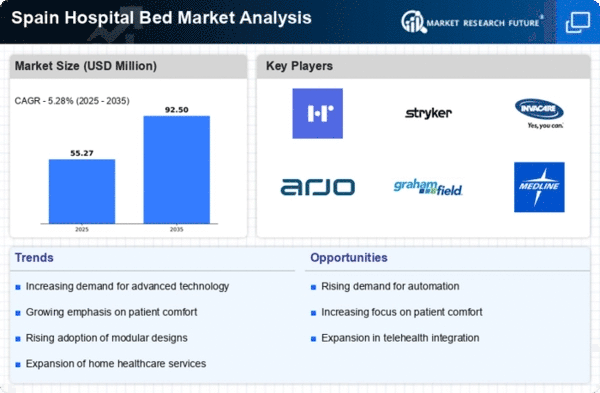
As per Market Research Future analysis, the Spain hospital bed market Size was estimated at 52.5 USD Million in 2024. The Spain hospital bed market is projected to grow from 55.27 USD Million in 2025 to 92.5 USD Million by 2035, exhibiting a compound annual growth rate (CAGR) of 5.2% during the forecast period 2025 - 2035

Key Market Trends & Highlights

The Spain hospital bed market is experiencing a transformative shift driven by technological advancements and a focus on patient-centric designs.

  • Technological advancements are reshaping the hospital bed market, enhancing functionality and patient care.
  • Customization and patient-centric designs are becoming increasingly prevalent, catering to diverse patient needs.
  • The largest segment in the market is the electric hospital beds, while the fastest-growing segment is the adjustable hospital beds.
  • Key market drivers include the aging population and increased healthcare demand, alongside government initiatives and funding for healthcare.

Market Size & Forecast

2024 Market Size 52.5 (USD Million)
2035 Market Size 92.5 (USD Million)
CAGR (2025 - 2035) 5.28%

Major Players

Hill-Rom (US), Stryker (US), Invacare (US), Arjo (SE), Graham-Field (US), Medline Industries (US), Drive DeVilbiss Healthcare (GB), Linet (CZ), Karma Healthcare (IN)

Our Impact
Enabled $4.3B Revenue Impact for Fortune 500 and Leading Multinationals
Partnering with 2000+ Global Organizations Each Year
30K+ Citations by Top-Tier Firms in the Industry

Spain Hospital Bed Market Trends

The hospital bed market in Spain is currently experiencing notable transformations driven by various factors. The increasing demand for advanced healthcare services, coupled with an aging population, is influencing the design and functionality of hospital beds. Innovations in technology, such as integrated monitoring systems and adjustable features, are becoming more prevalent. These advancements not only enhance patient comfort but also improve the efficiency of healthcare providers. Furthermore, the emphasis on infection control and hygiene is prompting the development of materials and designs that facilitate easier cleaning and maintenance. In addition, the hospital bed market is witnessing a shift towards more sustainable practices. Manufacturers are exploring eco-friendly materials and production methods, aligning with broader environmental goals. This trend reflects a growing awareness of the need for sustainability in healthcare. As the landscape evolves, stakeholders in the hospital bed market must adapt to these changes to meet the expectations of both healthcare professionals and patients. The future appears promising, with potential for further innovations and improvements in patient care and operational efficiency.

Technological Advancements

The integration of advanced technologies in hospital beds is reshaping the market. Features such as smart monitoring systems and automated adjustments are enhancing patient care and operational efficiency. These innovations allow healthcare providers to track vital signs and adjust bed positions remotely, improving overall patient outcomes.

Sustainability Initiatives

There is a growing focus on sustainability within the hospital bed market. Manufacturers are increasingly adopting eco-friendly materials and production processes. This shift not only addresses environmental concerns but also aligns with the healthcare sector's commitment to reducing its carbon footprint.

Customization and Patient-Centric Designs

The trend towards customization is becoming more pronounced in the hospital bed market. Beds are being designed with patient comfort and specific medical needs in mind. This approach enhances the overall patient experience and supports better recovery outcomes.

Spain Hospital Bed Market Drivers

Focus on Patient Safety and Comfort

The emphasis on patient safety and comfort is becoming increasingly important in the hospital bed market. Hospitals in Spain are prioritizing the well-being of patients, leading to a demand for beds that enhance safety features and comfort levels. Innovations such as anti-microbial surfaces, fall prevention systems, and adjustable height features are gaining traction. The hospital bed market is likely to see a shift towards beds designed with these safety and comfort features, as hospitals aim to reduce the risk of hospital-acquired infections and improve patient satisfaction. This focus on patient-centered care is expected to drive growth in the market, as healthcare providers recognize the importance of creating a healing environment that promotes recovery and well-being.

Rising Prevalence of Chronic Diseases

The rising prevalence of chronic diseases in Spain is a significant driver for the hospital bed market. Conditions such as diabetes, cardiovascular diseases, and respiratory disorders are becoming increasingly common, necessitating prolonged hospital stays and specialized care. According to recent statistics, approximately 30% of the Spanish population suffers from at least one chronic condition, which is likely to increase the demand for hospital beds. The hospital bed market must respond to this trend by providing beds that cater to the specific needs of patients with chronic illnesses, such as those requiring long-term care. This growing patient demographic is expected to drive market growth, as healthcare facilities will need to expand their bed capacity to accommodate the influx of patients requiring ongoing treatment.

Aging Population and Increased Healthcare Demand

The aging population in Spain is a crucial driver for the hospital bed market. As the demographic shifts towards an older age group, the demand for healthcare services, including hospital beds, is likely to rise. By 2030, it is projected that individuals aged 65 and older will constitute approximately 25% of the total population. This demographic trend necessitates an expansion of healthcare facilities and resources, including hospital beds, to accommodate the growing number of elderly patients. The hospital bed market must adapt to this increasing demand by providing specialized beds that cater to the needs of older patients, such as adjustable features and enhanced comfort. Furthermore, the Spanish government has been investing in healthcare infrastructure, which may further stimulate the hospital bed market, ensuring that hospitals are equipped to handle the influx of patients requiring care.

Government Initiatives and Funding for Healthcare

Government initiatives and funding play a pivotal role in shaping the hospital bed market. In Spain, the government has been increasing its healthcare budget, which is expected to reach €200 billion by 2026. This financial support is likely to enhance the capacity of hospitals, leading to an increased demand for hospital beds. The hospital bed market stands to benefit from these investments, as hospitals will require more beds to accommodate the growing patient population. Additionally, government programs aimed at improving healthcare access and quality may further stimulate the market. The focus on upgrading existing facilities and expanding healthcare services indicates a positive outlook for the hospital bed market, as hospitals seek to modernize their equipment and improve patient care.

Technological Integration in Healthcare Facilities

The integration of advanced technologies in healthcare facilities is transforming the hospital bed market. Innovations such as smart beds equipped with monitoring systems, pressure sensors, and automated adjustments are becoming increasingly prevalent. These technologies not only enhance patient comfort but also improve safety and care efficiency. In Spain, hospitals are increasingly adopting these smart solutions, which could lead to a projected growth of around 15% in the hospital bed market over the next five years. The ability to monitor patient vitals remotely and adjust bed positions automatically is likely to reduce the workload on healthcare staff, thereby improving overall operational efficiency. As hospitals continue to invest in technology, the demand for technologically advanced hospital beds is expected to rise, driving growth in the market.


Market Segment Insights

By Type: Acute Care (Largest) vs. Long-Term Care (Fastest-Growing)

In the Spain hospital bed market, the segment distribution reveals that Acute Care holds the largest share, accounting for a significant portion of the overall market. Following closely, Long-Term Care is gaining traction, driven by an increase in the aging population and a growing demand for rehabilitative facilities. Psychiatric & Bariatric Care and Others provide a smaller yet essential share, catering to specialized patient needs, which reflects the diversifying healthcare landscape in Spain. Growth trends indicate that Long-Term Care is the fastest-growing segment, fueled by changes in patient care preferences and an emphasis on home-based healthcare solutions. Moreover, the rising prevalence of chronic diseases necessitates extended care beyond hospital settings, thus propelling this segment's growth. Technological advancements and innovative care approaches are also integral in enhancing patient outcomes, confirming the segment's potential effectiveness in addressing future healthcare demands.

Acute Care (Dominant) vs. Long-Term Care (Emerging)

The Acute Care segment is characterized by its focus on providing immediate and intensive treatment for severe medical conditions, making it a dominant force in the Spain hospital bed market. It encompasses various specialties, including surgical, medical, and critical care units, ensuring rapid response to patient needs. In contrast, the Long-Term Care segment is emerging prominently, reflecting a shift towards more sustainable care models, particularly for the elderly or chronically ill patients. This segment prioritizes rehabilitation, support, and extended care options, focusing on improving quality of life. Both segments cater to essential healthcare requirements but differ fundamentally in their operational frameworks and patient management strategies.

By Power: Electric (Largest) vs. Semi-Electric (Fastest-Growing)

In the Spain hospital bed market, the distribution of power segment values reveals that Electric beds hold a significant share, making them the predominant choice among healthcare facilities. Their popularity stems from enhanced functionality and ease of use, which meets the demands of modern patient care settings. Semi-Electric beds also show a notable presence, appealing to institutions looking for a balance between cost and advanced features, while Manual beds remain relevant but occupy a smaller portion of the market share. Growth trends in this segment indicate a shift towards automated solutions, with Electric beds driving innovation and setting benchmarks in technology and patient comfort. The increasing focus on patient-centric care and the push for efficiency in hospital operations propel the Semi-Electric segment, as more facilities adopt these versatile options. Factors like aging demographics and advancements in healthcare technology further fuel the demand for Electric and Semi-Electric beds in Spain's healthcare infrastructure.

Electric (Dominant) vs. Semi-Electric (Emerging)

Electric hospital beds are characterized by their robust automation features, allowing for easy adjustment of height and position with minimal effort, thus enhancing patient comfort and care efficiency. They are widely adopted in intensive care units and surgical settings due to their reliability and advanced features. On the other hand, Semi-Electric beds serve as a practical alternative, offering partial electric features at a lower price point, making them appealing to budget-conscious hospitals. These beds provide flexibility and ease of use for caregivers, facilitating better patient management for non-critical care settings. As the market evolves, the Semi-Electric segment is capitalizing on the trend of modernization while maintaining affordability, positioning itself as a significant player in the market.

By End User: Hospitals (Largest) vs. Clinics (Fastest-Growing)

In the Spain hospital bed market, hospitals dominate the end-user segment, contributing significantly to overall market share. The demand for hospital beds is primarily driven by the increasing patient population and the rising number of surgical procedures in hospitals. Clinics, while holding a smaller portion of the market, are experiencing rapid growth as more patients seek outpatient services and minor surgical treatments in these settings. The growth trends in this segment reflect a broader shift in healthcare delivery, with increased investments in healthcare infrastructure. The rising prevalence of chronic diseases and an aging population are pushing clinics to expand their services, making them a vital part of the healthcare system. Technological advancements in bed design and functionalities also play a critical role in attracting clinics to invest in modern bed solutions.

Hospitals (Dominant) vs. Clinics (Emerging)

Hospitals are recognized as the dominant end-user in the Spain hospital bed market, characterized by high demand and significant investment in advanced medical facilities. They require a diverse range of beds to accommodate various patient needs, from routine care to intensive treatments. In contrast, clinics are emerging as a pivotal segment, adapting quickly to the needs of outpatient care. The growth of clinics is driven by the shift towards outpatient services, enabling a more flexible healthcare approach. These facilities often prioritize cost-effective and multifunctional bed designs that enhance patient comfort and improve operational efficiency. Both segments reflect the evolving landscape of healthcare in Spain, responding to demographic and technological changes.

Get more detailed insights about Spain Hospital Bed Market

Key Players and Competitive Insights

The hospital bed market in Spain is characterized by a competitive landscape that is increasingly shaped by innovation, strategic partnerships, and a focus on enhancing patient care. Key players such as Hill-Rom (US), Stryker (US), and Arjo (SE) are actively pursuing strategies that emphasize technological advancements and operational efficiencies. Hill-Rom (US), for instance, has positioned itself as a leader in smart hospital solutions, integrating digital health technologies into its product offerings. This focus on innovation not only enhances patient outcomes but also strengthens its competitive edge in a market that is becoming more reliant on technology-driven solutions.The business tactics employed by these companies reflect a concerted effort to optimize supply chains and localize manufacturing processes. The market appears moderately fragmented, with several players vying for market share, yet the influence of major companies remains substantial. Stryker (US), for example, has been enhancing its supply chain capabilities to ensure timely delivery and cost efficiency, which is crucial in a sector where operational reliability is paramount. This collective focus on operational excellence and localized production is likely to shape the competitive structure of the market moving forward.

In October Stryker (US) announced a strategic partnership with a leading Spanish healthcare provider to co-develop advanced hospital bed technologies tailored to local needs. This collaboration is significant as it not only allows Stryker to leverage local insights but also positions the company to better meet the specific demands of the Spanish healthcare system. Such partnerships are indicative of a broader trend where companies seek to align their offerings with regional healthcare requirements, thereby enhancing their market presence.

In September Arjo (SE) launched a new line of hospital beds designed with enhanced mobility features aimed at improving patient comfort and caregiver efficiency. This product introduction is particularly noteworthy as it reflects Arjo's commitment to addressing the evolving needs of healthcare facilities. By focusing on user-centric design, Arjo is likely to strengthen its market position and appeal to a broader customer base, which is essential in a competitive environment.The current trends in the hospital bed market are increasingly defined by digitalization, sustainability, and the integration of artificial intelligence (AI). Companies are recognizing the importance of these elements in shaping their product offerings and operational strategies. Strategic alliances, such as those seen between Stryker (US) and local healthcare providers, are becoming more prevalent, facilitating the exchange of knowledge and resources. Looking ahead, the competitive differentiation in this market is expected to evolve from traditional price-based competition to a focus on innovation, technology integration, and supply chain reliability. This shift underscores the necessity for companies to adapt and innovate continuously in order to maintain a competitive advantage.

Key Companies in the Spain Hospital Bed Market include

Industry Developments

The Spain Hospital Bed Market has recently seen significant developments, including heightened demand for advanced hospital beds due to the ongoing focus on improving healthcare infrastructure, particularly in response to the COVID-19 pandemic. Companies such as Stryker and HillRom are expanding their offerings, introducing innovative products designed for enhanced patient comfort and safety. In June 2023, Arjo completed a strategic acquisition of a local competitor, enhancing its operational capacity in Spain's healthcare sector.

In the previous year, August 2022 marked a notable partnership between Medline Industries and a major Spanish hospital network aimed at improving patient care through better equipment and services. The market has also experienced a growth in valuation, driven by increasing investment from both the public and private sectors, fostering improvements in medical technology. Furthermore, the Spanish government has earmarked significant funding for healthcare services, positively impacting companies like Invacare and Getinge, which are looking to expand their market presence.

Over recent years, advancements in smart bed technologies have garnered attention, with Sonova and Drive DeVilbiss Healthcare playing pivotal roles in this transition within Spanish hospitals.

Future Outlook

Spain Hospital Bed Market Future Outlook

The Hospital Bed Market in Spain is projected to grow at a 5.28% CAGR from 2025 to 2035, driven by technological advancements and increasing healthcare demands.

New opportunities lie in:

  • Development of smart hospital beds with integrated monitoring systems.
  • Expansion of rental services for hospital beds in home care settings.
  • Partnerships with tech firms for telehealth integration in hospital beds.

By 2035, the hospital bed market is expected to achieve substantial growth and innovation.

Market Segmentation

Spain Hospital Bed Market Type Outlook

  • Acute Care
  • Long-Term Care
  • Psychiatric & Bariatric Care
  • Others

Spain Hospital Bed Market Power Outlook

  • Electric
  • Semi-Electric
  • Manual

Spain Hospital Bed Market End User Outlook

  • Hospitals
  • Clinics
  • Ambulatory

Report Scope

MARKET SIZE 2024 52.5(USD Million)
MARKET SIZE 2025 55.27(USD Million)
MARKET SIZE 2035 92.5(USD Million)
COMPOUND ANNUAL GROWTH RATE (CAGR) 5.28% (2025 - 2035)
REPORT COVERAGE Revenue Forecast, Competitive Landscape, Growth Factors, and Trends
BASE YEAR 2024
Market Forecast Period 2025 - 2035
Historical Data 2019 - 2024
Market Forecast Units USD Million
Key Companies Profiled Hill-Rom (US), Stryker (US), Invacare (US), Arjo (SE), Graham-Field (US), Medline Industries (US), Drive DeVilbiss Healthcare (GB), Linet (CZ), Karma Healthcare (IN)
Segments Covered Type, Power, End User
Key Market Opportunities Integration of smart technology in hospital beds enhances patient care and operational efficiency.
Key Market Dynamics Technological advancements drive innovation in hospital bed designs, enhancing patient comfort and operational efficiency.
Countries Covered Spain
Leave a Comment

FAQs

What is the expected market size of the Spain Hospital Bed Market in 2024?

The Spain Hospital Bed Market is expected to be valued at 105.0 million USD in 2024.

What will be the market size of the Spain Hospital Bed Market by 2035?

By 2035, the market size of the Spain Hospital Bed Market is projected to reach 263.0 million USD.

What is the expected compound annual growth rate (CAGR) for the Spain Hospital Bed Market from 2025 to 2035?

The expected CAGR for the Spain Hospital Bed Market from 2025 to 2035 is 8.705%.

Which segment of the Spain Hospital Bed Market will have the largest share in 2024?

The Acute Care segment is expected to hold the largest share with a market value of 42.0 million USD in 2024.

What is the projected market value for the Long-Term Care segment by 2035?

The Long-Term Care segment is projected to reach a market value of 70.0 million USD by 2035.

Who are the key players in the Spain Hospital Bed Market?

Key players in the Spain Hospital Bed Market include Stryker, Arjo, HillRom, Medline Industries, and Invacare.

What is the expected market size for the Psychiatric & Bariatric Care segment in 2024?

The Psychiatric & Bariatric Care segment is expected to have a market size of 18.0 million USD in 2024.

What is the market value for the 'Others' segment by 2035?

The 'Others' segment is anticipated to reach a market value of 44.0 million USD by 2035.

What are the growth drivers for the Spain Hospital Bed Market in the coming years?

The growth drivers include increasing healthcare demands, technological advancements, and the aging population.

What impact might current global scenarios have on the Spain Hospital Bed Market?

Current global scenarios may influence supply chains and demand patterns, potentially altering market dynamics.

Download Free Sample

Kindly complete the form below to receive a free sample of this Report

Compare Licence

×
Features License Type
Single User Multiuser License Enterprise User
Price $4,950 $5,950 $7,250
Maximum User Access Limit 1 User Upto 10 Users Unrestricted Access Throughout the Organization
Free Customization
Direct Access to Analyst
Deliverable Format
Platform Access
Discount on Next Purchase 10% 15% 15%
Printable Versions