×
Request Free Sample ×

Kindly complete the form below to receive a free sample of this Report

* Please use a valid business email

Leading companies partner with us for data-driven Insights

clients tt-cursor
Hero Background

Spain Carob Market

ID: MRFR/FnB/42818-HCR
200 Pages
Snehal Singh
February 2026

Spain Carob Market Size, Share, Industry Trend & Analysis Research Report By Application Outlook (Food Beverages, Animal Feed, Personal Care), By Form Outlook (Powder, Gum) and By Category Outlook (Conventional, Organic)- Forecast to 2035

Share:
Download PDF ×

We do not share your information with anyone. However, we may send you emails based on your report interest from time to time. You may contact us at any time to opt-out.

Spain Carob Market Infographic
Purchase Options

Spain Carob Market Summary

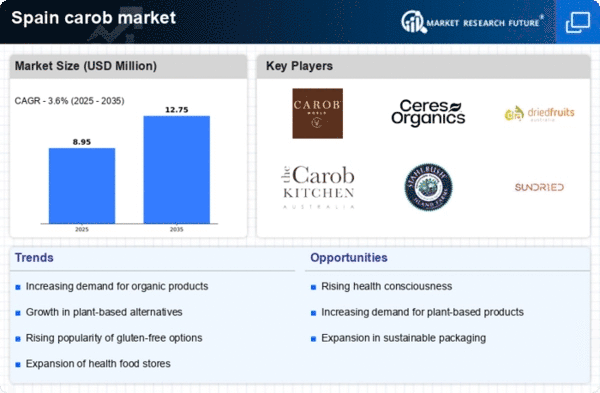
As per Market Research Future analysis, the Spain carob market Size was estimated at 8.64 USD Million in 2024. The Spain carob market is projected to grow from 8.95 USD Million in 2025 to 12.75 USD Million by 2035, exhibiting a compound annual growth rate (CAGR) of 3.6 % during the forecast period 2025 - 2035

Key Market Trends & Highlights

The Spain carob market is experiencing a positive trajectory driven by health trends and sustainability.

  • Health consciousness is significantly driving demand for carob products in Spain.
  • The largest segment in the market is natural sweeteners, while the fastest-growing segment is functional foods.
  • Sustainability and organic practices are becoming increasingly important to consumers in Spain.
  • Rising demand for natural sweeteners and support from agricultural policies are key drivers of market growth.

Market Size & Forecast

2024 Market Size 8.64 (USD Million)
2035 Market Size 12.75 (USD Million)
CAGR (2025 - 2035) 3.6%

Major Players

Carob World (AU), Ceres Organics (NZ), Dried Fruit Australia (AU), The Carob Kitchen (GB), Stahlbush Island Farms (US), Sundried (US), Tropical Foods (US), NutraFruit (AU)

Our Impact
Enabled $4.3B Revenue Impact for Fortune 500 and Leading Multinationals
Partnering with 2000+ Global Organizations Each Year
30K+ Citations by Top-Tier Firms in the Industry

Spain Carob Market Trends

The carob market in Spain is currently experiencing a notable transformation, driven by increasing consumer awareness regarding health and sustainability. Carob, often viewed as a natural alternative to chocolate, is gaining traction among health-conscious individuals and those seeking plant-based options. The demand for organic and sustainably sourced products is on the rise, prompting producers to adapt their practices to meet these expectations. This shift is likely to influence cultivation methods, processing techniques, and distribution channels, as stakeholders aim to align with consumer preferences. Furthermore, the growing trend of clean-label products is encouraging manufacturers to highlight the natural attributes of carob, thereby enhancing its appeal in various food applications. In addition, the carob market is witnessing a surge in innovation, with new product developments emerging across different sectors, including confectionery, snacks, and beverages. This diversification is indicative of the market's potential to cater to a broader audience, including those with dietary restrictions. As the industry evolves, collaboration between farmers, manufacturers, and retailers appears essential to ensure a steady supply chain and maintain product quality. Overall, the carob market in Spain is poised for growth, driven by changing consumer preferences and a commitment to sustainability.

Health Consciousness Driving Demand

The increasing focus on health and wellness among consumers is significantly influencing the carob market. As individuals seek natural alternatives to traditional sweets, carob is emerging as a favored option due to its perceived health benefits. This trend is prompting manufacturers to innovate and create products that cater to health-oriented consumers.

Sustainability and Organic Practices

Sustainability is becoming a core principle within the carob market. Producers are increasingly adopting organic farming methods to meet the rising demand for eco-friendly products. This shift not only appeals to environmentally conscious consumers but also enhances the market's reputation for quality and integrity.

Product Innovation and Diversification

Innovation is a key trend shaping the carob market. New product developments are emerging, particularly in the snack and beverage sectors. This diversification allows the market to reach a wider audience, including those with specific dietary needs, thereby expanding its overall consumer base.

Spain Carob Market Drivers

Expansion of Export Opportunities

The carob market in Spain is poised for growth through the expansion of export opportunities. Spain is one of the leading producers of carob in Europe, and its high-quality products are gaining recognition in international markets. Recent trade data suggests that exports of carob products have increased by approximately 18% over the past year, driven by rising demand in countries seeking natural and organic ingredients. This trend not only enhances the visibility of Spanish carob on a global scale but also encourages local producers to invest in quality improvements and sustainable practices. As the carob market continues to expand internationally, it may lead to increased competition and innovation within the domestic market, ultimately benefiting consumers.

Support from Agricultural Policies

The carob market in Spain benefits from supportive agricultural policies aimed at promoting sustainable farming practices. The Spanish government has implemented various initiatives to encourage the cultivation of carob trees, which are well-suited to arid conditions and require minimal water. These policies not only aim to boost local economies but also align with environmental sustainability goals. Recent reports indicate that the area dedicated to carob cultivation has increased by approximately 10% in the last five years, reflecting a commitment to enhancing the carob market. This support fosters a favorable environment for farmers, potentially leading to higher yields and improved quality of carob products, which could further stimulate market growth.

Growing Interest in Functional Foods

The carob market in Spain is experiencing a surge in interest surrounding functional foods, which are perceived to offer health benefits beyond basic nutrition. Carob is rich in dietary fiber, antioxidants, and essential minerals, making it an attractive ingredient for health-focused consumers. The trend towards functional foods is evident, with Market Research Future indicating that this segment has grown by approximately 12% annually. As consumers increasingly seek foods that contribute to overall well-being, carob's nutritional profile positions it favorably within the carob market. This growing interest may lead to innovative product formulations that highlight the health benefits of carob, thereby expanding its reach and appeal in the competitive food landscape.

Rising Demand for Natural Sweeteners

The carob market in Spain experiences a notable increase in demand for natural sweeteners, driven by a growing consumer preference for healthier alternatives to refined sugars. This shift is evident as more individuals seek to reduce sugar intake due to health concerns, including obesity and diabetes. Carob, with its naturally sweet flavor and low glycemic index, positions itself as an appealing option. Recent data indicates that the market for natural sweeteners in Spain has expanded by approximately 15% over the past year, reflecting a broader trend towards health-conscious eating. As consumers become more aware of the benefits of carob, its role in the carob market is likely to strengthen, potentially leading to increased production and innovation in product offerings.

Increased Use in Vegan and Plant-Based Diets

The carob market in Spain is significantly influenced by the rising popularity of vegan and plant-based diets. As more consumers adopt these dietary preferences, the demand for plant-derived ingredients, such as carob, has surged. Carob serves as a versatile ingredient in various vegan products, including snacks, desserts, and beverages, providing a chocolate-like flavor without the caffeine. Market analysis suggests that the plant-based food sector in Spain has grown by over 20% in recent years, with carob being a key player in this expansion. This trend not only enhances the visibility of carob in the market but also encourages manufacturers to explore innovative applications, thereby diversifying the product range within the carob market.


Market Segment Insights

By Application: Food & Beverages (Largest) vs. Animal Feed (Fastest-Growing)

In the Spain carob market, the application segment showcases a diverse distribution, with Food & Beverages taking the lead as the largest segment. It captures a significant share of the market by catering to consumer demands for organic and natural ingredients in the food sector. Following closely is the Animal Feed segment, which is gaining rapid traction due to the increasing awareness of healthier feed options for livestock and pets, aligning with evolving dietary preferences. Growth trends within the application segment indicate a robust upward trajectory, particularly for Animal Feed, which is currently the fastest-growing area. The market's expansion is driven by rising consumer interest in sustainable farming practices and a shift toward pet premiumization, ultimately enhancing the demand for carob as a functional ingredient. Additionally, the Food & Beverages segment is experiencing steady growth, largely fueled by the trend for clean label products and natural sweeteners that align with health-conscious consumer choices.

Food & Beverages (Dominant) vs. Animal Feed (Emerging)

The Food & Beverages segment in the Spain carob market remains dominant due to its extensive applications in confectionery, bakery, and beverages. Carob's natural sweetness and rich flavor profile make it an attractive choice for manufacturers seeking to offer healthier alternatives. In contrast, the Animal Feed segment is emerging as a significant player, propelled by the increasing adoption of carob in livestock feed formulations. This shift is primarily driven by the focus on nutritional enhancements and the demand for organic feed sources. The synergy between these segments underlines the versatility of carob as a functional ingredient, meeting diverse consumer and industry needs while contributing to market growth.

By Form: Powder (Largest) vs. Gum (Fastest-Growing)

The market share distribution among segment values in the Spain carob market reveals a noticeable preference for the powder form, which holds the largest share. The powder form's versatility and widespread usage in various applications contribute significantly to its dominance. In contrast, the gum segment, while smaller in share, is showing dynamic growth trends as it adapts to new market demands and consumer preferences. Growth trends in this segment are driven by the increasing demand for natural and organic food ingredients, with powder form appealing to health-conscious consumers. The gum segment is gaining traction due to its functional properties in food applications, attracting new product development. As awareness of the benefits of carob increases, both segments are expected to experience robust growth, albeit at different rates.

Powder (Dominant) vs. Gum (Emerging)

The powder form of carob is recognized as the dominant segment within the Spain carob market, largely due to its extensive applications in gluten-free and healthy food products. Its fine texture and rich flavor profile enhance it as an ideal ingredient for baking and beverage formulations. On the other hand, the gum segment is emerging as a significant player, particularly due to its unique thickening and stabilizing properties that cater to the food industry. As modern consumers increasingly seek alternatives to traditional ingredients, the gum form is poised for rapid growth, leveraging its natural origins and advantages in product formulations.

By Category: Conventional (Largest) vs. Organic (Fastest-Growing)

The Spain carob market exhibits a distinct segmentation between conventional and organic categories. Conventional carob products currently hold a significant market share, driven by their established presence and lower production costs. This segment caters primarily to traditional consumers looking for familiar products at accessible prices. On the other hand, organic carob products, though commanding a smaller share, are rapidly gaining traction among health-conscious consumers seeking natural and sustainably sourced options. The growth trends within the Spain carob market indicate that the organic segment is becoming increasingly popular, reflecting a broader shift towards healthier and environmentally friendly eating habits. Factors such as rising awareness of the benefits of organic products, changing consumer preferences, and the introduction of innovative organic carob offerings are driving this trend. As consumers become more educated about the advantages of organic diets, the demand for organic carob is expected to accelerate, positioning it as a key player in the market's future.

Conventional: Dominant vs. Organic: Emerging

The conventional segment in the Spain carob market remains dominant due to its established supply chains and consumer familiarity. Products in this category are often perceived as more affordable and reliable, appealing to a broad demographic. In contrast, the organic segment is emerging as a strong contender, largely fueled by increasing consumer awareness about health and sustainability. Organic carob products are poised to attract a niche audience that values quality and environmental responsibility over cost. As such, while conventional carob holds a commanding lead, the organic segment is on a bullish trajectory, indicating a gradual shift in preferences that could reshape the market landscape.

Get more detailed insights about Spain Carob Market

Key Players and Competitive Insights

The carob market exhibits a dynamic competitive landscape characterized by a blend of innovation, sustainability, and strategic partnerships. Key players such as Carob World (AU), Ceres Organics (NZ), and The Carob Kitchen (GB) are actively shaping the market through their distinct operational focuses. Carob World (AU) emphasizes product diversification and sustainability, aiming to cater to the growing demand for organic and health-oriented products. Ceres Organics (NZ) positions itself as a leader in organic food distribution, leveraging its extensive supply chain to enhance product availability. Meanwhile, The Carob Kitchen (GB) focuses on innovative product development, particularly in the confectionery sector, which aligns with the increasing consumer preference for healthier snack alternatives. Collectively, these strategies contribute to a competitive environment that prioritizes quality, sustainability, and consumer engagement.
In terms of business tactics, companies are increasingly localizing manufacturing to reduce supply chain vulnerabilities and enhance responsiveness to market demands. The competitive structure of the carob market appears moderately fragmented, with several players vying for market share. However, the influence of key players is substantial, as they set trends in product innovation and sustainability practices, thereby shaping consumer expectations and market dynamics.
In October 2025, Carob World (AU) announced a partnership with local farmers to enhance the sustainability of its sourcing practices. This strategic move not only strengthens its supply chain but also aligns with the growing consumer demand for ethically sourced products. By fostering local agricultural practices, Carob World (AU) positions itself as a responsible brand, potentially increasing its market share among environmentally conscious consumers.
In September 2025, Ceres Organics (NZ) launched a new line of carob-based snacks aimed at the health-conscious demographic. This product introduction reflects a strategic pivot towards meeting the rising consumer interest in nutritious snack options. By expanding its product portfolio, Ceres Organics (NZ) enhances its competitive edge, appealing to a broader audience and reinforcing its market presence.
In August 2025, The Carob Kitchen (GB) unveiled a new range of carob-infused confectionery products, targeting the growing vegan and health-conscious markets. This innovation not only diversifies its offerings but also positions the company to capitalize on the increasing trend towards plant-based diets. The strategic importance of this move lies in its potential to attract a new customer base, thereby enhancing brand loyalty and market penetration.
As of November 2025, the carob market is increasingly defined by trends such as digitalization, sustainability, and the integration of AI in supply chain management. Strategic alliances among companies are becoming more prevalent, facilitating knowledge sharing and resource optimization. Looking ahead, competitive differentiation is likely to evolve from traditional price-based competition to a focus on innovation, technology, and supply chain reliability. Companies that can effectively leverage these trends will likely secure a more robust position in the market.

Key Companies in the Spain Carob Market include

Industry Developments

In recent developments in the Spain Carob Market, companies such as Carob Harvest and Valley of Carob have focused on sustainable farming practices to meet the increasing demand for organic products, aligning with Spain's agricultural policies aimed at promoting ecological farming. In July 2023, Carob Solutions announced a significant increase in their export capacity, positioning themselves as a leading supplier of carob products in Europe. Furthermore, the Organic Carob Company has expanded its product line, which has positively influenced market valuation as interest in health-conscious and vegetarian options grows.

Market growth is also reflected in the financial performance of EcoCarob and Carob Gourmet, which have reported an increase in sales following rising consumer awareness about the health benefits of carob. No recent mergers or acquisitions involving the specified companies have been publicly reported. However, in 2021, NaturCarob launched a new initiative to promote carob use in industrial applications, while Carob World has been enhancing its online presence to cater to emerging market trends.

The overall market for carob in Spain continues to gain traction as industry players adapt to consumer needs and sustainability standards, contributing to the robust agricultural sector of the country.

Future Outlook

Spain Carob Market Future Outlook

The Carob Market in Spain is projected to grow at a 3.6% CAGR from 2025 to 2035, driven by increasing health awareness and demand for natural sweeteners.

New opportunities lie in:

  • Development of organic carob-based snack products
  • Expansion into plant-based food sectors
  • Investment in sustainable carob farming practices

By 2035, the carob market is expected to achieve robust growth and increased market share.

Market Segmentation

Spain Carob Market Form Outlook

  • Powder
  • Gum

Spain Carob Market Category Outlook

  • Conventional
  • Organic

Spain Carob Market Application Outlook

  • Food & Beverages
  • Animal Feed
  • Personal Care

Report Scope

MARKET SIZE 2024 8.64(USD Million)
MARKET SIZE 2025 8.95(USD Million)
MARKET SIZE 2035 12.75(USD Million)
COMPOUND ANNUAL GROWTH RATE (CAGR) 3.6% (2025 - 2035)
REPORT COVERAGE Revenue Forecast, Competitive Landscape, Growth Factors, and Trends
BASE YEAR 2024
Market Forecast Period 2025 - 2035
Historical Data 2019 - 2024
Market Forecast Units USD Million
Key Companies Profiled Carob World (AU), Ceres Organics (NZ), Dried Fruit Australia (AU), The Carob Kitchen (GB), Stahlbush Island Farms (US), Sundried (US), Tropical Foods (US), NutraFruit (AU)
Segments Covered Application, Form, Category
Key Market Opportunities Growing demand for natural sweeteners and health foods enhances opportunities in the carob market.

Key Market Dynamics Rising consumer demand for natural sweeteners drives innovation and competition in the carob market.
Countries Covered Spain
Leave a Comment

FAQs

What is the expected market size of the Spain Carob Market in 2024?

The Spain Carob Market is expected to be valued at 11.0 million USD in 2024.

What will be the market size of the Spain Carob Market in 2035?

By 2035, the Spain Carob Market is anticipated to reach a valuation of 22.0 million USD.

What is the expected compound annual growth rate (CAGR) for the Spain Carob Market from 2025 to 2035?

The Spain Carob Market is projected to achieve a CAGR of 6.504 percent from 2025 to 2035.

Which application segment holds the largest market share in the Spain Carob Market in 2024?

In 2024, the Food & Beverages segment holds the largest market share at 6.5 million USD.

What are the projected values for the Animal Feed application segment in 2024 and 2035?

The Animal Feed application segment is expected to be valued at 3.0 million USD in 2024 and 6.0 million USD in 2035.

What is the market size for the Personal Care segment in the Spain Carob Market in 2024?

The Personal Care segment is expected to be valued at 1.5 million USD in 2024.

Who are the key players in the Spain Carob Market?

Major players in the Spain Carob Market include Carob Harvest, Valley of Carob, and EcoCarob, among others.

What growth drivers are influencing the Spain Carob Market?

Increasing demand for natural and organic products is driving growth in the Spain Carob Market.

What opportunities exist in the Spain Carob Market for emerging companies?

Emerging companies have opportunities in product innovation and expanding into untapped market segments in Spain.

How does the market size for Food & Beverages change from 2024 to 2035?

The Food & Beverages market size is expected to grow from 6.5 million USD in 2024 to 13.0 million USD in 2035.

Download Free Sample

Kindly complete the form below to receive a free sample of this Report

Compare Licence

×
Features License Type
Single User Multiuser License Enterprise User
Price $4,950 $5,950 $7,250
Maximum User Access Limit 1 User Upto 10 Users Unrestricted Access Throughout the Organization
Free Customization
Direct Access to Analyst
Deliverable Format
Platform Access
Discount on Next Purchase 10% 15% 15%
Printable Versions