×
Request Free Sample ×

Kindly complete the form below to receive a free sample of this Report

* Please use a valid business email

Leading companies partner with us for data-driven Insights

clients tt-cursor
Hero Background

South Korea Beauty Tools Market

ID: MRFR/CG/44907-HCR
128 Pages
Snehal Singh
February 2026

South Korea Beauty Tools Market Size, Share, Industry Trend & Analysis Research Report: By Type (Hair Care Tools, Hair straighteners flat irons, Curling Irons, Hair Dryers, Others, Razors, Trimmers, Brushes Combs, Manicure Pedicure Tools, Nail File, Nail Cutter, Cuticle Pusher Nipper, Others), By End-Use (HouseHold, Commercial) and By Distribution Channel (Store-Based, Non-Store-Based (Online/ E-Commerce)) - Forecast to 2035

Share:
Download PDF ×

We do not share your information with anyone. However, we may send you emails based on your report interest from time to time. You may contact us at any time to opt-out.

South Korea Beauty Tools Market Infographic
Purchase Options

South Korea Beauty Tools Market Summary

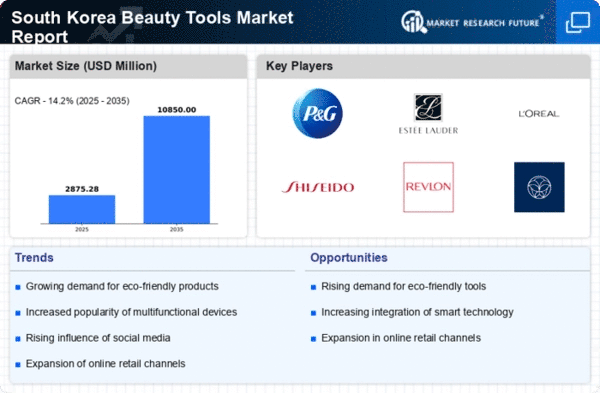
As per Market Research Future analysis, the South Korea beauty tools market size was estimated at 2517.76 USD Million in 2024. The South Korea beauty tools market is projected to grow from 2875.28 USD Million in 2025 to 10850.0 USD Million by 2035, exhibiting a compound annual growth rate (CAGR) of 14% during the forecast period 2025 - 2035

Key Market Trends & Highlights

The South Korea beauty tools market is experiencing dynamic growth driven by technological advancements and evolving consumer preferences.

  • Technological integration in beauty tools is enhancing user experience and product effectiveness.
  • The influence of social media and beauty influencers is shaping consumer purchasing decisions and brand loyalty.
  • Sustainability is becoming a focal point, with brands increasingly adopting eco-friendly practices and materials.
  • Rising demand for personalization and the influence of K-Beauty trends are key drivers propelling market expansion.

Market Size & Forecast

2024 Market Size 2517.76 (USD Million)
2035 Market Size 10850.0 (USD Million)
CAGR (2025 - 2035) 14.2%

Major Players

Procter & Gamble (US), Estée Lauder (US), L'Oréal (FR), Shiseido (JP), Revlon (US), Coty (US), Mary Kay (US), Amway (US), Avon (GB)

Our Impact
Enabled $4.3B Revenue Impact for Fortune 500 and Leading Multinationals
Partnering with 2000+ Global Organizations Each Year
30K+ Citations by Top-Tier Firms in the Industry

South Korea Beauty Tools Market Trends

The beauty tools market in South Korea is characterized by a dynamic landscape. It is driven by a blend of innovation and cultural influences. The nation is renowned for its advanced beauty standards and a strong emphasis on skincare, which significantly shapes consumer preferences. As a result, there is a growing demand for high-quality, multifunctional beauty tools that cater to the diverse needs of consumers. The market is witnessing a surge in the popularity of tools that incorporate technology, such as smart devices that offer personalized beauty solutions. This trend reflects a broader shift towards convenience and efficiency in beauty routines, appealing to the tech-savvy population. Moreover, the beauty tools market is increasingly influenced by social media and online platforms, where beauty influencers play a pivotal role in shaping trends and consumer behavior. The rise of e-commerce has further facilitated access to a wide range of products, allowing consumers to explore and purchase beauty tools with ease. Additionally, sustainability is becoming a focal point, with brands exploring eco-friendly materials and practices. This shift indicates a growing awareness among consumers regarding the environmental impact of their purchases, suggesting that the market may continue to evolve towards more sustainable options in the future.

Technological Integration

The beauty tools market is experiencing a notable trend towards the integration of technology. Smart beauty devices that offer personalized experiences are gaining traction, appealing to consumers seeking efficiency and innovation in their routines. This trend reflects a broader societal shift towards tech-driven solutions in everyday life.

Influencer Impact

Social media influencers are significantly shaping consumer preferences within the beauty tools market. Their recommendations and tutorials drive trends, making platforms like Instagram and YouTube essential for brand visibility. This influence underscores the importance of digital marketing strategies in reaching target audiences.

Sustainability Focus

There is a growing emphasis on sustainability within the beauty tools market. Consumers are increasingly seeking products made from eco-friendly materials and brands that prioritize ethical practices. This trend suggests a shift in consumer values, with a preference for environmentally responsible options.

South Korea Beauty Tools Market Drivers

Influence of K-Beauty Trends

The beauty tools market in South Korea is significantly influenced by the K-beauty phenomenon, emphasizing innovative skincare and beauty practices. This cultural trend has led to an increased interest in tools that complement K-beauty routines, such as facial rollers and LED masks. As K-beauty continues to gain traction globally, the demand for associated beauty tools is expected to rise. Recent statistics suggest that the K-beauty segment contributes to over 40% of the overall beauty tools market, highlighting the importance of cultural trends in shaping consumer preferences and driving market growth.

Growing Awareness of Skin Health

There is a rising awareness of skin health among South Korean consumers, which significantly impacts the beauty tools market. As individuals become more informed about skincare ingredients and their effects, they increasingly seek tools that promote skin health and wellness. This trend has led to a surge in demand for tools that offer therapeutic benefits, such as microcurrent devices and ultrasonic skin scrubbers. Market data suggests that products focusing on skin health could represent around 20% of the beauty tools market, indicating a shift towards holistic beauty solutions that prioritize skin well-being.

Expansion of E-commerce Platforms

The expansion of e-commerce platforms has transformed the beauty tools market in South Korea, providing consumers with greater access to a diverse range of products. Online shopping has become increasingly popular, particularly among younger demographics who prefer the convenience of purchasing beauty tools from home. This shift has led to a significant increase in online sales, which are expected to account for over 50% of total beauty tools market transactions in the near future. The rise of e-commerce not only facilitates consumer access but also encourages brands to innovate and diversify their offerings to meet the evolving demands of the market.

Rising Demand for Personalization

The beauty tools market in South Korea experiences a notable surge in demand for personalized products. Consumers increasingly seek tools that cater to their unique skin types and beauty preferences. This trend is reflected in the growing popularity of customizable beauty tools, which allow users to adjust settings according to their individual needs. Market data indicates that personalized beauty tools could account for approximately 30% of total sales in the coming years. This shift towards personalization not only enhances user satisfaction but also drives innovation within the beauty tools market, as brands strive to develop products that resonate with diverse consumer segments.

Technological Advancements in Beauty Tools

Technological advancements play a crucial role in shaping the beauty tools market in South Korea. The integration of smart technology into beauty tools, such as app-controlled devices and AI-driven skincare analysis, enhances user experience and effectiveness. These innovations not only attract tech-savvy consumers but also promote a more efficient beauty regimen. Market analysis indicates that the segment of technologically advanced beauty tools is projected to grow by 25% annually, reflecting a strong consumer inclination towards high-tech solutions in their beauty routines. This trend underscores the importance of continuous innovation in the beauty tools market.


Market Segment Insights

By Type: Brushes & Combs (Largest) vs. Manicure & Pedicure Tools (Fastest-Growing)

In the South Korea beauty tools market, the distribution of market share among the different segment values reveals that Brushes & Combs hold the largest portion, catering to a wide range of grooming needs among consumers. Following this, Hair Care Tools and Razors also maintain significant shares, showing that personal care routines continue to emphasize these essential products. Other categories like Trimmers and Nail Care Tools are present but capture smaller market segments, indicating a diverse but concentrated market landscape. Growth trends in the South Korea beauty tools market are primarily driven by increasing beauty consciousness among consumers and the continual innovation of products. The rise of social media influencers and beauty enthusiasts has led to greater demand for high-quality beauty tools, particularly in the manicure and pedicure segment. Emerging brands are leveraging e-commerce platforms to reach wider audiences, further propelling growth across various segments, especially in the manicure and pedicure tools category which is rapidly gaining traction among younger demographics.

Brushes & Combs (Dominant) vs. Manicure & Pedicure Tools (Emerging)

Brushes & Combs dominate the South Korea beauty tools market, well-established as essential items for daily beauty routines. They encompass a variety of designs tailored to multiple hair types and styles, appealing to a broad consumer base. This segment is characterized by high-quality materials and innovative designs that enhance user experience. On the other hand, Manicure & Pedicure Tools are emerging rapidly, capturing the interest of consumers seeking professional-quality nail care at home. This segment is increasingly popular among younger demographics, driven by social media trends and a growing emphasis on nail art and aesthetics. Together, these segments illustrate the balance between established preferences and evolving beauty trends.

By End-Use: Household (Largest) vs. Commercial (Fastest-Growing)

In the South Korea beauty tools market, the household segment dominates with a significant share, catering to the demands of individual consumers seeking convenience and effectiveness in their beauty routines. Many households prioritize quality and accessibility, leading to a substantial portion of the market being attributed to personal use of beauty tools, including skincare and grooming items. On the other hand, the commercial segment is identified as the fastest-growing area, driven by increasing demand from beauty salons and professional establishments. Factors such as the rise in beauty consciousness, along with the expanding professional beauty services sector, contribute to the rapid growth of the commercial segment, appealing to businesses that prioritize high-quality and innovative beauty tools to meet customer expectations.

Household (Dominant) vs. Commercial (Emerging)

The household segment in the South Korea beauty tools market represents a dominant force, characterized by a diverse range of products designed for personal use, including beauty and grooming tools that cater to everyday needs. Consumers in this segment often lean towards items that enhance their daily routines, focusing on innovation and ease of use. Conversely, the commercial segment is rapidly emerging, fueled by a growing number of beauty salons and professional grooming services. This segment is characterized by high-quality tools tailored for professional use, emphasizing performance and durability, catering to the needs of beauty professionals who rely on reliability and efficiency in their services.

By Distribution Channel: Store-Based (Largest) vs. Non-Store-Based (Fastest-Growing)

In the South Korea beauty tools market, store-based channels have secured the largest share, dominating the distribution landscape with their physical presence and personalized customer experience. However, the emergence of non-store-based channels, especially e-commerce platforms, has gained significant traction, showcasing consumer preference for convenience and accessibility. The growth trends for these distribution channels indicate a clear shift towards online shopping, fueled by the increasing penetration of smartphones and the rise of social media marketing. The COVID-19 pandemic has further accelerated this trend, as consumers sought safer shopping alternatives. Retailers are adapting by enhancing their online offerings, which is likely to continue driving the growth of non-store-based channels in the coming years.

Store-Based (Dominant) vs. Non-Store-Based (Emerging)

Store-based distribution channels in the South Korea beauty tools market are characterized by their accessibility and hands-on experience, allowing consumers to physically interact with products before purchase. This segment is largely driven by specialized beauty stores and department stores, which provide a curated selection of brands and products. Conversely, non-store-based channels, particularly e-commerce, are emerging rapidly, catering to a tech-savvy audience that prefers the convenience of shopping from home. These platforms offer extensive product ranges and often capitalize on social media influencers to drive sales, enhancing their appeal to younger consumers. Together, these segments reflect the evolving shopping habits and preferences of consumers in a digitally transforming landscape.

Get more detailed insights about South Korea Beauty Tools Market

Key Players and Competitive Insights

The beauty tools market in South Korea is characterized by a dynamic competitive landscape. It is driven by innovation, consumer demand for high-quality products, and the increasing influence of digital channels. Major players such as Procter & Gamble (US), Estée Lauder (US), and L'Oréal (FR) are actively shaping the market through strategic initiatives. Procter & Gamble (US) focuses on enhancing its product portfolio with cutting-edge technology, while Estée Lauder (US) emphasizes sustainability and eco-friendly practices in its operations. L'Oréal (FR) is leveraging digital transformation to engage consumers more effectively, indicating a collective shift towards integrating technology into product development and marketing strategies.Key business tactics within the beauty tools market include localizing manufacturing and optimizing supply chains to enhance efficiency and responsiveness to consumer trends. The market structure appears moderately fragmented, with several key players exerting significant influence. This fragmentation allows for a diverse range of products and innovations, fostering competition that drives quality improvements and consumer choice.

In October Procter & Gamble (US) announced a partnership with a leading tech firm to develop AI-driven beauty tools that personalize user experiences. This strategic move is likely to enhance consumer engagement and position the company as a leader in innovation within the beauty tools sector. The integration of AI technology could potentially revolutionize how consumers interact with beauty tools, making them more intuitive and tailored to individual needs.

In September Estée Lauder (US) launched a new line of eco-friendly beauty tools made from sustainable materials. This initiative aligns with the growing consumer preference for environmentally responsible products and reflects the company's commitment to sustainability. By prioritizing eco-friendly practices, Estée Lauder (US) not only meets consumer expectations but also differentiates itself in a competitive market increasingly focused on sustainability.

In August L'Oréal (FR) expanded its digital marketing efforts by introducing augmented reality (AR) features in its beauty tools app. This strategic enhancement allows consumers to visualize how products will perform in real-time, thereby improving the purchasing experience. The use of AR technology signifies a trend towards immersive consumer engagement, which is becoming essential in the beauty tools market.

As of November current competitive trends in the beauty tools market include a strong emphasis on digitalization, sustainability, and the integration of advanced technologies such as AI and AR. Strategic alliances among companies are increasingly shaping the landscape, fostering innovation and enhancing product offerings. Looking ahead, competitive differentiation is likely to evolve from traditional price-based competition to a focus on innovation, technological advancements, and supply chain reliability, as companies strive to meet the sophisticated demands of modern consumers.

Key Companies in the South Korea Beauty Tools Market include

Industry Developments

The South Korea Beauty Tools Market has witnessed a dynamic landscape with significant developments. In September 2023, Amorepacific launched a new line of eco-friendly beauty tools that align with the increasing consumer demand for sustainable products. Brands like Laneige and Innisfree have been expanding their portfolios to include innovative skincare tools, reflecting the current trend in enhancing at-home beauty routines. A'PIEU and Holika Holika have also seen substantial growth in their market valuation, driven by their effective marketing strategies within the millennial demographic.

Notably, in July 2023, LG Household and Health Care acquired a minor stake in a start-up focused on cutting-edge beauty devices, signaling a shift towards digital integration in beauty solutions. The overall market has experienced an uptick in valuations as consumers are increasingly investing in beauty tools that promote self-care and wellness. Over the last few years, promotions targeted at Korean beauty tools have gained traction, bolstered by social media influencers, contributing to a vibrant beauty culture in South Korea.

This evolution has positioned South Korea as a leading market in the beauty tools segment, attracting international brands and fostering innovation within domestic companies like Missha and ETUDE.

Future Outlook

South Korea Beauty Tools Market Future Outlook

The Beauty Tools Market is projected to grow at a 14.2% CAGR from 2025 to 2035, driven by technological advancements, increasing consumer awareness, and rising disposable incomes.

New opportunities lie in:

  • Development of AI-driven beauty tool personalization apps.
  • Expansion of subscription-based beauty tool services.
  • Investment in eco-friendly and sustainable beauty tool materials.

By 2035, the beauty tools market is expected to achieve substantial growth and innovation.

Market Segmentation

South Korea Beauty Tools Market Type Outlook

  • Hair Care Tools
  • Razors
  • Trimmers
  • Brushes & Combs
  • Manicure & Pedicure Tools
  • Nail File
  • Nail Cutter
  • Cuticle Pusher & Nipper

South Korea Beauty Tools Market End-Use Outlook

  • Household
  • Commercial

South Korea Beauty Tools Market Distribution Channel Outlook

  • Store-Based
  • Non-Store-Based (Online/ E-Commerce)

Report Scope

MARKET SIZE 2024 2517.76(USD Million)
MARKET SIZE 2025 2875.28(USD Million)
MARKET SIZE 2035 10850.0(USD Million)
COMPOUND ANNUAL GROWTH RATE (CAGR) 14.2% (2025 - 2035)
REPORT COVERAGE Revenue Forecast, Competitive Landscape, Growth Factors, and Trends
BASE YEAR 2024
Market Forecast Period 2025 - 2035
Historical Data 2019 - 2024
Market Forecast Units USD Million
Key Companies Profiled Procter & Gamble (US), Estée Lauder (US), L'Oréal (FR), Shiseido (JP), Revlon (US), Coty (US), Mary Kay (US), Amway (US), Avon (GB)
Segments Covered Type, End-Use, Distribution Channel
Key Market Opportunities Integration of smart technology in beauty tools enhances user experience and personalization.
Key Market Dynamics Rising consumer demand for innovative beauty tools drives competitive dynamics and technological advancements in the market.
Countries Covered South Korea
Leave a Comment

FAQs

What was the projected market size of the South Korea Beauty Tools Market in 2024?

The South Korea Beauty Tools Market was expected to be valued at 2.52 USD Billion in 2024.

What is the expected value of the South Korea Beauty Tools Market by 2035?

The market is projected to reach a value of 10.21 USD Billion by the year 2035.

What is the expected CAGR for the South Korea Beauty Tools Market from 2025 to 2035?

The anticipated compound annual growth rate for the market from 2025 to 2035 is 13.569%.

Which segment of the South Korea Beauty Tools Market is expected to have the largest value in 2035?

The Hair Care Tools segment is projected to be valued at 3.05 USD Billion in 2035.

What is the expected market size for Hair straighteners and flat irons in 2035?

Hair straighteners and flat irons are anticipated to be valued at 2.7 USD Billion in 2035.

Who are the major players in the South Korea Beauty Tools Market?

Key players in the market include A'PIEU, Tony Moly, The Face Shop, and Laneige, among others.

What will be the market value for Hair Dryers in 2035?

The Hair Dryers segment is expected to reach a value of 1.65 USD Billion in 2035.

What is the projected market size for Curling Irons in 2035?

Curling Irons are expected to be valued at 2.05 USD Billion in the year 2035.

What growth opportunities are present in the South Korea Beauty Tools Market?

Emerging trends and innovations in beauty tools present significant growth opportunities in the market.

What challenges does the South Korea Beauty Tools Market face?

The market faces challenges such as intense competition and rapidly changing consumer preferences.

Download Free Sample

Kindly complete the form below to receive a free sample of this Report

Compare Licence

×
Features License Type
Single User Multiuser License Enterprise User
Price $4,950 $5,950 $7,250
Maximum User Access Limit 1 User Upto 10 Users Unrestricted Access Throughout the Organization
Free Customization
Direct Access to Analyst
Deliverable Format
Platform Access
Discount on Next Purchase 10% 15% 15%
Printable Versions