×
Request Free Sample ×

Kindly complete the form below to receive a free sample of this Report

* Please use a valid business email

Leading companies partner with us for data-driven Insights

clients tt-cursor
Hero Background
English
Chinese
French
Japanese
Korean
German
Spanish

Pericarditis Market Size

ID: MRFR/Pharma/1315-CR
156 Pages
Rahul Gotadki
August 2019

Global Pericarditis Market Research Report Information by Type (Acute Pericarditis, Recurrent Pericarditis and Chronic Pericarditis), Diagnosis & Treatment [Diagnosis (Electrocardiogram (ECG), Echocardiogram, Computerized Tomography (CT) and X-Ray) and Treatment (Medication (Non-Steroidal Anti-Inflammatory Drugs (NSAIDs) and Colchicine) and Surgical Treatment), End User (Hospitals & Clinics and Medical Institutes & Research Laboratories) and Region (Americas, Europe, Asia-Pacific and Middle East & Africa) - Forecast till 2035

Share:
Download PDF ×

We do not share your information with anyone. However, we may send you emails based on your report interest from time to time. You may contact us at any time to opt-out.

Pericarditis Market Infographic
Purchase Options

Pericarditis Size

Pericarditis Market Growth Projections and Opportunities

The market for pericarditis is significantly influenced by the prevalence and incidence of this inflammatory condition affecting the pericardium, the thin sac surrounding the heart. The increasing recognition and diagnosis of pericarditis contribute to the demand for effective diagnostic tools and therapeutic interventions. Pericarditis often occurs as a part of post-cardiac injury syndrome, where inflammation of the pericardium follows cardiac procedures or events. The market dynamics are shaped by the need for specialized care and targeted treatments to address pericarditis arising from cardiac injuries. Pericarditis can also occur as a consequence of certain autoimmune diseases like rheumatoid arthritis and systemic lupus erythematosus. Leading from very idiopathic nature, the market is driven by these conditions that in turn requires holistic approach to deal effectively with underlying autoimmune causes. Viral infections, especially РЕ which is endangering breathing, may be a rather frequent factor contributing to viral pericarditis. Looking at the influence of viral factors on the market, it brings to mind of antiviral drugs and the anti-inflammatory medicines which address such signs of viral infections as pericarditis for example. The progress in diagnostic imaging invention is one of the reasons for the exact diagnosis and monitoring of the condition of pericarditis and this includes echocardiography, cardiac MRI, and CT scans. The market experience of this evolution involves the use of odorizing instruments which help doctors assess how extreme and broader the inflammatory pericardial process has gone. Well-established standards and protocols for guidelines and the treatment are a major factor for the development of the pericarditis market. The standards of care which the healthcare workers follow provide appropriate solutions using medications and non-pharmacological ways and therefore aid in standardized and evidence based care. Corticosteroid along with non-steroidal anti-inflammatory drugs (NSAIDs) is the class of commonly prescribed drugs used for the treatment of pericarditis. It will respond to the demand for merchants that work as anti-inflammatory that alleviate the symptoms and reduce pericardial inflammation. Periodic research renders to the secession of new therapies for pericarditis, especially anti-inflammatory agents as well as biologics. The market adapts to pharmaceutical companies giving priority to solution oriented approaches for the particular pathophysiology of pericardial inflammatory
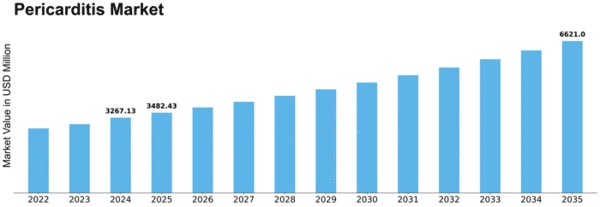

Pericarditis Market Size Graph
Author
Rahul Gotadki
Research Manager

He holds an experience of about 9+ years in Market Research and Business Consulting, working under the spectrum of Life Sciences and Healthcare domains. Rahul conceptualizes and implements a scalable business strategy and provides strategic leadership to the clients. His expertise lies in market estimation, competitive intelligence, pipeline analysis, customer assessment, etc.

Leave a Comment

FAQs

What is the current valuation of the Pericarditis Market as of 2024?

<p>The Pericarditis Market was valued at approximately 3267.13 USD Million in 2024.</p>

What is the projected market valuation for the Pericarditis Market in 2035?

<p>The market is projected to reach approximately 6621.0 USD Million by 2035.</p>

What is the expected CAGR for the Pericarditis Market during the forecast period 2025 - 2035?

<p>The expected CAGR for the Pericarditis Market during the forecast period 2025 - 2035 is 6.59%.</p>

Which companies are considered key players in the Pericarditis Market?

<p>Key players in the Pericarditis Market include Novartis, Pfizer, Bristol-Myers Squibb, AstraZeneca, Sanofi, Merck & Co., Gilead Sciences, Roche, and Johnson & Johnson.</p>

What are the main types of pericarditis and their market valuations?

<p>The main types of pericarditis include Acute Pericarditis valued at 1000.0 to 2000.0 USD Million, Chronic Pericarditis at 800.0 to 1500.0 USD Million, Recurrent Pericarditis at 600.0 to 1200.0 USD Million, and Constrictive Pericarditis at 867.13 to 1921.0 USD Million.</p>

What treatment approaches are available for pericarditis and their market values?

<p>Treatment approaches for pericarditis include Medication valued at 1300.0 to 2700.0 USD Million, Surgical Intervention at 800.0 to 1600.0 USD Million, Lifestyle Modification at 600.0 to 1200.0 USD Million, and Monitoring and Follow-up at 567.13 to 1121.0 USD Million.</p>

What are the primary causes of pericarditis and their respective market valuations?

The primary causes of pericarditis include Infectious Causes valued at 800.0 to 1600.0 USD Million, Autoimmune Disorders at 900.0 to 1800.0 USD Million, Post-Myocardial Infarction at 700.0 to 1400.0 USD Million, and Trauma or Injury at 867.13 to 1821.0 USD Million.

How does the Pericarditis Market's growth compare to other cardiovascular markets?

While specific comparisons to other cardiovascular markets are not provided, the Pericarditis Market's projected growth at a CAGR of 6.59% during 2025 - 2035 suggests a robust expansion.

What factors may influence the growth of the Pericarditis Market in the coming years?

Factors influencing the growth of the Pericarditis Market may include advancements in treatment options, increasing awareness of pericarditis, and the rising prevalence of underlying conditions.

How does the market segmentation impact the overall Pericarditis Market dynamics?

Market segmentation by type, treatment approach, and cause allows for targeted strategies by key players, potentially enhancing market dynamics and addressing specific patient needs.

Market Summary

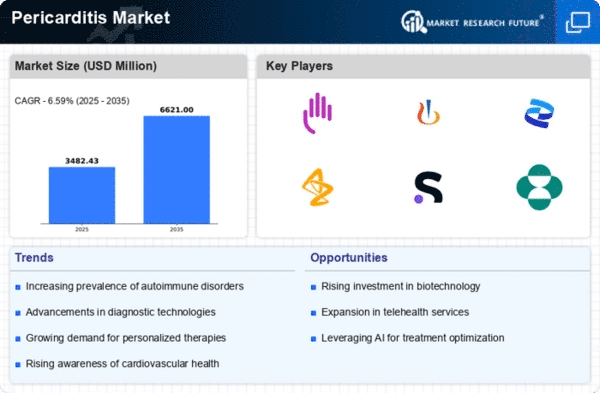
As per MRFR analysis, the Pericarditis Market Size was estimated at 3267.13 USD Million in 2024. The Pericarditis industry is projected to grow from 3519.87 in 2025 to 6621.0 by 2035, exhibiting a compound annual growth rate (CAGR) of 6.59% during the forecast period 2025 - 2035.

Key Market Trends & Highlights

The Pericarditis Market is experiencing notable growth driven by advancements in treatment and rising awareness of cardiovascular health.

  • North America remains the largest market for pericarditis treatments, reflecting a robust healthcare infrastructure. The Asia-Pacific region is identified as the fastest-growing market, driven by increasing healthcare investments and awareness. Acute pericarditis represents the largest segment, while chronic pericarditis is emerging as the fastest-growing segment in the market. Key market drivers include the increasing incidence of pericarditis and advancements in treatment modalities, which are shaping market dynamics.

Market Size & Forecast

2024 Market Size 3267.13 (USD Million)
2035 Market Size 6621.0 (USD Million)
CAGR (2025 - 2035) 6.59%
Largest Regional Market Share in 2024 North America

Major Players

<p><a href="https://news.bms.com/news/details/2025/Bristol-Myers-Squibb-Receives-Positive-CHMP-Opinion-for-the-Subcutaneous-Formulation-of-Opdivo-nivolumab-Across-Multiple-Solid-Tumor-Indications/default.aspx">Bristol-Myers Squibb</a> (US), Novartis (CH), Pfizer (US), AstraZeneca (GB), Sanofi (FR), Merck &amp; Co. (US), Gilead Sciences (US), Roche (CH)</p>

Market Trends

The Pericarditis Market is currently experiencing notable developments, driven by a combination of increasing awareness regarding cardiovascular diseases and advancements in diagnostic technologies. As healthcare systems evolve, there is a growing emphasis on early detection and effective management of pericarditis, which is a condition characterized by inflammation of the pericardium. This heightened focus appears to be fostering a more proactive approach among healthcare providers, leading to improved patient outcomes. Furthermore, the integration of telemedicine and digital health solutions is likely enhancing access to specialized care, thereby expanding the market's reach. In addition, the Pericarditis Market seems to be influenced by ongoing research and innovation in treatment modalities. Emerging therapies, including biologics and novel anti-inflammatory agents, may offer new avenues for managing this condition. The collaboration between pharmaceutical companies and research institutions indicates a commitment to addressing unmet medical needs. As the landscape continues to evolve, stakeholders in the Pericarditis Market are likely to adapt their strategies to align with these trends, ensuring that they remain competitive and responsive to patient demands.

Rising Awareness of Cardiovascular Health

There is an increasing recognition of the importance of cardiovascular health, which is driving demand for effective management of pericarditis. Educational initiatives and public health campaigns are contributing to this trend, encouraging individuals to seek timely medical attention.

Advancements in Diagnostic Technologies

Innovations in diagnostic tools are enhancing the ability to accurately identify pericarditis. Improved imaging techniques and biomarkers are facilitating earlier diagnosis, which may lead to better treatment outcomes and increased market growth.

Emerging Treatment Options

The development of new therapeutic agents is reshaping the treatment landscape for pericarditis. Research into biologics and targeted therapies suggests a potential shift towards more personalized medicine, which could significantly impact patient care.

Pericarditis Market Market Drivers

Emerging Therapeutic Options

The development of novel therapeutic agents for pericarditis is reshaping the Global Pericarditis Market Industry. Recent advancements in pharmacotherapy, including biologics and targeted therapies, offer new avenues for treatment, particularly for patients with recurrent or chronic pericarditis. These emerging options are designed to improve efficacy and reduce side effects compared to traditional treatments. As clinical trials yield promising results, the market is poised for expansion, with stakeholders keen to capitalize on these innovations. The anticipated growth trajectory suggests a market value of 7.16 USD Billion by 2035, reflecting the potential impact of these therapeutic advancements.

Rising Incidence of Pericarditis

The increasing prevalence of pericarditis globally is a primary driver for the Global Pericarditis Market Industry. Factors such as autoimmune diseases, infections, and post-surgical complications contribute to this rise. For instance, studies indicate that pericarditis affects approximately 27 per 100,000 individuals annually, with higher rates observed in specific demographics. This growing patient population necessitates enhanced diagnostic and therapeutic options, thereby expanding market opportunities. As the market is projected to reach 3.74 USD Billion in 2024, addressing this rising incidence is crucial for stakeholders in the Global Pericarditis Market Industry.

Increased Awareness and Education

Growing awareness about pericarditis among healthcare professionals and the general public is driving the Global Pericarditis Market Industry. Educational initiatives and campaigns aimed at recognizing symptoms and understanding treatment options are essential for early diagnosis and management. This heightened awareness leads to increased patient consultations and demand for medical interventions. Furthermore, as healthcare systems prioritize patient education, the market is expected to benefit from a more informed patient base. This trend aligns with the projected compound annual growth rate of 6.09% from 2025 to 2035, indicating a robust future for the industry.

Advancements in Diagnostic Technologies

Technological innovations in diagnostic tools are significantly influencing the Global Pericarditis Market Industry. Enhanced imaging techniques, such as echocardiography and MRI, allow for more accurate and timely diagnosis of pericarditis. These advancements facilitate early intervention, which is essential for improving patient outcomes. Moreover, the integration of artificial intelligence in diagnostic processes is expected to streamline workflows and reduce diagnostic errors. As these technologies become more widely adopted, they are likely to contribute to the market's growth, with projections indicating a market value of 7.16 USD Billion by 2035.

Rising Investment in Healthcare Infrastructure

The expansion of healthcare infrastructure globally is a significant factor propelling the Global Pericarditis Market Industry. Governments and private entities are investing in healthcare facilities and services, particularly in developing regions. This investment enhances access to medical care, including specialized treatments for pericarditis. Improved healthcare infrastructure facilitates better patient management and follow-up care, which is crucial for chronic conditions like pericarditis. As healthcare systems evolve, the market is likely to experience growth, supported by the increasing availability of resources and services tailored to pericarditis management.

Market Segment Insights

By Type of Pericarditis: Acute Pericarditis (Largest) vs. Chronic Pericarditis (Fastest-Growing)

<p>The Pericarditis Market is primarily dominated by Acute Pericarditis, which represents the largest share due to its widespread prevalence and recognition as a common cardiac condition. Chronic Pericarditis, while less prevalent than its acute counterpart, is gaining significant attention in the market, reflecting its increasing diagnosis and management. This dynamic distribution indicates a sector wherein acute cases lead, yet chronic instances are on the rise, influencing treatment protocols and market dynamics.</p>

<p>Acute Pericarditis (Dominant) vs. Recurrent Pericarditis (Emerging)</p>

<p>Acute Pericarditis is characterized by inflammation of the pericardial sac and is often linked to viral infections, leading to a higher incidence rate. Its dominance in the market can be attributed to a well-established treatment landscape, including non-steroidal anti-inflammatory drugs and corticosteroids, which provide effective management. In contrast, Recurrent Pericarditis is emerging as a significant focus for research and innovative treatments, driven by the need for long-term management options for patients experiencing repeated episodes. This segment is attracting attention due to the complexities involved in its treatment and the potential for novel therapeutic interventions, making it a crucial area for market growth.</p>

By Treatment Approach: Medication (Largest) vs. Surgical Intervention (Fastest-Growing)

<p>In the Pericarditis market, medication constitutes the largest treatment approach, emphasizing its pivotal role in managing the condition through anti-inflammatory drugs, corticosteroids, and pain relievers. This segment captures a substantial share of the treatment landscape due to its accessibility and effectiveness in mitigating symptoms. Meanwhile, surgical intervention is emerging as the fastest-growing approach, driven by an increasing recognition of its necessity in severe cases, such as constrictive pericarditis, where surgery can dramatically improve patient outcomes. The growth of the Treatment Approach segment is primarily fueled by advancements in medical research and technology, enabling more effective drug formulations and surgical techniques. Additionally, rising awareness about pericarditis and its debilitating effects has led to greater patient engagement in treatment decisions, further propelling the adoption of all treatment modalities. As healthcare providers recognize the need for personalized treatment plans, the combination of medication, surgery, and lifestyle changes is becoming increasingly common, adapting to the unique needs of patients experiencing pericarditis.</p>

<p>Medication (Dominant) vs. Surgical Intervention (Emerging)</p>

<p>Medication remains the dominant treatment approach in managing pericarditis due to its non-invasive nature and established efficacy in alleviating symptoms. This segment includes non-steroidal anti-inflammatory drugs, corticosteroids, and the appropriate use of colchicine, which are widely prescribed to help reduce inflammation and pain. In contrast, surgical intervention is gaining momentum as an emerging approach, particularly for patients with recurrent or persistent symptoms unresponsive to medication. Procedures such as pericardiectomy are becoming more prevalent, supported by research demonstrating their effectiveness in addressing specific complications of pericarditis. As healthcare professionals weigh the benefits of both approaches, there is a growing trend towards integrating medication management with surgical options to optimize patient care.</p>

By Cause of Pericarditis: Infectious Causes (Largest) vs. Autoimmune Disorders (Fastest-Growing)

<p>In the Pericarditis Market, infectious causes represent the largest segment, significantly impacting overall incidence rates. Various infectious agents, including viruses, bacteria, and fungi contribute heavily to pericarditis cases, establishing a dominant market share. Autoimmune disorders, while smaller in total share, are rapidly gaining traction due to increasing awareness and better diagnostic methods among clinicians, particularly for diseases such as lupus and rheumatoid arthritis. Growth trends for the pericarditis segment are largely driven by the rising prevalence of infectious diseases, spurred by globalization and changing social behaviors. On the other hand, autoimmune disorders are becoming an emerging focus area, with advancements in treatment options leading to an increase in the diagnosed cases, thereby fueling growth in this segment. Both trends indicate a need for tailored therapy and management strategies within this complex market.</p>

<p>Infectious Causes (Dominant) vs. Autoimmune Disorders (Emerging)</p>

<p>The infectious causes segment remains the dominant force in the Pericarditis Market, characterized by its extensive prevalence stemming from various pathogens such as viral and bacterial infections. Increasing rates of viral infections, particularly viral pericarditis, underline the segment’s robust positioning. Conversely, the autoimmune disorders segment is marked as an emerging market, reflecting a growing awareness and understanding of conditions like systemic lupus erythematosus and rheumatoid arthritis that lead to pericarditis. Healthcare providers are focusing on personalized treatment approaches to better manage these complex conditions, thus driving growth. With improvements in diagnostics and therapeutic options, this segment is expected to witness significant growth as more patients are identified and treated.</p>

By Diagnosis Method: Imaging Techniques (Largest) vs. Blood Tests (Fastest-Growing)

<p>In the Pericarditis Market, imaging techniques dominate the diagnosis method segment, capturing the largest share due to their ability to provide detailed visualization of the pericardium and surrounding structures. This includes echocardiography, CT scans, and MRI, which are pivotal in diagnosing the condition accurately. Meanwhile, blood tests, while traditionally considered ancillary, are experiencing growth as they provide quick and informative results regarding inflammation and infection, making them increasingly relevant in the overall diagnostic process.</p>

<p>Imaging Techniques (Dominant) vs. Blood Tests (Emerging)</p>

<p>Imaging techniques, particularly echocardiography, are established as the dominant method in the diagnosis of pericarditis, offering high accuracy and detailed anatomical assessment. These techniques allow clinicians to visualize fluid accumulation and other changes in the pericardium, leading to timely and effective treatment. In contrast, blood tests are emerging as an essential part of the diagnostic landscape, helping to identify biomarkers of inflammation. As healthcare evolves and focuses on <a href="https://www.marketresearchfuture.com/reports/rapid-diagnostics-market-11687">rapid diagnostics</a>, the demand for blood tests is increasing, showcasing their potential to complement traditional imaging techniques and enhance patient care.</p>

Get more detailed insights about Pericarditis Market Research Report— Global Forecast till 2035

Regional Insights

North America : Market Leader in Pericarditis

North America is poised to maintain its leadership in the Pericarditis market, holding a significant market share of $1630.0M in 2024. The region's growth is driven by increasing prevalence of cardiovascular diseases, advancements in treatment options, and supportive regulatory frameworks. The demand for innovative therapies is further fueled by rising healthcare expenditures and a focus on patient-centric care. The competitive landscape in North America is robust, featuring key players such as Bristol-Myers Squibb, Pfizer, and Merck & Co. These companies are actively engaged in research and development to enhance treatment efficacy. The U.S. remains the largest market, supported by a well-established healthcare infrastructure and a high rate of clinical trials, ensuring a steady pipeline of new therapies.

Europe : Emerging Market Dynamics

Europe is witnessing a growing interest in the Pericarditis market, with a market size of $900.0M. The region benefits from a strong regulatory environment that encourages innovation and the introduction of new therapies. Increasing awareness of cardiovascular health and the aging population are significant growth drivers. Additionally, collaborative efforts among healthcare providers and pharmaceutical companies are enhancing treatment accessibility. Leading countries such as Germany, France, and the UK are at the forefront of this market, with a competitive landscape featuring major players like Novartis and Roche. The European market is characterized by a mix of established therapies and emerging treatments, ensuring a diverse range of options for patients. The European Medicines Agency continues to support advancements in treatment protocols, fostering a favorable environment for market growth.

Asia-Pacific : Rapidly Growing Market Potential

The Asia-Pacific region is emerging as a significant player in the Pericarditis market, with a market size of $600.0M. Factors such as increasing healthcare investments, rising awareness of cardiovascular diseases, and a growing patient population are driving demand. Regulatory bodies are also becoming more supportive of new drug approvals, which is expected to enhance market growth in the coming years. Countries like Japan, China, and India are leading the charge in this region, with a competitive landscape that includes both local and international players. Companies such as AstraZeneca and Gilead Sciences are actively involved in expanding their presence. The region's diverse healthcare systems and varying levels of access to treatment present both challenges and opportunities for market players, making it a dynamic environment for growth.

Middle East and Africa : Untapped Market Opportunities

The Middle East and Africa (MEA) region is gradually developing its Pericarditis market, currently valued at $137.13M. The growth is driven by increasing healthcare investments and a rising prevalence of cardiovascular diseases. However, challenges such as limited access to healthcare and varying regulatory frameworks can hinder rapid growth. Efforts to improve healthcare infrastructure are essential for market expansion. Countries like South Africa and the UAE are leading the market, with a focus on enhancing treatment options. The competitive landscape is still evolving, with both local and international companies exploring opportunities. As awareness of cardiovascular health increases, the MEA region is expected to attract more investments, paving the way for future growth in the Pericarditis market.

Key Players and Competitive Insights

The Pericarditis Market is currently characterized by a dynamic competitive landscape, driven by increasing incidences of the condition and a growing demand for effective treatment options. Major players such as Bristol-Myers Squibb (US), Novartis (CH), and Pfizer (US) are strategically positioned to leverage their extensive research and development capabilities. Bristol-Myers Squibb (US) focuses on innovative therapies, while Novartis (CH) emphasizes partnerships to enhance its product pipeline. Pfizer (US) is actively pursuing digital transformation initiatives to streamline operations and improve patient engagement. Collectively, these strategies contribute to a competitive environment that is increasingly focused on innovation and patient-centric solutions.Key business tactics within the Pericarditis Market include localizing manufacturing and optimizing supply chains to enhance efficiency and reduce costs. The market structure appears moderately fragmented, with several key players exerting influence over various segments. This fragmentation allows for a diverse range of treatment options, although it also necessitates strategic collaborations among companies to maintain competitive advantage.


In November Novartis (CH) announced a strategic partnership with a leading biotechnology firm to co-develop a novel therapeutic agent for pericarditis. This collaboration is expected to accelerate the development timeline and enhance the efficacy of treatment options available in the market. The strategic importance of this partnership lies in its potential to combine Novartis's extensive resources with innovative approaches from the biotech sector, thereby positioning the company as a leader in the treatment of pericarditis.


In October Pfizer (US) launched a new digital health platform aimed at improving patient adherence to prescribed therapies for pericarditis. This initiative reflects a growing trend towards integrating technology into healthcare, allowing for real-time monitoring and personalized treatment plans. The strategic significance of this move is underscored by the increasing demand for digital solutions in healthcare, which may enhance patient outcomes and foster brand loyalty.


In September Bristol-Myers Squibb (US) expanded its clinical trial program for a promising new drug targeting pericarditis, indicating a strong commitment to research and development. This expansion not only demonstrates the company's dedication to addressing unmet medical needs but also positions it to capture a larger market share as new therapies emerge. The strategic focus on clinical trials is likely to yield valuable data that can inform future product development and marketing strategies.


As of December current competitive trends in the Pericarditis Market are increasingly defined by digitalization, sustainability, and the integration of artificial intelligence (AI) into treatment protocols. Strategic alliances are shaping the landscape, enabling companies to pool resources and expertise to drive innovation. Looking ahead, competitive differentiation is expected to evolve, with a shift from price-based competition towards a focus on technological advancements, innovative therapies, and reliable supply chains. This transition may ultimately enhance patient care and foster long-term growth within the market.

Key Companies in the Pericarditis Market include

Industry Developments

Future Outlook

Pericarditis Market Future Outlook

<p>The Pericarditis Market is projected to grow at a 6.59% CAGR from 2025 to 2035, driven by advancements in treatment options, increasing awareness, and rising healthcare expenditures.</p>

New opportunities lie in:

  • <p>Development of targeted biologic therapies for chronic pericarditis management. Expansion of telemedicine platforms for remote patient monitoring. Investment in AI-driven diagnostic tools for early detection of pericarditis.</p>

<p>By 2035, the Pericarditis Market is expected to achieve substantial growth and innovation.</p>

Market Segmentation

Pericarditis Market Diagnosis Method Outlook

  • Imaging Techniques
  • Blood Tests
  • Electrocardiogram
  • Physical Examination

Pericarditis Market Treatment Approach Outlook

  • Medication
  • Surgical Intervention
  • Lifestyle Modification
  • Monitoring and Follow-up

Pericarditis Market Patient Demographics Outlook

  • Age Group
  • Gender
  • Comorbid Conditions
  • Socioeconomic Status

Pericarditis Market Type of Pericarditis Outlook

  • Acute Pericarditis
  • Chronic Pericarditis
  • Recurrent Pericarditis
  • Constrictive Pericarditis

Report Scope

MARKET SIZE 2024 3267.13(USD Million)
MARKET SIZE 2025 3519.87(USD Million)
MARKET SIZE 2035 6621.0(USD Million)
COMPOUND ANNUAL GROWTH RATE (CAGR) 6.59% (2025 - 2035)
REPORT COVERAGE Revenue Forecast, Competitive Landscape, Growth Factors, and Trends
BASE YEAR 2024
Market Forecast Period 2025 - 2035
Historical Data 2019 - 2024
Market Forecast Units USD Million
Key Companies Profiled Bristol-Myers Squibb (US), Novartis (CH), Pfizer (US), AstraZeneca (GB), Sanofi (FR), Merck & Co. (US), Gilead Sciences (US), Roche (CH)
Segments Covered Type of Pericarditis, Treatment Approach, Patient Demographics, Diagnosis Method
Key Market Opportunities Advancements in targeted therapies and diagnostics enhance treatment options in the Pericarditis Market.
Key Market Dynamics Rising demand for innovative therapies drives competitive dynamics in the Pericarditis Market.
Countries Covered North America, Europe, APAC, South America, MEA

FAQs

What is the current valuation of the Pericarditis Market as of 2024?

<p>The Pericarditis Market was valued at approximately 3267.13 USD Million in 2024.</p>

What is the projected market valuation for the Pericarditis Market in 2035?

<p>The market is projected to reach approximately 6621.0 USD Million by 2035.</p>

What is the expected CAGR for the Pericarditis Market during the forecast period 2025 - 2035?

<p>The expected CAGR for the Pericarditis Market during the forecast period 2025 - 2035 is 6.59%.</p>

Which companies are considered key players in the Pericarditis Market?

<p>Key players in the Pericarditis Market include Novartis, Pfizer, Bristol-Myers Squibb, AstraZeneca, Sanofi, Merck & Co., Gilead Sciences, Roche, and Johnson & Johnson.</p>

What are the main types of pericarditis and their market valuations?

<p>The main types of pericarditis include Acute Pericarditis valued at 1000.0 to 2000.0 USD Million, Chronic Pericarditis at 800.0 to 1500.0 USD Million, Recurrent Pericarditis at 600.0 to 1200.0 USD Million, and Constrictive Pericarditis at 867.13 to 1921.0 USD Million.</p>

What treatment approaches are available for pericarditis and their market values?

<p>Treatment approaches for pericarditis include Medication valued at 1300.0 to 2700.0 USD Million, Surgical Intervention at 800.0 to 1600.0 USD Million, Lifestyle Modification at 600.0 to 1200.0 USD Million, and Monitoring and Follow-up at 567.13 to 1121.0 USD Million.</p>

What are the primary causes of pericarditis and their respective market valuations?

The primary causes of pericarditis include Infectious Causes valued at 800.0 to 1600.0 USD Million, Autoimmune Disorders at 900.0 to 1800.0 USD Million, Post-Myocardial Infarction at 700.0 to 1400.0 USD Million, and Trauma or Injury at 867.13 to 1821.0 USD Million.

How does the Pericarditis Market's growth compare to other cardiovascular markets?

While specific comparisons to other cardiovascular markets are not provided, the Pericarditis Market's projected growth at a CAGR of 6.59% during 2025 - 2035 suggests a robust expansion.

What factors may influence the growth of the Pericarditis Market in the coming years?

Factors influencing the growth of the Pericarditis Market may include advancements in treatment options, increasing awareness of pericarditis, and the rising prevalence of underlying conditions.

How does the market segmentation impact the overall Pericarditis Market dynamics?

Market segmentation by type, treatment approach, and cause allows for targeted strategies by key players, potentially enhancing market dynamics and addressing specific patient needs.

  1. SECTION I: EXECUTIVE SUMMARY AND KEY HIGHLIGHTS
    1. | 1.1 EXECUTIVE SUMMARY
    2. | | 1.1.1 Market Overview
    3. | | 1.1.2 Key Findings
    4. | | 1.1.3 Market Segmentation
    5. | | 1.1.4 Competitive Landscape
    6. | | 1.1.5 Challenges and Opportunities
    7. | | 1.1.6 Future Outlook
  2. SECTION II: SCOPING, METHODOLOGY AND MARKET STRUCTURE
    1. | 2.1 MARKET INTRODUCTION
    2. | | 2.1.1 Definition
    3. | | 2.1.2 Scope of the study
    4. | | | 2.1.2.1 Research Objective
    5. | | | 2.1.2.2 Assumption
    6. | | | 2.1.2.3 Limitations
    7. | 2.2 RESEARCH METHODOLOGY
    8. | | 2.2.1 Overview
    9. | | 2.2.2 Data Mining
    10. | | 2.2.3 Secondary Research
    11. | | 2.2.4 Primary Research
    12. | | | 2.2.4.1 Primary Interviews and Information Gathering Process
    13. | | | 2.2.4.2 Breakdown of Primary Respondents
    14. | | 2.2.5 Forecasting Model
    15. | | 2.2.6 Market Size Estimation
    16. | | | 2.2.6.1 Bottom-Up Approach
    17. | | | 2.2.6.2 Top-Down Approach
    18. | | 2.2.7 Data Triangulation
    19. | | 2.2.8 Validation
  3. SECTION III: QUALITATIVE ANALYSIS
    1. | 3.1 MARKET DYNAMICS
    2. | | 3.1.1 Overview
    3. | | 3.1.2 Drivers
    4. | | 3.1.3 Restraints
    5. | | 3.1.4 Opportunities
    6. | 3.2 MARKET FACTOR ANALYSIS
    7. | | 3.2.1 Value chain Analysis
    8. | | 3.2.2 Porter's Five Forces Analysis
    9. | | | 3.2.2.1 Bargaining Power of Suppliers
    10. | | | 3.2.2.2 Bargaining Power of Buyers
    11. | | | 3.2.2.3 Threat of New Entrants
    12. | | | 3.2.2.4 Threat of Substitutes
    13. | | | 3.2.2.5 Intensity of Rivalry
    14. | | 3.2.3 COVID-19 Impact Analysis
    15. | | | 3.2.3.1 Market Impact Analysis
    16. | | | 3.2.3.2 Regional Impact
    17. | | | 3.2.3.3 Opportunity and Threat Analysis
  4. SECTION IV: QUANTITATIVE ANALYSIS
    1. | 4.1 Healthcare, BY Type of Pericarditis (USD Million)
    2. | | 4.1.1 Acute Pericarditis
    3. | | 4.1.2 Chronic Pericarditis
    4. | | 4.1.3 Recurrent Pericarditis
    5. | | 4.1.4 Constrictive Pericarditis
    6. | 4.2 Healthcare, BY Treatment Approach (USD Million)
    7. | | 4.2.1 Medication
    8. | | 4.2.2 Surgical Intervention
    9. | | 4.2.3 Lifestyle Modification
    10. | | 4.2.4 Monitoring and Follow-up
    11. | 4.3 Healthcare, BY Cause of Pericarditis (USD Million)
    12. | | 4.3.1 Infectious Causes
    13. | | 4.3.2 Autoimmune Disorders
    14. | | 4.3.3 Post-Myocardial Infarction
    15. | | 4.3.4 Trauma or Injury
    16. | 4.4 Healthcare, BY Region (USD Million)
    17. | | 4.4.1 North America
    18. | | | 4.4.1.1 US
    19. | | | 4.4.1.2 Canada
    20. | | 4.4.2 Europe
    21. | | | 4.4.2.1 Germany
    22. | | | 4.4.2.2 UK
    23. | | | 4.4.2.3 France
    24. | | | 4.4.2.4 Russia
    25. | | | 4.4.2.5 Italy
    26. | | | 4.4.2.6 Spain
    27. | | | 4.4.2.7 Rest of Europe
    28. | | 4.4.3 APAC
    29. | | | 4.4.3.1 China
    30. | | | 4.4.3.2 India
    31. | | | 4.4.3.3 Japan
    32. | | | 4.4.3.4 South Korea
    33. | | | 4.4.3.5 Malaysia
    34. | | | 4.4.3.6 Thailand
    35. | | | 4.4.3.7 Indonesia
    36. | | | 4.4.3.8 Rest of APAC
    37. | | 4.4.4 South America
    38. | | | 4.4.4.1 Brazil
    39. | | | 4.4.4.2 Mexico
    40. | | | 4.4.4.3 Argentina
    41. | | | 4.4.4.4 Rest of South America
    42. | | 4.4.5 MEA
    43. | | | 4.4.5.1 GCC Countries
    44. | | | 4.4.5.2 South Africa
    45. | | | 4.4.5.3 Rest of MEA
  5. SECTION V: COMPETITIVE ANALYSIS
    1. | 5.1 Competitive Landscape
    2. | | 5.1.1 Overview
    3. | | 5.1.2 Competitive Analysis
    4. | | 5.1.3 Market share Analysis
    5. | | 5.1.4 Major Growth Strategy in the Healthcare
    6. | | 5.1.5 Competitive Benchmarking
    7. | | 5.1.6 Leading Players in Terms of Number of Developments in the Healthcare
    8. | | 5.1.7 Key developments and growth strategies
    9. | | | 5.1.7.1 New Product Launch/Service Deployment
    10. | | | 5.1.7.2 Merger & Acquisitions
    11. | | | 5.1.7.3 Joint Ventures
    12. | | 5.1.8 Major Players Financial Matrix
    13. | | | 5.1.8.1 Sales and Operating Income
    14. | | | 5.1.8.2 Major Players R&D Expenditure. 2023
    15. | 5.2 Company Profiles
    16. | | 5.2.1 Novartis (CH)
    17. | | | 5.2.1.1 Financial Overview
    18. | | | 5.2.1.2 Products Offered
    19. | | | 5.2.1.3 Key Developments
    20. | | | 5.2.1.4 SWOT Analysis
    21. | | | 5.2.1.5 Key Strategies
    22. | | 5.2.2 Pfizer (US)
    23. | | | 5.2.2.1 Financial Overview
    24. | | | 5.2.2.2 Products Offered
    25. | | | 5.2.2.3 Key Developments
    26. | | | 5.2.2.4 SWOT Analysis
    27. | | | 5.2.2.5 Key Strategies
    28. | | 5.2.3 Bristol-Myers Squibb (US)
    29. | | | 5.2.3.1 Financial Overview
    30. | | | 5.2.3.2 Products Offered
    31. | | | 5.2.3.3 Key Developments
    32. | | | 5.2.3.4 SWOT Analysis
    33. | | | 5.2.3.5 Key Strategies
    34. | | 5.2.4 AstraZeneca (GB)
    35. | | | 5.2.4.1 Financial Overview
    36. | | | 5.2.4.2 Products Offered
    37. | | | 5.2.4.3 Key Developments
    38. | | | 5.2.4.4 SWOT Analysis
    39. | | | 5.2.4.5 Key Strategies
    40. | | 5.2.5 Sanofi (FR)
    41. | | | 5.2.5.1 Financial Overview
    42. | | | 5.2.5.2 Products Offered
    43. | | | 5.2.5.3 Key Developments
    44. | | | 5.2.5.4 SWOT Analysis
    45. | | | 5.2.5.5 Key Strategies
    46. | | 5.2.6 Merck & Co. (US)
    47. | | | 5.2.6.1 Financial Overview
    48. | | | 5.2.6.2 Products Offered
    49. | | | 5.2.6.3 Key Developments
    50. | | | 5.2.6.4 SWOT Analysis
    51. | | | 5.2.6.5 Key Strategies
    52. | | 5.2.7 Gilead Sciences (US)
    53. | | | 5.2.7.1 Financial Overview
    54. | | | 5.2.7.2 Products Offered
    55. | | | 5.2.7.3 Key Developments
    56. | | | 5.2.7.4 SWOT Analysis
    57. | | | 5.2.7.5 Key Strategies
    58. | | 5.2.8 Roche (CH)
    59. | | | 5.2.8.1 Financial Overview
    60. | | | 5.2.8.2 Products Offered
    61. | | | 5.2.8.3 Key Developments
    62. | | | 5.2.8.4 SWOT Analysis
    63. | | | 5.2.8.5 Key Strategies
    64. | | 5.2.9 Johnson & Johnson (US)
    65. | | | 5.2.9.1 Financial Overview
    66. | | | 5.2.9.2 Products Offered
    67. | | | 5.2.9.3 Key Developments
    68. | | | 5.2.9.4 SWOT Analysis
    69. | | | 5.2.9.5 Key Strategies
    70. | 5.3 Appendix
    71. | | 5.3.1 References
    72. | | 5.3.2 Related Reports
  6. LIST OF FIGURES
    1. | 6.1 MARKET SYNOPSIS
    2. | 6.2 NORTH AMERICA MARKET ANALYSIS
    3. | 6.3 US MARKET ANALYSIS BY TYPE OF PERICARDITIS
    4. | 6.4 US MARKET ANALYSIS BY TREATMENT APPROACH
    5. | 6.5 US MARKET ANALYSIS BY CAUSE OF PERICARDITIS
    6. | 6.6 CANADA MARKET ANALYSIS BY TYPE OF PERICARDITIS
    7. | 6.7 CANADA MARKET ANALYSIS BY TREATMENT APPROACH
    8. | 6.8 CANADA MARKET ANALYSIS BY CAUSE OF PERICARDITIS
    9. | 6.9 EUROPE MARKET ANALYSIS
    10. | 6.10 GERMANY MARKET ANALYSIS BY TYPE OF PERICARDITIS
    11. | 6.11 GERMANY MARKET ANALYSIS BY TREATMENT APPROACH
    12. | 6.12 GERMANY MARKET ANALYSIS BY CAUSE OF PERICARDITIS
    13. | 6.13 UK MARKET ANALYSIS BY TYPE OF PERICARDITIS
    14. | 6.14 UK MARKET ANALYSIS BY TREATMENT APPROACH
    15. | 6.15 UK MARKET ANALYSIS BY CAUSE OF PERICARDITIS
    16. | 6.16 FRANCE MARKET ANALYSIS BY TYPE OF PERICARDITIS
    17. | 6.17 FRANCE MARKET ANALYSIS BY TREATMENT APPROACH
    18. | 6.18 FRANCE MARKET ANALYSIS BY CAUSE OF PERICARDITIS
    19. | 6.19 RUSSIA MARKET ANALYSIS BY TYPE OF PERICARDITIS
    20. | 6.20 RUSSIA MARKET ANALYSIS BY TREATMENT APPROACH
    21. | 6.21 RUSSIA MARKET ANALYSIS BY CAUSE OF PERICARDITIS
    22. | 6.22 ITALY MARKET ANALYSIS BY TYPE OF PERICARDITIS
    23. | 6.23 ITALY MARKET ANALYSIS BY TREATMENT APPROACH
    24. | 6.24 ITALY MARKET ANALYSIS BY CAUSE OF PERICARDITIS
    25. | 6.25 SPAIN MARKET ANALYSIS BY TYPE OF PERICARDITIS
    26. | 6.26 SPAIN MARKET ANALYSIS BY TREATMENT APPROACH
    27. | 6.27 SPAIN MARKET ANALYSIS BY CAUSE OF PERICARDITIS
    28. | 6.28 REST OF EUROPE MARKET ANALYSIS BY TYPE OF PERICARDITIS
    29. | 6.29 REST OF EUROPE MARKET ANALYSIS BY TREATMENT APPROACH
    30. | 6.30 REST OF EUROPE MARKET ANALYSIS BY CAUSE OF PERICARDITIS
    31. | 6.31 APAC MARKET ANALYSIS
    32. | 6.32 CHINA MARKET ANALYSIS BY TYPE OF PERICARDITIS
    33. | 6.33 CHINA MARKET ANALYSIS BY TREATMENT APPROACH
    34. | 6.34 CHINA MARKET ANALYSIS BY CAUSE OF PERICARDITIS
    35. | 6.35 INDIA MARKET ANALYSIS BY TYPE OF PERICARDITIS
    36. | 6.36 INDIA MARKET ANALYSIS BY TREATMENT APPROACH
    37. | 6.37 INDIA MARKET ANALYSIS BY CAUSE OF PERICARDITIS
    38. | 6.38 JAPAN MARKET ANALYSIS BY TYPE OF PERICARDITIS
    39. | 6.39 JAPAN MARKET ANALYSIS BY TREATMENT APPROACH
    40. | 6.40 JAPAN MARKET ANALYSIS BY CAUSE OF PERICARDITIS
    41. | 6.41 SOUTH KOREA MARKET ANALYSIS BY TYPE OF PERICARDITIS
    42. | 6.42 SOUTH KOREA MARKET ANALYSIS BY TREATMENT APPROACH
    43. | 6.43 SOUTH KOREA MARKET ANALYSIS BY CAUSE OF PERICARDITIS
    44. | 6.44 MALAYSIA MARKET ANALYSIS BY TYPE OF PERICARDITIS
    45. | 6.45 MALAYSIA MARKET ANALYSIS BY TREATMENT APPROACH
    46. | 6.46 MALAYSIA MARKET ANALYSIS BY CAUSE OF PERICARDITIS
    47. | 6.47 THAILAND MARKET ANALYSIS BY TYPE OF PERICARDITIS
    48. | 6.48 THAILAND MARKET ANALYSIS BY TREATMENT APPROACH
    49. | 6.49 THAILAND MARKET ANALYSIS BY CAUSE OF PERICARDITIS
    50. | 6.50 INDONESIA MARKET ANALYSIS BY TYPE OF PERICARDITIS
    51. | 6.51 INDONESIA MARKET ANALYSIS BY TREATMENT APPROACH
    52. | 6.52 INDONESIA MARKET ANALYSIS BY CAUSE OF PERICARDITIS
    53. | 6.53 REST OF APAC MARKET ANALYSIS BY TYPE OF PERICARDITIS
    54. | 6.54 REST OF APAC MARKET ANALYSIS BY TREATMENT APPROACH
    55. | 6.55 REST OF APAC MARKET ANALYSIS BY CAUSE OF PERICARDITIS
    56. | 6.56 SOUTH AMERICA MARKET ANALYSIS
    57. | 6.57 BRAZIL MARKET ANALYSIS BY TYPE OF PERICARDITIS
    58. | 6.58 BRAZIL MARKET ANALYSIS BY TREATMENT APPROACH
    59. | 6.59 BRAZIL MARKET ANALYSIS BY CAUSE OF PERICARDITIS
    60. | 6.60 MEXICO MARKET ANALYSIS BY TYPE OF PERICARDITIS
    61. | 6.61 MEXICO MARKET ANALYSIS BY TREATMENT APPROACH
    62. | 6.62 MEXICO MARKET ANALYSIS BY CAUSE OF PERICARDITIS
    63. | 6.63 ARGENTINA MARKET ANALYSIS BY TYPE OF PERICARDITIS
    64. | 6.64 ARGENTINA MARKET ANALYSIS BY TREATMENT APPROACH
    65. | 6.65 ARGENTINA MARKET ANALYSIS BY CAUSE OF PERICARDITIS
    66. | 6.66 REST OF SOUTH AMERICA MARKET ANALYSIS BY TYPE OF PERICARDITIS
    67. | 6.67 REST OF SOUTH AMERICA MARKET ANALYSIS BY TREATMENT APPROACH
    68. | 6.68 REST OF SOUTH AMERICA MARKET ANALYSIS BY CAUSE OF PERICARDITIS
    69. | 6.69 MEA MARKET ANALYSIS
    70. | 6.70 GCC COUNTRIES MARKET ANALYSIS BY TYPE OF PERICARDITIS
    71. | 6.71 GCC COUNTRIES MARKET ANALYSIS BY TREATMENT APPROACH
    72. | 6.72 GCC COUNTRIES MARKET ANALYSIS BY CAUSE OF PERICARDITIS
    73. | 6.73 SOUTH AFRICA MARKET ANALYSIS BY TYPE OF PERICARDITIS
    74. | 6.74 SOUTH AFRICA MARKET ANALYSIS BY TREATMENT APPROACH
    75. | 6.75 SOUTH AFRICA MARKET ANALYSIS BY CAUSE OF PERICARDITIS
    76. | 6.76 REST OF MEA MARKET ANALYSIS BY TYPE OF PERICARDITIS
    77. | 6.77 REST OF MEA MARKET ANALYSIS BY TREATMENT APPROACH
    78. | 6.78 REST OF MEA MARKET ANALYSIS BY CAUSE OF PERICARDITIS
    79. | 6.79 KEY BUYING CRITERIA OF HEALTHCARE
    80. | 6.80 RESEARCH PROCESS OF MRFR
    81. | 6.81 DRO ANALYSIS OF HEALTHCARE
    82. | 6.82 DRIVERS IMPACT ANALYSIS: HEALTHCARE
    83. | 6.83 RESTRAINTS IMPACT ANALYSIS: HEALTHCARE
    84. | 6.84 SUPPLY / VALUE CHAIN: HEALTHCARE
    85. | 6.85 HEALTHCARE, BY TYPE OF PERICARDITIS, 2024 (% SHARE)
    86. | 6.86 HEALTHCARE, BY TYPE OF PERICARDITIS, 2024 TO 2035 (USD Million)
    87. | 6.87 HEALTHCARE, BY TREATMENT APPROACH, 2024 (% SHARE)
    88. | 6.88 HEALTHCARE, BY TREATMENT APPROACH, 2024 TO 2035 (USD Million)
    89. | 6.89 HEALTHCARE, BY CAUSE OF PERICARDITIS, 2024 (% SHARE)
    90. | 6.90 HEALTHCARE, BY CAUSE OF PERICARDITIS, 2024 TO 2035 (USD Million)
    91. | 6.91 BENCHMARKING OF MAJOR COMPETITORS
  7. LIST OF TABLES
    1. | 7.1 LIST OF ASSUMPTIONS
    2. | | 7.1.1
    3. | 7.2 North America MARKET SIZE ESTIMATES; FORECAST
    4. | | 7.2.1 BY TYPE OF PERICARDITIS, 2025-2035 (USD Million)
    5. | | 7.2.2 BY TREATMENT APPROACH, 2025-2035 (USD Million)
    6. | | 7.2.3 BY CAUSE OF PERICARDITIS, 2025-2035 (USD Million)
    7. | 7.3 US MARKET SIZE ESTIMATES; FORECAST
    8. | | 7.3.1 BY TYPE OF PERICARDITIS, 2025-2035 (USD Million)
    9. | | 7.3.2 BY TREATMENT APPROACH, 2025-2035 (USD Million)
    10. | | 7.3.3 BY CAUSE OF PERICARDITIS, 2025-2035 (USD Million)
    11. | 7.4 Canada MARKET SIZE ESTIMATES; FORECAST
    12. | | 7.4.1 BY TYPE OF PERICARDITIS, 2025-2035 (USD Million)
    13. | | 7.4.2 BY TREATMENT APPROACH, 2025-2035 (USD Million)
    14. | | 7.4.3 BY CAUSE OF PERICARDITIS, 2025-2035 (USD Million)
    15. | 7.5 Europe MARKET SIZE ESTIMATES; FORECAST
    16. | | 7.5.1 BY TYPE OF PERICARDITIS, 2025-2035 (USD Million)
    17. | | 7.5.2 BY TREATMENT APPROACH, 2025-2035 (USD Million)
    18. | | 7.5.3 BY CAUSE OF PERICARDITIS, 2025-2035 (USD Million)
    19. | 7.6 Germany MARKET SIZE ESTIMATES; FORECAST
    20. | | 7.6.1 BY TYPE OF PERICARDITIS, 2025-2035 (USD Million)
    21. | | 7.6.2 BY TREATMENT APPROACH, 2025-2035 (USD Million)
    22. | | 7.6.3 BY CAUSE OF PERICARDITIS, 2025-2035 (USD Million)
    23. | 7.7 UK MARKET SIZE ESTIMATES; FORECAST
    24. | | 7.7.1 BY TYPE OF PERICARDITIS, 2025-2035 (USD Million)
    25. | | 7.7.2 BY TREATMENT APPROACH, 2025-2035 (USD Million)
    26. | | 7.7.3 BY CAUSE OF PERICARDITIS, 2025-2035 (USD Million)
    27. | 7.8 France MARKET SIZE ESTIMATES; FORECAST
    28. | | 7.8.1 BY TYPE OF PERICARDITIS, 2025-2035 (USD Million)
    29. | | 7.8.2 BY TREATMENT APPROACH, 2025-2035 (USD Million)
    30. | | 7.8.3 BY CAUSE OF PERICARDITIS, 2025-2035 (USD Million)
    31. | 7.9 Russia MARKET SIZE ESTIMATES; FORECAST
    32. | | 7.9.1 BY TYPE OF PERICARDITIS, 2025-2035 (USD Million)
    33. | | 7.9.2 BY TREATMENT APPROACH, 2025-2035 (USD Million)
    34. | | 7.9.3 BY CAUSE OF PERICARDITIS, 2025-2035 (USD Million)
    35. | 7.10 Italy MARKET SIZE ESTIMATES; FORECAST
    36. | | 7.10.1 BY TYPE OF PERICARDITIS, 2025-2035 (USD Million)
    37. | | 7.10.2 BY TREATMENT APPROACH, 2025-2035 (USD Million)
    38. | | 7.10.3 BY CAUSE OF PERICARDITIS, 2025-2035 (USD Million)
    39. | 7.11 Spain MARKET SIZE ESTIMATES; FORECAST
    40. | | 7.11.1 BY TYPE OF PERICARDITIS, 2025-2035 (USD Million)
    41. | | 7.11.2 BY TREATMENT APPROACH, 2025-2035 (USD Million)
    42. | | 7.11.3 BY CAUSE OF PERICARDITIS, 2025-2035 (USD Million)
    43. | 7.12 Rest of Europe MARKET SIZE ESTIMATES; FORECAST
    44. | | 7.12.1 BY TYPE OF PERICARDITIS, 2025-2035 (USD Million)
    45. | | 7.12.2 BY TREATMENT APPROACH, 2025-2035 (USD Million)
    46. | | 7.12.3 BY CAUSE OF PERICARDITIS, 2025-2035 (USD Million)
    47. | 7.13 APAC MARKET SIZE ESTIMATES; FORECAST
    48. | | 7.13.1 BY TYPE OF PERICARDITIS, 2025-2035 (USD Million)
    49. | | 7.13.2 BY TREATMENT APPROACH, 2025-2035 (USD Million)
    50. | | 7.13.3 BY CAUSE OF PERICARDITIS, 2025-2035 (USD Million)
    51. | 7.14 China MARKET SIZE ESTIMATES; FORECAST
    52. | | 7.14.1 BY TYPE OF PERICARDITIS, 2025-2035 (USD Million)
    53. | | 7.14.2 BY TREATMENT APPROACH, 2025-2035 (USD Million)
    54. | | 7.14.3 BY CAUSE OF PERICARDITIS, 2025-2035 (USD Million)
    55. | 7.15 India MARKET SIZE ESTIMATES; FORECAST
    56. | | 7.15.1 BY TYPE OF PERICARDITIS, 2025-2035 (USD Million)
    57. | | 7.15.2 BY TREATMENT APPROACH, 2025-2035 (USD Million)
    58. | | 7.15.3 BY CAUSE OF PERICARDITIS, 2025-2035 (USD Million)
    59. | 7.16 Japan MARKET SIZE ESTIMATES; FORECAST
    60. | | 7.16.1 BY TYPE OF PERICARDITIS, 2025-2035 (USD Million)
    61. | | 7.16.2 BY TREATMENT APPROACH, 2025-2035 (USD Million)
    62. | | 7.16.3 BY CAUSE OF PERICARDITIS, 2025-2035 (USD Million)
    63. | 7.17 South Korea MARKET SIZE ESTIMATES; FORECAST
    64. | | 7.17.1 BY TYPE OF PERICARDITIS, 2025-2035 (USD Million)
    65. | | 7.17.2 BY TREATMENT APPROACH, 2025-2035 (USD Million)
    66. | | 7.17.3 BY CAUSE OF PERICARDITIS, 2025-2035 (USD Million)
    67. | 7.18 Malaysia MARKET SIZE ESTIMATES; FORECAST
    68. | | 7.18.1 BY TYPE OF PERICARDITIS, 2025-2035 (USD Million)
    69. | | 7.18.2 BY TREATMENT APPROACH, 2025-2035 (USD Million)
    70. | | 7.18.3 BY CAUSE OF PERICARDITIS, 2025-2035 (USD Million)
    71. | 7.19 Thailand MARKET SIZE ESTIMATES; FORECAST
    72. | | 7.19.1 BY TYPE OF PERICARDITIS, 2025-2035 (USD Million)
    73. | | 7.19.2 BY TREATMENT APPROACH, 2025-2035 (USD Million)
    74. | | 7.19.3 BY CAUSE OF PERICARDITIS, 2025-2035 (USD Million)
    75. | 7.20 Indonesia MARKET SIZE ESTIMATES; FORECAST
    76. | | 7.20.1 BY TYPE OF PERICARDITIS, 2025-2035 (USD Million)
    77. | | 7.20.2 BY TREATMENT APPROACH, 2025-2035 (USD Million)
    78. | | 7.20.3 BY CAUSE OF PERICARDITIS, 2025-2035 (USD Million)
    79. | 7.21 Rest of APAC MARKET SIZE ESTIMATES; FORECAST
    80. | | 7.21.1 BY TYPE OF PERICARDITIS, 2025-2035 (USD Million)
    81. | | 7.21.2 BY TREATMENT APPROACH, 2025-2035 (USD Million)
    82. | | 7.21.3 BY CAUSE OF PERICARDITIS, 2025-2035 (USD Million)
    83. | 7.22 South America MARKET SIZE ESTIMATES; FORECAST
    84. | | 7.22.1 BY TYPE OF PERICARDITIS, 2025-2035 (USD Million)
    85. | | 7.22.2 BY TREATMENT APPROACH, 2025-2035 (USD Million)
    86. | | 7.22.3 BY CAUSE OF PERICARDITIS, 2025-2035 (USD Million)
    87. | 7.23 Brazil MARKET SIZE ESTIMATES; FORECAST
    88. | | 7.23.1 BY TYPE OF PERICARDITIS, 2025-2035 (USD Million)
    89. | | 7.23.2 BY TREATMENT APPROACH, 2025-2035 (USD Million)
    90. | | 7.23.3 BY CAUSE OF PERICARDITIS, 2025-2035 (USD Million)
    91. | 7.24 Mexico MARKET SIZE ESTIMATES; FORECAST
    92. | | 7.24.1 BY TYPE OF PERICARDITIS, 2025-2035 (USD Million)
    93. | | 7.24.2 BY TREATMENT APPROACH, 2025-2035 (USD Million)
    94. | | 7.24.3 BY CAUSE OF PERICARDITIS, 2025-2035 (USD Million)
    95. | 7.25 Argentina MARKET SIZE ESTIMATES; FORECAST
    96. | | 7.25.1 BY TYPE OF PERICARDITIS, 2025-2035 (USD Million)
    97. | | 7.25.2 BY TREATMENT APPROACH, 2025-2035 (USD Million)
    98. | | 7.25.3 BY CAUSE OF PERICARDITIS, 2025-2035 (USD Million)
    99. | 7.26 Rest of South America MARKET SIZE ESTIMATES; FORECAST
    100. | | 7.26.1 BY TYPE OF PERICARDITIS, 2025-2035 (USD Million)
    101. | | 7.26.2 BY TREATMENT APPROACH, 2025-2035 (USD Million)
    102. | | 7.26.3 BY CAUSE OF PERICARDITIS, 2025-2035 (USD Million)
    103. | 7.27 MEA MARKET SIZE ESTIMATES; FORECAST
    104. | | 7.27.1 BY TYPE OF PERICARDITIS, 2025-2035 (USD Million)
    105. | | 7.27.2 BY TREATMENT APPROACH, 2025-2035 (USD Million)
    106. | | 7.27.3 BY CAUSE OF PERICARDITIS, 2025-2035 (USD Million)
    107. | 7.28 GCC Countries MARKET SIZE ESTIMATES; FORECAST
    108. | | 7.28.1 BY TYPE OF PERICARDITIS, 2025-2035 (USD Million)
    109. | | 7.28.2 BY TREATMENT APPROACH, 2025-2035 (USD Million)
    110. | | 7.28.3 BY CAUSE OF PERICARDITIS, 2025-2035 (USD Million)
    111. | 7.29 South Africa MARKET SIZE ESTIMATES; FORECAST
    112. | | 7.29.1 BY TYPE OF PERICARDITIS, 2025-2035 (USD Million)
    113. | | 7.29.2 BY TREATMENT APPROACH, 2025-2035 (USD Million)
    114. | | 7.29.3 BY CAUSE OF PERICARDITIS, 2025-2035 (USD Million)
    115. | 7.30 Rest of MEA MARKET SIZE ESTIMATES; FORECAST
    116. | | 7.30.1 BY TYPE OF PERICARDITIS, 2025-2035 (USD Million)
    117. | | 7.30.2 BY TREATMENT APPROACH, 2025-2035 (USD Million)
    118. | | 7.30.3 BY CAUSE OF PERICARDITIS, 2025-2035 (USD Million)
    119. | 7.31 PRODUCT LAUNCH/PRODUCT DEVELOPMENT/APPROVAL
    120. | | 7.31.1
    121. | 7.32 ACQUISITION/PARTNERSHIP
    122. | | 7.32.1

Healthcare Market Segmentation

Healthcare By Type of Pericarditis (USD Million, 2025-2035)

  • Acute Pericarditis
  • Chronic Pericarditis
  • Recurrent Pericarditis
  • Constrictive Pericarditis

Healthcare By Treatment Approach (USD Million, 2025-2035)

  • Medication
  • Surgical Intervention
  • Lifestyle Modification
  • Monitoring and Follow-up

Healthcare By Cause of Pericarditis (USD Million, 2025-2035)

  • Infectious Causes
  • Autoimmune Disorders
  • Post-Myocardial Infarction
  • Trauma or Injury
Infographic

Free Sample Request

Kindly complete the form below to receive a free sample of this Report

Get Free Sample

Customer Strories

Compare Licence

×
Features License Type
Single User Multiuser License Enterprise User
Price $4,950 $5,950 $7,250
Maximum User Access Limit 1 User Upto 10 Users Unrestricted Access Throughout the Organization
Free Customization
Direct Access to Analyst
Deliverable Format
Platform Access
Discount on Next Purchase 10% 15% 15%
Printable Versions