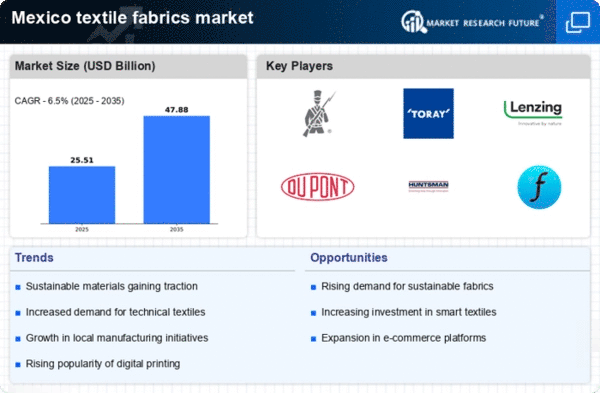
The textile fabrics market in Mexico is characterized by a dynamic competitive landscape, driven by factors such as increasing consumer demand for sustainable materials, technological advancements, and a growing emphasis on digital transformation. Major players like Berkshire Hathaway (US), Toray Industries (JP), and DuPont (US) are strategically positioned to leverage these trends. Berkshire Hathaway (US) focuses on innovation through its diverse portfolio, which includes investments in sustainable textile technologies. Meanwhile, Toray Industries (JP) emphasizes regional expansion and partnerships to enhance its market presence, particularly in eco-friendly fabric production. DuPont (US) is actively pursuing digital transformation initiatives to optimize its supply chain and improve product offerings, thereby shaping a competitive environment that prioritizes sustainability and technological integration.Key business tactics within the market include localizing manufacturing and optimizing supply chains to enhance efficiency and responsiveness to consumer needs. The competitive structure appears moderately fragmented, with a mix of large multinational corporations and smaller, specialized firms. This fragmentation allows for a variety of offerings, yet the influence of key players remains substantial, as they set trends and standards that smaller companies often follow.
In October Toray Industries (JP) announced a strategic partnership with a local Mexican textile manufacturer to co-develop sustainable fabric solutions. This collaboration is significant as it not only strengthens Toray's foothold in the region but also aligns with the growing consumer preference for environmentally friendly products. By leveraging local expertise, Toray aims to enhance its product offerings while contributing to the sustainability goals of the Mexican textile industry.
In September DuPont (US) launched a new line of biodegradable textiles aimed at reducing environmental impact. This initiative reflects DuPont's commitment to sustainability and innovation, positioning the company as a leader in eco-friendly fabric solutions. The introduction of biodegradable options is likely to resonate with environmentally conscious consumers, potentially increasing market share and enhancing brand loyalty.
In August Berkshire Hathaway (US) expanded its investment in advanced textile technologies, focusing on smart fabrics that integrate digital capabilities. This move indicates a strategic shift towards innovation, as smart textiles are expected to gain traction in various applications, from fashion to healthcare. By investing in this area, Berkshire Hathaway aims to differentiate itself in a competitive market increasingly driven by technological advancements.
As of November current competitive trends in the textile fabrics market include a pronounced shift towards digitalization, sustainability, and the integration of artificial intelligence in production processes. Strategic alliances are becoming increasingly important, as companies seek to pool resources and expertise to meet evolving consumer demands. Looking ahead, competitive differentiation is likely to evolve from traditional price-based competition to a focus on innovation, technology, and supply chain reliability, underscoring the importance of adaptability in a rapidly changing market.