×
Request Free Sample ×

Kindly complete the form below to receive a free sample of this Report

* Please use a valid business email

Leading companies partner with us for data-driven Insights

clients tt-cursor
Hero Background

Mexico Insect Pest Control Market

ID: MRFR/Agri/44793-HCR
128 Pages
Harshita Gorade
February 2026

Mexico Insect Pest Control Market Size, Share, Industry Trend & Analysis Research Report: By Pest Type (Insects, Termites, Rodents, others), By Method (Chemical, Mechanical, Biological), andBy Application (Residential, Commercial, Industrial)- Forecast to 2035

Share:
Download PDF ×

We do not share your information with anyone. However, we may send you emails based on your report interest from time to time. You may contact us at any time to opt-out.

Mexico Insect Pest Control Market Infographic
Purchase Options

Mexico Insect Pest Control Market Summary

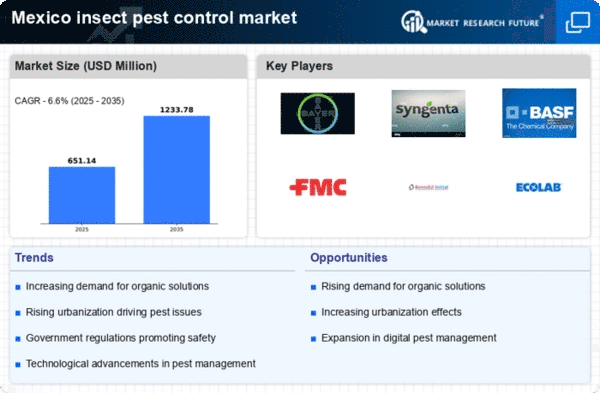
As per Market Research Future analysis, the Mexico Insect Pest Control Market size was estimated at 610.83 USD Million in 2024. The Mexico insect pest-control market is projected to grow from 651.14 USD Million in 2025 to 1233.78 USD Million by 2035, exhibiting a compound annual growth rate (CAGR) of 6.6% during the forecast period 2025 - 2035

Key Market Trends & Highlights

The Mexico insect pest-control market is experiencing a shift towards sustainable and technologically advanced solutions.

  • The market is witnessing a rise in eco-friendly pest control solutions, reflecting a growing consumer preference for sustainable practices.
  • Technological advancements in pest management are enhancing efficiency and effectiveness, particularly in urban areas.
  • Regulatory changes are shaping compliance requirements, influencing market dynamics and operational strategies.
  • Increasing urbanization and rising health awareness are major drivers propelling the growth of the pest-control market.

Market Size & Forecast

2024 Market Size 610.83 (USD Million)
2035 Market Size 1233.78 (USD Million)
CAGR (2025 - 2035) 6.6%

Major Players

Bayer AG (DE), Syngenta AG (CH), BASF SE (DE), FMC Corporation (US), Rentokil Initial plc (GB), Ecolab Inc. (US), Terminix Global Holdings Inc. (US), Rollins Inc. (US), Anticimex AB (SE)

Our Impact
Enabled $4.3B Revenue Impact for Fortune 500 and Leading Multinationals
Partnering with 2000+ Global Organizations Each Year
30K+ Citations by Top-Tier Firms in the Industry

Mexico Insect Pest Control Market Trends

The Mexico Insect Pest Control Market in Mexico is currently experiencing notable transformations driven by various factors. Increasing urbanization and agricultural expansion have led to a heightened demand for effective pest management solutions. As urban areas grow, the prevalence of pests such as rodents and insects becomes more pronounced, necessitating innovative approaches to control. Furthermore, the agricultural sector's reliance on pest-control measures to safeguard crops from infestations is paramount, as it directly impacts food security and economic stability. This dynamic environment fosters a competitive landscape where companies strive to develop advanced products and services that cater to the specific needs of consumers. In addition, there is a growing awareness of environmental sustainability among consumers and regulatory bodies. This trend encourages the adoption of eco-friendly pest-control solutions that minimize harm to non-target species and ecosystems. As a result, manufacturers are increasingly investing in research and development to create biopesticides and integrated pest management strategies. The insect pest-control market is thus evolving to meet the dual demands of efficacy and sustainability, reflecting broader societal shifts towards responsible consumption and environmental stewardship. The future appears promising, with potential for further innovation and growth as stakeholders adapt to changing consumer preferences and regulatory frameworks.

Rise of Eco-Friendly Solutions

There is a noticeable shift towards environmentally friendly pest-control products. Consumers are increasingly seeking solutions that minimize ecological impact, prompting manufacturers to develop biopesticides and organic options. This trend aligns with broader sustainability goals and reflects changing consumer preferences.

Technological Advancements in Pest Management

The integration of technology in pest management is becoming more prevalent. Innovations such as smart traps, drones for monitoring, and data analytics for pest prediction are enhancing the effectiveness of pest-control strategies. These advancements are likely to improve operational efficiency and reduce costs.

Regulatory Changes and Compliance

The regulatory landscape surrounding pest-control products is evolving. Stricter regulations regarding chemical usage and safety standards are influencing product development. Companies must adapt to these changes to ensure compliance, which may drive innovation in safer and more effective pest-control solutions.

Mexico Insect Pest Control Market Drivers

Agricultural Expansion

The expansion of agricultural activities in Mexico is a key driver for the insect pest-control market. As the agricultural sector grows, so does the need for effective pest management to protect crops from infestations. In 2025, the agricultural sector is expected to contribute significantly to the national economy, with an estimated value of over $30 billion. This growth presents opportunities for pest control companies to provide specialized services tailored to the agricultural industry. The insect pest-control market must focus on developing solutions that address the unique challenges faced by farmers, such as crop protection and pest resistance. As agricultural practices evolve, the demand for integrated pest management strategies is likely to increase, further driving the growth of the market.

Climate Change Impacts

Climate change is significantly influencing the insect pest-control market in Mexico. Rising temperatures and altered precipitation patterns create favorable conditions for various pests, including mosquitoes and termites. These changes can lead to increased pest populations and extended breeding seasons, thereby heightening the risk of infestations. For instance, studies suggest that warmer temperatures may increase mosquito populations by up to 30% in certain regions. As a result, the insect pest-control market faces mounting pressure to develop innovative and effective pest management strategies. Companies are likely to invest in research and development to create solutions that can effectively combat the challenges posed by climate change. This evolving landscape presents both challenges and opportunities for the industry, as it seeks to adapt to the changing environmental conditions.

Increasing Urbanization

The rapid urbanization in Mexico is driving the demand for the insect pest-control market. As more people migrate to urban areas, the concentration of human activities creates ideal conditions for pest infestations. Urban environments often provide abundant food sources and shelter for pests, leading to increased pest-related issues. Consequently, the need for effective pest management solutions becomes paramount. In 2025, urban areas in Mexico are projected to house over 80% of the population, further intensifying the demand for pest control services. This trend indicates a growing market for pest control companies, as they seek to address the challenges posed by urban living. The insect pest-control market must adapt to these changing dynamics by offering tailored solutions that cater to the unique needs of urban dwellers.

Rising Health Awareness

There is a growing awareness of health issues related to pest infestations in Mexico, which is driving the insect pest-control market. Pests such as rodents and insects are known carriers of diseases, and their presence can pose significant health risks to the population. As public awareness of these health risks increases, consumers are more inclined to seek professional pest control services. The insect pest-control market is responding by emphasizing the importance of pest management in safeguarding public health. In 2025, it is estimated that the market will grow by approximately 15% as more households and businesses prioritize pest control to ensure a safe and healthy environment. This trend indicates a shift towards preventive measures, with consumers increasingly recognizing the value of investing in pest management solutions.

Technological Integration in Pest Control

The integration of technology in pest control practices is transforming the insect pest-control market in Mexico. Innovations such as smart traps, drones, and data analytics are enhancing the efficiency and effectiveness of pest management solutions. These technologies allow for real-time monitoring and targeted treatments, reducing the reliance on chemical pesticides. In 2025, it is anticipated that the adoption of technology in pest control will increase by approximately 20%, as companies seek to improve their service offerings. The insect pest-control market is likely to witness a shift towards more sustainable and precise pest management approaches, aligning with consumer preferences for eco-friendly solutions. This technological evolution presents both challenges and opportunities for pest control providers as they navigate the changing landscape.


Market Segment Insights

By Pest Type: Insects (Largest) vs. Rodents (Fastest-Growing)

In the Mexico insect pest-control market, the distribution of market share among various pest types highlights Insects as the largest segment, capturing a significant portion of overall sales. Following Insects, Termites and Rodents each hold considerable shares as well, although they lag behind in magnitude. The Others category, while important, accounts for a smaller slice of the market, indicating that specific pest types dominate pest control efforts in the region. Growth trends within the segment show that Rodents are emerging as the fastest-growing category, driven largely by urbanization and increasing rodent populations in metropolitan areas. The demand for effective pest management solutions has intensified, prompting the development of innovative products specifically targeting Rodents. Meanwhile, the Insects segment continues to attract stable interest due to ongoing agricultural challenges and public health concerns, solidifying its position within the market.

Insects (Dominant) vs. Rodents (Emerging)

Insects constitute the dominant force in the Mexico insect pest-control market, characterized by a wide variety of species, necessitating diverse treatment strategies. This dominance is driven by the continuous array of challenges posed by agricultural pests and public health threats. In contrast, Rodents represent an emerging segment, with a rapidly growing market presence. Their growth is propelled by urbanization and infrastructure expansion, leading to increased encounters with rodent populations. To address this, pest control manufacturers are focusing on targeted solutions that cater specifically to Rodent issues. As both segments evolve, ongoing research and development efforts aim to refine control methods and improve efficacy, reflecting their respective positions in the market.

By Method: Chemical (Largest) vs. Biological (Fastest-Growing)

In the Mexico insect pest-control market, the Chemical segment holds the largest share due to its widespread use and effectiveness in managing various pests. This segment benefits from established manufacturing processes and well-known brands that dominate the market landscape. In contrast, the Biological segment is gaining traction, appealing particularly to environmentally-conscious consumers. Its market share is on the rise as it offers sustainable alternatives to traditional methods, paving the way for a diverse product range in the sector. Growth trends indicate a shift towards Biological methods as regulations tighten on chemical usage and consumers seek safer options. The demand for efficient pest control solutions drives innovation and the emergence of advanced biological products. As awareness around the impact of chemical pesticides increases, key industry players are investing in research to enhance the effectiveness of biological solutions, making it a focal point for future development in the Mexico insect pest-control market.

Chemical (Dominant) vs. Biological (Emerging)

The Chemical segment remains dominant within the Mexico insect pest-control market, characterized by its effectiveness and efficiency in eliminating a wide range of pests. Companies in this segment leverage established infrastructure and a strong distribution network to maintain their market position. Innovations in chemical formulations also enhance their appeal to consumers seeking reliable pest control solutions. Conversely, the Biological segment is emerging as a vital player, appealing to eco-conscious consumers and aligning with sustainable agricultural practices. It offers a range of products derived from natural sources, and investments in this segment are increasing as more stakeholders recognize its growth potential. The competition between Chemical and Biological methods illustrates the evolving landscape of pest control, prompting companies to adapt and innovate.

By Application: Residential (Largest) vs. Commercial (Fastest-Growing)

The market share distribution in the application segment indicates that the Residential category holds the largest portion, driven by an increasing awareness of pest control solutions among homeowners. This segment benefits from a growing population, rising disposable incomes, and an increase in housing developments that necessitate effective pest management solutions. On the other hand, the Commercial segment, while smaller in share, represents the fastest-growing application due to businesses increasingly prioritizing pest control to maintain hygiene and compliance standards, especially in food service and hospitality industries. Growth trends in the application segment are shaped by several factors, including urbanization, which leads to higher demands for pest control in residential areas. Additionally, the expansion of the commercial sector, particularly in retail and hospitality, is creating new opportunities for pest control services. Innovations in pest control techniques and products, coupled with a heightened focus on sustainability and eco-friendly solutions, are propelling the market forward. The growing emphasis on maintaining pest-free environments is further enhancing demand in both Residential and Commercial applications.

Residential (Dominant) vs. Commercial (Emerging)

The Residential application segment is characterized by its significant market dominance, as homeowners increasingly seek preventative and reactive pest control solutions. Factors such as urban population growth, environmental concerns, and heightened awareness about health and safety are driving this demand. In contrast, the Commercial segment, while emerging, is rapidly gaining traction due to businesses' proactive approaches to pest management. Factors like regulatory requirements and customer expectations for cleanliness are propelling growth. The Commercial segment includes diverse industries such as retail, hospitality, and food services, all of which are prioritizing pest control to uphold their reputations and ensure compliance with health standards. Both segments are evolving with advances in technology and eco-friendly pest management options.

Get more detailed insights about Mexico Insect Pest Control Market

Key Players and Competitive Insights

The insect pest-control market in Mexico is characterized by a dynamic competitive landscape, driven by increasing urbanization, agricultural expansion, and heightened awareness of pest-related health risks. Major players such as Bayer AG (DE), Syngenta AG (CH), and BASF SE (DE) are actively shaping the market through strategic initiatives focused on innovation and sustainability. Bayer AG (DE) emphasizes its commitment to developing environmentally friendly pest-control solutions, while Syngenta AG (CH) leverages its extensive research capabilities to introduce advanced biopesticides. BASF SE (DE) is also investing in digital transformation to enhance its product offerings and customer engagement, collectively fostering a competitive environment that prioritizes sustainable practices and technological advancements.
Key business tactics within the market include localizing manufacturing and optimizing supply chains to enhance responsiveness to regional demands. The competitive structure appears moderately fragmented, with a mix of multinational corporations and local firms vying for market share. This fragmentation allows for diverse product offerings and tailored solutions, although the influence of key players remains substantial, as they set industry standards and drive innovation.
In October 2025, Bayer AG (DE) announced the launch of a new line of biopesticides aimed at reducing chemical residues in agricultural products. This strategic move not only aligns with global sustainability trends but also positions Bayer as a leader in eco-friendly pest management solutions, potentially increasing its market share in the organic farming sector. The introduction of these products may enhance consumer trust and loyalty, further solidifying Bayer's competitive edge.
In September 2025, Syngenta AG (CH) expanded its partnership with local agricultural cooperatives to enhance distribution channels for its pest-control products. This collaboration is likely to improve market penetration and accessibility, particularly in rural areas where pest management is critical for crop yields. By strengthening these local ties, Syngenta may effectively respond to regional pest challenges and foster community engagement, which could lead to increased sales and brand loyalty.
In August 2025, BASF SE (DE) unveiled a digital platform designed to provide farmers with real-time pest monitoring and management solutions. This innovative approach not only enhances the efficiency of pest control but also empowers farmers with data-driven insights, potentially leading to better decision-making and resource allocation. The integration of technology into pest management signifies a shift towards more sophisticated and responsive agricultural practices, which may redefine competitive dynamics in the market.
As of November 2025, current trends in the insect pest-control market are increasingly defined by digitalization, sustainability, and the integration of artificial intelligence. Strategic alliances among key players are shaping the landscape, fostering innovation and collaborative solutions. The competitive differentiation appears to be shifting from price-based strategies to a focus on technological advancements and supply chain reliability. This evolution suggests that companies that prioritize innovation and sustainable practices will likely emerge as leaders in the market, adapting to the changing needs of consumers and regulatory environments.

Key Companies in the Mexico Insect Pest Control Market include

Industry Developments

The Mexico Insect Pest Control Market has recently seen significant developments, particularly regarding the increasing demand for effective pest management solutions due to agricultural expansions and urbanization. Companies such as Pest Control Canada, Ecolab, and Rentokil Initial have been positioning themselves to cater to this growing market, focusing on sustainable and eco-friendly pest control methods. In recent months, in September 2023, Pest Control Canada announced an acquisition of a local pest control firm to expand its operations in Mexico, reflecting a trend of consolidation in the industry.

Additionally, market valuation for companies like Bayer and BASF has been positively influenced as adverse pest infestations have prompted increased spending on pest management services. The regulatory environment in Mexico is also adapting, with local authorities pushing for stringent pest control measures, which is likely to drive further growth. Over the past two years, starting from 2021, the market has witnessed a steady increase in investment and technological advancements, enhancing the efficacy of pest control treatments and elevating market competition among key players such as Orkin, FMC Corporation, and Terminix.


Future Outlook

Mexico Insect Pest Control Market Future Outlook

The Insect Pest Control Market in Mexico is projected to grow at a 6.6% CAGR from 2025 to 2035, driven by urbanization, climate change, and increased agricultural activities.

New opportunities lie in:

  • Development of eco-friendly pest control products
  • Integration of IoT technology for real-time monitoring
  • Expansion of subscription-based pest management services

By 2035, the market is expected to achieve robust growth, driven by innovation and sustainability.

Market Segmentation

Mexico Insect Pest Control Market Method Outlook

  • Chemical
  • Mechanical
  • Biological

Mexico Insect Pest Control Market Pest Type Outlook

  • Insects
  • Termites
  • Rodents
  • Others

Mexico Insect Pest Control Market Application Outlook

  • Residential
  • Commercial
  • Industrial

Report Scope

MARKET SIZE 2024 610.83(USD Million)
MARKET SIZE 2025 651.14(USD Million)
MARKET SIZE 2035 1233.78(USD Million)
COMPOUND ANNUAL GROWTH RATE (CAGR) 6.6% (2025 - 2035)
REPORT COVERAGE Revenue Forecast, Competitive Landscape, Growth Factors, and Trends
BASE YEAR 2024
Market Forecast Period 2025 - 2035
Historical Data 2019 - 2024
Market Forecast Units USD Million
Key Companies Profiled Bayer AG (DE), Syngenta AG (CH), BASF SE (DE), FMC Corporation (US), Rentokil Initial plc (GB), Ecolab Inc. (US), Terminix Global Holdings Inc. (US), Rollins Inc. (US), Anticimex AB (SE)
Segments Covered Pest Type, Method, Application
Key Market Opportunities Adoption of biopesticides driven by increasing consumer demand for sustainable pest management solutions.
Key Market Dynamics Rising demand for eco-friendly pest control solutions drives innovation and competition in the insect pest-control market.
Countries Covered Mexico
Leave a Comment

FAQs

What is the expected market size of the Mexico Insect Pest Control Market in 2024?

The Mexico Insect Pest Control Market is expected to be valued at 650.0 USD million in 2024.

What will be the projected market size of the Mexico Insect Pest Control Market by 2035?

By 2035, the Mexico Insect Pest Control Market is anticipated to reach a value of 1030.0 USD million.

What is the expected CAGR for the Mexico Insect Pest Control Market from 2025 to 2035?

The expected CAGR for the Mexico Insect Pest Control Market from 2025 to 2035 is 4.274%.

Which pest type is expected to dominate the Mexico Insect Pest Control Market in 2024?

In 2024, the insect pest type is projected to hold the largest market share at 325.0 USD million.

How much is the termites segment expected to be worth in the Mexico Insect Pest Control Market by 2035?

The termites segment is expected to be valued at 236.0 USD million by 2035.

What is the projected market size for rodent pest control in Mexico by 2035?

The rodent pest control segment is expected to reach a market size of 150.0 USD million by 2035.

Who are the key players in the Mexico Insect Pest Control Market?

Key players in the market include Pest Control Canada, Ecolab, BASF, Orkin, and Terminix.

What is the expected growth rate for the insect pest control market in Mexico?

The expected growth rate for the Mexico Insect Pest Control Market is driven by increasing pest infestations and urbanization.

What challenges could affect the growth of the Mexico Insect Pest Control Market?

Challenges include regulatory restrictions and the availability of eco-friendly pest control solutions.

What opportunities exist in the Mexico Insect Pest Control Market for key players?

Opportunities lie in developing innovative pest control products and expanding services to new regions.

Download Free Sample

Kindly complete the form below to receive a free sample of this Report

Compare Licence

×
Features License Type
Single User Multiuser License Enterprise User
Price $4,950 $5,950 $7,250
Maximum User Access Limit 1 User Upto 10 Users Unrestricted Access Throughout the Organization
Free Customization
Direct Access to Analyst
Deliverable Format
Platform Access
Discount on Next Purchase 10% 15% 15%
Printable Versions