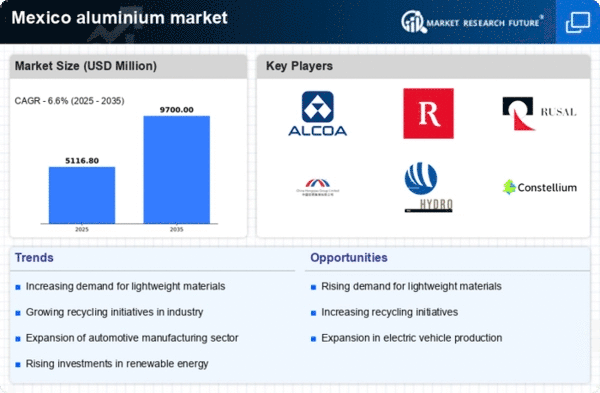
The aluminium metals market in Mexico is characterized by a competitive landscape that is increasingly shaped by innovation, sustainability, and strategic partnerships. Key players such as Alcoa Corporation (US), Novelis Inc. (US), and Rusal (RU) are actively pursuing strategies that enhance their operational efficiencies and market presence. Alcoa Corporation (US) has focused on reducing its carbon footprint through advanced recycling technologies, while Novelis Inc. (US) emphasizes its commitment to sustainable practices by investing in low-carbon aluminium production. Rusal (RU), on the other hand, is leveraging its technological expertise to optimize production processes, thereby enhancing its competitive edge in the region. Collectively, these strategies indicate a shift towards a more sustainable and technologically advanced market environment.In terms of business tactics, companies are increasingly localizing manufacturing to reduce logistics costs and enhance supply chain resilience. This approach appears to be particularly effective in a moderately fragmented market structure, where the influence of key players is significant but not overwhelming. The collective actions of these companies suggest a trend towards greater collaboration and integration within the supply chain, which may lead to improved operational efficiencies and market responsiveness.
In October Alcoa Corporation (US) announced a partnership with a local Mexican firm to establish a new recycling facility aimed at increasing the availability of recycled aluminium in the region. This strategic move not only aligns with Alcoa's sustainability goals but also positions the company to capitalize on the growing demand for eco-friendly materials. The establishment of this facility is likely to enhance local supply chains and reduce dependency on imported materials, thereby strengthening Alcoa's market position.
In September Novelis Inc. (US) unveiled plans to expand its production capacity in Mexico by 20%, focusing on the automotive sector. This expansion is strategically important as it allows Novelis to meet the rising demand for lightweight materials in vehicle manufacturing, which is increasingly driven by regulatory pressures for fuel efficiency. The investment reflects Novelis's commitment to innovation and its proactive approach to capturing market opportunities in a rapidly evolving industry.
In August Rusal (RU) launched a new initiative aimed at integrating AI technologies into its production processes. This initiative is expected to enhance operational efficiencies and reduce costs, thereby positioning Rusal as a leader in technological advancement within the aluminium sector. The integration of AI could potentially streamline operations and improve decision-making processes, which may provide Rusal with a competitive advantage in the market.
As of November the competitive trends in the aluminium metals market are increasingly defined by digitalization, sustainability, and the integration of advanced technologies. Strategic alliances among key players are shaping the landscape, fostering innovation and enhancing supply chain reliability. The shift from price-based competition to a focus on technological differentiation and sustainable practices is evident. Companies that prioritize innovation and sustainability are likely to emerge as leaders in this evolving market, suggesting a future where competitive advantage is derived from operational excellence and environmental responsibility.