×
Request Free Sample ×

Kindly complete the form below to receive a free sample of this Report

* Please use a valid business email

Leading companies partner with us for data-driven Insights

clients tt-cursor
Hero Background
English
Chinese
French
Japanese
Korean
German
Spanish

Malignant Lymphoma Market Trends

ID: MRFR/Pharma/1329-HCR
85 Pages
Rahul Gotadki
October 2025

Malignant Lymphoma Market Research Report Information, by types (Hodgkin lymphoma and Non Hodgkin lymphoma), by treatment (chemotherapy, radiation therapy, immunotherapy, stem cell therapy and others) - Growth & Industry Forecast 2025 To 2035

Share:
Download PDF ×

We do not share your information with anyone. However, we may send you emails based on your report interest from time to time. You may contact us at any time to opt-out.

Malignant Lymphoma Market Infographic
×
Malignant Lymphoma Market Infographic Full View
Purchase Options

Market Trends

Key Emerging Trends in the Malignant Lymphoma Market

The market for malignant lymphoma treatment is encountering expanded demand, essentially determined by a developing rate of the infection universally. Factors like maturing populations, environmental factors, and further developed diagnostic capabilities contribute to the rising number of analyzed cases, necessitating effective and different treatment options. Immunotherapy is revolutionizing the scene of malignant lymphoma treatment. Checkpoint inhibitors, chimeric antigen receptor (CAR) T-cell therapy, and other immunotherapeutic methodologies are showing momentous outcome in certain lymphoma subtypes, giving patients new and targeted treatment options. Pushes in precision medication are molding treatment strategies for malignant lymphoma. Sub-atomic profiling and genetic testing take into consideration a more customized approach, identifying explicit genetic markers and sub-atomic characteristics of the lymphoma to modify treatment plans for individual patients. Pharmaceutical organizations are actively participated in the development of targeted therapies for malignant lymphoma. Targeted agents, for example, monoclonal antibodies and little particle inhibitors, expect to selectively attack cancer cells while limiting harm to healthy tissues, offering more effective and less toxic treatment options. The trend of consolidating different treatment modalities is acquiring noticeable quality in malignant lymphoma treatment. Combinatorial methodologies, which might incorporate chemotherapy, immunotherapy, and targeted therapies, are being investigated to upgrade treatment adequacy, reverse resistance, and work on generally patient outcomes. CAR T-cell therapy is arising as a transformative treatment for certain types of malignant lymphomas. This innovative methodology includes changing a patient's own T cells to target and destroy cancer cells, showing significant achievement, particularly in relapsed or refractory cases. Diagnostic imaging technologies are progressing, supporting early detection and accurate staging of malignant lymphomas. Positron emission tomography-computed tomography (PET-CT) filters and other high level imaging modalities contribute to exact determination, empowering clinicians to tailor treatment plans in view of disease characteristics.

Author
Rahul Gotadki
Assistant Manager

He holds an experience of about 7+ years in Market Research and Business Consulting, working under the spectrum of Life Sciences and Healthcare domains. Rahul conceptualizes and implements a scalable business strategy and provides strategic leadership to the clients. His expertise lies in market estimation, competitive intelligence, pipeline analysis, customer assessment, etc. In addition to the above, his other responsibility includes strategic tracking of high growth markets & advising clients on the potential areas of focus they could direct their business initiatives

Leave a Comment

FAQs

How does the outlook of the global malignant lymphoma market look like?

The outlook of the global malignant lymphoma market looks very promising.

What are the major tailwinds pushing the growth of the global malignant lymphoma market?

Increased government funding for the drug development and increment in the global economy that is widening the access to quality care are the major tailwinds pushing the growth of the global malignant lymphoma market.

Which region holds the largest share in the global malignant lymphoma market?

North America holds the largest share in the global malignant lymphoma market, followed by Europe and the Asia Pacific, respectively.

Who are the top players in the global malignant lymphoma market?

Abiogen Pharma S.p.A., Abbott Laboratories, Genmab, Actelion Pharmaceuticals, Allos Therapeutics, Aeterna Zentaris, Inc., Novartis, Astellas Pharma, Seattle Genetics Johnson & Johnson, Celgene Corporation, Bristol-Myers Squibb Company, Roche, Merck & Co. Inc., Eli Lilly and Company, Inovio Pharmaceuticals, and Onyx Pharmaceuticals, are some of the major players operating in the malignant lymphoma market.

What are the key growth strategies of malignant lymphoma industry players?

Strategic initiatives such as mergers & acquisitions, collaborations, expansion, and technology/ product launch are some of the growth strategies that players operating in the global malignant lymphoma market adopt to gain a larger competitive advantage.

Market Summary

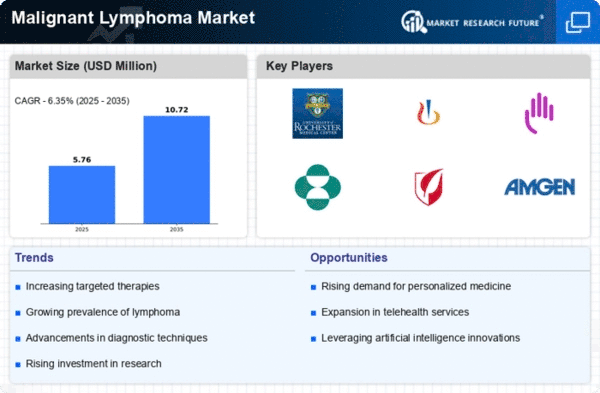
As per MRFR analysis, the Malignant Lymphoma Market Size was estimated at 5.42 USD Million in 2024. The Malignant Lymphoma industry is projected to grow from 5.83 in 2025 to 10.72 by 2035, exhibiting a compound annual growth rate (CAGR) of 6.35 during the forecast period 2025 - 2035.

Key Market Trends & Highlights

The Malignant Lymphoma Market is experiencing a transformative shift driven by innovative therapies and increasing incidence rates.

  • The rise of targeted therapies is reshaping treatment paradigms in the Malignant Lymphoma Market.
  • Immunotherapy is emerging as the fastest-growing treatment modality, particularly in Hodgkin Lymphoma cases.
  • Advancements in diagnostic techniques are enhancing early detection and treatment outcomes across North America and Asia-Pacific.
  • The increase in incidence rates and rising investment in research and development are key drivers propelling market growth.

Market Size & Forecast

2024 Market Size 5.42 (USD Million)
2035 Market Size 10.72 (USD Million)
CAGR (2025 - 2035) 6.35%
Largest Regional Market Share in 2024 North America

Major Players

Roche (CH), Novartis (CH), Bristol-Myers Squibb (US), Merck & Co. (US), Gilead Sciences (US), Amgen (US), Celgene (US), Takeda (JP), AstraZeneca (GB)

Market Trends

The Malignant Lymphoma Market is currently experiencing a dynamic evolution, driven by advancements in treatment modalities and a growing understanding of the disease's biology. Innovative therapies, including targeted agents and immunotherapies, are emerging as pivotal components in the management of various lymphoma subtypes. This shift towards personalized medicine appears to enhance patient outcomes and may lead to a more tailored approach in treatment protocols. Furthermore, the increasing prevalence of malignant lymphomas globally suggests a rising demand for effective therapeutic options, thereby propelling market growth. In addition, the Malignant Lymphoma Market is witnessing a surge in research and development activities, as pharmaceutical companies and academic institutions collaborate to explore novel therapeutic avenues. The integration of cutting-edge technologies, such as artificial intelligence and genomics, into clinical practice may facilitate the identification of biomarkers and improve patient stratification. This trend indicates a potential transformation in how malignant lymphomas are diagnosed and treated, ultimately aiming for improved survival rates and quality of life for patients. As the landscape continues to evolve, stakeholders must remain vigilant to adapt to these changes and capitalize on emerging opportunities.

Rise of Targeted Therapies

The Malignant Lymphoma Market is increasingly characterized by the introduction of targeted therapies that focus on specific molecular pathways involved in lymphoma progression. These treatments aim to minimize side effects while maximizing efficacy, thereby enhancing patient adherence and overall treatment success.

Growth of Immunotherapy

Immunotherapy is gaining traction within the Malignant Lymphoma Market, as it harnesses the body's immune system to combat cancer cells. This approach not only offers new hope for patients with refractory cases but also suggests a paradigm shift in treatment strategies, emphasizing the importance of immune modulation.

Advancements in Diagnostic Techniques

The Malignant Lymphoma Market is benefiting from advancements in diagnostic technologies, which enable earlier and more accurate detection of lymphomas. Enhanced imaging techniques and molecular diagnostics are likely to improve patient outcomes by facilitating timely interventions and personalized treatment plans.

Malignant Lymphoma Market Market Drivers

Rising Incidence of Malignant Lymphoma

The Global Malignant Lymphoma Market Industry is experiencing growth due to the increasing incidence of malignant lymphoma worldwide. According to health statistics, the prevalence of lymphoma cases has been on the rise, with an estimated 4.37 USD Billion market value in 2024. This surge is attributed to factors such as improved diagnostic techniques and heightened awareness among healthcare professionals and patients. As more individuals are diagnosed, the demand for effective treatment options escalates, thereby driving market expansion. The growing population and aging demographics further contribute to the increase in lymphoma cases, indicating a sustained need for innovative therapies in the Global Malignant Lymphoma Market Industry.

Market Segment Insights

By Type of Malignant Lymphoma: Non-Hodgkin Lymphoma (Largest) vs. Hodgkin Lymphoma (Fastest-Growing)

The malignant lymphoma market is predominantly characterized by two main segments: Non-Hodgkin Lymphoma (NHL) and Hodgkin Lymphoma (HL). NHL accounts for the largest market share due to its higher incidence rate and diverse subtypes. Meanwhile, while HL represents a smaller segment, it is gaining significant traction, reflecting trends towards improved diagnostics and targeted therapies. Added to this, Primary Central Nervous System Lymphoma and Cutaneous Lymphoma are niche segments, accounting for a smaller fraction of overall market dynamics.

Non-Hodgkin Lymphoma (Dominant) vs. Hodgkin Lymphoma (Emerging)

Non-Hodgkin Lymphoma (NHL) dominates the malignant lymphoma sector with a broad spectrum of subtypes and treatment options. It has become a focal point for innovative research and development, driving growth within the market. By contrast, Hodgkin Lymphoma, although smaller in market share, is emerging rapidly, thanks to new therapies and clinical advances that significantly improve patient outcomes. Primary Central Nervous System Lymphoma and Cutaneous Lymphoma are classified as emerging niches, often requiring specialized treatment approaches and providing opportunities for targeted market growth. As researchers delve deeper into the biology of these diseases, treatment paradigms continue to evolve, paving the way for advancements that can potentially reshape patient management strategies.

By Treatment Modality: Chemotherapy (Largest) vs. Immunotherapy (Fastest-Growing)

The malignant lymphoma market is characterized by a diverse range of treatment modalities. Chemotherapy holds the largest share, favored for its long-standing efficacy against various lymphoma types. Other modalities like Radiation Therapy, Targeted Therapy, and Immunotherapy are gaining traction, each contributing to the differentiated market share. Radiation Therapy, although traditional, continues to support specific lymphomas, while Targeted and Immunotherapies are catching up due to advancements in personalized medicine, focusing on patient-specific treatment routes.

Chemotherapy (Dominant) vs. Immunotherapy (Emerging)

Chemotherapy remains the dominant treatment modality in the malignant lymphoma market, primarily due to its extensive historical success across diverse lymphoma subtypes. This traditional approach employs cytotoxic agents to eliminate rapidly dividing cells, making it effective but also associated with significant side effects. In contrast, Immunotherapy is emerging as a revolutionary option, harnessing the body's immune system to combat cancerous cells. This newer modality showcases rapid growth, driven by innovative treatments like CAR T-cell therapy and immune checkpoint inhibitors, which target specific cancer markers with fewer side effects, thereby enhancing patient outcomes.

By Stage of Disease: Localized (Largest) vs. Distant (Fastest-Growing)

The Malignant Lymphoma Market exhibits a diverse distribution among its stages of disease. Localized cases hold the largest market share due to early diagnosis and effective treatment options. This dominance reflects the increasing awareness and screening efforts that lead to earlier detection of lymphomas. In contrast, regional and distant stages, while prevalent, command a smaller share as they often denote advanced disease where treatment becomes more complex. The recurrent cases also play a significant role, indicative of the ongoing challenges in achieving long-term remission utilizing current therapeutic approaches.

Localized (Dominant) vs. Distant (Emerging)

In the Malignant Lymphoma Market, the 'Localized' stage represents the dominant segment, characterized by its better treatment outcomes and patient prognosis. Early-stage lymphomas are typically more manageable and respond well to targeted therapies and combinations, resulting in higher rates of survival. In contrast, the 'Distant' stage is emerging as a significant concern, marked by the challenges of late-stage diagnosis due to its aggressive nature and treatment resistance. Patients classified under this category often require intensive and innovative therapeutic strategies, creating a demand for more focused research and investment into effective treatment modalities. Both segments represent distinct but crucial phases in the management of malignant lymphoma.

By Patient Demographics: Age Group (Largest) vs. Gender (Fastest-Growing)

In the Malignant Lymphoma Market, the distribution of patient demographics indicates that the age group is the largest segment, comprising a significant proportion of patients diagnosed with various forms of malignant lymphoma, particularly within the older population. Gender representation shows a varied distribution; however, there has been a noticeable increase in diagnoses among females, highlighting shifting trends in susceptibility and awareness of the disease across different demographics.

Age Group (Dominant) vs. Gender (Emerging)

The age group remains the dominant factor in the Malignant Lymphoma Market, with a particularly high incidence among older adults, primarily due to the weakening of the immune system and genetic predispositions in this demographic. As the population ages, this segment is expected to continue commanding a significant share of the market. Conversely, gender has emerged as a growing segment, with rising detection rates among females linked to enhanced screening and awareness initiatives. This shift suggests that while historically more males have been affected, emerging trends indicate a more balanced landscape, with future implications for treatment options and healthcare strategies.

Get more detailed insights about Malignant Lymphoma Market Research Report- Global Forecast To 2035

Regional Insights

North America : Market Leader in Innovation

North America continues to lead the malignant lymphoma market, holding a significant share of 2.71 billion in 2024. The region's growth is driven by advanced healthcare infrastructure, high R&D investments, and increasing awareness of lymphoma treatments. Regulatory support, including expedited approval processes for innovative therapies, further fuels market expansion. The rising incidence of lymphoma and the demand for targeted therapies are key trends shaping the market landscape. The United States is the primary contributor to this market, with major pharmaceutical companies like Roche, Novartis, and Bristol-Myers Squibb leading the charge. The competitive landscape is characterized by a strong pipeline of novel therapies and collaborations between biotech firms and research institutions. This dynamic environment is expected to enhance treatment options and improve patient outcomes, solidifying North America's position as a market leader.

Europe : Emerging Market with Growth Potential

Europe's malignant lymphoma market is valued at 1.5 billion, reflecting a growing demand for innovative treatments and therapies. The region benefits from robust healthcare systems and increasing investments in cancer research. Regulatory bodies are actively promoting the development of new therapies, which is expected to drive market growth. The rising prevalence of lymphoma and the aging population are significant factors contributing to this upward trend. Leading countries in this market include Germany, France, and the UK, where key players like Merck & Co. and Gilead Sciences are making substantial contributions. The competitive landscape is marked by strategic partnerships and collaborations aimed at enhancing treatment efficacy. As the market evolves, the focus on personalized medicine and targeted therapies is likely to reshape the treatment paradigm in Europe.

Asia-Pacific : Emerging Powerhouse in Oncology

The Asia-Pacific malignant lymphoma market, valued at 0.9 billion, is witnessing rapid growth driven by increasing healthcare expenditure and rising awareness of cancer treatments. The region's expanding population and improving access to healthcare services are significant growth drivers. Regulatory frameworks are becoming more supportive, encouraging the introduction of new therapies and treatment options for lymphoma patients. Countries like Japan, China, and Australia are at the forefront of this market, with key players such as Takeda and Amgen actively involved. The competitive landscape is characterized by a mix of local and international companies striving to capture market share. As the region continues to develop, the focus on innovative therapies and clinical trials is expected to enhance treatment outcomes for lymphoma patients.

Middle East and Africa : Resource-Rich Frontier for Growth

The Middle East and Africa malignant lymphoma market, valued at 0.31 billion, is gradually emerging as a significant player in the oncology landscape. The growth is driven by increasing healthcare investments and a rising incidence of lymphoma. Regulatory bodies are beginning to implement frameworks that support the introduction of new therapies, which is crucial for market expansion. The demand for improved healthcare services is also a key factor influencing growth in this region. Leading countries include South Africa and the UAE, where local and international pharmaceutical companies are working to enhance treatment access. The competitive landscape is evolving, with a focus on partnerships and collaborations to improve patient outcomes. As awareness of lymphoma increases, the market is expected to grow, driven by the need for innovative treatment solutions.

Key Players and Competitive Insights

The Malignant Lymphoma Market is characterized by a dynamic competitive landscape, driven by a confluence of innovation, strategic partnerships, and a growing emphasis on personalized medicine. Key players such as Roche (CH), Novartis (CH), and Bristol-Myers Squibb (US) are at the forefront, each adopting distinct strategies to enhance their market positioning. Roche (CH) focuses on advancing its portfolio of targeted therapies, while Novartis (CH) emphasizes the development of CAR-T cell therapies, reflecting a broader industry trend towards innovative treatment modalities. Bristol-Myers Squibb (US) is leveraging its expertise in immunotherapy, indicating a collective shift among these companies towards harnessing cutting-edge technologies to address unmet medical needs in malignant lymphoma.In terms of business tactics, companies are increasingly localizing manufacturing and optimizing supply chains to enhance operational efficiency. The market structure appears moderately fragmented, with several players vying for market share, yet the influence of major companies remains substantial. This competitive environment is shaped by the strategic actions of these key players, who are not only competing on product efficacy but also on the ability to deliver comprehensive treatment solutions.

In November Roche (CH) announced a collaboration with a leading biotechnology firm to develop a novel bispecific antibody targeting malignant lymphoma. This strategic move is likely to bolster Roche's position in the market by expanding its therapeutic offerings and enhancing its research capabilities. The partnership underscores the importance of collaboration in driving innovation and addressing the complexities of malignant lymphoma treatment.

In October Novartis (CH) received regulatory approval for its latest CAR-T therapy, which is designed to treat relapsed or refractory malignant lymphoma. This approval is pivotal, as it not only strengthens Novartis's product portfolio but also positions the company as a leader in the CAR-T space. The successful launch of this therapy could significantly impact patient outcomes and solidify Novartis's competitive edge in the market.

In September Bristol-Myers Squibb (US) expanded its clinical trial program for a promising immunotherapy aimed at malignant lymphoma, indicating a robust commitment to research and development. This expansion is crucial, as it reflects the company's strategy to explore new treatment avenues and potentially enhance its therapeutic offerings. The focus on clinical trials may also facilitate faster access to innovative treatments for patients, thereby improving the overall competitive landscape.

As of December current trends in the Malignant Lymphoma Market are increasingly defined by digitalization, sustainability, and the integration of artificial intelligence in drug development. Strategic alliances are becoming more prevalent, as companies recognize the value of collaboration in navigating the complexities of the healthcare landscape. Looking ahead, competitive differentiation is likely to evolve, with a pronounced shift from price-based competition to a focus on innovation, technological advancements, and supply chain reliability. This transition may ultimately lead to improved patient outcomes and a more sustainable market environment.

Key Companies in the Malignant Lymphoma Market include

Industry Developments

In May 2021, the popular enterpriser PerkinElmer, Inc is planning to acquire the Immunodiagnostic Systems Holdings PLC with an investment of nearly $155 million for expanding their overall diagnostics business.

In March 2020, one of the well-known companies Kura Oncology conducted a clinical trial for a pipeline candidate named tipifarnib which is used for the disease indication of peripheral T-cell lymphoma. Present, the clinical trial is in Phase-II and it received the fast track designation from the FDA.

In February 2021, the famous enterpriser Bristol Myers Squibb announced that their company received approval from the U.S Food and Drug Administration (FDA) for cancer immunotherapy as a treatment for adults who are having certain types of non-Hodgkin lymphoma.

Future Outlook

Malignant Lymphoma Market Future Outlook

The Malignant Lymphoma Market is projected to grow at a 6.35% CAGR from 2025 to 2035, driven by advancements in targeted therapies, increasing incidence rates, and enhanced diagnostic techniques.

New opportunities lie in:

  • Development of personalized immunotherapy solutions for diverse lymphoma subtypes.
  • Expansion of telehealth services for remote patient monitoring and consultations.
  • Investment in AI-driven diagnostic tools to improve early detection rates.

By 2035, the Malignant Lymphoma Market is expected to achieve substantial growth and innovation.

Market Segmentation

Malignant Lymphoma Market Stage of Disease Outlook

  • Localized
  • Regional
  • Distant
  • Recurrent

Malignant Lymphoma Market Treatment Modality Outlook

  • Chemotherapy
  • Radiation Therapy
  • Targeted Therapy
  • Immunotherapy

Malignant Lymphoma Market Patient Demographics Outlook

  • Age Group
  • Gender
  • Ethnicity
  • Socioeconomic Status

Malignant Lymphoma Market Type of Malignant Lymphoma Outlook

  • Hodgkin Lymphoma
  • Non-Hodgkin Lymphoma
  • Primary Central Nervous System Lymphoma
  • Cutaneous Lymphoma

Report Scope

MARKET SIZE 20245.42(USD Million)
MARKET SIZE 20255.83(USD Million)
MARKET SIZE 203510.72(USD Million)
COMPOUND ANNUAL GROWTH RATE (CAGR)6.35% (2025 - 2035)
REPORT COVERAGERevenue Forecast, Competitive Landscape, Growth Factors, and Trends
BASE YEAR2024
Market Forecast Period2025 - 2035
Historical Data2019 - 2024
Market Forecast UnitsUSD Million
Key Companies ProfiledRoche (CH), Novartis (CH), Bristol-Myers Squibb (US), Merck & Co. (US), Gilead Sciences (US), Amgen (US), Celgene (US), Takeda (JP), AstraZeneca (GB)
Segments CoveredType of Malignant Lymphoma, Treatment Modality, Stage of Disease, Patient Demographics
Key Market OpportunitiesAdvancements in targeted therapies and immunotherapies are reshaping the Malignant Lymphoma Market landscape.
Key Market DynamicsRising demand for targeted therapies drives innovation and competition in the Malignant Lymphoma Market.
Countries CoveredNorth America, Europe, APAC, South America, MEA

FAQs

How does the outlook of the global malignant lymphoma market look like?

The outlook of the global malignant lymphoma market looks very promising.

What are the major tailwinds pushing the growth of the global malignant lymphoma market?

Increased government funding for the drug development and increment in the global economy that is widening the access to quality care are the major tailwinds pushing the growth of the global malignant lymphoma market.

Which region holds the largest share in the global malignant lymphoma market?

North America holds the largest share in the global malignant lymphoma market, followed by Europe and the Asia Pacific, respectively.

Who are the top players in the global malignant lymphoma market?

Abiogen Pharma S.p.A., Abbott Laboratories, Genmab, Actelion Pharmaceuticals, Allos Therapeutics, Aeterna Zentaris, Inc., Novartis, Astellas Pharma, Seattle Genetics Johnson & Johnson, Celgene Corporation, Bristol-Myers Squibb Company, Roche, Merck & Co. Inc., Eli Lilly and Company, Inovio Pharmaceuticals, and Onyx Pharmaceuticals, are some of the major players operating in the malignant lymphoma market.

What are the key growth strategies of malignant lymphoma industry players?

Strategic initiatives such as mergers & acquisitions, collaborations, expansion, and technology/ product launch are some of the growth strategies that players operating in the global malignant lymphoma market adopt to gain a larger competitive advantage.

  1. SECTION I: EXECUTIVE SUMMARY AND KEY HIGHLIGHTS
    1. | 1.1 EXECUTIVE SUMMARY
    2. | 1.1.1 Market Overview
    3. | 1.1.2 Key Findings
    4. | 1.1.3 Market Segmentation
    5. | 1.1.4 Competitive Landscape
    6. | 1.1.5 Challenges and Opportunities
    7. | 1.1.6 Future Outlook
  2. SECTION II: SCOPING, METHODOLOGY AND MARKET STRUCTURE
    1. | 2.1 MARKET INTRODUCTION
    2. | 2.1.1 Definition
    3. | 2.1.2 Scope of the study
    4. |-- 2.1.2.1 Research Objective
    5. |-- 2.1.2.2 Assumption
    6. |-- 2.1.2.3 Limitations
    7. | 2.2 RESEARCH METHODOLOGY
    8. | 2.2.1 Overview
    9. | 2.2.2 Data Mining
    10. | 2.2.3 Secondary Research
    11. | 2.2.4 Primary Research
    12. |-- 2.2.4.1 Primary Interviews and Information Gathering Process
    13. |-- 2.2.4.2 Breakdown of Primary Respondents
    14. | 2.2.5 Forecasting Model
    15. | 2.2.6 Market Size Estimation
    16. |-- 2.2.6.1 Bottom-Up Approach
    17. |-- 2.2.6.2 Top-Down Approach
    18. | 2.2.7 Data Triangulation
    19. | 2.2.8 Validation
  3. SECTION III: QUALITATIVE ANALYSIS
    1. | 3.1 MARKET DYNAMICS
    2. | 3.1.1 Overview
    3. | 3.1.2 Drivers
    4. | 3.1.3 Restraints
    5. | 3.1.4 Opportunities
    6. | 3.2 MARKET FACTOR ANALYSIS
    7. | 3.2.1 Value chain Analysis
    8. | 3.2.2 Porter's Five Forces Analysis
    9. |-- 3.2.2.1 Bargaining Power of Suppliers
    10. |-- 3.2.2.2 Bargaining Power of Buyers
    11. |-- 3.2.2.3 Threat of New Entrants
    12. |-- 3.2.2.4 Threat of Substitutes
    13. |-- 3.2.2.5 Intensity of Rivalry
    14. | 3.2.3 COVID-19 Impact Analysis
    15. |-- 3.2.3.1 Market Impact Analysis
    16. |-- 3.2.3.2 Regional Impact
    17. |-- 3.2.3.3 Opportunity and Threat Analysis
  4. SECTION IV: QUANTITATIVE ANALYSIS
    1. | 4.1 Healthcare, BY Type of Malignant Lymphoma (USD Million)
    2. | 4.1.1 Hodgkin Lymphoma
    3. | 4.1.2 Non-Hodgkin Lymphoma
    4. | 4.1.3 Primary Central Nervous System Lymphoma
    5. | 4.1.4 Cutaneous Lymphoma
    6. | 4.2 Healthcare, BY Treatment Modality (USD Million)
    7. | 4.2.1 Chemotherapy
    8. | 4.2.2 Radiation Therapy
    9. | 4.2.3 Targeted Therapy
    10. | 4.2.4 Immunotherapy
    11. | 4.3 Healthcare, BY Stage of Disease (USD Million)
    12. | 4.3.1 Localized
    13. | 4.3.2 Regional
    14. | 4.3.3 Distant
    15. | 4.3.4 Recurrent
    16. | 4.4 Healthcare, BY Patient Demographics (USD Million)
    17. | 4.4.1 Age Group
    18. | 4.4.2 Gender
    19. | 4.4.3 Ethnicity
    20. | 4.4.4 Socioeconomic Status
    21. | 4.5 Healthcare, BY Region (USD Million)
    22. | 4.5.1 North America
    23. |-- 4.5.1.1 US
    24. |-- 4.5.1.2 Canada
    25. | 4.5.2 Europe
    26. |-- 4.5.2.1 Germany
    27. |-- 4.5.2.2 UK
    28. |-- 4.5.2.3 France
    29. |-- 4.5.2.4 Russia
    30. |-- 4.5.2.5 Italy
    31. |-- 4.5.2.6 Spain
    32. |-- 4.5.2.7 Rest of Europe
    33. | 4.5.3 APAC
    34. |-- 4.5.3.1 China
    35. |-- 4.5.3.2 India
    36. |-- 4.5.3.3 Japan
    37. |-- 4.5.3.4 South Korea
    38. |-- 4.5.3.5 Malaysia
    39. |-- 4.5.3.6 Thailand
    40. |-- 4.5.3.7 Indonesia
    41. |-- 4.5.3.8 Rest of APAC
    42. | 4.5.4 South America
    43. |-- 4.5.4.1 Brazil
    44. |-- 4.5.4.2 Mexico
    45. |-- 4.5.4.3 Argentina
    46. |-- 4.5.4.4 Rest of South America
    47. | 4.5.5 MEA
    48. |-- 4.5.5.1 GCC Countries
    49. |-- 4.5.5.2 South Africa
    50. |-- 4.5.5.3 Rest of MEA
  5. SECTION V: COMPETITIVE ANALYSIS
    1. | 5.1 Competitive Landscape
    2. | 5.1.1 Overview
    3. | 5.1.2 Competitive Analysis
    4. | 5.1.3 Market share Analysis
    5. | 5.1.4 Major Growth Strategy in the Healthcare
    6. | 5.1.5 Competitive Benchmarking
    7. | 5.1.6 Leading Players in Terms of Number of Developments in the Healthcare
    8. | 5.1.7 Key developments and growth strategies
    9. |-- 5.1.7.1 New Product Launch/Service Deployment
    10. |-- 5.1.7.2 Merger & Acquisitions
    11. |-- 5.1.7.3 Joint Ventures
    12. | 5.1.8 Major Players Financial Matrix
    13. |-- 5.1.8.1 Sales and Operating Income
    14. |-- 5.1.8.2 Major Players R&D Expenditure. 2023
    15. | 5.2 Company Profiles
    16. | 5.2.1 Roche (CH)
    17. |-- 5.2.1.1 Financial Overview
    18. |-- 5.2.1.2 Products Offered
    19. |-- 5.2.1.3 Key Developments
    20. |-- 5.2.1.4 SWOT Analysis
    21. |-- 5.2.1.5 Key Strategies
    22. | 5.2.2 Novartis (CH)
    23. |-- 5.2.2.1 Financial Overview
    24. |-- 5.2.2.2 Products Offered
    25. |-- 5.2.2.3 Key Developments
    26. |-- 5.2.2.4 SWOT Analysis
    27. |-- 5.2.2.5 Key Strategies
    28. | 5.2.3 Bristol-Myers Squibb (US)
    29. |-- 5.2.3.1 Financial Overview
    30. |-- 5.2.3.2 Products Offered
    31. |-- 5.2.3.3 Key Developments
    32. |-- 5.2.3.4 SWOT Analysis
    33. |-- 5.2.3.5 Key Strategies
    34. | 5.2.4 Merck & Co. (US)
    35. |-- 5.2.4.1 Financial Overview
    36. |-- 5.2.4.2 Products Offered
    37. |-- 5.2.4.3 Key Developments
    38. |-- 5.2.4.4 SWOT Analysis
    39. |-- 5.2.4.5 Key Strategies
    40. | 5.2.5 Gilead Sciences (US)
    41. |-- 5.2.5.1 Financial Overview
    42. |-- 5.2.5.2 Products Offered
    43. |-- 5.2.5.3 Key Developments
    44. |-- 5.2.5.4 SWOT Analysis
    45. |-- 5.2.5.5 Key Strategies
    46. | 5.2.6 Amgen (US)
    47. |-- 5.2.6.1 Financial Overview
    48. |-- 5.2.6.2 Products Offered
    49. |-- 5.2.6.3 Key Developments
    50. |-- 5.2.6.4 SWOT Analysis
    51. |-- 5.2.6.5 Key Strategies
    52. | 5.2.7 Celgene (US)
    53. |-- 5.2.7.1 Financial Overview
    54. |-- 5.2.7.2 Products Offered
    55. |-- 5.2.7.3 Key Developments
    56. |-- 5.2.7.4 SWOT Analysis
    57. |-- 5.2.7.5 Key Strategies
    58. | 5.2.8 Takeda (JP)
    59. |-- 5.2.8.1 Financial Overview
    60. |-- 5.2.8.2 Products Offered
    61. |-- 5.2.8.3 Key Developments
    62. |-- 5.2.8.4 SWOT Analysis
    63. |-- 5.2.8.5 Key Strategies
    64. | 5.2.9 AstraZeneca (GB)
    65. |-- 5.2.9.1 Financial Overview
    66. |-- 5.2.9.2 Products Offered
    67. |-- 5.2.9.3 Key Developments
    68. |-- 5.2.9.4 SWOT Analysis
    69. |-- 5.2.9.5 Key Strategies
    70. | 5.3 Appendix
    71. | 5.3.1 References
    72. | 5.3.2 Related Reports

Healthcare Market Segmentation

Healthcare By Type of Malignant Lymphoma (USD Million, 2025-2035)

  • Hodgkin Lymphoma
  • Non-Hodgkin Lymphoma
  • Primary Central Nervous System Lymphoma
  • Cutaneous Lymphoma

Healthcare By Treatment Modality (USD Million, 2025-2035)

  • Chemotherapy
  • Radiation Therapy
  • Targeted Therapy
  • Immunotherapy

Healthcare By Stage of Disease (USD Million, 2025-2035)

  • Localized
  • Regional
  • Distant
  • Recurrent

Healthcare By Patient Demographics (USD Million, 2025-2035)

  • Age Group
  • Gender
  • Ethnicity
  • Socioeconomic Status
Infographic

Free Sample Request

Kindly complete the form below to receive a free sample of this Report

Get Free Sample

Customer Strories

Compare Licence

×
Features License Type
Single User Multiuser License Enterprise User
Price $4,950 $5,950 $7,250
Maximum User Access Limit 1 User Upto 10 Users Unrestricted Access Throughout the Organization
Free Customization
Direct Access to Analyst
Deliverable Format
Platform Access
Discount on Next Purchase 10% 15% 15%
Printable Versions