×
Request Free Sample ×

Kindly complete the form below to receive a free sample of this Report

* Please use a valid business email

Leading companies partner with us for data-driven Insights

clients tt-cursor
Hero Background

Malaysia Biofertilizers Market

ID: MRFR/Agri/46633-HCR
128 Pages
Garvit Vyas
February 2026

Malaysia Biofertilizers Market Size, Share, Industry Trend & Analysis Research Report By Type (Nitrogen Fixing, Phosphate Solubilizing, Others), By Crop Type (Cereals & Grains, Pulses & Oilseeds, Fruits & Vegetables), By Form (Dry, Liquid), By Application (Leaf Treatment, Root Immersion, Plant Rooting, Others) and By Microorganism Type (Rhizobium, Azotobacter, Azospirillum, Pseudomonas, Bacillus, VAM, Others) - Forecast to 2035.

Share:
Download PDF ×

We do not share your information with anyone. However, we may send you emails based on your report interest from time to time. You may contact us at any time to opt-out.

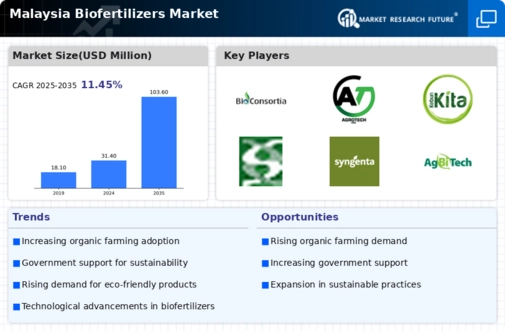
Malaysia Biofertilizers Market Infographic
Purchase Options

Malaysia Biofertilizers Market Summary

As per analysis, the Malaysia malaysia biofertilizers market is projected to grow from USD 39.2 Million in 2024 to USD 106.75 Million by 2035, exhibiting a compound annual growth rate (CAGR) of 9.53% during the forecast period (2025 - 2035).

Key Market Trends & Highlights

The Malaysia biofertilizers market is poised for growth driven by increasing demand for sustainable agricultural practices.

  • The demand for organic farming is rising, leading to a greater adoption of biofertilizers.
  • Soil fertility improvement remains the largest segment, while plant growth promotion is the fastest-growing segment in the market.
  • Liquid biofertilizers dominate the market, whereas granular biofertilizers are experiencing rapid growth.
  • Key market drivers include the rising demand for sustainable agriculture and government incentives supporting biofertilizer production.

Market Size & Forecast

2024 Market Size 39.2 (USD Million)
2035 Market Size 106.75 (USD Million)
CAGR (2025 - 2035) 9.53%

Major Players

BioCare (MY), AgroBio (MY), Green Biofertilizers (MY), BioFert (MY), MyBio (MY), EcoFert (MY), Nutrient Solutions (MY), AgriTech (MY)

Our Impact
Enabled $4.3B Revenue Impact for Fortune 500 and Leading Multinationals
Partnering with 2000+ Global Organizations Each Year
30K+ Citations by Top-Tier Firms in the Industry

Malaysia Biofertilizers Market Trends

The malaysia biofertilizers market is currently experiencing a notable transformation, driven by increasing awareness of sustainable agricultural practices among farmers and stakeholders. The Malaysian government has been actively promoting the use of biofertilizers as a means to enhance soil fertility and reduce reliance on chemical fertilizers. This shift aligns with the broader objectives of improving agricultural productivity while minimizing environmental impact. Furthermore, the integration of biofertilizers into conventional farming practices appears to be gaining traction, as farmers recognize the potential benefits of these organic alternatives. In addition, the malaysia biofertilizers market is witnessing a rise in research and development initiatives aimed at improving the efficacy and application methods of biofertilizers. Various agricultural universities and research institutions in Malaysia are collaborating with industry players to develop innovative biofertilizer products tailored to local soil conditions and crop requirements. This collaborative approach not only enhances product offerings but also fosters a culture of knowledge sharing and innovation within the sector. As the market continues to evolve, it seems poised for further growth, driven by both consumer demand for sustainable solutions and supportive government policies.

Rising Demand for Organic Farming

There is an increasing trend towards organic farming practices in Malaysia, which is likely to boost the demand for biofertilizers. Farmers are becoming more aware of the benefits of organic inputs, leading to a shift away from synthetic fertilizers. This trend suggests a growing preference for environmentally friendly agricultural solutions.

Government Support and Policy Initiatives

The Malaysian government appears to be actively supporting the biofertilizers sector through various policies and initiatives. This support may include funding for research, subsidies for biofertilizer production, and educational programs aimed at promoting sustainable farming practices among local farmers.

Technological Advancements in Biofertilizer Production

Innovations in production techniques and formulation of biofertilizers are emerging within the malaysia biofertilizers market. Advances in biotechnology and microbial research could enhance the effectiveness of biofertilizers, making them more appealing to farmers seeking efficient and sustainable agricultural solutions.

Malaysia Biofertilizers Market Drivers

Growing Awareness of Soil Health

There is a growing recognition among Malaysian farmers of the importance of soil health, which is driving the adoption of biofertilizers in the Malaysia biofertilizers market industry. Healthy soil is essential for sustainable agricultural practices, and biofertilizers play a crucial role in enhancing soil fertility and structure. Educational campaigns and workshops organized by agricultural agencies have raised awareness about the benefits of biofertilizers in improving soil health. As farmers become more informed about the long-term advantages of using biofertilizers, the demand for these products is expected to rise. This shift in mindset towards prioritizing soil health is likely to contribute positively to the growth of the Malaysia biofertilizers market industry.

Government Incentives and Support

The Malaysian government has implemented various policies and initiatives to promote the use of biofertilizers, which is a key driver in the Malaysia biofertilizers market industry. Programs aimed at providing financial assistance and subsidies for farmers adopting biofertilizers have been introduced. For instance, the Ministry of Agriculture and Food Security has launched initiatives to educate farmers about the benefits of biofertilizers and to facilitate access to these products. This support is crucial, as it encourages farmers to transition from conventional fertilizers to bio-based alternatives. The government's commitment to sustainable agriculture is reflected in its policies, which aim to increase the adoption of biofertilizers, thereby enhancing the growth potential of the Malaysia biofertilizers market industry.

Export Opportunities for Biofertilizers

The Malaysia biofertilizers market industry is also benefiting from increasing export opportunities. As global demand for organic and sustainable agricultural inputs rises, Malaysian biofertilizer producers are exploring international markets. The country's strategic location and established trade agreements with various countries provide a favorable environment for exporting biofertilizers. Recent data indicates that Malaysia's exports of agricultural products, including biofertilizers, have shown a positive trend. This expansion into international markets not only enhances the revenue potential for local producers but also positions Malaysia as a key player in The malaysia biofertilizers market. The potential for growth in exports is likely to further stimulate the development of the Malaysia biofertilizers market industry.

Rising Demand for Sustainable Agriculture

The increasing awareness of environmental sustainability is driving the demand for biofertilizers in the Malaysia biofertilizers market industry. Farmers are increasingly seeking alternatives to chemical fertilizers due to their adverse effects on soil health and the environment. The Malaysian government has been promoting sustainable agricultural practices, which has led to a notable rise in organic farming. According to recent statistics, the area under organic farming in Malaysia has expanded significantly, indicating a shift towards more sustainable practices. This trend is likely to continue, as consumers increasingly prefer organic produce, thereby creating a robust market for biofertilizers. The Malaysia biofertilizers market industry is poised to benefit from this growing demand, as biofertilizers are seen as a viable solution to enhance soil fertility while minimizing environmental impact.

Technological Innovations in Biofertilizer Production

Technological advancements in the production of biofertilizers are significantly influencing the Malaysia biofertilizers market industry. Innovations such as microbial inoculants and advanced fermentation techniques are enhancing the efficacy and efficiency of biofertilizers. Research institutions in Malaysia are actively engaged in developing new formulations that improve nutrient availability and plant growth. The introduction of these technologies is expected to increase the competitiveness of biofertilizers compared to traditional fertilizers. As a result, farmers are likely to adopt these innovative products, leading to a potential increase in market share for biofertilizers within the Malaysia biofertilizers market industry. This trend suggests a promising future for biofertilizer producers who invest in research and development.


Market Segment Insights

By Application: Soil Fertility Improvement (Largest) vs. Plant Growth Promotion (Fastest-Growing)

In the Malaysia biofertilizers market, the application segment is gaining traction with diverse values influencing soil and plant health. Soil Fertility Improvement takes a significant share due to its vital role in enhancing soil structure and nutrient content, attracting farmers focused on sustainable agricultural practices. In contrast, Plant Growth Promotion is emerging as a fast-growing value as agriculturalists increasingly recognize its potential in boosting crop yields and accelerating growth processes, thus contributing to greater output in diverse crops.

Soil Fertility Improvement (Dominant) vs. Plant Growth Promotion (Emerging)

Soil Fertility Improvement stands out as the dominant application in the Malaysia biofertilizers market, reflecting a strong preference among farmers for solutions that enhance soil health and nutrient retention. This application ensures long-term agricultural productivity by addressing soil degradation and nutrient depletion. On the other hand, Plant Growth Promotion is rapidly gaining prominence, characterized by innovations that enhance plant health and crop resilience. This emerging segment appeals to modern agricultural practices that require efficient growth solutions amid changing environmental conditions, driving its demand in the market.

By Formulation Type: Liquid Biofertilizers (Largest) vs. Granular Biofertilizers (Fastest-Growing)

In the Malaysia biofertilizers market, the formulation type segment exhibits a diverse distribution of products, with liquid biofertilizers currently holding the largest market share. This dominance is driven by their ease of application and quick absorption by plants. Granular biofertilizers, while holding a smaller share, are beginning to gain traction among farmers seeking long-lasting nutrients for their crops. Powder biofertilizers are also part of the mix, although their market presence is currently limited compared to the other two types. The growth trend within the formulation type segment is largely influenced by increasing awareness of sustainable agriculture and organic crop production. Liquid biofertilizers are favored for their rapid effectiveness, while granular biofertilizers are becoming increasingly popular due to their prolonged nutrient release. Agricultural practices shifting towards environmentally-friendly solutions are expected to drive further growth in this segment, particularly for granular options that combine convenience and efficiency.

Liquid Biofertilizers (Dominant) vs. Granular Biofertilizers (Emerging)

Liquid biofertilizers are characterized by their easy application and swift uptake, making them the dominant formulation in the Malaysia biofertilizers market. They are often used in various agricultural settings, including horticulture and field crops, due to their flexibility and effectiveness. Meanwhile, granular biofertilizers, though emerging, are gaining market share thanks to their long-lasting effects and ability to provide steady nutrient release. Farmers are increasingly recognizing the benefits of granular formulations for optimizing soil health and crop productivity. Both formulations are pivotal in promoting sustainable practices, but liquid biofertilizers currently lead the market, while granular options are on the rise as an attractive alternative for many growers.

By Microbial Source: Bacteria (Largest) vs. Fungi (Fastest-Growing)

In the Malaysian biofertilizers market, bacteria dominate the microbial source segment. They are widely recognized for their effectiveness in enhancing soil fertility and crop yields, making them a popular choice among farmers. Meanwhile, fungi are emerging as a powerful competitor, gaining significant market attention due to their ability to promote nutrient uptake and improve plant health. As the market evolves, understanding these dynamics is crucial for stakeholders looking to capitalize on the growing biofertilizer trend. The growth of the microbial source segment is fueled by increasing organic farming practices and a heightened awareness of sustainable agriculture. Bacteria are well-established, benefiting from their broad range of applications. Conversely, the rapid rise of fungi reflects a shift toward innovative solutions in soil management, driven by research and development efforts aiming to leverage beneficial microorganisms for enhanced agricultural productivity.

Bacteria: Dominant vs. Fungi: Emerging

Bacteria are the backbone of the microbial source segment in Malaysia's biofertilizers market, known for their role in nitrogen fixation, phosphorus solubilization, and overall soil health improvement. Their multifaceted benefits have made them the preferred choice amongst conventional farmers. However, fungi are rapidly gaining traction, recognized for their symbiotic relationships with plants. They enhance nutrient absorption and improve root health, making them highly sought after in organic and sustainable practices. The growing preference for natural and eco-friendly solutions positions fungi as an emerging segment, reflecting a shift in agricultural paradigms toward sustainability. This dynamic interplay suggests a coexistence where both bacteria and fungi can thrive, catering to diverse agricultural needs.

By End Use: Agriculture (Largest) vs. Horticulture (Fastest-Growing)

In the Malaysia biofertilizers market, the agriculture segment holds the largest share as it extensively incorporates biofertilizers to promote sustainable farming practices. The growing emphasis on organic farming in Malaysia is also significantly contributing to the dominance of this segment. Meanwhile, the horticulture segment is rapidly gaining traction, being recognized for its application in optimizing plant growth and quality, which appeals to both large-scale and small-scale growers in the region.

Agriculture (Dominant) vs. Horticulture (Emerging)

The agriculture segment is characterized by its widespread adoption of biofertilizers across various crops, making it the cornerstone of biofertilizer usage in Malaysia. Farmers are increasingly turning to these organic solutions to enhance soil fertility and reduce chemical inputs. In contrast, the horticulture segment is emerging as a dynamic player in the market, particularly among nurseries and garden centers. The drive for higher-quality produce and sustainable practices is propelling the growth of horticultural biofertilizers, making it a crucial focus for innovation and development.

By Distribution Channel: Direct Sales (Largest) vs. Online Sales (Fastest-Growing)

In the Malaysia biofertilizers market, the distribution landscape showcases a competitive array of channels. Direct sales currently hold the largest market share due to strong relationships between manufacturers and their customers, facilitating personalized service and immediate access to products. In contrast, online sales, while initially lagging, have gained traction thanks to the rising digitalization of purchasing behaviors and increased internet penetration, creating new opportunities for suppliers. As the market evolves, growth trends indicate that online sales are on a rapid upward trajectory, fueled by the convenience and accessibility of e-commerce platforms. This shift reflects changing consumer habits, where a growing number of buyers prefer online channels for their purchasing needs. With ongoing investments in online marketing and logistics, online sales are expected to become increasingly significant in the near future.

Direct Sales (Dominant) vs. Retail Sales (Emerging)

Direct sales remain dominant in the Malaysia biofertilizers market, primarily due to the established relationships that companies have cultivated with farmers and agricultural businesses. This channel allows for tailored solutions and expert advice directly to customers, enhancing the trust factor in purchasing biofertilizers. On the other hand, retail sales, though considered emerging, are gradually making their presence felt as retailers begin to cater to the increasing demand for sustainable agricultural practices. Retail outlets are evolving to provide a broader range of biofertilizer products, appealing to environmentally conscious consumers looking for sustainable solutions. As awareness and knowledge about biofertilizers grow among the general public and agricultural stakeholders, retail sales are poised for incremental growth, although they may still lag behind the direct sales channel.

Get more detailed insights about Malaysia Biofertilizers Market

Key Players and Competitive Insights

The competitive dynamics within the biofertilizers market in Malaysia are characterized by a blend of innovation, sustainability, and strategic partnerships. Key players such as BioCare (MY), AgroBio (MY), and Green Biofertilizers (MY) are actively shaping the landscape through their distinct operational focuses. BioCare (MY) emphasizes research and development, aiming to enhance product efficacy and environmental sustainability. AgroBio (MY) has adopted a strategy of regional expansion, targeting underserved agricultural areas to increase market penetration. Meanwhile, Green Biofertilizers (MY) is leveraging digital transformation to optimize its supply chain and customer engagement, indicating a shift towards more tech-driven operations. Collectively, these strategies contribute to a moderately fragmented market structure, where competition is driven by innovation and localized solutions.
In terms of business tactics, companies are increasingly localizing manufacturing to reduce costs and improve supply chain efficiency. This approach not only enhances responsiveness to market demands but also aligns with sustainability goals by minimizing transportation emissions. The competitive structure of the market appears to be moderately fragmented, with several players vying for market share. The influence of key players is significant, as their strategies often set benchmarks for operational excellence and innovation within the sector.
In December 2025, BioCare (MY) announced a partnership with a local university to develop advanced biofertilizer formulations tailored for specific crops. This collaboration is strategically important as it not only enhances BioCare's product offerings but also positions the company as a leader in research-driven solutions, potentially increasing its market share in the coming years.
In November 2025, AgroBio (MY) launched a new line of biofertilizers specifically designed for oil palm cultivation, which is a critical sector in Malaysia. This strategic move is likely to bolster AgroBio's presence in a lucrative market segment, reflecting a targeted approach to meet the needs of local farmers and enhance agricultural productivity.
In October 2025, Green Biofertilizers (MY) implemented an AI-driven supply chain management system aimed at optimizing inventory levels and reducing waste. This initiative underscores the growing trend of digitalization within the sector, suggesting that companies are increasingly relying on technology to enhance operational efficiency and customer satisfaction.
As of January 2026, the competitive trends in the biofertilizers market are heavily influenced by digitalization, sustainability, and the integration of AI technologies. Strategic alliances are becoming more prevalent, as companies recognize the value of collaboration in driving innovation and expanding market reach. Looking ahead, it is anticipated that competitive differentiation will increasingly pivot from price-based strategies to those centered on innovation, technological advancement, and reliable supply chains. This evolution may redefine the competitive landscape, fostering a more sustainable and efficient agricultural sector.

Key Companies in the Malaysia Biofertilizers Market include

Industry Developments

Recent developments in the Malaysia Biofertilizers Market reflect a growing emphasis on sustainable agricultural practices. As of September 2023, the Malaysian Agricultural Research and Development Institute (MARDI) has been actively promoting Biofertilizers through various programs aimed at supporting local farmers in adopting environmentally friendly alternatives. Additionally, companies like Green Nature and Royal Agritech are expanding their product lines to include innovative Biofertilizers that cater to the needs of modern agriculture, focusing on increased crop yield and soil health.

Current affairs highlight the competitive landscape, with BioConsortia and AgroTech working on strategic partnerships to enhance their Research and Development efforts and drive technological advancements in biofertilizer applications. Notably, there have been no recent publicly known mergers or acquisitions reported among the selected companies in this sector. The market has seen consistent growth, with companies like Biotech Agri Solutions and BASF Plant Science witnessing increased valuations due to their commitment to eco-friendly products, thus positively impacting the industry landscape in Malaysia.

Over the last couple of years, initiatives from entities like the Sarawak Biodiversity Centre have further solidified the importance of Biofertilizers in promoting sustainable agriculture in Malaysia.


Future Outlook

Malaysia Biofertilizers Market Future Outlook

The Malaysia biofertilizers market is projected to grow at a 9.53% CAGR from 2025 to 2035, driven by increasing organic farming practices, government support, and environmental sustainability initiatives.

New opportunities lie in:

  • Development of customized biofertilizer blends for specific crops Expansion into urban agriculture markets with tailored solutions Partnerships with agricultural cooperatives for bulk distribution

By 2035, the market is expected to be robust, driven by innovation and strategic partnerships.

Market Segmentation

Malaysia Biofertilizers Market End Use Outlook

  • Agriculture
  • Horticulture
  • Forestry

Malaysia Biofertilizers Market Application Outlook

  • Soil Fertility Improvement
  • Plant Growth Promotion
  • Nutrient Solubilization
  • Disease Resistance Enhancement

Malaysia Biofertilizers Market Formulation Type Outlook

  • Liquid Biofertilizers
  • Granular Biofertilizers
  • Powder Biofertilizers

Malaysia Biofertilizers Market Microbial Source Outlook

  • Bacteria
  • Fungi
  • Algae
  • Actinomycetes

Malaysia Biofertilizers Market Distribution Channel Outlook

  • Direct Sales
  • Online Sales
  • Retail Sales

Report Scope

MARKET SIZE 2024 39.2(USD Million)
MARKET SIZE 2025 43.4(USD Million)
MARKET SIZE 2035 106.75(USD Million)
COMPOUND ANNUAL GROWTH RATE (CAGR) 9.53% (2024 - 2035)
REPORT COVERAGE Revenue Forecast, Competitive Landscape, Growth Factors, and Trends
BASE YEAR 2024
Market Forecast Period 2025 - 2035
Historical Data 2019 - 2024
Market Forecast Units USD Million
Key Companies Profiled BioCare (MY), AgroBio (MY), Green Biofertilizers (MY), BioFert (MY), MyBio (MY), EcoFert (MY), Nutrient Solutions (MY), AgriTech (MY)
Segments Covered Application, Formulation Type, Microbial Source, End Use, Distribution Channel
Key Market Opportunities Growing demand for sustainable agriculture drives innovation in the malaysia biofertilizers market.
Key Market Dynamics Rising demand for sustainable agriculture drives innovation and competition in Malaysia's biofertilizers market.
Countries Covered Malaysia
Leave a Comment

FAQs

What is the current valuation of the Malaysia biofertilizers market?

The Malaysia biofertilizers market was valued at 39.2 USD Million in 2024.

What is the projected market size for the Malaysia biofertilizers market by 2035?

The market is projected to reach 106.75 USD Million by 2035.

What is the expected CAGR for the Malaysia biofertilizers market during the forecast period?

The expected CAGR for the Malaysia biofertilizers market from 2025 to 2035 is 9.53%.

Who are the key players in the Malaysia biofertilizers market?

Key players include BioCare (MY), AgroBio (MY), Green Biofertilizers (MY), and others.

What are the main applications of biofertilizers in Malaysia?

Main applications include Soil Fertility Improvement, Plant Growth Promotion, and Disease Resistance Enhancement.

How do liquid biofertilizers compare to granular and powder forms in terms of market valuation?

Liquid biofertilizers had a valuation of 15.0 USD Million in 2024, projected to grow to 40.0 USD Million by 2035.

What is the market valuation for biofertilizers used in agriculture?

Biofertilizers used in agriculture were valued at 20.0 USD Million in 2024, with projections indicating growth to 54.0 USD Million by 2035.

What distribution channels are prevalent in the Malaysia biofertilizers market?

Distribution channels include Direct Sales, Online Sales, and Retail Sales, with Direct Sales valued at 15.0 USD Million in 2024.

What microbial sources are utilized in the Malaysia biofertilizers market?

The market includes microbial sources such as Bacteria, Fungi, Algae, and Actinomycetes, with Bacteria valued at 15.0 USD Million in 2024.

What trends are expected in the formulation types of biofertilizers in Malaysia?

Formulation types include Liquid, Granular, and Powder biofertilizers, with Liquid biofertilizers projected to grow from 15.0 USD Million to 40.0 USD Million by 2035.

Download Free Sample

Kindly complete the form below to receive a free sample of this Report

Compare Licence

×
Features License Type
Single User Multiuser License Enterprise User
Price $4,950 $5,950 $7,250
Maximum User Access Limit 1 User Upto 10 Users Unrestricted Access Throughout the Organization
Free Customization
Direct Access to Analyst
Deliverable Format
Platform Access
Discount on Next Purchase 10% 15% 15%
Printable Versions