×
Request Free Sample ×

Kindly complete the form below to receive a free sample of this Report

* Please use a valid business email

Leading companies partner with us for data-driven Insights

clients tt-cursor
Hero Background

Kidney Stones Market

ID: MRFR/HC/1213-CR
117 Pages
Kinjoll Dey
February 2021

Kidney Stone Market Research Report Information by Type (Calcium Oxalate Stones, Uric Acid, Struvite Kidney Stones, Cystine Stones, Calcium Phosphate Stones), Treatment Type (Medications, Extracorporeal Shock Wave Lithotripsy, Ureteroscopy, Percutaneous Nephrolithotomy), Diagnosis (Ultrasound, Intravenous Pyelography, CT scan, X-Ray, Others), And By Region (North America, Europe, Asia-Pacific, And Rest Of The World) - Forecast Till 2035

Share:
Download PDF ×

We do not share your information with anyone. However, we may send you emails based on your report interest from time to time. You may contact us at any time to opt-out.

Kidney Stones Market Infographic
Purchase Options

Kidney Stones Market Summary

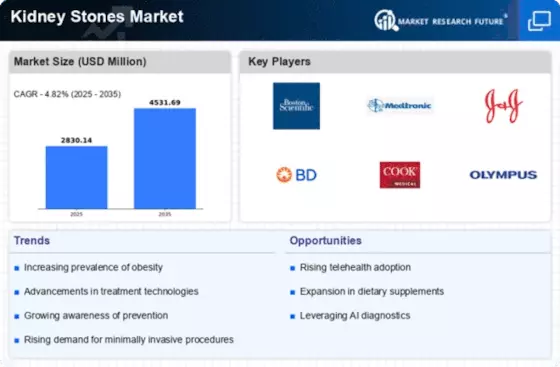
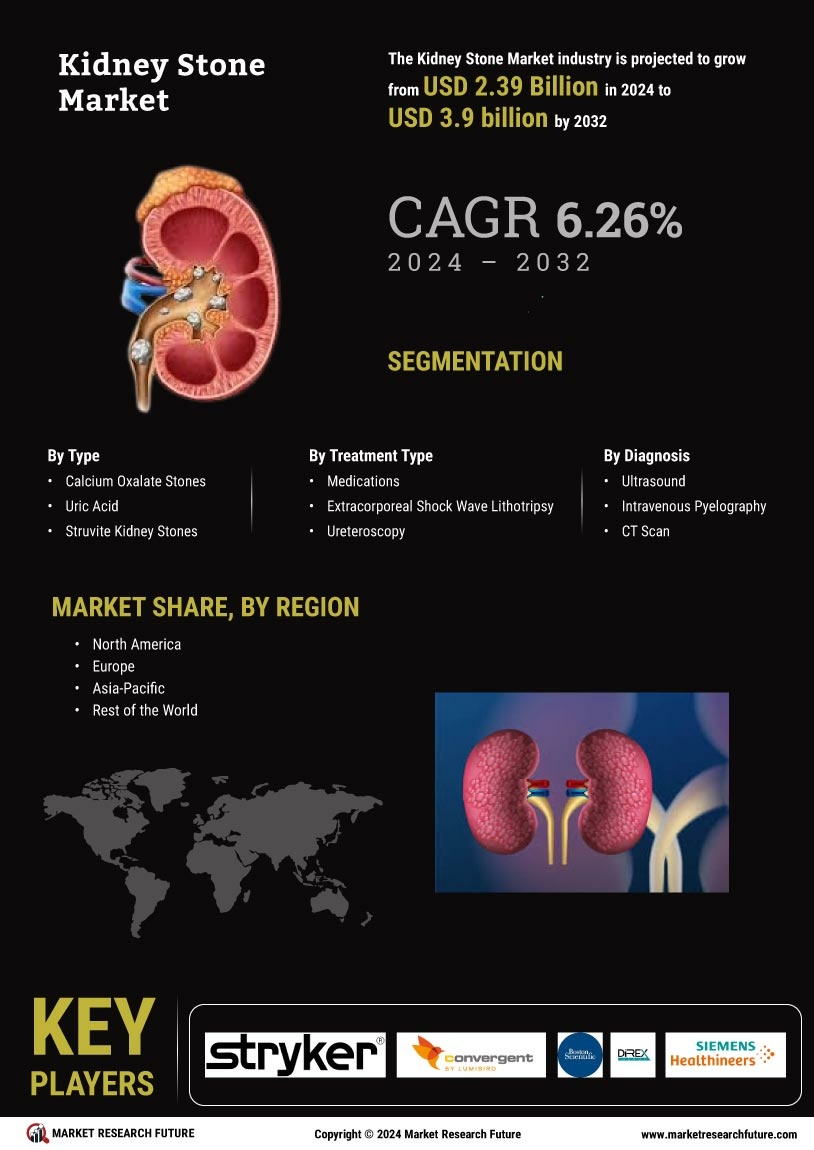
As per MRFR analysis, the Kidney Stones Market Size was estimated at 2700.0 USD Million in 2024. The Kidney Stones industry is projected to grow from 2830.15 in 2025 to 4531.69 by 2035, exhibiting a compound annual growth rate (CAGR) of 4.82 during the forecast period 2025 - 2035.

Key Market Trends & Highlights

The Kidney Stones Market is experiencing notable growth driven by technological advancements and demographic shifts.

  • Technological advancements in treatment are enhancing patient outcomes and expanding treatment options.
  • Growing awareness and education about kidney stones are leading to increased patient engagement and proactive healthcare.
  • Demographic shifts, particularly in the aging population, are contributing to a rising incidence of kidney stones in North America.
  • The rising incidence of kidney stones and advancements in medical technology are key drivers propelling market growth in both North America and Asia-Pacific.

Market Size & Forecast

2024 Market Size 2700.0 (USD Million)
2035 Market Size 4531.69 (USD Million)
CAGR (2025 - 2035) 4.82%

Major Players

Boston Scientific (US), Medtronic (US), Johnson & Johnson (US), C.R. Bard (US), Cook Medical (US), Olympus Corporation (JP), Stryker Corporation (US), Terumo Corporation (JP), Karl Storz (DE)

Our Impact
Enabled $4.3B Revenue Impact for Fortune 500 and Leading Multinationals
Partnering with 2000+ Global Organizations Each Year
30K+ Citations by Top-Tier Firms in the Industry

Kidney Stones Market Trends

The Kidney Stones Market is currently experiencing notable transformations driven by various factors. Increasing awareness regarding kidney health and the rising prevalence of kidney stones are contributing to a heightened demand for effective treatment options. Patients are becoming more informed about their conditions, leading to a surge in consultations and diagnostic procedures. Furthermore, advancements in medical technology are facilitating the development of innovative treatment modalities, which may enhance patient outcomes and satisfaction. As healthcare systems evolve, the integration of telemedicine and digital health solutions is also gaining traction, potentially improving access to care for individuals suffering from kidney stones. In addition, the Kidney Stones Market appears to be influenced by demographic shifts, particularly the aging population. Older adults are more susceptible to developing kidney stones, which could lead to an increased patient base for healthcare providers. Moreover, lifestyle changes, such as dietary habits and sedentary behavior, may further exacerbate the incidence of this condition. As a result, stakeholders in the market are likely to focus on preventive measures and education to mitigate risks associated with kidney stones. Overall, the Kidney Stones Market is poised for growth, driven by a combination of technological advancements, demographic trends, and increased awareness of kidney health.

Technological Advancements in Treatment

The Kidney Stones Market is witnessing a surge in innovative treatment options, largely due to advancements in medical technology. New techniques, such as minimally invasive procedures and laser lithotripsy, are becoming more prevalent, potentially improving patient recovery times and outcomes. These developments may lead to a shift in treatment paradigms, as healthcare providers increasingly adopt cutting-edge solutions to address kidney stone issues.

Growing Awareness and Education

There is a noticeable increase in public awareness regarding kidney health and the implications of kidney stones. Educational campaigns and resources are becoming more accessible, encouraging individuals to seek timely medical advice. This trend may result in earlier diagnosis and intervention, ultimately contributing to better management of kidney stones and reducing the burden on healthcare systems.

Demographic Shifts and Lifestyle Changes

The Kidney Stones Market is likely to be affected by demographic changes, particularly the aging population. Older adults are at a higher risk for developing kidney stones, which could expand the market's patient base. Additionally, lifestyle factors, such as poor dietary choices and lack of physical activity, may further increase the prevalence of kidney stones, prompting healthcare providers to focus on preventive strategies.

Kidney Stones Market Drivers

Rising Healthcare Expenditure

The upward trend in healthcare expenditure is influencing the Kidney Stones Market. As countries allocate more resources to healthcare, there is a corresponding increase in funding for research and development in the field of urology. This financial commitment fosters innovation and the introduction of new treatment modalities for kidney stones. Additionally, higher healthcare spending often translates to improved access to medical services, enabling more patients to seek treatment for kidney stones. This trend is particularly evident in regions where healthcare systems are evolving to meet the demands of their populations. As a result, the Kidney Stones Market is likely to benefit from increased investment in healthcare infrastructure and services, ultimately enhancing patient care and treatment outcomes.

Rising Incidence of Kidney Stones

The increasing prevalence of kidney stones is a primary driver of the Kidney Stones Market. Recent data indicates that approximately 10 percent of the population will experience a kidney stone at some point in their lives. This rising incidence is attributed to various factors, including dietary habits, obesity, and dehydration. As more individuals are diagnosed with kidney stones, the demand for effective treatment options and preventive measures escalates. This trend is likely to propel the growth of the Kidney Stones Market, as healthcare providers seek innovative solutions to manage and treat this condition. Furthermore, the economic burden associated with kidney stones, including hospitalizations and treatment costs, underscores the necessity for advancements in this market.

Advancements in Medical Technology

Technological innovations in the medical field are significantly influencing the Kidney Stones Market. The development of minimally invasive surgical techniques, such as ureteroscopy and laser lithotripsy, has transformed the treatment landscape for kidney stones. These advancements not only enhance patient outcomes but also reduce recovery times and hospital stays. Moreover, the integration of imaging technologies, such as ultrasound and CT scans, facilitates accurate diagnosis and treatment planning. As healthcare providers increasingly adopt these advanced technologies, the Kidney Stones Market is poised for growth. The potential for new devices and treatment modalities to emerge further indicates a dynamic market environment, where continuous improvement in patient care remains a priority.

Aging Population and Chronic Conditions

The aging population is a significant driver of the Kidney Stones Market. As individuals age, the likelihood of developing kidney stones increases due to various factors, including changes in metabolism and the prevalence of chronic conditions such as diabetes and hypertension. This demographic shift is expected to result in a higher incidence of kidney stones, thereby increasing the demand for treatment options. Furthermore, the aging population often requires more comprehensive healthcare services, which may include specialized care for kidney stone management. Consequently, the Kidney Stones Market is likely to expand as healthcare systems adapt to meet the needs of this growing demographic, ensuring that effective treatment options are readily available.

Increased Focus on Preventive Healthcare

The growing emphasis on preventive healthcare is shaping the Kidney Stones Market. As awareness of the importance of lifestyle choices in preventing kidney stones rises, individuals are more inclined to adopt healthier diets and hydration practices. This shift is reflected in the increasing demand for dietary supplements and educational resources aimed at preventing kidney stones. Additionally, healthcare providers are prioritizing preventive measures, leading to the development of programs and initiatives focused on educating patients about risk factors and management strategies. This proactive approach not only benefits patients but also contributes to the overall growth of the Kidney Stones Market, as it encourages the development of products and services tailored to prevention.

Market Segment Insights

By Type of Kidney Stones: Calcium Oxalate (Largest) vs. Uric Acid (Fastest-Growing)

The Kidney Stones Market is significantly driven by the prevalence of different types of kidney stones, with Calcium Oxalate stones being the most common, holding the largest market share. Uric Acid stones, while less prevalent than Calcium Oxalate, are emerging rapidly due to various factors including dietary changes and lifestyle diseases. Struvite and Cystine stones account for a smaller portion of the market, but they also play a crucial role in the overall landscape of kidney stone composition.

Calcium Oxalate (Dominant) vs. Uric Acid (Emerging)

Calcium Oxalate stones are the dominant type in the kidney stones market, primarily due to their high incidence linked to diet and genetic factors. Patients suffering from conditions such as hypercalciuria often experience this type of stone. On the other hand, Uric Acid stones are emerging as a significant concern, especially among individuals with diets rich in purines, contributing to a rising incidence. Their formation is influenced by factors like obesity and metabolic syndrome, making them a growing focus in patient management and preventive strategies. Together, these types define the landscape of kidney stone challenges faced in today's healthcare setting.

By Treatment Method: Medication (Largest) vs. Surgery (Fastest-Growing)

The distribution of market share among the treatment methods for kidney stones reveals that medication remains the largest segment, successfully catering to patients seeking non-invasive solutions. This approach benefits from ongoing advancements in pharmaceutical research, which continuously enhance drug efficacy and patient outcomes. Conversely, surgery, while holding a smaller share, is identified as the fastest-growing segment due to increasing incidences of complex kidney stone cases and the advancement in surgical techniques, providing better recovery time and outcomes for patients.

Medication: Dominant vs. Surgery: Emerging

Medication is characterized by its non-invasive approach, allowing patients to manage kidney stones with pain relief and stone dissolution treatments. The continuous innovation in pharmaceuticals and the growing preference for conservative management contribute to its dominance in the market. On the other hand, surgery is emerging rapidly, driven by advancements in techniques such as laparoscopic surgery and robotic assistance. This method is increasingly favored for patients with large or recurrent stones, as it significantly decreases recovery time and improves procedural success rates, making it a vital alternative in the overall treatment landscape.

By Diagnosis Method: CT Scan (Largest) vs. Ultrasound (Fastest-Growing)

In the Kidney Stones Market, the diagnosis methods exhibit a varied distribution of market share. CT Scan stands out as the largest segment, favored for its high accuracy and quick results, which many healthcare providers prefer. Ultrasound, while currently holding a smaller market share, is rapidly gaining traction due to its non-invasive nature and growing acceptance in clinical practices. As a whole, this segment captures the diverse preferences in diagnostic approaches among healthcare professionals, reflecting the demand for effective diagnosis.

CT Scan (Dominant) vs. Ultrasound (Emerging)

CT Scan is seen as the dominant diagnosis method due to its exceptional precision in identifying kidney stones. Its ability to provide detailed images within a short time contributes significantly to its preference among urologists and emergency departments. However, Ultrasound is emerging as a viable alternative, particularly in pediatric cases and in settings where radiation exposure is a concern. The growth of Ultrasound is propelled by advancements in technology making it more accessible, along with increasing awareness of the benefits of radiation-free imaging, positioning it as an indispensable tool in the evolving landscape of kidney stone diagnosis.

By Patient Demographics: Age Group (Largest) vs. Gender (Fastest-Growing)

In the Kidney Stones Market, the distribution of patients by age group indicates that individuals aged 30 to 50 years represent the largest segment, significantly impacting the overall market. This demographic holds a notable portion of the market due to lifestyle factors and increased prevalence of kidney stones within this age range. Gender distribution shows a growing trend, particularly among females, as awareness and diagnosis improve, making it a key area for growth in upcoming years.

Age Group: 30-50 (Dominant) vs. Gender: Female (Emerging)

The age group of 30 to 50 years is currently the dominant demographic in the Kidney Stones Market, primarily due to the combination of lifestyle choices, dietary habits, and increased susceptibility that come with age. This group frequently experiences the implications of sedentary lifestyles and dietary influences, which contribute to stone formation. Conversely, the female demographic is emerging as a significant player in this market. With an increasing awareness of kidney health among women and outreach programs targeting female patients, this group shows potential for rapid growth and is likely to become an essential part of future market strategies.

Get more detailed insights about Kidney Stones Market

Regional Insights

North America : Market Leader in Innovation

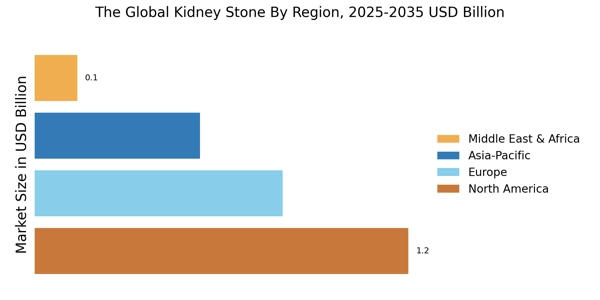
North America holds a commanding position in the kidney stones market, with a market size of $1350.0 million in 2024. The region's growth is driven by increasing prevalence of kidney stones, advancements in medical technology, and supportive healthcare policies. Regulatory catalysts, such as FDA approvals for innovative treatment devices, further enhance market dynamics. The rising awareness of preventive healthcare and lifestyle changes also contribute to the growing demand for effective treatment options. The competitive landscape in North America is characterized by the presence of major players like Boston Scientific, Medtronic, and Johnson & Johnson. These companies are at the forefront of developing cutting-edge technologies and minimally invasive procedures. The U.S. remains the leading country, accounting for a significant share of the market, while Canada is also witnessing growth due to increasing healthcare investments and a rising patient population.

Europe : Emerging Market with Growth Potential

Europe's kidney stones market is valued at $810.0 million, reflecting a growing demand for advanced treatment options. Factors such as an aging population, rising obesity rates, and increased awareness of kidney health are driving market growth. Regulatory frameworks in the EU promote innovation and ensure patient safety, which is crucial for market expansion. The region is also witnessing a shift towards minimally invasive procedures, enhancing patient outcomes and satisfaction. Leading countries in Europe include Germany, France, and the UK, where healthcare systems are increasingly adopting advanced technologies. Key players like Karl Storz and Olympus Corporation are actively involved in research and development, contributing to the competitive landscape. The presence of robust healthcare infrastructure and favorable reimbursement policies further support market growth, positioning Europe as a significant player in The Kidney Stones.

Asia-Pacific : Rapidly Growing Healthcare Sector

The Asia-Pacific kidney stones market is valued at $450.0 million, driven by rising healthcare expenditures and increasing prevalence of kidney stones. Countries like China and India are experiencing a surge in demand for effective treatment options due to lifestyle changes and dietary habits. Government initiatives aimed at improving healthcare access and affordability are also contributing to market growth. The region is witnessing a trend towards adopting advanced medical technologies, enhancing treatment efficacy. In the competitive landscape, key players such as Terumo Corporation and Olympus Corporation are expanding their presence in Asia-Pacific. The market is characterized by a mix of local and international companies, fostering innovation and competition. As healthcare infrastructure improves, the region is poised for significant growth, making it an attractive market for investment and development in kidney stone treatments.

Middle East and Africa : Emerging Market with Challenges

The Middle East and Africa (MEA) kidney stones market is valued at $90.0 million, reflecting a nascent but growing sector. The region faces challenges such as limited healthcare access and varying levels of awareness about kidney health. However, increasing urbanization and lifestyle changes are contributing to a rise in kidney stone cases, driving demand for treatment options. Government initiatives aimed at improving healthcare infrastructure are expected to support market growth in the coming years. Leading countries in the MEA region include South Africa and the UAE, where healthcare systems are gradually adopting advanced medical technologies. The competitive landscape is evolving, with both local and international players seeking to establish a foothold. As awareness of kidney health increases, the market is likely to attract investments, paving the way for innovative treatment solutions.

Kidney Stones Market Regional Image

Key Players and Competitive Insights

The Kidney Stones Market is characterized by a competitive landscape that is increasingly shaped by innovation, strategic partnerships, and a focus on patient-centric solutions. Key players such as Boston Scientific (US), Medtronic (US), and Johnson & Johnson (US) are actively pursuing strategies that emphasize technological advancements and operational efficiencies. For instance, Boston Scientific (US) has been focusing on expanding its product portfolio through innovative solutions that enhance patient outcomes, while Medtronic (US) is leveraging its extensive research capabilities to develop minimally invasive procedures that cater to the growing demand for less invasive treatment options. Johnson & Johnson (US), on the other hand, appears to be concentrating on strategic acquisitions to bolster its market presence and diversify its offerings, thereby shaping a competitive environment that is both dynamic and multifaceted.

In terms of business tactics, companies are increasingly localizing manufacturing to reduce costs and improve supply chain efficiency. This approach not only enhances responsiveness to market demands but also mitigates risks associated with global supply chain disruptions. The competitive structure of the market is moderately fragmented, with several players vying for market share. However, the collective influence of major companies is significant, as they drive innovation and set industry standards that smaller players often follow.

In January 2026, Medtronic (US) announced the launch of a new line of advanced ureteral stents designed to improve patient comfort and reduce complications associated with kidney stone procedures. This strategic move is likely to enhance Medtronic's competitive edge by addressing specific patient needs and reinforcing its commitment to innovation in urology. The introduction of these stents may also position the company favorably against competitors who have yet to innovate in this area.

In December 2025, Boston Scientific (US) entered into a partnership with a leading telehealth provider to integrate remote monitoring solutions into its kidney stone treatment protocols. This collaboration is indicative of a broader trend towards digital health solutions, which could potentially transform patient management and follow-up care. By embracing telehealth, Boston Scientific (US) not only enhances its service offerings but also aligns itself with the growing demand for digital health solutions in the medical field.

In November 2025, Johnson & Johnson (US) completed the acquisition of a startup specializing in AI-driven diagnostic tools for kidney stones. This acquisition is strategically significant as it allows Johnson & Johnson (US) to integrate cutting-edge technology into its existing product lines, thereby enhancing diagnostic accuracy and treatment efficacy. The move underscores the importance of technological integration in maintaining a competitive advantage in the market.

As of February 2026, current trends in the Kidney Stones Market are increasingly defined by digitalization, sustainability, and the integration of AI technologies. Strategic alliances are becoming more prevalent, as companies recognize the value of collaboration in driving innovation and expanding market reach. Looking ahead, competitive differentiation is likely to evolve from traditional price-based competition to a focus on innovation, technological advancements, and supply chain reliability. This shift suggests that companies that prioritize these elements will be better positioned to thrive in an increasingly complex and competitive landscape.

Key Companies in the Kidney Stones Market include

Industry Developments

  • Q2 2024: Boston Scientific Announces FDA Clearance of Next-Generation LithoVue™ Elite Single-Use Digital Flexible Ureteroscope Boston Scientific received FDA clearance for its LithoVue™ Elite, a next-generation single-use digital flexible ureteroscope designed for kidney stone management, enhancing visualization and data integration for urologists.
  • Q2 2024: Olympus Launches Soltive™ SuperPulsed Laser System for Kidney Stone Treatment in Europe Olympus announced the European launch of its Soltive™ SuperPulsed Laser System, a new device for minimally invasive kidney stone treatment, expanding its urology portfolio.
  • Q3 2024: Urotronic Receives CE Mark Approval for Optilume® Urethral Drug-Coated Balloon for Urolithiasis Urotronic secured CE Mark approval for its Optilume® drug-coated balloon, enabling its use in the European market for the treatment of urethral strictures associated with kidney stone disease.
  • Q3 2024: Medtronic Acquires StoneClear Medical to Expand Kidney Stone Management Portfolio Medtronic completed the acquisition of StoneClear Medical, a startup specializing in advanced kidney stone removal devices, strengthening its position in the urology device market.
  • Q2 2024: Dornier MedTech Opens New Manufacturing Facility in Singapore for Kidney Stone Devices Dornier MedTech inaugurated a new manufacturing facility in Singapore dedicated to the production of its kidney stone management devices, aiming to meet growing global demand.
  • Q1 2025: Coloplast Announces $200 Million Investment in Urology R&D, Focus on Kidney Stone Solutions Coloplast revealed a $200 million investment in research and development for urology, with a significant portion allocated to developing new kidney stone management technologies.
  • Q2 2025: Boston Scientific Launches LithoVue™ Elite in Asia-Pacific Markets Boston Scientific expanded the availability of its LithoVue™ Elite single-use digital flexible ureteroscope to Asia-Pacific markets, following regulatory approvals in several countries.
  • Q1 2024: FDA Approves New Indication for ShockPulse-SE Lithotripter in Pediatric Kidney Stone Patients The FDA granted approval for the use of the ShockPulse-SE Lithotripter in pediatric patients, broadening treatment options for children with kidney stones.
  • Q3 2024: Olympus Partners with Medispec to Co-Develop Next-Generation Lithotripsy System Olympus entered a partnership with Medispec to co-develop a next-generation lithotripsy system aimed at improving the efficiency and safety of kidney stone fragmentation.
  • Q2 2024: Urotronic Raises $40 Million in Series C Funding to Advance Kidney Stone Device Pipeline Urotronic closed a $40 million Series C funding round to accelerate the development and commercialization of its minimally invasive devices for kidney stone management.
  • Q4 2024: Coloplast Receives FDA Clearance for New Ureteral Stent for Kidney Stone Patients Coloplast obtained FDA clearance for its latest ureteral stent, designed to improve patient comfort and outcomes in kidney stone management.
  • Q1 2025: Medtronic Appoints New Head of Urology Division Amid Kidney Stone Market Expansion Medtronic appointed a new executive to lead its urology division, signaling a strategic focus on expanding its kidney stone management business.

Future Outlook

Kidney Stones Market Future Outlook

The Kidney Stones Market is projected to grow at a 4.82% CAGR from 2024 to 2035, driven by increasing prevalence, advancements in treatment technologies, and rising healthcare expenditure.

New opportunities lie in:

  • Development of minimally invasive surgical techniques for stone removal.
  • Expansion of telehealth services for remote patient monitoring and consultations.
  • Investment in AI-driven diagnostic tools for early detection of kidney stones.

By 2035, the Kidney Stones Market is expected to achieve substantial growth and innovation.

Market Segmentation

Kidney Stones Market Diagnosis Method Outlook

  • Ultrasound
  • CT Scan
  • X-ray
  • Urinalysis

Kidney Stones Market Treatment Method Outlook

  • Medication
  • Surgery
  • Extracorporeal Shock Wave Lithotripsy
  • Ureteroscopy

Kidney Stones Market Patient Demographics Outlook

  • Age Group
  • Gender
  • Lifestyle Factors
  • Geographic Distribution

Kidney Stones Market Type of Kidney Stones Outlook

  • Calcium Oxalate
  • Uric Acid
  • Struvite
  • Cystine

Report Scope

MARKET SIZE 20242700.0(USD Million)
MARKET SIZE 20252830.15(USD Million)
MARKET SIZE 20354531.69(USD Million)
COMPOUND ANNUAL GROWTH RATE (CAGR)4.82% (2024 - 2035)
REPORT COVERAGERevenue Forecast, Competitive Landscape, Growth Factors, and Trends
BASE YEAR2024
Market Forecast Period2025 - 2035
Historical Data2019 - 2024
Market Forecast UnitsUSD Million
Key Companies ProfiledBoston Scientific (US), Medtronic (US), Johnson & Johnson (US), C.R. Bard (US), Cook Medical (US), Olympus Corporation (JP), Stryker Corporation (US), Terumo Corporation (JP), Karl Storz (DE)
Segments CoveredType of Kidney Stones, Treatment Method, Diagnosis Method, Patient Demographics
Key Market OpportunitiesAdvancements in minimally invasive treatment technologies enhance patient outcomes in the Kidney Stones Market.
Key Market DynamicsRising prevalence of kidney stones drives demand for innovative treatment options and advanced diagnostic technologies.
Countries CoveredNorth America, Europe, APAC, South America, MEA

Market Highlights

Author
Kinjoll Dey
Research Analyst Level I

He is an extremely curious individual currently working in Healthcare and Medical Devices Domain. Kinjoll is comfortably versed in data centric research backed by healthcare educational background. He leverages extensive data mining and analytics tools such as Primary and Secondary Research, Statistical Analysis, Machine Learning, Data Modelling. His key role also involves Technical Sales Support, Client Interaction and Project management within the Healthcare team. Lastly, he showcases extensive affinity towards learning new skills and remain fascinated in implementing them.

Leave a Comment

FAQs

What is the current valuation of The Global Kidney Stone?

The Global Kidney Stone was valued at 2.7 USD Billion in 2024.

What is the projected market size for The Global Kidney Stone by 2035?

The market is projected to reach 4.532 USD Billion by 2035.

What is the expected CAGR for The Global Kidney Stone during the forecast period 2025 - 2035?

The expected CAGR for the market during 2025 - 2035 is 4.82%.

Which types of kidney stones are most prevalent in the market?

Calcium Oxalate Stones lead the market, with a valuation increase from 1.35 USD Billion in 2024 to 2.25 USD Billion by 2035.

What are the key treatment types contributing to The Global Kidney Stone?

Medications and Ureteroscopy are significant contributors, with both expected to grow from 0.81 USD Billion in 2024 to 1.36 USD Billion by 2035.

How does the diagnosis segment perform in The Global Kidney Stone?

The CT Scan segment is anticipated to grow from 0.81 USD Billion in 2024 to 1.29 USD Billion by 2035.

Who are the leading players in The Global Kidney Stone?

Key players include Boston Scientific, Medtronic, and Johnson & Johnson, among others.

Download Free Sample

Kindly complete the form below to receive a free sample of this Report

Compare Licence

×
Features License Type
Single User Multiuser License Enterprise User
Price $4,950 $5,950 $7,250
Maximum User Access Limit 1 User Upto 10 Users Unrestricted Access Throughout the Organization
Free Customization
Direct Access to Analyst
Deliverable Format
Platform Access
Discount on Next Purchase 10% 15% 15%
Printable Versions