×
Request Free Sample ×

Kindly complete the form below to receive a free sample of this Report

* Please use a valid business email

Leading companies partner with us for data-driven Insights

clients tt-cursor
Hero Background

Japan Motorcycles Market

ID: MRFR/AT/43109-HCR
128 Pages
Sejal Akre
February 2026

Japan Motorcycles Market Research Report By Application (Handlers, Postures) and By End User (Cruiser, Adventure, Touring, Standard, Sports) - Growth & Industry Forecast 2025 To 2035

Share:
Download PDF ×

We do not share your information with anyone. However, we may send you emails based on your report interest from time to time. You may contact us at any time to opt-out.

Japan Motorcycles Market Infographic
Purchase Options

Japan Motorcycles Market Summary

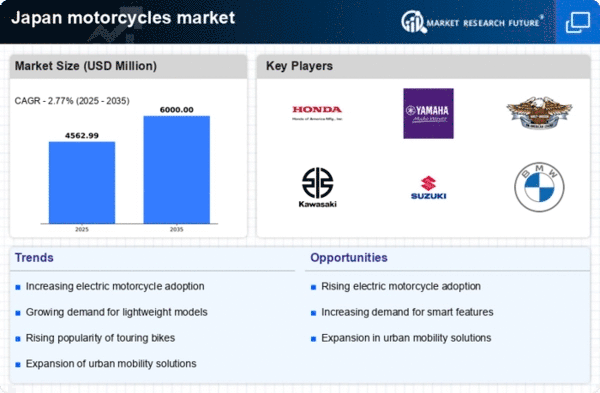
As per Market Research Future analysis, the Japan motorcycles market Size was estimated at 4440.0 $ Million in 2024. The Japan motorcycles market is projected to grow from 4562.99 $ Million in 2025 to 6000.0 $ Million by 2035, exhibiting a compound annual growth rate (CAGR) of 2.7% during the forecast period 2025 - 2035

Key Market Trends & Highlights

The Japan motorcycles market is experiencing a transformative shift towards electric and smart technologies.

  • The market is witnessing a notable rise in electric motorcycles, reflecting a broader trend towards sustainable transportation.
  • Smart technology integration is becoming increasingly prevalent, enhancing user experience and safety features in motorcycles.
  • Urban mobility solutions are gaining traction, particularly in densely populated areas, as consumers seek efficient transportation options.
  • Key market drivers include the increasing demand for eco-friendly transportation and technological advancements in motorcycle design.

Market Size & Forecast

2024 Market Size 4440.0 (USD Million)
2035 Market Size 6000.0 (USD Million)
CAGR (2025 - 2035) 2.77%

Major Players

Honda (JP), Yamaha (JP), Harley-Davidson (US), Kawasaki (JP), Suzuki (JP), BMW (DE), Ducati (IT), Triumph (GB), KTM (AT)

Our Impact
Enabled $4.3B Revenue Impact for Fortune 500 and Leading Multinationals
Partnering with 2000+ Global Organizations Each Year
30K+ Citations by Top-Tier Firms in the Industry

Japan Motorcycles Market Trends

The motorcycles market in Japan is currently experiencing a dynamic phase characterized by evolving consumer preferences and technological advancements. The increasing interest in eco-friendly transportation options has led to a rise in demand for electric motorcycles, which are perceived as a sustainable alternative to traditional gasoline-powered models. This shift is further supported by government initiatives aimed at reducing carbon emissions and promoting green technologies. Additionally, the growing popularity of urban commuting solutions has influenced manufacturers to innovate and adapt their offerings to meet the needs of city dwellers. As a result, the market is witnessing a diversification of product lines, catering to various segments, including leisure riders and daily commuters. Moreover, the motorcycles market is also seeing a trend towards enhanced connectivity features. Consumers are increasingly seeking motorcycles equipped with smart technology, such as navigation systems and smartphone integration. This trend reflects a broader movement towards digitalization in the automotive sector, where convenience and safety are paramount. The competitive landscape is intensifying as manufacturers strive to differentiate their products through advanced features and superior performance. Overall, the motorcycles market in Japan is poised for growth, driven by innovation, sustainability, and changing consumer behaviors.

Rise of Electric Motorcycles

The demand for electric motorcycles is on the rise, driven by environmental concerns and government incentives. Consumers are increasingly attracted to eco-friendly options, leading manufacturers to expand their electric offerings.

Smart Technology Integration

There is a growing trend towards the incorporation of smart technology in motorcycles. Features such as navigation systems and smartphone connectivity are becoming essential for modern riders, enhancing convenience and safety.

Urban Mobility Solutions

The motorcycles market is adapting to the needs of urban commuters. Manufacturers are focusing on lightweight, compact designs that facilitate easy maneuverability in congested city environments.

Japan Motorcycles Market Drivers

Shift Towards Urban Mobility Solutions

The motorcycles market in Japan is witnessing a shift towards urban mobility solutions, driven by increasing urbanization and traffic congestion. Motorcycles offer a practical alternative for navigating crowded city streets, appealing to commuters seeking efficient transportation. In 2025, urban motorcycle sales are projected to rise by 20%, as more individuals recognize the advantages of two-wheeled vehicles in urban settings. This trend is prompting manufacturers to focus on compact, lightweight models that are easy to maneuver and park. As cities continue to evolve, the motorcycles market is likely to adapt to the changing needs of urban dwellers.

Rising Popularity of Motorcycle Tourism

Motorcycle tourism is emerging as a significant driver for the motorcycles market in Japan. The country's diverse landscapes and scenic routes attract both domestic and international riders, contributing to a growing interest in motorcycle travel. In 2025, it is estimated that motorcycle tourism generated over $500 million in revenue, highlighting its economic impact. This trend encourages manufacturers to develop touring motorcycles that cater to long-distance travel, equipped with features such as comfortable seating and advanced navigation systems. As more riders seek adventure and exploration, the motorcycles market is poised to benefit from this burgeoning segment.

Technological Advancements in Motorcycle Design

Technological advancements are playing a crucial role in shaping the motorcycles market in Japan. Innovations in materials, safety features, and performance enhancements are attracting a new generation of riders. For instance, the integration of lightweight materials has improved fuel efficiency and handling, while advanced safety technologies, such as anti-lock braking systems (ABS) and traction control, have become standard in many models. These developments not only enhance the riding experience but also align with consumer expectations for modern motorcycles. As manufacturers invest in research and development, the motorcycles market is likely to see a continuous influx of cutting-edge designs and features.

Increasing Demand for Eco-Friendly Transportation

The motorcycles market in Japan is experiencing a notable shift towards eco-friendly transportation solutions. As environmental concerns gain traction, consumers are increasingly seeking sustainable alternatives to traditional gasoline-powered motorcycles. This trend is reflected in the rising sales of electric motorcycles, which accounted for approximately 15% of total motorcycle sales in 2025. The Japanese government has also implemented various incentives to promote electric vehicle adoption, further stimulating growth in the motorcycles market. This demand for greener options is likely to continue influencing consumer preferences, pushing manufacturers to innovate and expand their electric offerings.

Growing Interest in Customization and Personalization

Customization and personalization are becoming prominent trends within the motorcycles market in Japan. Riders increasingly seek unique motorcycles that reflect their individual styles and preferences. This demand has led to a rise in aftermarket parts and accessories, with the customization market estimated to be worth over $300 million in 2025. Manufacturers are responding by offering a wider range of customizable options, from aesthetic modifications to performance upgrades. This trend not only enhances rider satisfaction but also fosters a sense of community among motorcycle enthusiasts. As the desire for personalized experiences grows, the motorcycles market is likely to see continued innovation in this area.


Market Segment Insights

By Type: Cruiser (Largest) vs. Sport (Fastest-Growing)

In the Japan motorcycles market, the Cruiser segment holds the largest share, appealing to riders with its comfortable design and classic styling. Following closely are the Sport and Touring segments, which cater to enthusiasts seeking speed and long-distance travel, respectively. The Standard segment remains popular for its versatility, while the Dirt segment attracts off-road adventurers. This diverse market showcases how varying consumer preferences shape the distribution among these motorcycle types. The growth trends indicate a significant increase in the Sport segment, driven by rising interest in performance and racing activities among younger riders. Conversely, the Cruiser segment maintains steady growth due to its established customer base. Environmental concerns and electric motorcycle innovations are also playing a role, as manufacturers adapt their offerings to address shifting consumer values and expectations, enhancing the overall market dynamics.

Cruiser (Dominant) vs. Sport (Emerging)

The Cruiser segment stands out as the dominant category in the Japan motorcycles market, characterized by its iconic designs, comfortable seating, and strong brand loyalty among riders. These motorcycles are designed for relaxed cruising, making them ideal for long journeys on highways. In contrast, the Sport segment is emerging rapidly, appealing to a younger demographic that values performance and agility. These motorcycles typically feature lighter frames and powerful engines, catering to thrill-seekers and racing aficionados. As consumers shift towards more performance-driven models, the Sport segment is expected to capture an increasing share, further diversifying the market and challenging the long-established Cruiser segment.

By Engine Type: Internal Combustion Engine (Largest) vs. Electric Motor (Fastest-Growing)

The Japan motorcycles market exhibits a diverse distribution of engine types, with Internal Combustion Engines (ICE) maintaining the largest share due to their established presence and consumer familiarity. ICE motorcycles are favored for their performance, particularly in the sport and touring segments, while Electric Motors, though currently smaller in market share, are rapidly gaining traction among environmentally conscious consumers seeking sustainable options. In recent years, the growth of the Electric Motor segment has been dynamic, driven by technological advancements and increasing government support for green initiatives. Rising fuel prices and urbanization trends are also encouraging manufacturers to innovate and invest in electric technologies. As a result, the hybrid engine segment is emerging, blending the reliability of ICE with the efficiency of electric motors, appealing to a broader audience.

Internal Combustion Engine (Dominant) vs. Electric Motor (Emerging)

Internal Combustion Engines dominate the Japan motorcycles market primarily due to their enduring popularity, robust performance, and wide range of available models, appealing particularly to traditional motorcycle enthusiasts. In contrast, Electric Motors represent an emerging segment with the potential for significant growth; they cater to a new generation of riders who prioritize sustainability and noise reduction. The market response to electric variants is gaining strength as manufacturers focus on improving battery life and charging infrastructure. This transition demonstrates a shift in consumer preferences, marked by an increasing willingness to explore alternative propulsion methods while maintaining a strong affinity for established internal combustion technologies.

By End Use: Personal Use (Largest) vs. Sports Use (Fastest-Growing)

In the Japan motorcycles market, the distribution of end use segments reveals that Personal Use holds a significant share, making it the largest segment. Commercial Use also contributes to the market but at a smaller proportion, while Sports Use is emerging rapidly, attracting a younger demographic and increasing interest in recreational activities. Growth trends indicate a rising demand for Personal Use motorcycles largely driven by urban commuting needs and lifestyle choices. Sports Use is gaining traction due to the increasing popularity of motorsports and leisure riding, fueled by advancements in technology and design that enhance performance and aesthetics, appealing to enthusiasts across various age groups.

Personal Use (Dominant) vs. Sports Use (Emerging)

Personal Use motorcycles dominate the Japan motorcycles market, characterized by their versatility, fuel efficiency, and adaptability for both short commutes and leisure riding. This segment caters to a diverse audience, including daily commuters and casual riders, making it a stable source of demand. On the other hand, Sports Use motorcycles are emerging in the market, known for their high performance and speed. This segment attracts younger riders focused on adrenaline-fueled experiences. The combination of superior engineering and innovative features in Sports Use models positions them as a growing competitor in the market, appealing to consumers looking for excitement and recreational opportunities.

By Distribution Channel: Online (Largest) vs. Dealerships (Fastest-Growing)

In the Japan motorcycles market, the distribution of sales among the various channels shows that online sales have emerged as the largest segment, accounting for a significant portion of the total market share. This trend indicates a shift in consumer behavior, where convenience and accessibility are driving preferences towards online purchasing methods over traditional ones. As for growth trends, the offline segment, particularly through dealerships, is witnessing the fastest growth, propelled by enhanced customer experiences and personalized services. Dealerships are adapting to consumer demands by integrating online capabilities and offering extensive after-sales services, leading to a renewed interest in-person purchases. This evolution reflects the dynamic nature of the market and changing consumer preferences.

Online (Dominant) vs. Dealerships (Emerging)

In the Japan motorcycles market, the online distribution channel is currently dominant, attracting a broad range of customers through its ease of access and competitive pricing strategies. The convenience of online shopping allows consumers to browse various models, compare prices, and make purchases with just a few clicks. On the other hand, dealerships are positioned as an emerging segment, focusing on delivering tailored experiences and hands-on engagement. These establishments are increasingly incorporating digital tools and platforms to enhance customer interaction, providing both in-person support and online functionalities. This dual approach creates a comprehensive purchasing experience that appeals to both traditional buyers and tech-savvy consumers.

Get more detailed insights about Japan Motorcycles Market

Key Players and Competitive Insights

The motorcycles market in Japan is characterized by a competitive landscape that is both dynamic and multifaceted. Key growth drivers include increasing consumer demand for electric motorcycles, advancements in technology, and a growing emphasis on sustainability. Major players such as Honda (Japan), Yamaha (Japan), and Kawasaki (Japan) are strategically positioned to leverage these trends. Honda (Japan) focuses on innovation and has been investing heavily in electric vehicle technology, while Yamaha (Japan) emphasizes performance and design, appealing to a younger demographic. Kawasaki (Japan) is known for its strong brand loyalty and is expanding its product line to include more eco-friendly options. Collectively, these strategies shape a competitive environment that is increasingly focused on technological advancement and sustainability. In terms of business tactics, companies are localizing manufacturing to reduce costs and enhance supply chain efficiency. The market structure appears moderately fragmented, with several key players holding substantial market shares. This fragmentation allows for a variety of consumer choices, while the collective influence of these major companies drives innovation and competitive pricing strategies. In October 2025, Honda (Japan) announced the launch of its new electric motorcycle model, which is expected to significantly enhance its market presence in the growing electric segment. This strategic move not only aligns with global trends towards electrification but also positions Honda (Japan) as a leader in sustainable mobility solutions. The introduction of this model is likely to attract environmentally conscious consumers and strengthen Honda's competitive edge. In September 2025, Yamaha (Japan) unveiled a partnership with a tech startup to integrate advanced AI features into its motorcycles. This collaboration aims to enhance rider safety and experience through smart technology. By embracing AI, Yamaha (Japan) is not only innovating its product offerings but also responding to the increasing consumer demand for connected and intelligent vehicles. This strategic action could potentially redefine user engagement and set new standards in the industry. In August 2025, Kawasaki (Japan) expanded its manufacturing capabilities by investing in a new facility dedicated to electric motorcycle production. This investment reflects Kawasaki's commitment to sustainability and its recognition of the shifting market dynamics towards electric mobility. By enhancing its production capacity, Kawasaki (Japan) is likely to improve its responsiveness to market demands and solidify its position in the competitive landscape. As of November 2025, current competitive trends are heavily influenced by digitalization, sustainability, and the integration of AI technologies. Strategic alliances are increasingly shaping the landscape, allowing companies to pool resources and expertise to innovate more effectively. Looking ahead, competitive differentiation is expected to evolve, with a notable shift from price-based competition to a focus on innovation, technology, and supply chain reliability. This transition suggests that companies that prioritize these areas will likely emerge as leaders in the motorcycles market.

Key Companies in the Japan Motorcycles Market include

Industry Developments

In recent months, Japan Motorcycles Industry has seen several notable developments. Yamaha has been actively expanding its electric motorcycle lineup, aligning with Japan's push towards sustainable transport. Meanwhile, Kawasaki is leveraging technological advancements to enhance product offerings, focusing on connected smart features. In April 2023, Honda announced a strategic partnership with a local tech firm to develop smart mobility solutions, reflecting a trend toward digitization in the industry. The market continues to experience growth, with increased consumer interest in leisure riding and a surge in electric vehicle uptake.

In terms of mergers and acquisitions, Piaggio finalized an agreement to acquire a majority stake in a Japanese electric motorcycle startup in May 2023, indicating robust interest in expanding electric capabilities within the market. Moreover, the overall market valuation for companies like Suzuki, KTM, and Ducati has shown positive growth, driven by rising demand for high-performance bikes and eco-friendly alternatives. Over the past two years, Japan ese government has initiated various subsidies for electric motorcycle purchases, reinforcing consumer transition to cleaner transportation options.

This evolving landscape underscores the dynamic nature of Japan's motorcycle industry in a time of shifting consumer preferences and regulatory support.

Future Outlook

Japan Motorcycles Market Future Outlook

The Motorcycles Market in Japan is projected to grow at a 2.77% CAGR from 2025 to 2035, driven by technological advancements, increasing urbanization, and a shift towards eco-friendly transportation.

New opportunities lie in:

  • Expansion of electric motorcycle models targeting urban commuters. Development of subscription-based ownership models for flexible access. Investment in smart connectivity features for enhanced rider experience.

By 2035, the market is expected to achieve robust growth, reflecting evolving consumer preferences and technological innovations.

Market Segmentation

Japan Motorcycles Market Type Outlook

  • Cruiser
  • Sport
  • Touring
  • Standard
  • Dirt

Japan Motorcycles Market End Use Outlook

  • Personal Use
  • Commercial Use
  • Sports Use

Japan Motorcycles Market Engine Type Outlook

  • Internal Combustion Engine
  • Electric Motor
  • Hybrid Engine

Japan Motorcycles Market Distribution Channel Outlook

  • Online
  • Offline
  • Dealerships

Report Scope

MARKET SIZE 2024 4440.0(USD Million)
MARKET SIZE 2025 4562.99(USD Million)
MARKET SIZE 2035 6000.0(USD Million)
COMPOUND ANNUAL GROWTH RATE (CAGR) 2.77% (2025 - 2035)
REPORT COVERAGE Revenue Forecast, Competitive Landscape, Growth Factors, and Trends
BASE YEAR 2024
Market Forecast Period 2025 - 2035
Historical Data 2019 - 2024
Market Forecast Units USD Million
Key Companies Profiled Honda (JP), Yamaha (JP), Harley-Davidson (US), Kawasaki (JP), Suzuki (JP), BMW (DE), Ducati (IT), Triumph (GB), KTM (AT)
Segments Covered Type, Engine Type, End Use, Distribution Channel
Key Market Opportunities Integration of electric vehicle technology in motorcycles market to meet evolving consumer preferences.
Key Market Dynamics Shifts in consumer preferences towards electric motorcycles drive innovation and competition in Japan's motorcycle market.
Countries Covered Japan
Leave a Comment

FAQs

What is the expected market size of the Japan Motorcycles Market in 2024?

The Japan Motorcycles Market is expected to be valued at 9.34 million USD in 2024.

What is the projected market valuation for the Japan Motorcycles Market by 2035?

By 2035, the Japan Motorcycles Market is projected to reach a valuation of 15.05 million USD.

What is the expected CAGR for the Japan Motorcycles Market from 2025 to 2035?

The expected CAGR for the Japan Motorcycles Market from 2025 to 2035 is 4.432 percent.

Which companies are the key players in the Japan Motorcycles Market?

Key players in the Japan Motorcycles Market include Yamaha, Honda, Kawasaki, and Harley-Davidson among others.

How much is the Japan Motorcycles Market valued for Handlers in 2024?

The Japan Motorcycles Market for Handlers is valued at 4.67 million USD in 2024.

What is the estimated market size for Postures in the Japan Motorcycles Market in 2024?

The market size for Postures in the Japan Motorcycles Market is also valued at 4.67 million USD in 2024.

What is the expected market value for Handlers by 2035?

By 2035, the market value for Handlers in the Japan Motorcycles Market is expected to be 7.51 million USD.

What is the projected value for Postures in the Japan Motorcycles Market by 2035?

The projected value for Postures in the Japan Motorcycles Market by 2035 is 7.54 million USD.

What are the growth drivers for the Japan Motorcycles Market?

Growth drivers for the Japan Motorcycles Market include increased consumer preference for two-wheelers and advancements in motorcycle technology.

How does the Japan Motorcycles Market plan to address emerging trends and opportunities?

The Japan Motorcycles Market plans to address emerging trends by focusing on innovation, sustainability, and meeting evolving consumer demands.

Download Free Sample

Kindly complete the form below to receive a free sample of this Report

Compare Licence

×
Features License Type
Single User Multiuser License Enterprise User
Price $4,950 $5,950 $7,250
Maximum User Access Limit 1 User Upto 10 Users Unrestricted Access Throughout the Organization
Free Customization
Direct Access to Analyst
Deliverable Format
Platform Access
Discount on Next Purchase 10% 15% 15%
Printable Versions