×
Request Free Sample ×

Kindly complete the form below to receive a free sample of this Report

* Please use a valid business email

Leading companies partner with us for data-driven Insights

clients tt-cursor
Hero Background

Japan Health Supplements Market

ID: MRFR/HC/42337-HCR
200 Pages
Garvit Vyas
February 2026

Japan Health Supplements Market Research Report By Type (Dietary supplement, Body building supplements, Eye health supplements, Specialty supplements, Others), By Application (Cardiology, Rheumatic disorders, Allergy, Others), By Ingredients (Vitamins minerals, Amino acids, Botanicals, Enzymes, Others) and By End-Users (Hospitals, Clinics, Research centers, Other) - Growth & Industry Forecast 2025 To 2035

Share:
Download PDF ×

We do not share your information with anyone. However, we may send you emails based on your report interest from time to time. You may contact us at any time to opt-out.

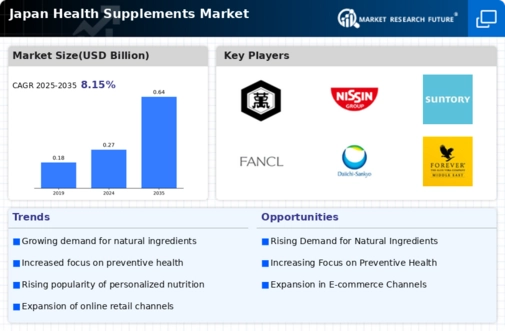
Japan Health Supplements Market Infographic
Purchase Options

Japan Health Supplements Market Summary

As per Market Research Future analysis, the Japan health supplements market size was estimated at 334.77 USD Million in 2024. The Japan health supplements market is projected to grow from 365.2 USD Million in 2025 to 871.26 USD Million by 2035, exhibiting a compound annual growth rate (CAGR) of 9.0% during the forecast period 2025 - 2035

Key Market Trends & Highlights

The Japan health supplements market is experiencing a robust shift towards natural and personalized products driven by demographic changes and health consciousness.

  • The market is increasingly leaning towards natural ingredients, reflecting consumer preferences for clean-label products.
  • Personalized nutrition is gaining traction, as consumers seek tailored solutions to meet their specific health needs.
  • E-commerce is emerging as a dominant sales channel, facilitating greater accessibility and convenience for consumers.
  • The aging population and rising health awareness are key drivers propelling market growth, alongside a heightened focus on preventive healthcare.

Market Size & Forecast

2024 Market Size 334.77 (USD Million)
2035 Market Size 871.26 (USD Million)
CAGR (2025 - 2035) 9.09%

Major Players

Herbalife (US), Amway (US), GNC Holdings (US), Nature's Bounty (US), NOW Foods (US), Garden of Life (US), NutraBio Labs (US), Optimum Nutrition (US)

Our Impact
Enabled $4.3B Revenue Impact for Fortune 500 and Leading Multinationals
Partnering with 2000+ Global Organizations Each Year
30K+ Citations by Top-Tier Firms in the Industry

Japan Health Supplements Market Trends

The health supplements market in Japan is currently experiencing notable growth, driven by an increasing awareness of health and wellness among consumers. This trend appears to be influenced by a rising aging population that seeks to maintain vitality and longevity. Additionally, the younger demographic is becoming more health-conscious, leading to a surge in demand for various supplements, including vitamins, minerals, and herbal products. The market seems to be evolving with a focus on natural ingredients, as consumers are increasingly inclined to choose products perceived as safe and effective. Furthermore, the integration of technology in health management, such as mobile applications for tracking dietary intake, is likely to enhance consumer engagement and product utilization. Moreover, the regulatory environment in Japan is becoming more supportive of health supplements, with authorities emphasizing safety and efficacy. This regulatory framework may encourage innovation and the introduction of new products, catering to diverse consumer needs. The health supplements market is also witnessing a shift towards online retail, as e-commerce platforms provide convenient access to a wide range of products. This trend could potentially reshape purchasing behaviors, making it easier for consumers to explore and select supplements that align with their health goals. Overall, the market appears poised for continued expansion, reflecting changing consumer preferences and advancements in product offerings.

Natural Ingredients Trend

There is a growing preference for health supplements that utilize natural ingredients. Consumers are increasingly seeking products that are free from artificial additives and preservatives, reflecting a broader trend towards clean and organic living. This inclination may drive manufacturers to innovate and develop formulations that emphasize purity and sustainability.

Personalized Nutrition

The concept of personalized nutrition is gaining traction within the health supplements market. Consumers are showing interest in products tailored to their specific health needs and goals. This trend suggests a shift towards more individualized approaches, where supplements are designed based on genetic, lifestyle, and dietary factors.

E-commerce Growth

The rise of e-commerce is transforming how consumers access health supplements. Online platforms are becoming increasingly popular for purchasing these products, offering convenience and a wider selection. This trend indicates a shift in consumer behavior, as more individuals prefer the ease of online shopping over traditional retail channels.

Japan Health Supplements Market Drivers

Rising Preventive Healthcare

Preventive healthcare is gaining traction in Japan, significantly influencing the health supplements market. Consumers are increasingly prioritizing health maintenance over treatment, leading to a surge in demand for supplements that promote immunity, cardiovascular health, and metabolic function. The health supplements market is witnessing a shift where products are marketed not just for illness recovery but as preventive measures. This trend is supported by government initiatives aimed at reducing healthcare costs and promoting healthier lifestyles. In 2025, the preventive health segment is expected to account for nearly 40% of the total health supplements market, indicating a robust growth trajectory.

Increased Focus on Mental Health

The growing emphasis on mental health is emerging as a significant driver for the health supplements market. In Japan, there is a rising awareness of the importance of mental well-being, leading to increased consumption of supplements aimed at reducing stress, anxiety, and enhancing cognitive function. The health supplements market is responding by developing products that include adaptogens, omega-3 fatty acids, and herbal extracts known for their mental health benefits. This shift is likely to result in a market growth of around 10% annually, as consumers seek holistic approaches to mental wellness.

Aging Population and Health Awareness

The aging population in Japan is a crucial driver for the health supplements market. As the demographic shifts towards an older age group, there is an increasing awareness of health and wellness among consumers. This trend is reflected in the growing demand for supplements that support joint health, cognitive function, and overall vitality. In 2025, it is estimated that over 30% of the population will be aged 65 and above, leading to a projected market growth of approximately 8% annually. The health supplements market is adapting to this demographic change by offering products specifically designed for older adults, thereby enhancing their quality of life and addressing age-related health concerns.

Regulatory Support and Quality Standards

Regulatory support and stringent quality standards are pivotal in shaping the health supplements market in Japan. The government has implemented regulations that ensure product safety and efficacy, fostering consumer confidence in health supplements. This regulatory framework encourages manufacturers to adhere to high-quality standards, which is essential for market growth. The health supplements market benefits from these regulations as they help to eliminate subpar products, thereby enhancing the overall reputation of the market. As a result, the market is projected to grow by 7% annually, driven by increased consumer trust and demand for high-quality supplements.

Technological Advancements in Product Development

Technological advancements are reshaping the health supplements market in Japan. Innovations in formulation, delivery methods, and quality control are enhancing product efficacy and consumer trust. The health supplements market is increasingly utilizing technologies such as nanotechnology and biotechnology to create more effective and bioavailable products. This trend is likely to attract a more health-conscious consumer base, as they seek scientifically-backed supplements. Furthermore, the integration of technology in production processes is expected to reduce costs and improve product accessibility, potentially increasing market penetration by 15% over the next few years.


Market Segment Insights

By Type: Dietary supplements (Largest) vs. Bodybuilding supplements (Fastest-Growing)

In the Japan health supplements market, dietary supplements account for the largest share, reflecting the strong consumer focus on wellness and preventative healthcare. Other segments, including bodybuilding and eye health supplements, follow but with smaller market shares, highlighting the varied interests among Japanese consumers when it comes to health and nutrition. Specialty supplements and others hold niche positions but are gaining traction as health trends evolve. The growth trends in the Japan health supplements market indicate a growing inclination towards holistic health solutions. Bodybuilding supplements are emerging as the fastest-growing segment, driven by the increasing popularity of fitness and bodybuilding activities among various age groups. The rise in awareness regarding fitness and athletic performance continues to propel demand, while dietary supplements remain essential for daily health maintenance, ensuring sustained interest across these categories.

Dietary Supplements: Dominant vs. Bodybuilding Supplements: Emerging

Dietary supplements dominate the Japan health supplements market, characterized by a wide range of products aimed at improving overall well-being. This segment includes vitamins, minerals, and herbal supplements, catering to health-conscious consumers who seek to fill nutritional gaps in their diets. On the other hand, bodybuilding supplements are emerging rapidly, attracting younger demographics who are increasingly engaged in fitness culture. This segment comprises protein powders, pre-workout formulas, and post-workout recovery items, appealing to those focused on muscle gain and athletic performance. The growing trend of health and fitness among the populace solidifies the ground for both segments to thrive, each addressing specific consumer needs and preferences.

By Application: Cardiology (Largest) vs. Rheumatic disorders (Fastest-Growing)

The market share distribution among the application segments in the Japan health supplements market shows that cardiology holds a significant portion, appealing to a broad consumer base concerned with heart health. Rheumatic disorders, while smaller in terms of current market share, are rapidly gaining attention as more consumers seek relief from chronic pain and inflammation through dietary supplements. Growth trends in this segment are driven by increasing awareness of preventive healthcare and the rising prevalence of lifestyle-related diseases such as hypertension and arthritis. The aging population in Japan further contributes to the demand for health supplements targeting these conditions, as consumers become more proactive about maintaining their well-being through nutritional support.

Cardiology (Dominant) vs. Rheumatic disorders (Emerging)

Cardiology, as the dominant application segment, reflects a strong consumer focus on heart health, driven by rising cardiovascular concerns linked to lifestyle choices and aging populations. Products in this category often contain ingredients promoted for their heart-beneficial properties. In contrast, rheumatic disorders are emerging as a significant segment due to increasing incidences of joint-related issues among aging individuals. Supplements targeting this area often focus on anti-inflammatory ingredients and pain relief. This shift is indicative of changing consumer preferences, where individuals are seeking more targeted health solutions, leading to innovative product development in the rheumatism space.

By Ingredients: Vitamins & Minerals (Largest) vs. Botanicals (Fastest-Growing)

In the Japan health supplements market, the segment values show a diverse landscape with vitamins & minerals leading the charge, holding a substantial share of overall sales. Following closely are amino acids and botanicals, where the latter showcases a rapid increase in popularity among consumers seeking natural and holistic health solutions. Enzymes and other ingredients hold their ground but contribute less significantly compared to these primary categories. Growth trends point towards the rising consumer awareness regarding health and wellness, driving the demand for vitamins & minerals as essential supplements. Botanicals, recognized for their natural health benefits, are becoming the fastest-growing category, capitalizing on trends like clean labeling and organic products. The increasing aging population in Japan, coupled with a focus on preventive healthcare, further propels growth in these segments.

Vitamins & Minerals: Dominant vs. Botanicals: Emerging

Vitamins & minerals represent the dominant segment in the Japan health supplements market, characterized by a broad consumer base reliant on these essential nutrients for overall wellness and the prevention of deficiencies. Products in this category are well-established and trusted, with a focus on high-quality formulations. On the other hand, botanicals are recognized as an emerging category, appealing to health-conscious consumers seeking alternatives to synthetic supplements. This segment is growing rapidly, driven by increasing interest in natural remedies and the adoption of plant-based diets. Botanical supplements often emphasize traditional uses and holistic health benefits, creating a unique niche that contrasts with the conventional reliance on vitamins & minerals.

By End-Users: Hospitals (Largest) vs. Clinics (Fastest-Growing)

The Japan health supplements market features a diverse range of end-users, with hospitals commanding the largest share due to their established healthcare frameworks and high demand for integrative health solutions. Clinics represent a significant portion of the market, reflecting a growing trend among smaller healthcare providers to incorporate health supplements into their treatment regimens as they respond to patient needs and preferences. The growth trends in this segment are driven by an increasing awareness of health and wellness among consumers, prompting both hospitals and clinics to adapt and expand their offerings. Research centers are also gearing up to contribute by promoting innovative supplements through clinical trials, while the 'others' category includes a variety of end-users that cater to niche markets, paving the way for unique products tailored to specific health concerns.

Hospitals: Dominant vs. Clinics: Emerging

Hospitals are the dominant end-user in the Japan health supplements market, leveraging their extensive resources and established patient bases to incorporate health supplements into treatments, often focusing on recovery and preventative care. In contrast, clinics are emerging as a dynamic segment, increasingly offering personalized health solutions tailored to individual patient needs. Their ability to provide targeted advice and supplement recommendations positions them as proactive healthcare providers. As patient interest in preventive health rises, both sectors are expected to evolve, with hospitals continuing to prioritize large-scale health initiatives, while clinics adapt to a more personalized approach, making them vital players in the changing landscape of health and wellness.

Get more detailed insights about Japan Health Supplements Market

Key Players and Competitive Insights

The health supplements market in Japan is characterized by a dynamic competitive landscape, driven by increasing consumer awareness regarding health and wellness. Key players such as Herbalife (US), Amway (US), and GNC Holdings (US) are actively shaping the market through innovative product offerings and strategic partnerships. Herbalife (US) has positioned itself as a leader in personalized nutrition, focusing on tailored solutions that cater to individual health needs. Meanwhile, Amway (US) emphasizes its commitment to quality and sustainability, leveraging its extensive distribution network to enhance market penetration. GNC Holdings (US) is concentrating on expanding its digital presence, reflecting a broader trend towards e-commerce in the health supplements sector. Collectively, these strategies contribute to a competitive environment that is increasingly focused on consumer-centric approaches and technological integration.In terms of business tactics, companies are localizing manufacturing to reduce costs and improve supply chain efficiency. This approach is particularly relevant in a moderately fragmented market where smaller players also compete for market share. The collective influence of major companies is significant, as they not only set industry standards but also drive innovation through research and development initiatives. The competitive structure is evolving, with larger firms increasingly acquiring smaller brands to diversify their product portfolios and enhance their market presence.

In October Herbalife (US) announced a partnership with a leading Japanese health technology firm to develop a new line of personalized supplements utilizing AI-driven health assessments. This strategic move is likely to enhance Herbalife's product differentiation and align with the growing consumer demand for customized health solutions. The collaboration underscores the importance of technology in shaping product offerings and meeting consumer expectations in a rapidly evolving market.

In September GNC Holdings (US) launched a new e-commerce platform tailored specifically for the Japanese market, featuring localized content and product recommendations. This initiative reflects GNC's recognition of the increasing importance of digital channels in reaching consumers. By enhancing its online presence, GNC aims to capture a larger share of the growing e-commerce segment, which is becoming a critical avenue for sales in the health supplements market.

In August Amway (US) introduced a new line of plant-based protein supplements, responding to the rising trend of veganism and plant-based diets in Japan. This product launch not only aligns with consumer preferences but also positions Amway as a forward-thinking player in the market. The emphasis on plant-based nutrition is indicative of broader dietary shifts and highlights the need for companies to adapt their offerings to meet changing consumer demands.

As of November current trends in the health supplements market include a strong focus on digitalization, sustainability, and the integration of AI technologies. Strategic alliances are increasingly shaping the competitive landscape, enabling companies to leverage each other's strengths and enhance their market offerings. Looking ahead, competitive differentiation is likely to evolve from traditional price-based competition towards innovation, technological advancements, and supply chain reliability. Companies that can effectively navigate these trends will be better positioned to thrive in an increasingly complex market.

Key Companies in the Japan Health Supplements Market include

Industry Developments

In recent months, the Japan Health Supplements Market has witnessed significant developments. Notable has been the continued growth in market valuation, as consumer demand for health and wellness products escalates, driven partly by the aging population in Japan. Companies like Ajinomoto and Kowa Company are focusing on innovation in functional food products, particularly those that enhance immune health. In September 2023, Takeda Pharmaceutical announced a strategic partnership with Otsuka Pharmaceutical to co-develop a line of new health supplements tailored for senior citizens in Japan, catering to their unique health needs. 

Additionally, Fancl has expanded its range of beauty supplements, reflecting ongoing trends toward holistic health and personal wellness. Over the last couple of years, there has been an increased inclination towards plant-based supplements; for example, Kikkoman has produced new soy-based health products that appeal to health-conscious consumers. Moreover, the market has seen mergers within the sector as companies look to consolidate resources and expertise, particularly the acquisition of Morinaga Milk Industry’s health supplement division by Meiji Holdings in June 2022, aimed at enhancing product offerings in a competitive market landscape.

This proactive approach by these companies underscores a pivotal trend in Japan's health supplement sector.

Future Outlook

Japan Health Supplements Market Future Outlook

The Health Supplements Market in Japan is projected to grow at a 9.09% CAGR from 2025 to 2035, driven by increasing health awareness and aging population.

New opportunities lie in:

  • Development of personalized supplement subscription services
  • Expansion into e-commerce platforms for direct consumer sales
  • Investment in research for innovative functional ingredients

By 2035, the market is expected to achieve substantial growth and diversification.

Market Segmentation

Japan Health Supplements Market Type Outlook

  • Dietary supplements
  • Bodybuilding supplements
  • Eye health supplements
  • Specialty supplements
  • Others

Japan Health Supplements Market End-Users Outlook

  • Hospitals
  • Clinics
  • Research centers
  • Others

Japan Health Supplements Market Application Outlook

  • Cardiology
  • Rheumatic disorders
  • Allergy
  • Others

Japan Health Supplements Market Ingredients Outlook

  • Vitamins & minerals
  • Amino acids
  • Botanicals
  • Enzymes
  • Others

Report Scope

MARKET SIZE 2024 334.77(USD Million)
MARKET SIZE 2025 365.2(USD Million)
MARKET SIZE 2035 871.26(USD Million)
COMPOUND ANNUAL GROWTH RATE (CAGR) 9.09% (2025 - 2035)
REPORT COVERAGE Revenue Forecast, Competitive Landscape, Growth Factors, and Trends
BASE YEAR 2024
Market Forecast Period 2025 - 2035
Historical Data 2019 - 2024
Market Forecast Units USD Million
Key Companies Profiled Herbalife (US), Amway (US), GNC Holdings (US), Nature's Bounty (US), NOW Foods (US), Garden of Life (US), NutraBio Labs (US), Optimum Nutrition (US)
Segments Covered Type, Application, Ingredients, End-Users
Key Market Opportunities Growing consumer interest in personalized nutrition drives innovation in the health supplements market.
Key Market Dynamics Rising consumer demand for natural ingredients drives innovation and competition in Japan's health supplements market.
Countries Covered Japan
Leave a Comment

FAQs

What is the projected market size of the Japan Health Supplements Market in 2024?

The projected market size for the Japan Health Supplements Market in 2024 is valued at 0.27 USD Billion.

What is the expected market value of the Japan Health Supplements Market by 2035?

By 2035, the Japan Health Supplements Market is expected to reach a value of 0.64 USD Billion.

What is the expected CAGR for the Japan Health Supplements Market between 2025 and 2035?

The expected CAGR for the Japan Health Supplements Market from 2025 to 2035 is 8.15%.

Which type of health supplement is projected to have the largest market size in 2035?

The Dietary Supplements segment is projected to have the largest market size, valued at 0.25 USD Billion in 2035.

Who are the major players in the Japan Health Supplements Market?

Major players in the Japan Health Supplements Market include Kowa Company, Ajinomoto, Amway, Kikkoman, and Nissin Foods.

What is the market size for Body Building Supplements in 2024?

The market size for Body Building Supplements in 2024 is valued at 0.07 USD Billion.

What are the growth drivers for the Japan Health Supplements Market?

Key growth drivers include increased health consciousness and rising demand for preventive healthcare solutions.

What market segment is expected to grow the fastest from 2025 to 2035?

The Body Building Supplements segment is expected to grow the fastest, reaching 0.16 USD Billion by 2035.

What is the market size for Eye Health Supplements in 2035?

The market size for Eye Health Supplements is projected to be 0.12 USD Billion by 2035.

What challenges does the Japan Health Supplements Market face?

Challenges include regulatory hurdles and competition from unregulated supplements in the market.

Download Free Sample

Kindly complete the form below to receive a free sample of this Report

Compare Licence

×
Features License Type
Single User Multiuser License Enterprise User
Price $4,950 $5,950 $7,250
Maximum User Access Limit 1 User Upto 10 Users Unrestricted Access Throughout the Organization
Free Customization
Direct Access to Analyst
Deliverable Format
Platform Access
Discount on Next Purchase 10% 15% 15%
Printable Versions