×
Request Free Sample ×

Kindly complete the form below to receive a free sample of this Report

* Please use a valid business email

Leading companies partner with us for data-driven Insights

clients tt-cursor
Hero Background

Japan Betaine Market

ID: MRFR/FnB/47144-HCR
128 Pages
Snehal Singh
February 2026

Japan Betaine Market Size, Share, Industry Trend & Analysis Research Report By Type (Cocamidopropyl Betaine, Betaine Anhydrous, Others), By Category (Natural, Synthetic) and By Application (Personal Care, Animal Feed, Food & Beverages) - Forecast to 2035

Share:
Download PDF ×

We do not share your information with anyone. However, we may send you emails based on your report interest from time to time. You may contact us at any time to opt-out.

Japan Betaine Market Infographic
Purchase Options

Japan Betaine Market Summary

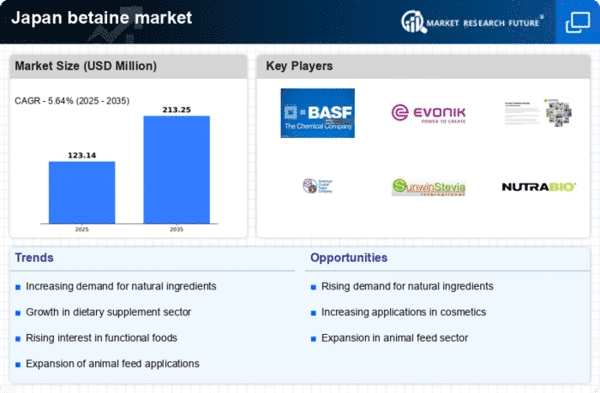
As per Market Research Future analysis, the Japan betaine market Size was estimated at 116.57 $ Million in 2024. The Japan betaine market is projected to grow from 123.14 $ Million in 2025 to 213.25 $ Million by 2035, exhibiting a compound annual growth rate (CAGR) of 5.6% during the forecast period 2025 - 2035

Key Market Trends & Highlights

The Japan betaine market is experiencing robust growth driven by diverse applications and increasing health consciousness.

  • The food and beverage sector represents the largest segment, reflecting a rising demand for functional ingredients.
  • Nutraceutical applications are the fastest-growing segment, indicating a shift towards health-oriented products.
  • Sustainable sourcing practices are gaining traction, aligning with consumer preferences for environmentally friendly options.
  • Key market drivers include increasing health awareness and the expansion of animal feed applications, which are shaping market dynamics.

Market Size & Forecast

2024 Market Size 116.57 (USD Million)
2035 Market Size 213.25 (USD Million)
CAGR (2025 - 2035) 5.64%

Major Players

BASF SE (DE), Evonik Industries AG (DE), Zhejiang Jianfeng Chemical Co Ltd (CN), American Crystal Sugar Company (US), Sunwin Stevia International Inc (US), NutraBio Labs Inc (US), Kemin Industries Inc (US), Ginkgo BioWorks Inc (US)

Our Impact
Enabled $4.3B Revenue Impact for Fortune 500 and Leading Multinationals
Partnering with 2000+ Global Organizations Each Year
30K+ Citations by Top-Tier Firms in the Industry

Japan Betaine Market Trends

The betaine market in Japan is currently experiencing notable growth, driven by increasing demand across various sectors, including food and beverage, pharmaceuticals, and cosmetics. This growth appears to be influenced by a rising awareness of health benefits associated with betaine, such as its role in enhancing metabolic processes and supporting liver function. Additionally, the trend towards natural and organic ingredients in consumer products seems to be propelling the use of betaine as a preferred additive. As consumers become more health-conscious, manufacturers are likely to adapt their formulations to include this compound, thereby expanding its application range. Moreover, the regulatory environment in Japan appears to be supportive of the betaine market, with government initiatives promoting the use of functional ingredients in food products. This regulatory backing may encourage innovation and investment in research and development, leading to the introduction of new betaine-based products. Furthermore, the increasing popularity of dietary supplements and functional foods is likely to create additional opportunities for market players. Overall, the outlook for the betaine market in Japan seems promising, with various factors contributing to its expansion and diversification in the coming years.

Rising Demand in Food and Beverage Sector

The food and beverage sector is witnessing a surge in the incorporation of betaine, attributed to its health benefits. As consumers seek healthier options, manufacturers are increasingly using this compound to enhance product appeal.

Growth in Nutraceutical Applications

There is a noticeable increase in the use of betaine in nutraceuticals, driven by consumer interest in dietary supplements. This trend suggests a shift towards preventive health measures, with betaine being recognized for its potential benefits.

Focus on Sustainable Sourcing

Sustainability is becoming a key consideration in the betaine market. Companies are exploring eco-friendly sourcing methods, aligning with consumer preferences for products that are both effective and environmentally responsible.

Japan Betaine Market Drivers

Increasing Health Awareness

The betaine market in Japan is experiencing a notable surge due to the increasing health awareness among consumers. As individuals become more conscious of their dietary choices, the demand for functional ingredients like betaine is rising. This compound is recognized for its potential health benefits, including liver function support and improved athletic performance. In 2025, the market for betaine in dietary supplements is projected to reach approximately $150 million, reflecting a growth rate of around 8% annually. This trend indicates that consumers are actively seeking products that enhance their well-being, thereby driving the betaine market forward.

Expansion of Animal Feed Applications

The betaine market is also benefiting from the expansion of its applications in the animal feed sector in Japan. As the livestock industry seeks to improve feed efficiency and animal health, betaine is increasingly incorporated into animal diets. It is known to enhance growth performance and reduce stress in animals, which is crucial for livestock producers. The animal feed segment is expected to account for over 60% of the total betaine market by 2025, indicating a strong reliance on this ingredient for optimizing animal production. This trend underscores the importance of betaine in ensuring sustainable livestock farming practices.

Technological Advancements in Production

Technological advancements in the production of betaine are playing a pivotal role in shaping the market landscape in Japan. Innovations in extraction and synthesis methods are leading to more efficient and cost-effective production processes. This is likely to enhance the availability of high-quality betaine at competitive prices, thereby attracting a broader range of applications across various industries. As production techniques improve, the betaine market may witness a diversification of product offerings, catering to specific consumer needs. This evolution in production technology is expected to bolster market growth and expand the reach of betaine in Japan.

Rising Popularity of Plant-Based Products

The betaine market is witnessing a shift driven by the rising popularity of plant-based products among Japanese consumers. As more individuals adopt vegetarian and vegan diets, the demand for plant-derived ingredients, including betaine, is increasing. This trend is particularly evident in the food and beverage sector, where manufacturers are seeking natural alternatives to synthetic additives. The plant-based segment is projected to grow at a CAGR of 10% through 2025, indicating a robust market potential for betaine sourced from natural origins. This shift not only aligns with consumer preferences but also supports the betaine market's sustainability goals.

Regulatory Support for Functional Ingredients

Regulatory support for functional ingredients in Japan is fostering a conducive environment for the betaine market. The government has been promoting the use of health-enhancing ingredients in food products, which aligns with the growing consumer demand for functional foods. This regulatory framework encourages manufacturers to incorporate betaine into their formulations, thereby expanding its market presence. As a result, the betaine market is likely to benefit from increased product innovation and a wider acceptance of betaine-enriched products among consumers. This supportive regulatory landscape is expected to drive market growth in the coming years.


Market Segment Insights

By Category: Natural (Largest) vs. Synthetic (Fastest-Growing)

In the Japan betaine market, the Natural segment holds a prominent position, capitalizing on consumer demand for clean label products and plant-based ingredients. This segment is favored for its perceived health benefits and sustainability, contributing significantly to market share distribution. Conversely, the Synthetic segment, while smaller in market share, is rapidly gaining traction due to cost-effectiveness and versatility in various industrial applications, attracting attention from manufacturers. Growth trends indicate that the Natural segment will continue to thrive as more consumers turn toward sustainable and natural products. In contrast, the Synthetic segment is gaining momentum as innovations enhance its appeal in food, cosmetics, and pharmaceutical applications, driven by advancements in production technologies and increasing demand for functional ingredients. This dual growth reflects evolving consumer preferences and market dynamics.

Betaine: Natural (Dominant) vs. Synthetic (Emerging)

The Natural segment of the Japan betaine market is characterized by its focus on clean label and sustainable sourcing, making it the dominant choice among consumers who prioritize health and environmental impact. This preference is fueling its share in the market. On the other hand, the Synthetic segment emerges as a competitive alternative, particularly in sectors where cost efficiency is crucial. Innovations in synthetic production methods are enhancing the appeal of synthetic betaine by offering consistent quality and performance, thereby capturing the interest of manufacturers looking for reliable ingredients. As consumer preferences evolve, these segments represent contrasting yet complementary forces in shaping the future of the market.

By Type: Cocamidopropyl Betaine (Largest) vs. Betaine Anhydrous (Fastest-Growing)

In the Japan betaine market, Cocamidopropyl Betaine leads the segment, holding a notable market share. This product's popularity can be attributed to its gentle properties and versatility in personal care products, making it a preferred choice among manufacturers. Meanwhile, Betaine Anhydrous, though smaller in share, has been steadily gaining traction due to increasing demand in health and wellness sectors. Growth trends in this segment indicate a robust shift towards greener and more sustainable ingredients. The adoption of natural surfactants and the clean label movement have intensified interest in Cocamidopropyl Betaine, while Betaine Anhydrous benefits from the rising health consciousness among consumers, driving innovations in dietary supplements. The dual focus on personal care and health-related applications is propelling growth across both products.

Cocamidopropyl Betaine (Dominant) vs. Betaine Anhydrous (Emerging)

Cocamidopropyl Betaine is distinguished by its multifunctionality, serving as a surfactant and moisturizer in various formulations, primarily within the cosmetics and personal care industry. Its ability to enhance texture and improve skin compatibility has established it as a dominant player in the market. On the other hand, Betaine Anhydrous is an emerging product, primarily recognized for its utility in nutritional and dietary applications. Rich in natural compounds, it is increasingly favored for its potential benefits in energy metabolism and skin hydration, appealing to health-conscious consumers. Both segments showcase unique attributes; however, Cocamidopropyl Betaine maintains a stronger foothold, while Betaine Anhydrous is quickly evolving to meet consumer demands.

By Application: Personal Care (Largest) vs. Animal Feed (Fastest-Growing)

In the Japan betaine market, the application segment is primarily dominated by Personal Care, which holds the largest market share due to its widespread use in cosmetics and skincare products. This segment benefits from the increasing demand for natural ingredients and the growing consumer preference for personal care items that are gentle on the skin. On the other hand, Animal Feed is gaining traction and is recognized as the fastest-growing segment, supported by rising livestock production and a focus on improving animal health and feed efficiency. The growth trends in the Japan betaine market are influenced by several key factors. The increasing awareness about the benefits of betaine in enhancing nutrient absorption and improving overall health of livestock is a significant driver for the Animal Feed segment. Meanwhile, the expanding personal care industry continues to propel the demand for betaine as consumers seek out high-quality, effective, and safe products. Additionally, the food & beverages segment holds a steady position, driven by the need for innovative ingredients that enhance flavor and preservation in food products.

Personal Care: Dominant vs. Animal Feed: Emerging

The Personal Care segment in the Japan betaine market is characterized by its prominence in various beauty and skincare products. It is preferred for its moisturizing properties and ability to reduce skin irritation, aligning with the trend towards clean and natural beauty. The segment is well-established, benefiting from strong brand loyalty and a rising interest in personal grooming. In contrast, the Animal Feed segment is emerging rapidly due to the increasing recognition of betaine's role in promoting animal health and feed efficiency. This segment is attracting investments and innovations aimed at optimizing livestock production. As consumer trends shift towards sustainable agriculture and animal welfare, both segments are set to see evolving dynamics that can reshape market strategies.

Get more detailed insights about Japan Betaine Market

Key Players and Competitive Insights

The betaine market exhibits a dynamic competitive landscape characterized by a blend of innovation, strategic partnerships, and regional expansion. Key players such as BASF SE (DE), Evonik Industries AG (DE), and Kemin Industries Inc (US) are at the forefront, each adopting distinct strategies to enhance their market presence. BASF SE (DE) focuses on innovation in product development, particularly in sustainable betaine production, which aligns with the growing demand for eco-friendly ingredients. Meanwhile, Evonik Industries AG (DE) emphasizes strategic partnerships to bolster its supply chain and expand its product offerings, thereby enhancing its competitive edge. Kemin Industries Inc (US) appears to prioritize digital transformation, leveraging technology to optimize its operations and improve customer engagement, which collectively shapes a competitive environment that is increasingly reliant on innovation and strategic collaboration.The business tactics employed by these companies reflect a concerted effort to localize manufacturing and optimize supply chains, which are crucial in a moderately fragmented market. This competitive structure allows for a diverse range of products and services, catering to various consumer needs while enabling key players to exert significant influence over market dynamics. The collective actions of these companies suggest a trend towards greater efficiency and responsiveness to market demands, which is essential in maintaining competitive advantage.
In October BASF SE (DE) announced the launch of a new line of sustainable betaine products aimed at the cosmetics industry. This strategic move not only reinforces BASF's commitment to sustainability but also positions the company to capture a growing segment of environmentally conscious consumers. The introduction of these products is likely to enhance BASF's market share and strengthen its reputation as a leader in sustainable chemical solutions.
In September Evonik Industries AG (DE) entered into a strategic partnership with a leading biotechnology firm to develop innovative betaine derivatives. This collaboration is expected to accelerate product development cycles and enhance Evonik's ability to meet the evolving needs of its customers. The partnership underscores the importance of innovation in maintaining competitive differentiation and suggests that Evonik is keen on leveraging external expertise to bolster its product portfolio.
In August Kemin Industries Inc (US) unveiled a new digital platform designed to streamline customer interactions and improve service delivery. This initiative reflects Kemin's focus on digital transformation and its commitment to enhancing customer experience. By investing in technology, Kemin is likely to improve operational efficiency and strengthen its market position, particularly in a landscape where customer engagement is increasingly critical.
As of November the competitive trends in the betaine market are heavily influenced by digitalization, sustainability, and the integration of advanced technologies such as AI. Strategic alliances are becoming more prevalent, enabling companies to pool resources and expertise to drive innovation. The shift from price-based competition to a focus on technological advancement and supply chain reliability is evident, suggesting that future competitive differentiation will hinge on the ability to innovate and adapt to changing market conditions.

Key Companies in the Japan Betaine Market include

Industry Developments

The Japan Betaine Market has seen notable developments recently, with an increased focus on sustainability and natural ingredients influencing market dynamics. Companies such as BASF and Evonik Industries are prioritizing the formulation of eco-friendly betaine products to meet consumer demand for sustainable alternatives. In July 2023, Fufeng Group announced plans to enhance production capacity, aiming to capitalize on the growing demand for betaine in personal care and food industries in Japan. Additionally, Tate and Lyle is expanding its portfolio to include betaine derivatives that cater to the health sector, reflecting current health trends among Japanese consumers.

Over the past two to three years, major players like American Crystal Sugar Company have reported expansion strategies to increase their market share, contributing to a higher valuation of betaine products in Japan. A significant merger occurred in March 2023, when Merck KGaA announced its acquisition of a specialized betaine production facility, strengthening its position in the market. These trends indicate a robust and evolving landscape for the betaine market in Japan, characterized by innovation and strategic growth initiatives among key industry participants.


Future Outlook

Japan Betaine Market Future Outlook

The Betaine Market in Japan is projected to grow at a 5.64% CAGR from 2025 to 2035, driven by increasing demand in food and beverage applications, personal care products, and animal feed.

New opportunities lie in:

  • Development of customized betaine formulations for specific dietary needs. Expansion into emerging markets with tailored marketing strategies. Investment in sustainable production methods to enhance brand reputation.

By 2035, the betaine market is expected to achieve robust growth, positioning itself as a key player in various industries.

Market Segmentation

Japan Betaine Market Type Outlook

  • Cocamidopropyl Betaine
  • Betaine Anhydrous
  • Others

Japan Betaine Market Category Outlook

  • Natural
  • Synthetic

Japan Betaine Market Application Outlook

  • Personal Care
  • Animal Feed
  • Food & Beverages
  • Others

Report Scope

MARKET SIZE 2024 116.57(USD Million)
MARKET SIZE 2025 123.14(USD Million)
MARKET SIZE 2035 213.25(USD Million)
COMPOUND ANNUAL GROWTH RATE (CAGR) 5.64% (2025 - 2035)
REPORT COVERAGE Revenue Forecast, Competitive Landscape, Growth Factors, and Trends
BASE YEAR 2024
Market Forecast Period 2025 - 2035
Historical Data 2019 - 2024
Market Forecast Units USD Million
Key Companies Profiled BASF SE (DE), Evonik Industries AG (DE), Zhejiang Jianfeng Chemical Co Ltd (CN), American Crystal Sugar Company (US), Sunwin Stevia International Inc (US), NutraBio Labs Inc (US), Kemin Industries Inc (US), Ginkgo BioWorks Inc (US)
Segments Covered Category, Type, Application
Key Market Opportunities Growing demand for plant-based betaine in food and beverage applications presents a lucrative opportunity.
Key Market Dynamics Rising demand for natural betaine in food and beverage sectors drives innovation and competition in Japan's market.
Countries Covered Japan
Leave a Comment

FAQs

What is the projected market size of the Japan Betaine Market in 2024?

The Japan Betaine Market is expected to be valued at 86.0 million USD in 2024.

What will the Japan Betaine Market be valued at in 2035?

By 2035, the Japan Betaine Market is projected to reach a value of 175.0 million USD.

What is the expected CAGR for the Japan Betaine Market from 2025 to 2035?

The expected CAGR for the Japan Betaine Market from 2025 to 2035 is 6.672%.

Which type of betaine will lead the market in 2035?

Cocamidopropyl Betaine is projected to be valued at 60.0 million USD by 2035.

What is the anticipated market value for Betaine Anhydrous in 2035?

Betaine Anhydrous is expected to reach a market value of 80.0 million USD in 2035.

Who are the major players in the Japan Betaine Market?

Key players in the Japan Betaine Market include Fufeng Group, BASF, and Merck KGaA among others.

What is the market value of the 'Others' segment in 2024?

The 'Others' segment of the Japan Betaine Market is valued at 16.0 million USD in 2024.

What is the forecasted growth rate for Cocamidopropyl Betaine from 2024 to 2035?

Cocamidopropyl Betaine is expected to grow significantly, valued at 30.0 million USD in 2024 and projected to reach 60.0 million USD in 2035.

What are the key applications driving the growth of the Japan Betaine Market?

The Japan Betaine Market is driven by applications in personal care products and food industries.

What opportunities exist in the Japanese market for betaine products?

The rise in demand for natural ingredients in cosmetics and personal care presents growth opportunities in the Japan Betaine Market.

Download Free Sample

Kindly complete the form below to receive a free sample of this Report

Compare Licence

×
Features License Type
Single User Multiuser License Enterprise User
Price $4,950 $5,950 $7,250
Maximum User Access Limit 1 User Upto 10 Users Unrestricted Access Throughout the Organization
Free Customization
Direct Access to Analyst
Deliverable Format
Platform Access
Discount on Next Purchase 10% 15% 15%
Printable Versions