×
Request Free Sample ×

Kindly complete the form below to receive a free sample of this Report

* Please use a valid business email

Leading companies partner with us for data-driven Insights

clients tt-cursor
Hero Background

Italy Juice Concentrate Market

ID: MRFR/FnB/46719-HCR
200 Pages
Varsha More
February 2026

Italy Juice Concentrate Market Size, Share, Industry Trend & Analysis Research Report By Product Type (Citrus Concentrates, Non-Citrus Concentrates, Mixed Fruit Concentrates, Vegetable Concentrates), By Form (Liquid, Powder, Granular), By End-use (Beverage Industry, Food Industry, Nutraceuticals, Cosmetics and Personal Care) and By Packaging Type (Tetra Packs, Cans, Drums, Bottles) - Forecast to 2035

Share:
Download PDF ×

We do not share your information with anyone. However, we may send you emails based on your report interest from time to time. You may contact us at any time to opt-out.

Italy Juice Concentrate Market Infographic
Purchase Options

Italy Juice Concentrate Market Summary

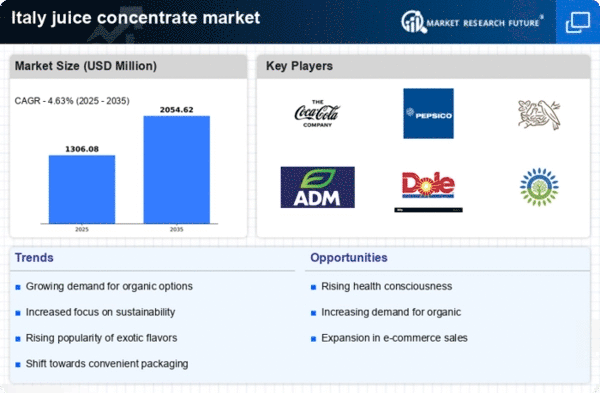
As per Market Research Future analysis, the Italy juice concentrate market size was estimated at 1248.28 $ Million in 2024. The Italy juice concentrate market is projected to grow from 1306.08 $ Million in 2025 to 2054.62 $ Million by 2035, exhibiting a compound annual growth rate (CAGR) of 4.6% during the forecast period 2025 - 2035

Key Market Trends & Highlights

The Italy juice concentrate market is experiencing a robust shift towards health-conscious and sustainable products.

  • The largest segment in the Italy juice concentrate market is the health-focused segment, driven by increasing consumer awareness of nutrition.
  • The fastest-growing segment is the functional beverages segment, reflecting a rising interest in beverages that offer health benefits.
  • Sustainability initiatives are becoming a core focus for manufacturers, as consumers increasingly prefer eco-friendly products.
  • Rising demand for natural ingredients and innovative product development are key drivers propelling market growth.

Market Size & Forecast

2024 Market Size 1248.28 (USD Million)
2035 Market Size 2054.62 (USD Million)
CAGR (2025 - 2035) 4.63%

Major Players

Coca-Cola (US), PepsiCo (US), Nestle (CH), Archer Daniels Midland (US), Dole Food Company (US), SunOpta (CA), Tree Top (US), Hain Celestial Group (US), Del Monte Foods (US)

Our Impact
Enabled $4.3B Revenue Impact for Fortune 500 and Leading Multinationals
Partnering with 2000+ Global Organizations Each Year
30K+ Citations by Top-Tier Firms in the Industry

Italy Juice Concentrate Market Trends

The juice concentrate market in Italy is currently experiencing a dynamic phase characterized by evolving consumer preferences and increasing demand for natural products. As health consciousness rises, consumers are gravitating towards juice concentrates that offer nutritional benefits without artificial additives. This shift is prompting manufacturers to innovate and diversify their product lines, focusing on organic and premium offerings. Additionally, the growing trend of convenience in food and beverage consumption is influencing the market, as consumers seek easy-to-use products that fit their busy lifestyles. The emphasis on sustainability is also notable, with companies exploring eco-friendly packaging solutions and sourcing practices to appeal to environmentally aware consumers. In November 2025, the juice concentrate market reflects a blend of traditional flavors and modern health trends. The Italian palate, known for its rich culinary heritage, is influencing the types of concentrates available, with a notable preference for local fruit varieties. This regional focus not only enhances flavor authenticity but also supports local agriculture. As the market continues to evolve, stakeholders are likely to adapt to these trends, ensuring that offerings align with consumer expectations for quality, health, and sustainability.

Health and Wellness Focus

There is a noticeable shift towards juice concentrates that emphasize health benefits. Consumers are increasingly seeking products that are free from artificial ingredients and rich in vitamins and minerals. This trend is driving manufacturers to reformulate their offerings, highlighting natural ingredients and health claims.

Sustainability Initiatives

Sustainability is becoming a key consideration in the juice concentrate market. Companies are adopting eco-friendly practices, such as using recyclable packaging and sourcing fruits from sustainable farms. This approach not only meets consumer demand for environmentally responsible products but also enhances brand loyalty.

Convenience and Versatility

The demand for convenience is shaping product development in the juice concentrate market. Consumers prefer ready-to-use solutions that can easily integrate into their daily routines. This trend is leading to the introduction of versatile concentrates that can be used in various applications, from beverages to culinary uses.

Italy Juice Concentrate Market Drivers

Innovative Product Development

Innovation plays a crucial role in the juice concentrate market in Italy. Manufacturers are investing in research and development to create new flavors and blends that cater to evolving consumer tastes. The introduction of exotic fruit concentrates and functional beverages, which offer added health benefits, is becoming increasingly prevalent. In 2025, the market is expected to see a 10% increase in the introduction of innovative products. This trend not only attracts health-conscious consumers but also enhances the overall value proposition of the juice concentrate market, allowing brands to differentiate themselves in a competitive landscape.

Expansion of Distribution Channels

The juice concentrate market in Italy is benefiting from the expansion of distribution channels. Retailers are increasingly recognizing the value of offering a diverse range of juice concentrate products, leading to greater availability in supermarkets, health food stores, and online platforms. This trend is expected to enhance market penetration, with online sales projected to grow by 20% in 2025. The juice concentrate market is adapting to these changes by optimizing supply chains and enhancing logistics to ensure product availability. This expansion not only increases consumer access but also drives overall market growth.

Rising Demand for Natural Ingredients

The juice concentrate market in Italy experiences a notable increase in demand for natural ingredients. Consumers are increasingly seeking products that are free from artificial additives and preservatives. This trend aligns with a broader shift towards health-conscious choices, where natural and organic products are preferred. In 2025, the market for organic juice concentrates is projected to grow by approximately 15%, reflecting a significant consumer preference for authenticity in food and beverage choices. The juice concentrate market is adapting to this demand by sourcing high-quality, natural fruits, which enhances product appeal and market competitiveness.

Increased Focus on Sustainable Practices

Sustainability is becoming a pivotal concern within the juice concentrate market in Italy. Consumers are increasingly favoring brands that demonstrate a commitment to environmentally friendly practices. This includes sourcing fruits from sustainable farms and utilizing eco-friendly packaging. In 2025, it is anticipated that the market will see a 15% increase in products marketed as sustainable. The juice concentrate market is responding to this demand by implementing sustainable practices throughout the supply chain, which not only meets consumer expectations but also enhances brand loyalty and market share.

Growing Popularity of Functional Beverages

The juice concentrate market in Italy is witnessing a surge in the popularity of functional beverages. These products, which offer health benefits beyond basic nutrition, are becoming a staple for many consumers. The market for functional juice concentrates is projected to grow by 12% in 2025, driven by increasing awareness of health and wellness. Ingredients such as vitamins, minerals, and probiotics are being incorporated into juice concentrates, appealing to consumers looking for enhanced health benefits. This trend indicates a shift in consumer preferences, positioning the juice concentrate market to capitalize on the growing demand for health-oriented products.


Market Segment Insights

By Type: Fruits (Largest) vs. Vegetables (Fastest-Growing)

In the Italy juice concentrate market, the distribution of market share among segment values reveals that fruits occupy the largest portion, showcasing their strong appeal among consumers looking for natural flavors and sweetness. Vegetables, while holding a smaller share, are gaining traction as health-conscious consumers seek out nutritious options, leading to a competitive landscape where blends are also beginning to establish their place in the market. The growth trends for these segments reflect shifting consumer preferences and lifestyle changes. Fruits are being driven by their versatility and established presence in the market, while vegetable concentrates are emerging as the fastest-growing segment, propelled by a growing awareness of health benefits and innovative product developments. Blends are also seeing increased demand, as consumers are drawn to unique flavor profiles and the convenience of mixed offerings.

Fruits (Dominant) vs. Vegetables (Emerging)

The characteristics of the fruits segment in the Italy juice concentrate market are defined by their established dominance, flavored by a diverse range of options appealing to various taste preferences. Fruits are perceived as a staple in juice concentrate offerings, benefiting from a strong association with freshness and quality. On the other hand, the vegetables segment is emerging as a key player, distinguished by its health-oriented appeal and increasing innovation. As consumers become more adventurous and seek varied nutritional benefits, vegetable concentrates are capturing attention for their unique profiles. This competition between the dominant fruit segment and the emerging vegetable segment highlights the evolving dynamics within the market, creating opportunities for growth and diversification in product offerings.

By Form: Liquid (Largest) vs. Powder (Fastest-Growing)

In the Italy juice concentrate market, the liquid form dominates with a significant share of the overall market. This segment is favored for its versatility and ease of production, aligning well with consumer preferences for convenience. On the other hand, the powder form is emerging rapidly, appealing particularly to the health-conscious demographic seeking longer shelf life and reduced shipping costs. The growth trend for the liquid segment is driven by its established presence and consumer familiarity, whereas the powder segment shows immense potential due to its convenience and lower storage costs. As trends shift towards healthier and more convenient options, the powder form is likely to see accelerated growth, capitalizing on the increasing demand for natural ingredients and easy-to-use products.

Powder (Emerging) vs. Liquid (Dominant)

The powder segment in the Italy juice concentrate market is characterized by its innovative formulations and extended shelf life. This form is increasingly appealing to manufacturers and consumers alike, as it offers convenience in transportation and storage. The growing focus on health and wellness among consumers drives demand for concentrated ingredients that can be easily mixed or reconstituted. In contrast, the liquid segment remains dominant, recognized for its ready-to-use nature and consistency in flavor. While the liquid form caters to traditional juice consumers, the powder form is carving a niche in the market by attracting health enthusiasts and those preferring lighter packaging.

By Application: Beverages (Largest) vs. Food (Fastest-Growing)

In the Italy juice concentrate market, the application segment is primarily divided into beverages and food. Beverages hold the largest share, largely due to consumer preferences for fruit juices and their health benefits. The demand for ready-to-drink beverages drives this segment, making it a dominant force in the market. On the other hand, the food application segment is gaining traction as manufacturers increasingly incorporate juice concentrates in food processing, contributing to its rapid growth. The growth trends in these segments are driven by changing consumer lifestyles and preferences. The trend towards healthier eating is contributing to a surge in juice concentrate usage in both beverages and food applications. Innovative product launches and an increasing focus on fruit-based products are fueling growth in the food segment, making it the fastest-growing area within the market. As the market evolves, we expect to see further diversification in product offerings to cater to health-conscious consumers.

Beverages (Dominant) vs. Food (Emerging)

The beverages segment of the Italy juice concentrate market is characterized by a wide range of products that appeal to health-conscious consumers, offering natural flavors and nutritional benefits. This segment enjoys robust demand for fruit juices, which dominate the market share. In contrast, the food segment is emerging rapidly, as food manufacturers increasingly recognize the versatility of juice concentrates in enhancing flavor and nutrition in various food products. This growth is fueled by innovation in product development and a trend towards using natural ingredients. While beverages continue to hold the dominant position, the food segment's expansion marks a significant shift in consumer behavior towards incorporating juice concentrates in culinary applications, indicating a promising outlook.

Get more detailed insights about Italy Juice Concentrate Market

Key Players and Competitive Insights

The juice concentrate market in Italy exhibits a dynamic competitive landscape, characterized by a blend of established players and emerging innovators. Key growth drivers include increasing consumer demand for natural and organic products, alongside a rising trend towards health-conscious consumption. Major companies such as Coca-Cola (US), PepsiCo (US), and Nestle (CH) are strategically positioned to leverage these trends through innovation and product diversification. Coca-Cola (US), for instance, focuses on expanding its portfolio of health-oriented beverages, while PepsiCo (US) emphasizes sustainability in sourcing and production. Nestle (CH) appears to be enhancing its operational focus on plant-based and organic juice concentrates, thereby shaping a competitive environment that prioritizes health and sustainability.In terms of business tactics, companies are increasingly localizing manufacturing to reduce supply chain complexities and enhance responsiveness to market demands. The competitive structure of the market is moderately fragmented, with a mix of large multinational corporations and smaller niche players. This fragmentation allows for a diverse range of products, catering to varying consumer preferences. The collective influence of these key players fosters a competitive atmosphere where innovation and sustainability are paramount.

In October Coca-Cola (US) announced a partnership with a local Italian agricultural cooperative to source organic fruits for its juice concentrate production. This strategic move not only enhances Coca-Cola's commitment to sustainability but also strengthens its supply chain by ensuring high-quality, locally sourced ingredients. Such initiatives are likely to resonate well with the growing segment of health-conscious consumers in Italy.

In September PepsiCo (US) unveiled a new line of juice concentrates that utilize advanced AI technology to optimize flavor profiles and nutritional content. This innovation reflects PepsiCo's commitment to integrating technology into product development, potentially setting a new standard in the market. The use of AI may enhance consumer satisfaction and loyalty, positioning PepsiCo favorably against its competitors.

In August Nestle (CH) launched a campaign promoting its new range of organic juice concentrates, emphasizing transparency in sourcing and production processes. This initiative aligns with the increasing consumer demand for transparency and ethical sourcing, suggesting that Nestle is keenly aware of shifting consumer values. By prioritizing these aspects, Nestle may strengthen its market position and appeal to a broader audience.

As of November current competitive trends in the juice concentrate market are heavily influenced by digitalization, sustainability, and technological integration. Strategic alliances among key players are shaping the landscape, fostering innovation and enhancing supply chain efficiencies. The shift from price-based competition to a focus on innovation, technology, and reliability in supply chains is evident. Companies that can effectively differentiate themselves through these avenues are likely to thrive in an increasingly competitive environment.

Key Companies in the Italy Juice Concentrate Market include

Industry Developments

The Italy Juice Concentrate Market has been experiencing notable developments, particularly with companies enhancing their product offerings and market strategies.

Unilever has shown interest in expanding its portfolio, focusing on sustainable sourcing of raw materials. Purdue University has been collaborating with food manufacturers to innovate in juice concentrate processing to improve quality and shelf life.

Recently, in September 2023, Lamex Food Group announced the acquisition of Fruitalia to strengthen their supply chain amid rising demand for juice concentrates derived from organic fruits. Talon International maintained investments in technology to improve extraction processes, signifying a commitment to innovation.

The total valuation of the juice concentrate market in Italy has seen substantial growth, driven by increasing consumer preferences for natural and organic products, leading to heightened competition among major players such as Tropicana Products and Cargill. Additionally, Citrosuco has been investing in sustainable practices, aligning with market trends toward environmental responsibility.

Over the past two years, Italy has seen an increasing trend in consumer demand for healthier beverage options, influencing the strategies adopted by companies in this market. As these companies adapt to shifting consumer demands and sustainability practices, the Italy Juice Concentrate Market is poised for significant evolution.

Future Outlook

Italy Juice Concentrate Market Future Outlook

The Juice Concentrate Market in Italy is projected to grow at a 4.63% CAGR from 2025 to 2035, driven by increasing health awareness and demand for natural products.

New opportunities lie in:

  • Expansion of organic juice concentrate lines to meet consumer demand.
  • Investment in advanced extraction technologies for higher yield and quality.
  • Development of customized juice blends for niche markets and health trends.

By 2035, the market is expected to achieve robust growth, reflecting evolving consumer preferences.

Market Segmentation

Italy Juice Concentrate Market Form Outlook

  • Powder
  • Liquid

Italy Juice Concentrate Market Type Outlook

  • Fruits
  • Vegetables
  • Blends

Italy Juice Concentrate Market Application Outlook

  • Beverages
  • Food

Report Scope

MARKET SIZE 2024 1248.28(USD Million)
MARKET SIZE 2025 1306.08(USD Million)
MARKET SIZE 2035 2054.62(USD Million)
COMPOUND ANNUAL GROWTH RATE (CAGR) 4.63% (2025 - 2035)
REPORT COVERAGE Revenue Forecast, Competitive Landscape, Growth Factors, and Trends
BASE YEAR 2024
Market Forecast Period 2025 - 2035
Historical Data 2019 - 2024
Market Forecast Units USD Million
Key Companies Profiled Coca-Cola (US), PepsiCo (US), Nestle (CH), Archer Daniels Midland (US), Dole Food Company (US), SunOpta (CA), Tree Top (US), Hain Celestial Group (US), Del Monte Foods (US)
Segments Covered Type, Form, Application
Key Market Opportunities Growing demand for natural and organic juice concentrates driven by health-conscious consumer preferences.
Key Market Dynamics Rising consumer preference for natural ingredients drives innovation in the juice concentrate market.
Countries Covered Italy
Leave a Comment

FAQs

What was the market size of the Italy Juice Concentrate Market in 2024?

The Italy Juice Concentrate Market was valued at approximately 150.48 million USD in 2024.

How much is the Italy Juice Concentrate Market projected to be worth by 2035?

By 2035, the Italy Juice Concentrate Market is projected to reach a value of around 227.06 million USD.

What is the expected CAGR for the Italy Juice Concentrate Market from 2025 to 2035?

The expected CAGR for the Italy Juice Concentrate Market from 2025 to 2035 is 3.811 percent.

Which product type was dominant in the Italy Juice Concentrate Market?

Citrus Concentrates was one of the dominant product types, valued at 45.15 million USD in 2024.

What will the market value of Non-Citrus concentrate be in 2035?

The market value of Non-Citrus Concentrates is expected to be around 61.02 million USD by 2035.

Which companies are considered key players in the Italy Juice Concentrate Market?

Key players in the Italy Juice Concentrate Market include Unilever, Tropicana Products, Cargill, and Pepsico.

What is the expected market growth rate for Mixed Fruit Concentrates from 2024 to 2035?

The expected market growth rate for Mixed Fruit Concentrates from 2024 to 2035 results in an increase from 30.0 million USD to 46.04 million USD.

How much is the Vegetable Concentrates segment expected to grow by 2035?

The Vegetable Concentrates segment is expected to grow from 35.03 million USD in 2024 to approximately 51.4 million USD by 2035.

What challenges are impacting the growth of the Italy Juice Concentrate Market?

The market faces challenges such as fluctuating raw material prices and increasing competition among key players.

What is the market outlook for the Italy Juice Concentrate Market, given current trends?

The Italy Juice Concentrate Market outlook remains positive, supported by rising consumer demand for healthier beverage options.

Download Free Sample

Kindly complete the form below to receive a free sample of this Report

Compare Licence

×
Features License Type
Single User Multiuser License Enterprise User
Price $4,950 $5,950 $7,250
Maximum User Access Limit 1 User Upto 10 Users Unrestricted Access Throughout the Organization
Free Customization
Direct Access to Analyst
Deliverable Format
Platform Access
Discount on Next Purchase 10% 15% 15%
Printable Versions