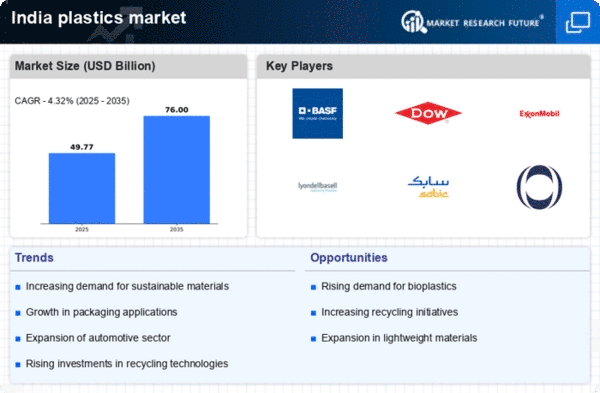
The plastics market in India is characterized by a dynamic competitive landscape, driven by increasing demand across various sectors such as packaging, automotive, and construction. Key players are actively pursuing strategies that emphasize innovation, sustainability, and regional expansion. For instance, BASF (DE) has been focusing on developing advanced materials that cater to the growing demand for lightweight and durable products, while Dow (US) is enhancing its operational capabilities through digital transformation initiatives aimed at optimizing production efficiency. These strategies collectively contribute to a competitive environment that is increasingly shaped by technological advancements and sustainability goals.In terms of business tactics, companies are localizing manufacturing to reduce costs and improve supply chain resilience. The market structure appears moderately fragmented, with several key players exerting influence over their respective segments. This fragmentation allows for a diverse range of products and innovations, although it also intensifies competition among established and emerging firms.
In October ExxonMobil (US) announced a significant investment in a new recycling facility in India, aimed at enhancing its circular economy initiatives. This move is strategically important as it aligns with global trends towards sustainability and positions ExxonMobil as a leader in the transition to a more sustainable plastics industry. The facility is expected to process up to 100,000 tons of plastic waste annually, thereby reducing environmental impact and meeting increasing regulatory pressures.
In September LyondellBasell (US) launched a new line of bio-based plastics, which are derived from renewable resources. This strategic action reflects a growing consumer preference for sustainable products and positions LyondellBasell to capture market share in the eco-friendly segment. The introduction of these materials is likely to enhance the company's reputation and appeal to environmentally conscious consumers, thereby driving sales growth.
In August SABIC (SA) entered into a partnership with a local Indian startup to develop innovative packaging solutions that utilize recycled materials. This collaboration not only strengthens SABIC's market presence but also demonstrates its commitment to sustainability and innovation. By leveraging local expertise, SABIC can tailor its products to meet specific regional needs, enhancing its competitive edge in the Indian market.
As of November current competitive trends in the plastics market are increasingly defined by digitalization, sustainability, and the integration of artificial intelligence. Strategic alliances are becoming more prevalent, as companies seek to enhance their capabilities and market reach. The competitive differentiation is likely to evolve from traditional price-based competition towards a focus on innovation, technology, and supply chain reliability. This shift suggests that companies that prioritize sustainable practices and technological advancements will be better positioned to thrive in the future.