×
Request Free Sample ×

Kindly complete the form below to receive a free sample of this Report

* Please use a valid business email

Leading companies partner with us for data-driven Insights

clients tt-cursor
Hero Background

India Baby Toys Market

ID: MRFR/CG/44639-HCR
128 Pages
Sakshi Gupta
February 2026

India Baby Toys Market Size, Share, Industry Trend & Analysis Research Report By Product Type (Board Games, Soft ToysDolls, Action Toys, ArtsCraft Toys, Construction Toys, Vehicles, Musical ToysRattles, Others), By End User (Infants, Toddlers), andBy Distribution Channel (Store-Based, Non-Store-Based) - Forecast to 2035

Share:
Download PDF ×

We do not share your information with anyone. However, we may send you emails based on your report interest from time to time. You may contact us at any time to opt-out.

India Baby Toys Market Infographic
Purchase Options

India Baby Toys Market Summary

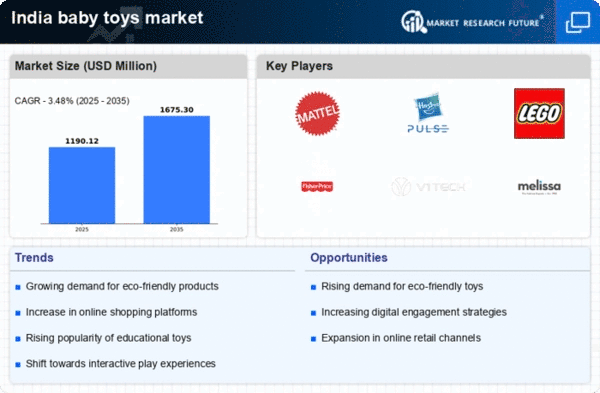
As per Market Research Future analysis, the India baby toys market size was estimated at 1150.1 USD Million in 2024. The India baby toys market is projected to grow from 1190.12 USD Million in 2025 to 1675.3 USD Million by 2035, exhibiting a compound annual growth rate (CAGR) of 3.4% during the forecast period 2025 - 2035

Key Market Trends & Highlights

The India baby toys market is experiencing robust growth driven by evolving consumer preferences and demographic factors.

  • The market is witnessing a notable rise in demand for educational toys, reflecting a shift towards learning-oriented play.
  • E-commerce is rapidly becoming the preferred shopping channel for baby toys, enhancing accessibility for consumers.
  • Sustainability is increasingly influencing purchasing decisions, with parents favoring eco-friendly products.
  • Key market drivers include increasing birth rates and rising disposable incomes, which are fueling overall market expansion.

Market Size & Forecast

2024 Market Size 1150.1 (USD Million)
2035 Market Size 1675.3 (USD Million)
CAGR (2025 - 2035) 3.48%

Major Players

Mattel (US), Hasbro (US), LEGO (DK), Fisher-Price (US), VTech (HK), Melissa & Doug (US), Nerf (US), Chicco (IT), Playmobil (DE)

Our Impact
Enabled $4.3B Revenue Impact for Fortune 500 and Leading Multinationals
Partnering with 2000+ Global Organizations Each Year
30K+ Citations by Top-Tier Firms in the Industry

India Baby Toys Market Trends

the baby toys market is evolving dynamically, driven by various factors including changing consumer preferences and increasing disposable incomes. Parents are increasingly seeking toys that not only entertain but also contribute to the developmental needs of their children. This shift in focus has led to a growing demand for educational toys that promote cognitive skills, motor skills, and social interaction. Furthermore, the rise of e-commerce platforms has transformed the way consumers access and purchase baby toys, making a wider variety of products available at their fingertips. As a result, manufacturers are adapting their strategies to cater to this evolving landscape, emphasizing quality, safety, and innovative designs. In addition, sustainability is becoming a crucial consideration in the baby toys market. There is a noticeable trend towards eco-friendly materials and production processes, as environmentally conscious parents seek products that align with their values. This shift is prompting companies to explore sustainable sourcing and manufacturing practices, which may enhance their brand reputation and appeal to a broader audience. Overall, the baby toys market is poised for continued growth, with an emphasis on innovation, safety, and sustainability shaping its future trajectory.

Rise of Educational Toys

There is a notable increase in the demand for educational toys that foster learning and development. Parents are prioritizing products that enhance cognitive and motor skills, leading to a shift in purchasing behavior.

E-commerce Growth

The expansion of online shopping platforms is significantly influencing the baby toys market. Consumers are increasingly turning to e-commerce for convenience and variety, prompting manufacturers to enhance their online presence.

Sustainability Focus

A growing emphasis on eco-friendly products is evident in the baby toys market. Parents are seeking toys made from sustainable materials, encouraging companies to adopt greener practices in their production.

India Baby Toys Market Drivers

Increasing Birth Rates

the baby toys market in India is growing due to increasing birth rates.. According to recent data, the birth rate in India stands at approximately 22.4 births per 1,000 people. This demographic trend suggests a larger population of infants and toddlers, thereby expanding the consumer base for baby toys. As families grow, the demand for a variety of toys, including educational and developmental products, is likely to rise. This increase in demand may lead to a surge in sales for manufacturers and retailers within the baby toys market. Furthermore, the cultural emphasis on child development and education in India encourages parents to invest in toys that promote learning and creativity, further fueling market growth.

Rising Disposable Incomes

The baby toys market in India is positively influenced by rising disposable incomes among families. As economic conditions improve, more households are experiencing an increase in their purchasing power. This trend is particularly evident in urban areas, where disposable income has risen by approximately 10% annually over the past few years. Families are now more willing to spend on high-quality and innovative toys that contribute to their children's development. This shift in consumer behavior indicates a potential for premium products within the baby toys market, as parents seek toys that offer educational value and safety. Consequently, manufacturers may focus on creating diverse product lines to cater to this evolving demand.

Expansion of Retail Channels

the baby toys market in India benefits from expanding retail channels, both physical and online.. The proliferation of e-commerce has made it easier for consumers to access a wide range of products. Recent statistics indicate that online sales of baby toys have increased by approximately 30% in the last year alone. This growth is attributed to the convenience of online shopping and the availability of diverse brands and products. Additionally, traditional retail stores are also expanding their offerings, providing parents with more options to choose from. This multi-channel approach is likely to enhance the visibility of products in the baby toys market, ultimately driving sales and market penetration.

Growing Awareness of Child Development

There is a notable increase in awareness regarding child development among Indian parents, which is significantly impacting the baby toys market. Parents are increasingly recognizing the importance of play in cognitive and physical development during early childhood. This awareness is leading to a preference for toys that are not only entertaining but also educational. Reports suggest that around 65% of parents prioritize educational toys when making purchasing decisions. This trend indicates a shift towards products that stimulate learning and creativity, thereby driving sales in the baby toys market. Manufacturers are likely to respond by innovating and marketing toys that align with developmental milestones, ensuring they meet the expectations of informed consumers.

Influence of Social Media and Parenting Communities

the baby toys market in India is influenced more by social media and parenting communities.. Platforms such as Instagram and Facebook serve as vital channels for parents to share experiences and recommendations regarding toys. This trend appears to be shaping consumer preferences, as parents often rely on peer reviews and influencer endorsements when selecting toys for their children. Research indicates that nearly 40% of parents are influenced by social media when making purchasing decisions. This growing reliance on digital platforms suggests that manufacturers and retailers in the baby toys market may need to enhance their online presence and engage with consumers through targeted marketing strategies to capitalize on this trend.


Market Segment Insights

By Type: Soft Toys & Dolls (Largest) vs. Arts & Craft Toys (Fastest-Growing)

In the India baby toys market, the distribution of market share among segment values reveals a diverse landscape. Soft Toys & Dolls command the largest share, appealing to a broad audience due to their charm andability to foster emotional connections. Following them are Action Toys and Vehicles, which also hold significant portions, while Arts & Craft Toys are carving out a notable niche, reflecting changing preferences. Growth trends in this segment indicate a rising demand for creative and interactive toys, with Arts & Craft Toys leading as the fastest-growing category. The rise in disposable income and heightened parental focus on developmental play are key drivers. Additionally, the increasing popularity of educational toys plays a vital role in boosting the growth of various segment values, attracting both children and parents alike.

Soft Toys & Dolls (Dominant) vs. Arts & Craft Toys (Emerging)

Soft Toys & Dolls are characterized by their emotional appeal and tactile nature, making them a dominant category in the India baby toys market. They serve not only as toys but also as companions for children, enhancing their playtime experience. These toys offer a range of options, including plush animals and dolls that are perfect for imaginative play. In contrast, Arts & Craft Toys represent the emerging segment emphasizing creativity and educational engagement. They encourage hands-on activities, aiding in skill development and artistic expression among young children. The growth of this category showcases a shift towards more interactive and constructive play experiences, catering to the evolving demands of modern parents.

By End User: Infants (Largest) vs. Toddlers (Fastest-Growing)

In the India baby toys market, 'Infants' hold a significant share, representing the largest segment of end users. This category benefits from a diverse range of products designed for early developmental needs, meeting safety standards and parental preferences. Comparatively, the 'Toddlers' segment is rapidly gaining popularity, reflecting a shift in consumer demand towards toys that facilitate learning and motor skills. The increasing awareness among parents regarding the importance of developmental play for toddlers further drives this segment's growth. The growth trends in the India baby toys market indicate that while 'Infants' toys remain a staple, 'Toddlers' toys are emerging as the fastest-growing segment. Key drivers include a rising number of working parents, who are keen on purchasing educational and interactive toys to support their children's growth. Additionally, the proliferation of e-commerce platforms has made it easier for parents to access a wide variety of toddler toys, leading to increased sales and market penetration for this segment.

Infants (Dominant) vs. Toddlers (Emerging)

The 'Infants' segment of the India baby toys market is characterized by a variety of soft toys, rattles, and developmental products that cater specifically to the safety and sensory needs of infants. This dominant segment thrives on the trust that parents place in established brands known for high-quality, safe materials. In contrast, the 'Toddlers' segment is emerging with a focus on interactive and educational toys designed to enhance cognitive and motor skills. These toys often feature vibrant colors, dynamic shapes, and engaging functions, becoming increasingly popular among parents seeking to foster their children's development. As toddlers begin to explore their environment more actively, the demand for innovative and multifunctional toys is expected to escalate, positioning this segment for rapid growth.

By Distribution Channel: Store-Based (Largest) vs. Non-Store-Based (Fastest-Growing)

In the India baby toys market, the store-based distribution channel remains the largest segment, dominating market share due to the consumer preference for physical examination of products before purchase. Customers are drawn to the sensory experience provided in brick-and-mortar stores, which enhances trust and satisfaction. Conversely, the non-store-based channel is witnessing rapid growth as e-commerce continues to gain traction, appealing to tech-savvy parents looking for convenience and a broader selection of toys. The growth trends indicate a significant shift toward digital platforms, fueled by increased internet penetration and changing shopping habits. Factors such as the COVID-19 pandemic accelerated this trend, as more consumers began to appreciate the flexibility of online shopping. The ease of access, coupled with promotional strategies tailored for online consumers, is likely to further boost the non-store-based segment in the coming years.

Store-Based (Dominant) vs. Non-Store-Based (Emerging)

Store-based segments have carved their niche as the dominant force in the distribution of baby toys, capitalizing on the tactile advantages of shopping in-person where parents can physically assess quality and design. These retail environments often provide a curated experience, with knowledgeable staff available to assist customers, thus fostering a strong relationship between consumers and retailers. On the other hand, the non-store-based channel, characterized by online marketplaces and direct-to-consumer websites, is rapidly emerging. This segment offers unparalleled convenience and variety, catering to the needs of modern parents who prefer shopping from home. With unique sales promotions and enhanced user experiences, the non-store-based segment continues to attract a growing share of the market.

Get more detailed insights about India Baby Toys Market

Key Players and Competitive Insights

The baby toys market in India is characterized by a dynamic competitive landscape, driven by innovation, consumer preferences, and a growing emphasis on safety and educational value. Major players such as Mattel (US), LEGO (DK), and Fisher-Price (US) are actively shaping the market through strategic initiatives. For instance, Mattel (US) has focused on expanding its product lines to include more sustainable materials, reflecting a broader trend towards eco-friendly toys. LEGO (DK) continues to innovate with its educational kits, which align with the increasing demand for STEM-focused products. Fisher-Price (US) emphasizes developmental toys that cater to various age groups, thereby enhancing its market presence and consumer loyalty. Collectively, these strategies indicate a competitive environment that prioritizes innovation and consumer engagement.In terms of business tactics, companies are increasingly localizing manufacturing to reduce costs and improve supply chain efficiency. This approach not only enhances responsiveness to market demands but also aligns with government initiatives promoting Make in India. The market structure appears moderately fragmented, with several key players holding substantial market shares while also facing competition from local manufacturers. The collective influence of these major companies shapes pricing strategies and product offerings, creating a competitive yet collaborative atmosphere.

In October LEGO (DK) announced a partnership with a leading Indian educational institution to develop a series of interactive learning toys aimed at preschoolers. This strategic move is significant as it not only enhances LEGO's brand visibility in the educational sector but also aligns with the growing trend of integrating play with learning. Such initiatives may potentially position LEGO as a leader in educational toys, appealing to parents seeking quality learning experiences for their children.

In September Fisher-Price (US) launched a new line of toys made from 100% recycled materials, marking a pivotal shift towards sustainability. This initiative is likely to resonate with environmentally conscious consumers and could enhance brand loyalty among parents who prioritize eco-friendly products. The move underscores the importance of sustainability in the current market, suggesting that companies that adopt such practices may gain a competitive edge.

In November Mattel (US) unveiled a digital platform that allows parents to customize toys based on their children's preferences and developmental needs. This innovative approach not only enhances customer engagement but also reflects the increasing integration of technology in the toy industry. By leveraging digital tools, Mattel may effectively differentiate itself in a crowded market, appealing to tech-savvy consumers.

As of November current trends in the baby toys market indicate a strong shift towards digitalization, sustainability, and the integration of artificial intelligence in product development. Strategic alliances among companies are becoming more prevalent, fostering innovation and enhancing competitive positioning. The competitive landscape is likely to evolve, with a pronounced shift from price-based competition to a focus on technological advancements, product innovation, and supply chain reliability. Companies that can effectively navigate these trends may secure a more favorable position in the market.

Key Companies in the India Baby Toys Market include

Industry Developments

The India Baby Toys Market has witnessed significant developments over the past few months, driven by increasing consumer demand and product innovation. Companies like FirstCry and Funskool India Limited have launched various eco-friendly and educational toys to cater to the growing health-conscious consumer base. In September 2023, Mattel India reported a surge in sales due to the popularity of its toy lines following an increased focus on the learning advantages of play. Notably, the Indian government has actively supported domestic manufacturing in this sector, promoting initiatives that bolster local toy production amid international competition.

There have been no recent mergers or acquisitions in the sector involving the specified companies, but firms like Mee Mee and Hape are exploring strategic partnerships for market expansion. The valuation of the India Baby Toys Market is projected to increase substantially, supported by urbanization and rising disposable incomes, which are leading to a broader retail footprint, particularly in tier 2 cities. Major changes have also been observed in consumer preferences, with an increasing inclination towards online shopping for toys, especially during festive seasons, indicating a resilient and growing market.

Future Outlook

India Baby Toys Market Future Outlook

The Baby Toys Market in India is projected to grow at 3.48% CAGR from 2025 to 2035, driven by rising disposable incomes, urbanization, and increasing awareness of child development.

New opportunities lie in:

  • Develop eco-friendly toy lines to capture environmentally conscious consumers.
  • Leverage e-commerce platforms for direct-to-consumer sales strategies.
  • Introduce subscription models for regular toy deliveries to enhance customer retention.

By 2035, the market is expected to exhibit robust growth, reflecting evolving consumer preferences and innovative product offerings.

Market Segmentation

India Baby Toys Market Type Outlook

  • Board Games
  • Soft Toys & Dolls
  • Action Toys
  • Arts & Craft Toys
  • Construction Toys
  • Vehicles
  • Musical Toys & Rattles
  • Other

India Baby Toys Market End User Outlook

  • Infants
  • Toddlers

India Baby Toys Market Distribution Channel Outlook

  • Store-Based
  • Non-Store-Based

Report Scope

MARKET SIZE 2024 1150.1(USD Million)
MARKET SIZE 2025 1190.12(USD Million)
MARKET SIZE 2035 1675.3(USD Million)
COMPOUND ANNUAL GROWTH RATE (CAGR) 3.48% (2025 - 2035)
REPORT COVERAGE Revenue Forecast, Competitive Landscape, Growth Factors, and Trends
BASE YEAR 2024
Market Forecast Period 2025 - 2035
Historical Data 2019 - 2024
Market Forecast Units USD Million
Key Companies Profiled Mattel (US), Hasbro (US), LEGO (DK), Fisher-Price (US), VTech (HK), Melissa & Doug (US), Nerf (US), Chicco (IT), Playmobil (DE)
Segments Covered Type, End User, Distribution Channel
Key Market Opportunities Integration of sustainable materials and smart technology in the baby toys market presents a unique growth opportunity.
Key Market Dynamics Rising demand for eco-friendly baby toys drives innovation and competition among manufacturers in the market.
Countries Covered India
Leave a Comment

FAQs

What is the expected market size of the India Baby Toys Market in 2024?

The expected market size of the India Baby Toys Market in 2024 is valued at 1.15 USD Billion.

What will be the projected market size of the India Baby Toys Market by 2035?

The projected market size of the India Baby Toys Market by 2035 is expected to reach 2.01 USD Billion.

What is the expected CAGR for the India Baby Toys Market from 2025 to 2035?

The expected CAGR for the India Baby Toys Market from 2025 to 2035 is 5.224%.

Which product type is expected to have the largest market share in 2024?

In 2024, Soft Toys & Dolls are expected to have a significant market share valued at 0.3 USD Billion.

What is the value of the India Baby Toys Market for Board Games in 2035?

The value of the India Baby Toys Market for Board Games is projected to be 0.45 USD Billion in 2035.

Who are the major players in the India Baby Toys Market?

Major players in the India Baby Toys Market include LuvLap, Chicco, Kiddy Club, and Funskool India Limited.

How valued is the Action Toys segment of the market in 2024?

The Action Toys segment of the India Baby Toys Market is valued at 0.2 USD Billion in 2024.

What are the growth drivers for the India Baby Toys Market?

Growth drivers for the India Baby Toys Market include increasing disposable income and rising awareness of child development.

What value will the Arts & Craft Toys market segment reach by 2035?

The Arts & Craft Toys market segment is projected to reach a value of 0.3 USD Billion by 2035.

How will global trends impact the India Baby Toys Market?

Global trends may drive innovation and introduce new types of toys, positively impacting the India Baby Toys Market.

Download Free Sample

Kindly complete the form below to receive a free sample of this Report

Compare Licence

×
Features License Type
Single User Multiuser License Enterprise User
Price $4,950 $5,950 $7,250
Maximum User Access Limit 1 User Upto 10 Users Unrestricted Access Throughout the Organization
Free Customization
Direct Access to Analyst
Deliverable Format
Platform Access
Discount on Next Purchase 10% 15% 15%
Printable Versions