×
Request Free Sample ×

Kindly complete the form below to receive a free sample of this Report

* Please use a valid business email

Leading companies partner with us for data-driven Insights

clients tt-cursor
Hero Background

India Athleisure Market

ID: MRFR/CG/44705-HCR
200 Pages
Garvit Vyas
February 2026

India Athleisure Market Size, Share, Industry Trend & Analysis Research Report: By Product Type (Leggings, TightsJoggers, HoodiesSweatshirts, Sneakers, Shorts, Sports Jackets, Sports Bra, Yoga Pants, Others), By Distribution Channel (Store-Based, Non-Store Based) andBy End User (Men, Women, Unisex)- Forecast to 2035

Share:
Download PDF ×

We do not share your information with anyone. However, we may send you emails based on your report interest from time to time. You may contact us at any time to opt-out.

India Athleisure Market Infographic
Purchase Options

India Athleisure Market Summary

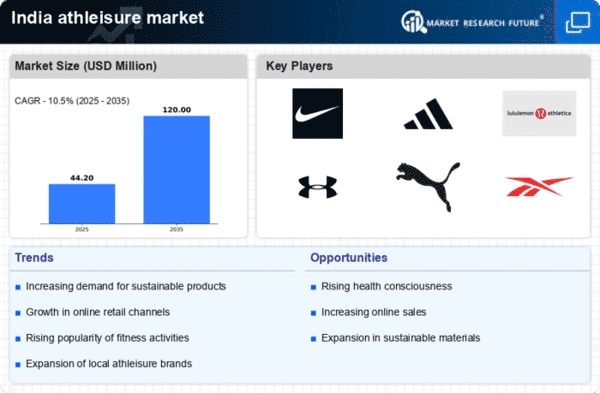
As per Market Research Future analysis, the India athleisure market Size was estimated at 40.0 USD Million in 2024. The India athleisure market is projected to grow from 44.2 USD Million in 2025 to 120.0 USD Million by 2035, exhibiting a compound annual growth rate (CAGR) of 10% during the forecast period 2025 - 2035

Key Market Trends & Highlights

The India athleisure market is experiencing robust growth driven by evolving consumer preferences and lifestyle changes.

  • The athleisure market in India is witnessing a notable shift towards sustainability, with brands increasingly adopting eco-friendly materials.
  • Technological integration in athleisure products is enhancing consumer experience, particularly through smart fabrics and wearable technology.
  • The largest segment in the market is women's athleisure, while the fastest-growing segment is men's athleisure, reflecting changing fashion dynamics.
  • Health and wellness awareness, along with the rise of e-commerce platforms, are key drivers propelling the growth of the athleisure market in India.

Market Size & Forecast

2024 Market Size 40.0 (USD Million)
2035 Market Size 120.0 (USD Million)
CAGR (2025 - 2035) 10.5%

Major Players

Nike (US), Adidas (DE), Lululemon Athletica (CA), Under Armour (US), Puma (DE), Reebok (GB), New Balance (US), ASICS (JP), Fabletics (US)

Our Impact
Enabled $4.3B Revenue Impact for Fortune 500 and Leading Multinationals
Partnering with 2000+ Global Organizations Each Year
30K+ Citations by Top-Tier Firms in the Industry

India Athleisure Market Trends

The athleisure market in India is experiencing a notable transformation, driven by evolving consumer preferences and lifestyle changes. As individuals increasingly prioritize comfort and versatility in their clothing choices, the demand for athleisure apparel continues to rise. This shift is not merely a trend but appears to reflect a broader cultural movement towards health and wellness, where active lifestyles are becoming more mainstream. Retailers are responding by expanding their offerings, incorporating innovative materials and designs that cater to both athletic and casual wear. Moreover, the influence of social media and fitness influencers seems to play a crucial role in shaping consumer behavior. As more individuals share their fitness journeys online, the visibility of athleisure wear increases, encouraging others to adopt similar styles. This phenomenon suggests that the athleisure market is not only about clothing but also about a lifestyle that resonates with a growing demographic focused on health, fitness, and self-expression. The future of this market appears promising, with potential for further growth as brands continue to innovate and adapt to consumer needs.

Sustainability Focus

There is a growing emphasis on sustainable practices within the athleisure market. Brands are increasingly adopting eco-friendly materials and production methods, appealing to environmentally conscious consumers. This trend indicates a shift towards responsible consumption, where customers prefer products that align with their values.

Technological Integration

The integration of technology into athleisure apparel is becoming more prevalent. Features such as moisture-wicking fabrics, temperature regulation, and smart textiles are enhancing the functionality of clothing. This trend suggests that consumers are seeking performance-oriented products that support their active lifestyles.

Diverse Demographic Appeal

The athleisure market is attracting a diverse range of consumers, including various age groups and body types. Brands are recognizing the importance of inclusivity in their marketing strategies, which may lead to a broader customer base. This trend indicates a shift towards more personalized and relatable branding.

India Athleisure Market Drivers

Rise of E-commerce Platforms

The proliferation of e-commerce platforms in India is significantly influencing the athleisure market. With the convenience of online shopping, consumers are increasingly turning to digital channels for their athleisure needs. Data suggests that online retail sales in India are expected to reach $200 billion by 2026, with a substantial portion attributed to apparel. This shift towards e-commerce allows brands to reach a wider audience, including tier-2 and tier-3 cities, where traditional retail presence may be limited. The ease of access to a variety of athleisure products online is likely to enhance consumer engagement and drive sales, making it a crucial factor in the market's growth.

Health and Wellness Awareness

The increasing awareness of health and wellness among the Indian population appears to be a pivotal driver for the athleisure market. As more individuals prioritize fitness and a healthy lifestyle, the demand for comfortable and functional apparel rises. Reports indicate that the fitness industry in India is projected to grow at a CAGR of approximately 10% over the next few years. This trend is likely to bolster the athleisure market, as consumers seek clothing that seamlessly transitions from workout sessions to casual outings. The emphasis on physical well-being is fostering a culture where athleisure is not merely a fashion statement but a lifestyle choice, thereby expanding its market reach.

Urbanization and Lifestyle Changes

Rapid urbanization in India is contributing to the evolution of lifestyle choices, which in turn impacts the athleisure market. As more individuals migrate to urban areas, there is a noticeable shift towards active lifestyles that prioritize convenience and comfort. The urban population is increasingly engaged in fitness activities, leading to a heightened demand for versatile clothing that can be worn in various settings. This trend is likely to continue, as urban dwellers seek apparel that accommodates their dynamic routines. Consequently, the athleisure market stands to benefit from this demographic shift, as consumers look for clothing that aligns with their fast-paced lives.

Influence of Social Media and Fitness Trends

Social media platforms are playing a transformative role in shaping consumer preferences within the athleisure market. Influencers and fitness enthusiasts frequently showcase athleisure wear, creating a buzz that resonates with younger demographics. This trend is particularly pronounced in India, where social media penetration is high, with over 500 million users. The visibility of athleisure on platforms like Instagram and TikTok is likely to drive consumer interest and purchasing behavior. As fitness trends gain traction, the demand for stylish yet functional athleisure apparel is expected to rise, further propelling the market forward.

Growing Participation in Sports and Fitness Activities

The growing participation in sports and fitness activities among the Indian populace is a significant driver for the athleisure market. With initiatives promoting fitness and sports at both grassroots and professional levels, there is an increasing inclination towards active lifestyles. Reports indicate that the number of fitness enthusiasts in India has surged, with a notable rise in gym memberships and participation in sports events. This heightened engagement in physical activities is likely to create a robust demand for athleisure apparel, as consumers seek clothing that supports their active pursuits. The athleisure market is thus positioned to capitalize on this trend, catering to a more health-conscious consumer base.


Market Segment Insights

By Product Type: Leggings (Largest) vs. Sports Bra (Fastest-Growing)

In the India athleisure market, leggings dominate the product type segment with a significant market share, driven by their versatility and comfort. Tights & joggers and hoodies & sweatshirts also hold substantial shares, appealing to consumers looking for both style and functionality in their activewear. Sneakers and shorts follow closely, indicating a healthy distribution of preferences among various athleisure items. The growth trends in this segment are influenced by increasing fitness awareness and the growing popularity of casual, comfortable clothing for everyday use. The sports bra segment, in particular, is emerging rapidly as more women engage in fitness activities, demanding better support and style in their workout gear. This shift is also supported by various brands launching innovative designs and materials to attract consumers.

Leggings: Dominant vs. Sports Bra: Emerging

Leggings have established themselves as the dominant product within the India athleisure market due to their comfort, flexibility, and suitability for various occasions, from workouts to casual outings. They cater to a wide demographic, appealing to both fitness enthusiasts and the fashion-conscious. In contrast, the sports bra segment is rapidly emerging, reflecting a shift towards more specialized activewear for women. As more brands focus on creating supportive and stylish options, the demand continues to grow, helped by increased marketing efforts and the rising number of women participating in sports. This dynamic creates a vibrant market landscape where both categories are expected to thrive.

By End User: Women (Largest) vs. Unisex (Fastest-Growing)

In the India athleisure market, the distribution of market share among the end user segments shows that women account for the largest portion, indicating a strong preference among female consumers for athleisure wear. This segment benefits from a growing focus on fashion and functionality, with women increasingly seeking versatile clothing that caters to both athletic and casual settings. Meanwhile, the unisex segment is gaining traction, appealing to consumers seeking gender-neutral clothing options. The growth trends in the end user segment are driven by various factors, including increasing fitness awareness and the rise of athleisure as a lifestyle choice. Women's segments dominate due to their expanding participation in fitness activities, while the unisex segment is emerging rapidly, resonating with younger consumers valuing inclusivity and sustainability in their apparel choices. As a result, both segments are poised for significant growth in the coming years.

Women (Dominant) vs. Unisex (Emerging)

The women segment in the India athleisure market stands out as a dominant force, characterized by a diverse range of products tailored to various activities such as yoga, running, and casual wear. This segment reflects strong brand loyalty and a continuous evolution in styles, colors, and performance features, catering to the dynamic lifestyle of women today. On the other hand, the unisex segment, categorized as emerging, is attracting attention for its versatile designs that appeal to a broader audience. As society shifts towards acceptance of non-binary fashion, unisex athleisure wear is rapidly gaining popularity, particularly among the youth who are increasingly favoring styles that break traditional gender norms. This proactive approach to inclusivity is driving the design and marketing strategies of brands within this segment.

By Distribution Channel: Store-Based (Largest) vs. Non-Store Based (Fastest-Growing)

In the India athleisure market, store-based distribution channels command the largest market share. Physical stores provide consumers with the opportunity to experience the products firsthand, driving significant foot traffic and sales. The convenience of immediacy and tactile engagement with athleisure products makes store-based channels a preferred choice among many customers. Despite the growing influence of online channels, the traditional retail environment remains strong. On the other hand, non-store-based distribution channels are the fastest-growing segment, propelled by the increasing penetration of e-commerce platforms and the shift in consumer preferences towards online shopping. The convenience, variety, and ease of purchasing from home are key drivers fueling this growth. As the digital landscape continues to evolve, non-store-based channels are expected to expand rapidly, presenting significant opportunities for athleisure brands to capture a broader audience.

Store-Based (Dominant) vs. Non-Store Based (Emerging)

The store-based distribution segment is characterized by brick-and-mortar stores that offer consumers a hands-on experience with athleisure products. This segment benefits from strong brand loyalty and the ability to showcase a wide range of offerings in a physical space. On the other hand, the non-store-based segment is emerging rapidly, comprising online retail and direct-to-consumer sales. This segment attracts tech-savvy consumers who appreciate the convenience of shopping online and the ability to access diverse product ranges. While store-based channels remain dominant, non-store channels are gaining traction, appealing to a younger demographic and enabling brands to reach customers across vast geographical areas.

Get more detailed insights about India Athleisure Market

Key Players and Competitive Insights

The athleisure market in India is characterized by a dynamic competitive landscape, driven by increasing consumer demand for versatile apparel that seamlessly transitions from workout to casual wear. Key players such as Nike (US), Adidas (DE), and Lululemon Athletica (CA) are strategically positioned to capitalize on this trend through innovation and regional expansion. Nike (US) focuses on digital transformation, enhancing its e-commerce capabilities to cater to the growing online shopping trend. Adidas (DE) emphasizes sustainability, integrating eco-friendly materials into its product lines, while Lululemon Athletica (CA) leverages community engagement and experiential retail to foster brand loyalty. Collectively, these strategies shape a competitive environment that prioritizes consumer experience and sustainability.In terms of business tactics, companies are increasingly localizing manufacturing to reduce lead times and optimize supply chains. This approach not only enhances responsiveness to market demands but also aligns with the growing consumer preference for locally produced goods. The competitive structure of the athleisure market appears moderately fragmented, with several key players vying for market share, yet the influence of major brands remains substantial, often dictating trends and consumer expectations.

In October Nike (US) announced a partnership with a leading Indian fitness app to enhance its digital ecosystem, allowing users to access personalized workout plans and exclusive product offerings. This strategic move underscores Nike's commitment to integrating technology into its brand experience, potentially increasing customer engagement and driving sales through targeted marketing initiatives. The partnership may also facilitate deeper insights into consumer behavior, enabling Nike to tailor its offerings more effectively.

In September Adidas (DE) launched a new line of sustainable athleisure wear made from recycled ocean plastics, reflecting its ongoing commitment to environmental responsibility. This initiative not only aligns with global sustainability trends but also positions Adidas as a leader in eco-conscious fashion. The strategic importance of this launch lies in its potential to attract environmentally aware consumers, thereby enhancing brand loyalty and market share in a competitive landscape increasingly focused on sustainability.

In August Lululemon Athletica (CA) expanded its presence in India by opening several new stores in key metropolitan areas, coupled with a robust online marketing campaign. This expansion strategy aims to tap into the growing urban population's demand for high-quality athleisure products. The significance of this move is twofold: it not only increases brand visibility but also allows Lululemon to engage directly with consumers, fostering a community around its brand ethos.

As of November current trends in the athleisure market indicate a strong emphasis on digitalization, sustainability, and the integration of artificial intelligence in product development and customer engagement. Strategic alliances are increasingly shaping the competitive landscape, enabling brands to leverage each other's strengths. Looking ahead, competitive differentiation is likely to evolve from traditional price-based competition to a focus on innovation, technological advancements, and supply chain reliability. This shift suggests that companies that prioritize these areas will be better positioned to thrive in an increasingly competitive market.

Key Companies in the India Athleisure Market include

Industry Developments

The India Athleisure Market has seen notable developments recently, with brands like Puma India and Adidas expanding their product lines and increasing market presence. As of October 2023, Puma India has launched specialized collections targeting young consumers focused on comfort and style. Other players, such as Decathlon and Nike, are enhancing their online retail capabilities to tap into the growing e-commerce segment in India, particularly post-pandemic. In terms of market valuation, reports highlight an expected growth rate of around 12% annually in the athleisure segment, driven by increasing health consciousness and lifestyle changes among Indian consumers.

In recent mergers and acquisitions, there have been no major announcements in the athleisure segment concerning focal companies like Under Armour, Forever 21, and Reebok. However, in the previous years, Tata Group's acquisition of a stake in an emerging athleisure brand in July 2022 garnered attention, further showcasing the increasing interest in this market sector. Overall, the athleisure trend is significantly shaping the fashion landscape in India, with brands from various sectors aligning their strategies to capture this dynamic market.

Future Outlook

India Athleisure Market Future Outlook

The Athleisure Market in India is projected to grow at a 10.5% CAGR from 2025 to 2035, driven by increasing health awareness, lifestyle changes, and e-commerce expansion.

New opportunities lie in:

  • Development of eco-friendly athleisure lines using sustainable materials.
  • Expansion of online platforms with personalized shopping experiences.
  • Collaboration with fitness influencers for targeted marketing campaigns.

By 2035, the athleisure market is expected to achieve substantial growth and diversification.

Market Segmentation

India Athleisure Market End User Outlook

  • Men
  • Women
  • Unisex

India Athleisure Market Product Type Outlook

  • Leggings
  • Tights & Joggers
  • Hoodies & Sweatshirts
  • Sneakers
  • Shorts
  • Sports Jackets
  • Sports Bra
  • Yoga Pants
  • Others

India Athleisure Market Distribution Channel Outlook

  • Store-Based
  • Non-Store Based

Report Scope

MARKET SIZE 2024 40.0(USD Million)
MARKET SIZE 2025 44.2(USD Million)
MARKET SIZE 2035 120.0(USD Million)
COMPOUND ANNUAL GROWTH RATE (CAGR) 10.5% (2025 - 2035)
REPORT COVERAGE Revenue Forecast, Competitive Landscape, Growth Factors, and Trends
BASE YEAR 2024
Market Forecast Period 2025 - 2035
Historical Data 2019 - 2024
Market Forecast Units USD Million
Key Companies Profiled Nike (US), Adidas (DE), Lululemon Athletica (CA), Under Armour (US), Puma (DE), Reebok (GB), New Balance (US), ASICS (JP), Fabletics (US)
Segments Covered Product Type, End User, Distribution Channel
Key Market Opportunities Growing demand for sustainable materials in the athleisure market presents significant innovation opportunities.
Key Market Dynamics Rising consumer demand for versatile athleisure wear drives innovation and competition among brands in the market.
Countries Covered India
Leave a Comment

FAQs

What is the expected market size of the India Athleisure Market in 2024?

The India Athleisure Market is expected to be valued at 39.29 USD Million in 2024.

What will the India Athleisure Market be valued at by 2035?

By 2035, the India Athleisure Market is expected to reach a value of 114.0 USD Million.

What is the expected CAGR for the India Athleisure Market during the forecast period?

The expected CAGR for the India Athleisure Market from 2025 to 2035 is 10.168%.

Who are the major players in the India Athleisure Market?

Key players in the India Athleisure Market include Decathlon, Puma, Nike, and Adidas among others.

What will the market value for leggings be in 2035?

The market value for leggings in the India Athleisure Market is expected to be 25.8 USD Million by 2035.

How much is the market for tights and joggers projected to be in 2024?

The market for tights and joggers in 2024 is projected to be valued at 7.5 USD Million.

What is the projected value of the sneakers segment in 2035?

The projected value of the sneakers segment in the India Athleisure Market is 28.8 USD Million by 2035.

What challenges does the India Athleisure Market face?

The market faces challenges such as increasing competition and changing consumer preferences.

What growth drivers influence the India Athleisure Market?

Factors such as the rise in fitness consciousness and evolving fashion trends drive the market's growth.

How much is the hoodies and sweatshirts segment expected to grow by 2035?

The hoodies and sweatshirts segment is expected to grow to 22.9 USD Million by 2035.

Download Free Sample

Kindly complete the form below to receive a free sample of this Report

Compare Licence

×
Features License Type
Single User Multiuser License Enterprise User
Price $4,950 $5,950 $7,250
Maximum User Access Limit 1 User Upto 10 Users Unrestricted Access Throughout the Organization
Free Customization
Direct Access to Analyst
Deliverable Format
Platform Access
Discount on Next Purchase 10% 15% 15%
Printable Versions