Cost Efficiency and Fuel Savings
The Mild Hybrid Vehicles Market is experiencing a surge in interest due to the cost efficiency associated with mild hybrid technology. These vehicles typically offer improved fuel economy compared to traditional internal combustion engine vehicles, which can lead to significant savings for consumers. For instance, studies indicate that mild hybrids can achieve fuel savings of approximately 10 to 20%. This financial incentive is particularly appealing in regions where fuel prices are high. As consumers become more budget-conscious, the demand for mild hybrid vehicles is likely to increase, further driving the market. Additionally, the lower initial purchase price of mild hybrids compared to full hybrids makes them an attractive option for a broader audience, thereby expanding the Mild Hybrid Vehicles Market.
Environmental Regulations and Standards
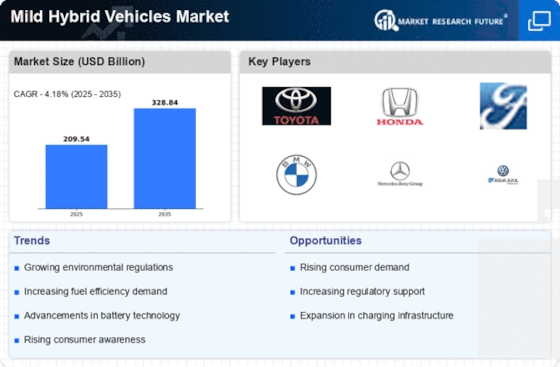
The Mild Hybrid Vehicles Market is significantly influenced by stringent environmental regulations aimed at reducing greenhouse gas emissions. Governments worldwide are implementing policies that encourage the adoption of cleaner vehicle technologies. For example, many regions have set ambitious targets for reducing carbon emissions from transportation, which has led to increased incentives for mild hybrid vehicles. These vehicles emit fewer pollutants than conventional vehicles, making them compliant with evolving regulations. As a result, manufacturers are investing in mild hybrid technology to meet these standards, which is expected to propel the market forward. The alignment of mild hybrids with regulatory frameworks suggests a promising future for the Mild Hybrid Vehicles Market as compliance becomes increasingly critical for automotive manufacturers.
Technological Innovations in Powertrains
The Mild Hybrid Vehicles Market is benefiting from ongoing technological innovations in powertrain systems. Advances in battery technology, energy recovery systems, and electric motor efficiency are enhancing the performance of mild hybrid vehicles. For instance, the integration of more efficient electric motors allows for better energy management, which can improve overall vehicle performance and reduce fuel consumption. As manufacturers continue to innovate, the appeal of mild hybrids is likely to grow, attracting consumers who seek both performance and efficiency. Furthermore, the development of smart technologies, such as regenerative braking and start-stop systems, is making mild hybrids more attractive. This trend indicates a robust future for the Mild Hybrid Vehicles Market as technology continues to evolve.
Consumer Preferences for Sustainable Mobility
The Mild Hybrid Vehicles Market is increasingly shaped by changing consumer preferences towards sustainable mobility solutions. As awareness of environmental issues grows, consumers are actively seeking vehicles that align with their values. Mild hybrid vehicles, which offer a balance between traditional combustion engines and full electric vehicles, are becoming a preferred choice for many. Market data suggests that a significant portion of consumers is willing to pay a premium for vehicles that demonstrate lower environmental impact. This shift in consumer behavior is likely to drive demand for mild hybrids, as they provide a practical solution for those looking to reduce their carbon footprint without sacrificing convenience. The rising interest in sustainability indicates a promising trajectory for the Mild Hybrid Vehicles Market.
Infrastructure Development and Charging Availability
The Mild Hybrid Vehicles Market is also influenced by the development of infrastructure that supports hybrid and electric vehicles. As charging stations become more prevalent, the convenience of owning a mild hybrid vehicle increases. Although mild hybrids do not require charging in the same way as full electric vehicles, the availability of charging infrastructure can enhance consumer confidence in hybrid technologies. Furthermore, investments in infrastructure development signal a commitment to supporting cleaner transportation options. This trend may encourage more consumers to consider mild hybrids as a viable alternative to traditional vehicles. The ongoing expansion of charging networks suggests a favorable environment for the Mild Hybrid Vehicles Market, potentially leading to increased adoption rates.