×
Request Free Sample ×

Kindly complete the form below to receive a free sample of this Report

* Please use a valid business email

Leading companies partner with us for data-driven Insights

clients tt-cursor
Hero Background

High Potency APIs Market

ID: MRFR/HC/5216-HCR
200 Pages
Rahul Gotadki
February 2026

High Potency APIs (HPAPI) Market Research Report By Application (Oncology, Hormonal Disorders, Cardiovascular Diseases, Infectious Diseases, Central Nervous System Disorders), By Type (Cytotoxic, Non-Cytotoxic, Targeted, Novel Biologics), By Manufacturing Process (Development, API Synthesis, Formulation, Quality Control), By End Use (Pharmaceutical Companies, Contract Manufacturing Organizations, Research Institutions) and By Regional (North America, Europe, South America, Asia Pacific, Middle East, and Africa) -Forecast to 2035

Share:
Download PDF ×

We do not share your information with anyone. However, we may send you emails based on your report interest from time to time. You may contact us at any time to opt-out.

High Potency APIs Market Infographic
Purchase Options

High Potency APIs Market Summary

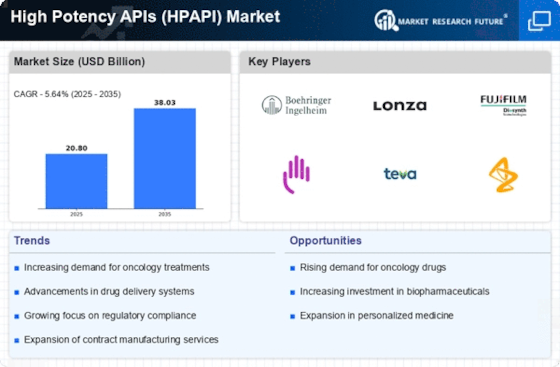
As per MRFR analysis, the High Potency APIs Market Size was estimated at 20.8 USD Billion in 2024. The High Potency APIs industry is projected to grow from 21.97 USD Billion in 2025 to 38.03 USD Billion by 2035, exhibiting a compound annual growth rate (CAGR) of 5.64 during the forecast period 2025 - 2035.

Key Market Trends & Highlights

The High Potency APIs Market is poised for substantial growth driven by technological advancements and increasing demand for targeted therapies.

  • The market experiences rising demand for targeted therapies, particularly in North America, which remains the largest market.
  • Outsourcing manufacturing processes is becoming a prevalent trend, especially among companies in the Asia-Pacific region, the fastest-growing market.
  • Advancements in manufacturing technologies are enhancing production efficiency and safety in high potency API production.
  • Key market drivers include the increasing prevalence of chronic diseases and growing investment in biopharmaceuticals, which are fueling market expansion.

Market Size & Forecast

2024 Market Size 20.8 (USD Billion)
2035 Market Size 38.03 (USD Billion)
CAGR (2025 - 2035) 5.64%

Major Players

Boehringer Ingelheim (DE), Lonza Group (CH), Fujifilm Diosynth Biotechnologies (JP), BASF SE (DE), Teva Pharmaceutical Industries (IL), AstraZeneca (GB), Novartis (CH), Hikma Pharmaceuticals (GB), Sandoz (CH)

Our Impact
Enabled $4.3B Revenue Impact for Fortune 500 and Leading Multinationals
Partnering with 2000+ Global Organizations Each Year
30K+ Citations by Top-Tier Firms in the Industry

High Potency APIs Market Trends

The High Potency APIs Market is currently experiencing a notable transformation, driven by the increasing demand for targeted therapies and the growing prevalence of chronic diseases. This market appears to be expanding as pharmaceutical companies invest in the development of innovative drugs that require high potency active pharmaceutical ingredients. The rise in oncology treatments, particularly, seems to be a significant factor influencing this growth, as these therapies often necessitate the use of potent compounds. Furthermore, advancements in manufacturing technologies and regulatory frameworks are likely to enhance the production capabilities of high potency APIs, thereby facilitating their availability in the market. In addition, the High Potency APIs Market is characterized by a shift towards outsourcing manufacturing processes. Many pharmaceutical firms appear to be collaborating with contract manufacturing organizations to leverage their expertise in handling potent compounds. This trend may provide companies with the flexibility to focus on core competencies while ensuring compliance with stringent safety regulations. As the market evolves, it is essential to monitor these dynamics, as they could shape the future landscape of high potency APIs and influence strategic decisions within the industry.

Rising Demand for Targeted Therapies

The High Potency APIs Market is witnessing an increase in the demand for targeted therapies, particularly in oncology. This trend indicates a shift towards more personalized medicine, where treatments are tailored to individual patient profiles, potentially improving efficacy and reducing side effects.

Outsourcing Manufacturing Processes

Pharmaceutical companies are increasingly outsourcing the production of high potency APIs to specialized contract manufacturing organizations. This trend suggests a strategic move to enhance efficiency and ensure compliance with safety standards, allowing firms to concentrate on research and development.

Advancements in Manufacturing Technologies

Innovations in manufacturing technologies are playing a crucial role in the High Potency APIs Market. These advancements may lead to improved production processes, increased yield, and enhanced safety measures, thereby supporting the growing demand for potent compounds.

High Potency APIs Market Drivers

Rising Demand for Personalized Medicine

The shift towards personalized medicine is significantly influencing the High Potency APIs Market. As healthcare moves towards tailored treatment approaches, the need for high potency APIs that can be customized for individual patient profiles is becoming more pronounced. This trend is driven by the recognition that one-size-fits-all therapies may not be effective for all patients. Market analysis indicates that the personalized medicine segment is growing rapidly, with high potency APIs playing a crucial role in the development of these targeted therapies. As more healthcare providers adopt personalized treatment plans, the demand for high potency APIs is expected to increase, further propelling market growth.

Growing Investment in Biopharmaceuticals

The biopharmaceutical sector is experiencing significant investment, which is likely to drive the High Potency APIs Market. With an increasing number of biopharmaceutical companies focusing on the development of monoclonal antibodies and other biologics, the demand for high potency APIs is expected to rise. These compounds are crucial for the formulation of biologics that require precise dosing and efficacy. Market data suggests that the biopharmaceutical market is expanding rapidly, with projections indicating a substantial increase in revenue over the next few years. This growth is anticipated to create a favorable environment for high potency APIs, as companies seek to enhance their product offerings.

Increasing Prevalence of Chronic Diseases

The rising incidence of chronic diseases such as cancer, diabetes, and cardiovascular disorders is a primary driver of the High Potency APIs Market. As these conditions become more prevalent, there is a growing need for effective treatment options. High potency active pharmaceutical ingredients are essential in developing targeted therapies that can address these complex diseases. According to recent data, the market for oncology drugs, which often utilize high potency APIs, is projected to reach substantial figures in the coming years. This trend indicates a robust demand for high potency APIs, as pharmaceutical companies strive to innovate and provide effective solutions for patients suffering from chronic ailments.

Regulatory Support for Advanced Therapies

Regulatory bodies are increasingly supporting the development of advanced therapies, which is likely to bolster the High Potency APIs Market. Initiatives aimed at expediting the approval process for innovative drugs, particularly those utilizing high potency APIs, are becoming more common. This regulatory environment encourages pharmaceutical companies to invest in research and development, leading to a surge in the production of high potency APIs. The introduction of guidelines that facilitate the safe handling and manufacturing of these potent compounds further enhances market growth. As a result, the industry is witnessing a shift towards more complex formulations that leverage the benefits of high potency APIs.

Technological Advancements in Drug Development

Technological innovations in drug development are playing a pivotal role in shaping the High Potency APIs Market. The emergence of advanced manufacturing techniques, such as continuous processing and nanotechnology, is enhancing the efficiency and safety of high potency API production. These advancements not only improve yield but also reduce the risk associated with handling potent compounds. As pharmaceutical companies adopt these technologies, the market for high potency APIs is likely to expand. Furthermore, the integration of automation and data analytics in manufacturing processes is expected to streamline operations, thereby fostering growth in the high potency APIs sector.


Market Segment Insights

By Application: Oncology (Largest) vs. Cardiology (Fastest-Growing)

In the High Potency APIs Market, the application segments show diverse distribution, with oncology commanding the largest market share. This dominance is attributed to the rising prevalence of cancer and the increased focus on developing potent targeted therapies that cater specifically to oncology. In contrast, cardiology is emerging as a notable player in the market, gaining traction due to an increasing global burden of cardiovascular diseases, which necessitates advanced therapies to meet patient needs. As the market evolves, growth trends indicate an accelerating interest in high potency APIs for both oncology and cardiology. Advancements in drug formulation technologies and a rising emphasis on personalized medicine have been pivotal drivers. Additionally, increased investment in R&D by pharmaceutical companies to innovate drug delivery mechanisms contributes to the rapid growth of applications in cardiology, positioning it as one of the fastest-growing segments within the high potency APIs landscape.

Oncology (Dominant) vs. Infectious Diseases (Emerging)

The oncology application stands out as a dominant force in the High Potency APIs Market due to its significant role in addressing the pressing need for effective cancer treatments. It leverages advanced research and innovative drug formulations to deliver potent therapies that target cancer cells selectively. In contrast, infectious diseases represent an emerging segment characterized by heightened urgency in response to global health challenges, including pandemics and antibiotic resistance. The fast-paced development of anti-infective drugs utilizing high potency APIs reflects the growing prioritization of infectious disease management. As biotechnology progresses, the competitive landscape is expected to shift, with increased focus on potent treatments for both oncology and infectious diseases, highlighting the evolution of therapy paradigms.

By End Use: Pharmaceuticals (Largest) vs. Biotechnology (Fastest-Growing)

In the High Potency APIs Market, the end-use segment is primarily characterized by its strong distribution among pharmaceuticals, biotechnology, contract manufacturing organizations, and research institutions. Pharmaceuticals hold the highest market share due to their extensive use of high potency active pharmaceutical ingredients in drug formulations. Meanwhile, biotechnology is rapidly gaining traction, spurred by advancements in biologics and targeted therapies aimed at treating complex diseases.

Pharmaceuticals: Dominant vs. Biotechnology: Emerging

The pharmaceutical end use segment is the dominant force in the High Potency APIs market, as companies within this sector leverage high potency APIs for the development of innovative therapies, particularly in oncology. These firms continue to invest heavily in research and development, which sustains their market leadership. Conversely, the biotechnology sector is emerging as a powerful player, driven by an increasing focus on personalized medicine and biopharmaceuticals, which are formulated using high potency APIs. The advancements in technology and the growing number of biotechnology firms are poised to significantly influence market dynamics, making it a fast-growing segment.

By Formulation Type: Injectable (Largest) vs. Oral (Fastest-Growing)

In the High Potency APIs Market, the formulation type segment is predominantly led by injectables, which account for the largest market share. This dominance is attributed to the growing preference for parenteral administration of high potency drugs, which ensures better bioavailability and faster therapeutic effects. Following injectables, oral formulations are gaining traction due to their convenience and patient compliance, marking them as a significant part of the market landscape.

Injectable (Dominant) vs. Oral (Emerging)

Injectable formulations have established themselves as the dominant choice in the High Potency APIs Market, driven by their efficacy and ability to deliver highly concentrated doses. They are preferred in settings where rapid action is required, such as in oncology treatments. Conversely, oral formulations are emerging rapidly, favored for their ease of administration and patient adherence. The evolution of oral drug delivery systems is enhancing the appeal of oral high potency APIs, making them a noteworthy segment. As the market evolves, both formulation types will continue to play critical roles, catering to differing patient needs and therapeutic requirements.

By Source: Synthetic (Largest) vs. Biological (Fastest-Growing)

In the High Potency APIs market, the segment values 'Synthetic', 'Biological', and 'Semi-Synthetic' play a crucial role in defining the competitive landscape. Among these, the Synthetic segment remains the largest contributor, commanding a significant share due to its extensive application in various therapeutic areas. The Biological segment is rapidly gaining traction and is identified as the fastest-growing category due to the increasing demand for biologics and the advancement of production technologies.

Synthetic (Dominant) vs. Biological (Emerging)

The Synthetic segment is the dominant force in the high potency APIs market, characterized by its use of chemical synthesis methods to produce potent compounds. This segment benefits from mature manufacturing processes and a well-established supply chain, providing reliable and cost-effective solutions for pharmaceutical applications. In contrast, the Biological segment is seen as an emerging player, leveraging biotechnological advancements to create novel APIs derived from biological sources. This segment's growth is driven by the increasing prevalence of chronic diseases and a shift toward targeted therapies that biologics provide, indicating a promising future in drug development.

By Potency Level: High Potency (Largest) vs. Ultra High Potency (Fastest-Growing)

The High Potency APIs market exhibits a diverse distribution among its segment values, with the 'High Potency' category holding the largest share due to its extensive application in various therapeutic areas. The 'Very High Potency' and 'Ultra High Potency' segments also contribute significantly, but they are catching up as increased demand for advanced therapies, particularly in oncology, boosts their market presence. This distribution highlights the growing acceptance of potent drugs across the pharmaceutical industry, as they provide targeted treatment options for complex diseases and conditions. In terms of growth trends, the 'Ultra High Potency' segment is emerging as the fastest-growing area within the market. This acceleration is driven by the introduction of innovative drug formulations that require highly potent APIs for enhanced efficacy and lower dosages. Furthermore, advancements in manufacturing technologies and stringent quality controls make it feasible for pharmaceutical companies to handle and produce ultra high potency compounds safely. These factors collectively point to a dynamic shift towards more potent API solutions, enhancing therapeutic outcomes and redefining treatment protocols for patients.

High Potency (Dominant) vs. Very High Potency (Emerging)

The High Potency segment is characterized by its extensive range of applications across various therapeutic categories, making it a dominant force in the High Potency APIs Market. It serves as the backbone for many essential drugs, particularly in oncology, where precision and potency are paramount. In contrast, the Very High Potency segment is considered an emerging player, gaining traction as the pharmaceutical industry seeks to develop more effective treatments requiring minute quantities of active ingredients. This segment is increasingly utilized in specialized therapies, showcasing a trend toward targeting complex diseases with highly potent compounds, thus fostering innovation and expanding the treatment landscape.

Get more detailed insights about High Potency APIs Market

Regional Insights

North America : Market Leader in High Potency APIs

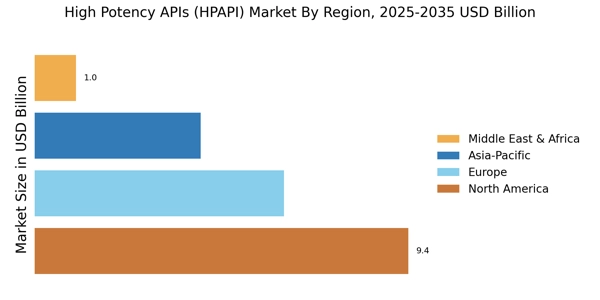
North America is poised to maintain its leadership in the High Potency APIs market, holding a significant market share of 10.4 in 2024. The region's growth is driven by increasing demand for innovative therapies, particularly in oncology and chronic diseases. Regulatory support from agencies like the FDA has catalyzed advancements in manufacturing processes, ensuring compliance with stringent safety standards. This regulatory environment fosters innovation and attracts investments, further propelling market growth. The competitive landscape in North America is characterized by the presence of major players such as Boehringer Ingelheim, Lonza Group, and Teva Pharmaceutical Industries. These companies are investing heavily in R&D to develop novel high potency formulations. The U.S. and Canada are leading countries in this sector, with a robust infrastructure for pharmaceutical manufacturing. The focus on personalized medicine and biologics is expected to drive further growth, solidifying North America's position as a hub for high potency APIs.

Europe : Emerging Hub for Innovation

Europe is emerging as a significant player in the High Potency APIs market, with a market size of 6.2 in 2024. The region benefits from a strong regulatory framework that encourages innovation and ensures high safety standards. The European Medicines Agency (EMA) plays a crucial role in facilitating the approval of new high potency drugs, which is driving demand. Additionally, the increasing prevalence of cancer and other chronic diseases is propelling the need for advanced therapeutic solutions, further boosting market growth. Leading countries in Europe include Germany, Switzerland, and the UK, where key players like Novartis and Sandoz are actively engaged in developing high potency APIs. The competitive landscape is marked by collaborations between pharmaceutical companies and research institutions, enhancing R&D capabilities. The focus on sustainable manufacturing practices is also gaining traction, positioning Europe as a forward-thinking region in the high potency API sector.

Asia-Pacific : Rapidly Growing Market Potential

The Asia-Pacific region is witnessing rapid growth in the High Potency APIs market, with a market size of 3.8 in 2024. This growth is driven by increasing investments in healthcare infrastructure and rising demand for advanced therapeutics. Countries like China and India are focusing on enhancing their pharmaceutical manufacturing capabilities, supported by favorable government policies. The region's regulatory bodies are also evolving to accommodate the complexities of high potency drug development, which is crucial for market expansion. China and India are the leading countries in this sector, with numerous local and international players vying for market share. Companies like Fujifilm Diosynth Biotechnologies and others are establishing facilities to cater to the growing demand. The competitive landscape is characterized by a mix of established firms and emerging startups, fostering innovation and collaboration. As the region continues to develop, the high potency APIs market is expected to flourish, driven by technological advancements and increased healthcare spending.

Middle East and Africa : Emerging Market with Challenges

The Middle East and Africa (MEA) region is in the nascent stages of developing its High Potency APIs market, with a market size of 0.4 in 2024. The growth in this region is primarily driven by increasing healthcare needs and a rising focus on pharmaceutical manufacturing. However, challenges such as regulatory hurdles and limited infrastructure can impede rapid growth. Governments are beginning to recognize the importance of high potency drugs, which may lead to more supportive policies in the future. Countries like South Africa and the UAE are taking steps to enhance their pharmaceutical sectors, with local companies exploring high potency API production. The competitive landscape is still developing, with a few key players beginning to establish a foothold. As the region invests in healthcare and regulatory frameworks improve, the potential for growth in the high potency APIs market is significant, albeit gradual.

High Potency APIs Market Regional Image

Key Players and Competitive Insights

The High Potency APIs Market is characterized by a dynamic competitive landscape, driven by increasing demand for specialized pharmaceuticals and the growing prevalence of chronic diseases. Key players such as Boehringer Ingelheim (DE), Lonza Group (CH), and Novartis (CH) are strategically positioned to leverage their extensive R&D capabilities and manufacturing expertise. Boehringer Ingelheim (DE) focuses on innovation through its investment in advanced manufacturing technologies, while Lonza Group (CH) emphasizes partnerships to enhance its service offerings. Novartis (CH) is actively pursuing mergers and acquisitions to expand its portfolio, thereby shaping a competitive environment that is increasingly reliant on technological advancements and strategic collaborations.

The market structure appears moderately fragmented, with several players vying for market share. Key business tactics include localizing manufacturing to reduce costs and optimize supply chains, which is essential in maintaining competitive pricing and ensuring timely delivery. The collective influence of these major companies fosters a competitive atmosphere where agility and responsiveness to market demands are paramount.

In January 2026, Boehringer Ingelheim (DE) announced a strategic partnership with a leading biotechnology firm to co-develop a new class of high potency APIs aimed at oncology treatments. This collaboration is expected to enhance Boehringer Ingelheim's product pipeline and solidify its position in the oncology segment, which is witnessing rapid growth due to increasing cancer incidences globally. The partnership underscores the importance of innovation in maintaining competitive advantage in this market.

In December 2025, Lonza Group (CH) unveiled a new state-of-the-art facility dedicated to the production of high potency APIs in Switzerland. This facility is designed to meet the rising demand for complex molecules and is expected to significantly increase Lonza's production capacity. The investment reflects Lonza's commitment to enhancing its manufacturing capabilities and responding to the evolving needs of its clients, thereby reinforcing its market position.

In November 2025, Novartis (CH) completed the acquisition of a small biotech company specializing in high potency APIs for rare diseases. This acquisition is anticipated to bolster Novartis's portfolio and provide access to innovative technologies that can accelerate drug development. Such strategic moves indicate a trend towards consolidation in the market, as companies seek to enhance their capabilities and expand their therapeutic offerings.

As of February 2026, current trends in the High Potency APIs Market include a pronounced shift towards digitalization, sustainability, and the integration of AI technologies in manufacturing processes. Strategic alliances are increasingly shaping the competitive landscape, allowing companies to pool resources and expertise. Looking ahead, competitive differentiation is likely to evolve from traditional price-based competition to a focus on innovation, technological advancements, and supply chain reliability, as companies strive to meet the complex demands of the pharmaceutical industry.

Key Companies in the High Potency APIs Market include

Industry Developments

In the High Potency APIs Market (HPAPI) Market, recent developments have emphasized the increasing demand for more advanced drug delivery systems. Key players like Lonza and Boehringer Ingelheim are expanding their manufacturing capabilities to accommodate the growing need for innovative therapies. In October 2023, Teva Pharmaceutical Industries announced plans to enhance its production capacity for HPAPIs to meet rising market demands.

Meanwhile, Aenova has initiated strategic partnerships to bolster its development of high-potency drugs. Growth in market valuation has been notable, with a 15% increase reported in 2022, largely attributed to the rising prevalence of cancer-related therapies. Additionally, in March 2023, CordenPharma completed its acquisition of a manufacturing facility specializing in oncology HPAPIs, strengthening its footprint in the sector. 

Notably, Fujifilm Diosynth Biotechnologies is also focusing on expanding its offerings in biologics, including HPAPIs, to capitalize on premium pricing and exclusive markets. The evolving landscape in the HPAPI sector is further characterized by a surge in mergers and acquisitions, driving innovation and strengthening supply chains. Overall, the Global HPAPI Market continues to evolve rapidly, supported by technological advancements and strategic business adjustments.

Future Outlook

High Potency APIs Market Future Outlook

The High Potency APIs Market is projected to grow at a 5.64% CAGR from 2024 to 2035, driven by increasing demand for targeted therapies and advancements in manufacturing technologies.

New opportunities lie in:

  • Expansion of contract manufacturing organizations for high potency APIs
  • Development of novel drug delivery systems for oncology applications
  • Investment in advanced containment solutions for safe handling of potent compounds

By 2035, the market is expected to achieve substantial growth, reflecting evolving therapeutic needs.

Market Segmentation

High Potency APIs Market Source Outlook

  • Synthetic
  • Biological
  • Semi-Synthetic

High Potency APIs Market End Use Outlook

  • Pharmaceuticals
  • Biotechnology
  • Contract Manufacturing Organizations
  • Research Institutions

High Potency APIs Market Application Outlook

  • Oncology
  • Cardiology
  • Neurology
  • Infectious Diseases
  • Hormonal Disorders

High Potency APIs Market Potency Level Outlook

  • High Potency
  • Very High Potency
  • Ultra High Potency

High Potency APIs Market Formulation Type Outlook

  • Injectable
  • Oral
  • Topical
  • Transdermal

Report Scope

MARKET SIZE 202420.8(USD Billion)
MARKET SIZE 202521.97(USD Billion)
MARKET SIZE 203538.03(USD Billion)
COMPOUND ANNUAL GROWTH RATE (CAGR)5.64% (2024 - 2035)
REPORT COVERAGERevenue Forecast, Competitive Landscape, Growth Factors, and Trends
BASE YEAR2024
Market Forecast Period2025 - 2035
Historical Data2019 - 2024
Market Forecast UnitsUSD Billion
Key Companies ProfiledBoehringer Ingelheim (DE), Lonza Group (CH), Fujifilm Diosynth Biotechnologies (JP), BASF SE (DE), Teva Pharmaceutical Industries (IL), AstraZeneca (GB), Novartis (CH), Hikma Pharmaceuticals (GB), Sandoz (CH)
Segments CoveredApplication, End Use, Formulation Type, Source, Potency Level
Key Market OpportunitiesAdvancements in targeted therapies drive demand for High Potency APIs Market innovations and regulatory compliance.
Key Market DynamicsRising demand for targeted therapies drives innovation and competition in the High Potency Active Pharmaceutical Ingredients market.
Countries CoveredNorth America, Europe, APAC, South America, MEA

Market Highlights

Author
Rahul Gotadki
Assistant Manager

He holds an experience of about 7+ years in Market Research and Business Consulting, working under the spectrum of Life Sciences and Healthcare domains. Rahul conceptualizes and implements a scalable business strategy and provides strategic leadership to the clients. His expertise lies in market estimation, competitive intelligence, pipeline analysis, customer assessment, etc. In addition to the above, his other responsibility includes strategic tracking of high growth markets & advising clients on the potential areas of focus they could direct their business initiatives

Leave a Comment

FAQs

What is the current valuation of the High Potency APIs (HPAPI) Market?

The market valuation reached 20.8 USD Billion in 2024.

What is the projected market size for the HPAPI Market by 2035?

The market is expected to grow to 38.03 USD Billion by 2035.

What is the expected CAGR for the HPAPI Market during the forecast period?

The anticipated CAGR for the HPAPI Market from 2025 to 2035 is 5.64%.

Which applications are driving growth in the HPAPI Market?

Key applications include Oncology, Hormonal Disorders, and Central Nervous System Disorders, with Oncology valued at 11.52 USD Billion by 2035.

What types of HPAPIs are most prevalent in the market?

Cytotoxic HPAPIs dominate the market, projected to reach 14.0 USD Billion by 2035.

How does the manufacturing process segment contribute to the HPAPI Market?

The API Synthesis segment is expected to grow to 11.38 USD Billion by 2035, indicating strong demand.

Who are the leading companies in the HPAPI Market?

Key players include Boehringer Ingelheim, Lonza Group, and Bristol-Myers Squibb, among others.

Download Free Sample

Kindly complete the form below to receive a free sample of this Report

Compare Licence

×
Features License Type
Single User Multiuser License Enterprise User
Price $4,950 $5,950 $7,250
Maximum User Access Limit 1 User Upto 10 Users Unrestricted Access Throughout the Organization
Free Customization
Direct Access to Analyst
Deliverable Format
Platform Access
Discount on Next Purchase 10% 15% 15%
Printable Versions