×
Request Free Sample ×

Kindly complete the form below to receive a free sample of this Report

* Please use a valid business email

Leading companies partner with us for data-driven Insights

clients tt-cursor
Hero Background

Germany Manuka Honey Market

ID: MRFR/FnB/44717-HCR
128 Pages
Garvit Vyas
February 2026

Germany Manuka Honey Market Size, Share, Industry Trend & Analysis Research Report: By Product Type (MGO 83, MGO 263, MGO 514, MGO 829, Others), By Category (Conventional, Organic) andBy Distribution Channel (Store-Based, Non-Store-Based)- Forecast to 2035

Share:
Download PDF ×

We do not share your information with anyone. However, we may send you emails based on your report interest from time to time. You may contact us at any time to opt-out.

Germany Manuka Honey Market Infographic
Purchase Options

Germany Manuka Honey Market Summary

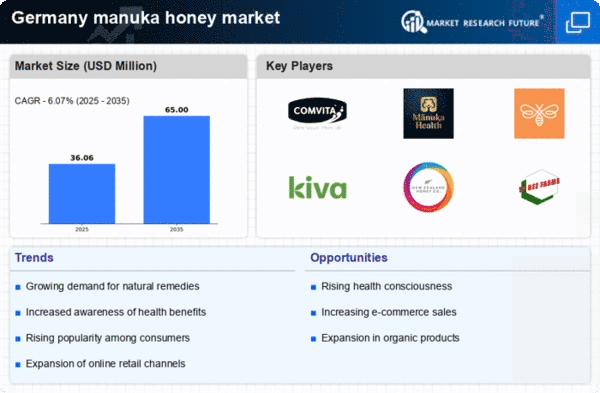
As per Market Research Future analysis, the Germany Manuka Honey Market size was estimated at 34.0 USD Million in 2024. The Manuka Honey market is projected to grow from 36.06 USD Million in 2025 to 65.0 USD Million by 2035, exhibiting a compound annual growth rate (CAGR) of 6.0% during the forecast period 2025 - 2035

Key Market Trends & Highlights

The Germany manuka honey market is experiencing robust growth driven by health trends and premiumization.

  • Health consciousness among consumers is significantly driving the demand for manuka honey in Germany.
  • The premiumization trend is evident as consumers increasingly seek high-quality and authentic manuka honey products.
  • E-commerce is rapidly growing, providing consumers with convenient access to a variety of manuka honey options.
  • Rising awareness of health benefits and increased disposable income are key drivers fueling market expansion.

Market Size & Forecast

2024 Market Size 34.0 (USD Million)
2035 Market Size 65.0 (USD Million)
CAGR (2025 - 2035) 6.07%

Major Players

Comvita (NZ), Manuka Health (NZ), Wedderspoon (US), Kiva (US), New Zealand Honey Co (NZ), Y.S. Eco Bee Farms (US), Happy Valley (NZ), Tahi (NZ)

Our Impact
Enabled $4.3B Revenue Impact for Fortune 500 and Leading Multinationals
Partnering with 2000+ Global Organizations Each Year
30K+ Citations by Top-Tier Firms in the Industry

Germany Manuka Honey Market Trends

The Germany Manuka Honey Market is experiencing notable growth, driven by increasing consumer awareness regarding health benefits associated with this unique product. As individuals become more health-conscious, the demand for natural remedies and organic products rises. Manuka honey, known for its antibacterial properties and potential therapeutic effects, appears to be gaining traction among consumers seeking alternatives to conventional sweeteners. This trend is further supported by a growing interest in wellness and holistic health, which encourages individuals to explore natural options for enhancing their well-being. Moreover, the market is likely influenced by the rising trend of premiumization, where consumers are willing to pay a higher price for high-quality, authentic products. This shift in consumer behavior suggests that there is a segment of the population that values the unique characteristics of manuka honey, such as its origin and production methods. As a result, brands that emphasize transparency and sustainability in their sourcing practices may find themselves well-positioned to capture the attention of discerning consumers. Overall, the manuka honey market appears to be on a positive trajectory, with potential for continued expansion in the coming years.

Health Consciousness Driving Demand

The increasing focus on health and wellness among consumers is significantly impacting the manuka honey market. Individuals are actively seeking natural products that offer health benefits, leading to a rise in the popularity of manuka honey as a natural remedy. This trend is likely to continue as more people become aware of the potential therapeutic properties associated with this unique honey.

Premiumization Trend

There is a noticeable trend towards premiumization within the manuka honey market. Consumers are increasingly willing to invest in high-quality products that are authentic and sustainably sourced. This shift indicates a growing appreciation for the unique qualities of manuka honey, suggesting that brands emphasizing quality and transparency may thrive in this evolving landscape.

E-commerce Growth

The rise of e-commerce platforms is transforming the way consumers access manuka honey. Online shopping provides convenience and a wider selection of products, making it easier for consumers to explore various brands and types of manuka honey. This trend is likely to enhance market accessibility and could lead to increased sales as more individuals turn to online channels for their purchasing needs.

Germany Manuka Honey Market Drivers

Increased Disposable Income

The rise in disposable income among German consumers is significantly impacting the manuka honey market. As individuals have more financial flexibility, they are more inclined to invest in premium health products, including manuka honey. Market analysis suggests that the premium segment of the manuka honey market has seen a surge, with sales increasing by 20% in the last year alone. This trend indicates that consumers are willing to pay higher prices for quality products that offer perceived health benefits. Consequently, the manuka honey market is likely to expand as more consumers prioritize health and wellness in their purchasing decisions, leading to a broader acceptance of premium-priced honey.

Expansion of Retail Channels

The expansion of retail channels is playing a crucial role in the growth of the manuka honey market. In Germany, the availability of manuka honey in various retail formats, including supermarkets, health food stores, and online platforms, is increasing. This diversification of distribution channels enhances consumer access to manuka honey products, thereby driving sales. Recent statistics show that online sales of manuka honey have surged by 30% in the last year, indicating a shift in shopping habits. The manuka honey market is likely to benefit from this trend as more consumers discover and purchase manuka honey through convenient retail options, further solidifying its market presence.

Growing Demand for Natural Products

The growing demand for natural and organic products is a significant driver for the manuka honey market. In Germany, consumers are increasingly seeking alternatives to processed foods, favoring products that are perceived as pure and unadulterated. This trend is evident in the manuka honey market, where organic certifications and natural sourcing are becoming essential selling points. Recent data indicates that organic manuka honey sales have increased by 25% over the past year, reflecting a shift in consumer preferences. The manuka honey market is thus adapting to these demands by emphasizing natural production methods and sustainability, which resonate with environmentally conscious consumers.

Rising Awareness of Health Benefits

The increasing awareness of the health benefits associated with manuka honey is a pivotal driver in the manuka honey market. Consumers in Germany are becoming more informed about the antibacterial and anti-inflammatory properties of manuka honey, which are attributed to its unique compounds like methylglyoxal (MGO). This heightened awareness is reflected in market data, indicating a growth rate of approximately 15% in sales over the past year. As health-conscious consumers seek natural remedies, the demand for manuka honey continues to rise, positioning it as a preferred choice among alternative sweeteners. The manuka honey market is thus experiencing a shift towards products that promote wellness, further solidifying its place in the health food sector.

Influence of Social Media and Marketing

The influence of social media and targeted marketing strategies is significantly shaping the manuka honey market. In Germany, brands are leveraging social media platforms to educate consumers about the benefits of manuka honey, creating a buzz around its uses and applications. This marketing approach appears to resonate well with younger demographics, who are more likely to engage with health trends online. Data suggests that brands utilizing social media marketing have experienced a 40% increase in brand awareness and consumer engagement. Consequently, the manuka honey market is adapting its strategies to harness the power of digital marketing, which is likely to enhance brand loyalty and drive sales.


Market Segment Insights

By Product Type: MGO 514 (Largest) vs. MGO 829 (Fastest-Growing)

In the Germany manuka honey market, MGO 514 leads the segment with a significant market share, appealing to consumers seeking high-potency honey for health benefits. MGO 263 and MGO 83 follow, capturing a dedicated consumer base focused on various health attributes, while the 'Others' category includes niche products that hold a small yet distinct market presence. The growth trends in this segment are primarily fueled by rising health consciousness and the increasing popularity of natural remedies. MGO 829 is emerging as the fastest-growing category, driven by its unique premium positioning and marketing strategies that appeal to discerning customers. Consumer awareness about the health benefits of high-MGO honey continues to create dynamic opportunities within this segment.

MGO 514 (Dominant) vs. MGO 829 (Emerging)

MGO 514 is considered the dominant player in the Germany manuka honey market, characterized by its high methylglyoxal content that supports its position as a sought-after product for its health benefits. This segment attracts consumers interested in potency and therapeutic uses, establishing a loyal customer base. In contrast, MGO 829 represents an emerging trend, positioning itself as a luxury choice among honey enthusiasts. Its higher price point is justified by its superior quality and product differentiation, appealing to consumers looking for exclusivity and premium health benefits. Both segments are essential in shaping consumer preferences, with distinct characteristics influencing their market dynamics.

By Category: Organic (Largest) vs. Conventional (Fastest-Growing)

In the Germany manuka honey market, the distribution between organic and conventional products shows a clear preference for organic offerings, which have become the largest segment due to increasing health consciousness among consumers. The organic segment garnered significant market share recently, driven by rising demand for natural and health-oriented products. In contrast, conventional manuka honey is witnessing rapid growth, appealing particularly to budget-conscious consumers seeking quality at more accessible price points. Growth trends indicate that the organic segment's expansion is supported by a trend towards clean eating and sustainable practices, with consumers willing to pay a premium for certified organic manuka honey. Meanwhile, the conventional segment benefits from its affordability and the broader availability of products, catering to a demographic that prioritizes value while still seeking the unique benefits of manuka honey.

Organic: Dominant vs. Conventional: Emerging

The organic segment in the Germany manuka honey market is characterized by its strong alignment with consumer preferences for health and wellness, making it the dominant force. Products in this category are often perceived as more natural and beneficial, positioning them favorably among health-conscious buyers. On the other hand, the conventional segment is emerging as a viable alternative, appealing to a wider audience by offering more competitively priced options without compromising quality. Both segments, while catering to different consumer bases, contribute to a dynamic market landscape where organic products lead in terms of preference, but conventional options are rapidly gaining traction.

By Distribution Channel: Store-Based (Largest) vs. Non-Store-Based (Fastest-Growing)

In the Germany manuka honey market, the distribution of sales between store-based and non-store-based channels reveals that store-based outlets dominate the landscape, accounting for a significant share of the overall sales. These traditional retail points provide consumers with immediate access to products, contributing to their longstanding popularity. Non-store-based channels, while currently smaller in market share, have been rapidly gaining traction as e-commerce continues to reshape consumer buying habits. Growth trends in the distribution channel segment point towards a shift as non-store-based methods, especially online retail, are projected to experience the fastest growth. This trend is driven by the increasing preference for convenience, variety, and accessibility among consumers, who are often seeking the specialized offerings found online. Additionally, the COVID-19 pandemic has accelerated these changes, leading more consumers to explore online alternatives for grocery items, including manuka honey.

Store-Based: Dominant vs. Non-Store-Based: Emerging

The store-based distribution channel remains dominant in the Germany manuka honey market, characterized by established retail chains and specialized health food stores that effectively attract customers seeking high-quality products. This channel benefits from in-person interactions and the ability to leverage local marketing strategies to enhance brand visibility. Conversely, the non-store-based channel is emerging rapidly, driven by changing consumer preferences towards online shopping. E-commerce platforms offer extensive product ranges with convenient purchasing options, appealing particularly to tech-savvy consumers who prioritize speed and efficiency. As online sales of manuka honey continue to grow, brands operating in this space are investing in digital marketing and enhanced logistics to capitalize on this evolving trend.

Get more detailed insights about Germany Manuka Honey Market

Key Players and Competitive Insights

The manuka honey market in Germany exhibits a dynamic competitive landscape characterized by a blend of established players and emerging brands. Key growth drivers include increasing consumer awareness regarding health benefits, rising demand for natural products, and a growing trend towards premiumization in food products. Major companies such as Comvita (NZ), Manuka Health (NZ), and Wedderspoon (US) are strategically positioned to leverage these trends. Comvita (NZ) focuses on innovation and product diversification, while Manuka Health (NZ) emphasizes sustainability and ethical sourcing. Wedderspoon (US) has adopted a robust digital marketing strategy to enhance brand visibility and consumer engagement. Collectively, these strategies contribute to a competitive environment that is both collaborative and competitive, as companies seek to differentiate themselves in a crowded marketplace.Key business tactics within the manuka honey market include localizing manufacturing and optimizing supply chains to enhance efficiency and reduce costs. The market structure appears moderately fragmented, with several key players holding significant market shares while numerous smaller brands vie for consumer attention. This fragmentation allows for a variety of product offerings, catering to diverse consumer preferences and price points, thereby influencing overall market dynamics.

In October Comvita (NZ) announced a partnership with a leading German retailer to expand its distribution network across Europe. This strategic move is likely to enhance Comvita's market presence and accessibility, allowing it to tap into the growing demand for premium manuka honey products in Germany. Such partnerships may also facilitate localized marketing efforts, aligning product offerings with regional consumer preferences.

In September Manuka Health (NZ) launched a new line of organic manuka honey products, emphasizing its commitment to sustainability and health. This initiative not only caters to the increasing consumer demand for organic products but also positions Manuka Health as a leader in the sustainable honey segment. The introduction of organic options may attract health-conscious consumers, thereby expanding the company's market share.

In August Wedderspoon (US) unveiled a digital campaign aimed at educating consumers about the health benefits of manuka honey. This campaign leverages social media platforms to engage with a younger demographic, potentially increasing brand loyalty and consumer awareness. By focusing on education and engagement, Wedderspoon is likely to strengthen its market position and foster a community of informed consumers.

As of November current competitive trends in the manuka honey market include a pronounced shift towards digitalization, sustainability, and the integration of AI technologies in marketing and supply chain management. Strategic alliances are increasingly shaping the landscape, enabling companies to pool resources and expertise. Looking ahead, competitive differentiation is expected to evolve, with a greater emphasis on innovation and technology rather than solely on price. Companies that can effectively leverage these trends will likely secure a competitive edge in the market.

Key Companies in the Germany Manuka Honey Market include

Industry Developments

The Germany Manuka Honey Market has been witnessing significant developments in recent months, particularly in the context of increasing consumer awareness regarding the health benefits of Manuka honey. Companies such as Manuka Health and Wedderspoon have introduced innovative product lines aimed at the German consumer base, capitalizing on the rising demand for natural health products. A notable event includes the strategic collaboration between Airborne Honey and New Zealand Honey Co., announced in June 2023, aimed at enhancing product distribution within Germany.

Furthermore, the market valuation of players like Comvita and Pure Gold Honey has seen positive growth trends attributed to enhanced marketing efforts and consumer education initiatives that highlight the unique properties of Manuka honey. Over the past two to three years, the market has also experienced a steady rise in imports and partnerships, reflecting a growing acceptance of Manuka products among German consumers. Additionally, government regulations on honey quality assurance in Germany have become stricter, influencing market dynamics as companies strive to meet these new standards.

This evolving landscape underscores the potential for continued growth and innovation within the Germany Manuka Honey Market.

Future Outlook

Germany Manuka Honey Market Future Outlook

The Manuka Honey Market in Germany is projected to grow at a 6.07% CAGR from 2025 to 2035, driven by rising health awareness and demand for natural products.

New opportunities lie in:

  • Develop premium product lines targeting health-conscious consumers.
  • Expand distribution channels through e-commerce platforms.
  • Leverage partnerships with wellness brands for co-marketing initiatives.

By 2035, the manuka honey market is expected to achieve robust growth and increased market penetration.

Market Segmentation

Germany Manuka Honey Market Category Outlook

  • Conventional
  • Organic

Germany Manuka Honey Market Product Type Outlook

  • MGO 83
  • MGO 263
  • MGO 514
  • MGO 829
  • Others

Germany Manuka Honey Market Distribution Channel Outlook

  • Store-Based
  • Non-Store-Based

Report Scope

MARKET SIZE 2024 34.0(USD Million)
MARKET SIZE 2025 36.06(USD Million)
MARKET SIZE 2035 65.0(USD Million)
COMPOUND ANNUAL GROWTH RATE (CAGR) 6.07% (2025 - 2035)
REPORT COVERAGE Revenue Forecast, Competitive Landscape, Growth Factors, and Trends
BASE YEAR 2024
Market Forecast Period 2025 - 2035
Historical Data 2019 - 2024
Market Forecast Units USD Million
Key Companies Profiled Comvita (NZ), Manuka Health (NZ), Wedderspoon (US), Kiva (US), New Zealand Honey Co (NZ), Y.S. Eco Bee Farms (US), Happy Valley (NZ), Tahi (NZ)
Segments Covered Product Type, Category, Distribution Channel
Key Market Opportunities Growing consumer demand for natural health products enhances opportunities in the manuka honey market.
Key Market Dynamics Rising consumer demand for natural health products drives growth in the manuka honey market.
Countries Covered Germany
Leave a Comment

FAQs

What is the expected market size of the Germany Manuka Honey Market in 2024?

The Germany Manuka Honey Market is expected to be valued at 43.12 million USD in 2024.

What is the projected market value for the Germany Manuka Honey Market by 2035?

The market is anticipated to reach a valuation of 100.0 million USD by 2035.

What is the expected compound annual growth rate (CAGR) for the Germany Manuka Honey Market from 2025 to 2035?

The expected CAGR for the Germany Manuka Honey Market is 7.946% from 2025 to 2035.

Which segment holds the highest market value in the Germany Manuka Honey Market for 2024?

The segment for MGO 263 is the highest, valued at 10.2 million USD in 2024.

How is the market for MGO 83 projected to grow by 2035?

The market for MGO 83 is projected to grow to 20.0 million USD by 2035.

Who are some of the key players in the Germany Manuka Honey Market?

Major players include Airborne Honey, Tahi, Kiva, Manuka Health, and Comvita.

What is the market value for the 'Others' category in the Germany Manuka Honey Market for 2024?

The 'Others' category is valued at 11.6 million USD in 2024.

What is the anticipated growth for MGO 514 from 2024 to 2035?

MGO 514 is expected to grow from 7.5 million USD in 2024 to 18.0 million USD by 2035.

What are the potential challenges facing the Germany Manuka Honey Market?

Potential challenges include market competition and fluctuating supply chains.

What opportunities exist for the Germany Manuka Honey Market moving forward?

Opportunities include increasing consumer awareness of health benefits and expanding retail distribution channels.

Download Free Sample

Kindly complete the form below to receive a free sample of this Report

Compare Licence

×
Features License Type
Single User Multiuser License Enterprise User
Price $4,950 $5,950 $7,250
Maximum User Access Limit 1 User Upto 10 Users Unrestricted Access Throughout the Organization
Free Customization
Direct Access to Analyst
Deliverable Format
Platform Access
Discount on Next Purchase 10% 15% 15%
Printable Versions