×
Request Free Sample ×

Kindly complete the form below to receive a free sample of this Report

* Please use a valid business email

Leading companies partner with us for data-driven Insights

clients tt-cursor
Hero Background

Germany Light Therapy Market

ID: MRFR/Pharma/42173-HCR
128 Pages
Rahul Gotadki
February 2026

Germany Light Therapy Market Research Report By Product Outlook (Light Box, Floor Desk Lamps, Light Visor, Handheld Devices for Skin Treatment (HDST), Dawn Simulator, Light Therapy Bulbs, Others), By Application Outlook (Psoriasis, Vitiligo, Eczema, Acne Vulgaris, Seasonal Affective Disorder (SAD), Sleeping Disorders, Others) and By End User Outlook (Homecare Settings, Hospitals, Dermatology Clinics, Others) - Growth & Industry Forecast 2025 To 2035

Share:
Download PDF ×

We do not share your information with anyone. However, we may send you emails based on your report interest from time to time. You may contact us at any time to opt-out.

Germany Light Therapy Market Infographic
Purchase Options

Germany Light Therapy Market Summary

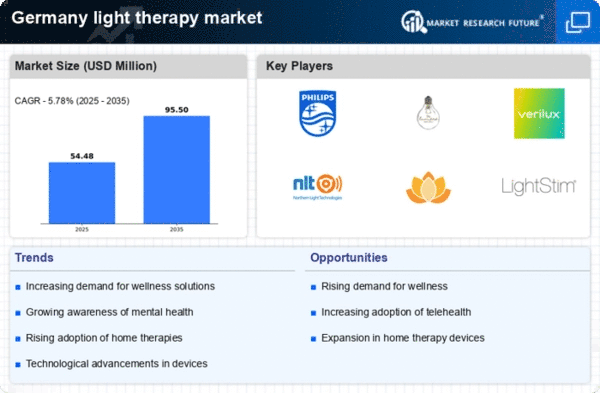
As per Market Research Future analysis, the Germany light therapy market Size was estimated at 51.5 USD Million in 2024. The Germany light therapy market is projected to grow from 54.48 USD Million in 2025 to 95.5 USD Million by 2035, exhibiting a compound annual growth rate (CAGR) of 5.7% during the forecast period 2025 - 2035

Key Market Trends & Highlights

The Germany light therapy market is experiencing notable growth driven by technological advancements and increasing consumer awareness.

  • Technological advancements in light therapy devices are enhancing treatment efficacy and user experience.
  • The largest segment in the market is the consumer light therapy devices, while the fastest-growing segment is professional light therapy equipment.
  • There is a rising consumer awareness regarding mental health, leading to a focus on holistic health solutions.
  • Key market drivers include the rising incidence of Seasonal Affective Disorder and advancements in light therapy technology.

Market Size & Forecast

2024 Market Size 51.5 (USD Million)
2035 Market Size 95.5 (USD Million)
CAGR (2025 - 2035) 5.78%

Major Players

Philips (NL), Lumie (GB), Verilux (US), Northern Light Technology (CA), Sunlighten (US), LightStim (US), Tendlite (US), BioLite (US), Joovv (US)

Our Impact
Enabled $4.3B Revenue Impact for Fortune 500 and Leading Multinationals
Partnering with 2000+ Global Organizations Each Year
30K+ Citations by Top-Tier Firms in the Industry

Germany Light Therapy Market Trends

The light therapy market is experiencing notable growth, driven by increasing awareness of mental health and wellness. In Germany, the demand for light therapy devices is rising as individuals seek alternative treatments for conditions such as seasonal affective disorder (SAD) and other mood-related issues. The integration of advanced technology in these devices enhances their effectiveness, making them more appealing to consumers. Furthermore, the aging population in Germany is likely to contribute to the market's expansion, as older adults often face challenges related to mood and sleep disorders. In addition, the light therapy market benefits from a growing trend towards holistic health approaches. Consumers are increasingly inclined to explore non-invasive treatment options, which aligns with the principles of light therapy. This shift in consumer behavior suggests a promising future for the market, as more individuals recognize the potential benefits of light exposure for overall well-being. As awareness continues to spread, the market is poised for further development, with innovations in product design and functionality likely to attract a broader audience.

Technological Advancements

The light therapy market is witnessing rapid technological advancements, with manufacturers introducing innovative devices that offer enhanced features. These advancements include adjustable light intensity, customizable treatment durations, and integration with mobile applications for better user experience. Such features are likely to attract tech-savvy consumers who seek convenience and effectiveness in their wellness routines.

Increased Consumer Awareness

There is a growing awareness among consumers regarding the benefits of light therapy for mental health and well-being. Educational campaigns and information dissemination through various channels are contributing to this trend. As more individuals become informed about the positive effects of light exposure, the demand for light therapy devices is expected to rise significantly.

Focus on Holistic Health

The light therapy market aligns with the increasing focus on holistic health and wellness. Consumers are increasingly seeking natural and non-invasive treatment options for various health issues. This trend indicates a shift towards integrating light therapy into broader wellness practices, potentially leading to increased adoption and market growth.

Germany Light Therapy Market Drivers

Supportive Regulatory Environment

The regulatory framework in Germany appears to be increasingly supportive of the light therapy market, fostering an environment conducive to innovation and market growth. Regulatory bodies are recognizing the therapeutic benefits of light therapy, leading to streamlined approval processes for new devices and treatments. This supportive stance may encourage manufacturers to invest in research and development, resulting in a wider array of products entering the market. The light therapy market is likely to benefit from this trend, as enhanced regulatory support can lead to increased consumer confidence in the safety and efficacy of light therapy solutions. Moreover, collaborations between manufacturers and healthcare professionals may further strengthen the market, as clinical validation of products becomes more prevalent. As the regulatory landscape evolves, it could potentially unlock new opportunities for growth within the light therapy market.

Advancements in Light Therapy Technology

Technological innovations in light therapy devices are transforming the landscape of the light therapy market in Germany. Recent developments include the introduction of portable and user-friendly devices that cater to the needs of consumers seeking convenience and effectiveness. For instance, advancements in LED technology have led to more efficient light sources that consume less energy while providing optimal therapeutic benefits. The light therapy market is likely to experience growth as these innovations attract a broader consumer base, including those who may have previously been hesitant to adopt such treatments. Additionally, the integration of smart technology into light therapy devices, such as app connectivity for personalized treatment plans, may further enhance user engagement and satisfaction. As these technologies evolve, they could potentially reshape consumer perceptions and increase the overall adoption of light therapy solutions.

Growing Interest in Non-Invasive Treatments

The light therapy market in Germany is witnessing a surge in interest for non-invasive treatment options, driven by a cultural shift towards holistic health and wellness. Consumers are increasingly seeking alternatives to traditional medical interventions, favoring therapies that promote well-being without the side effects associated with pharmaceuticals. This trend is reflected in the rising sales of light therapy devices, which are perceived as safe and effective solutions for various conditions, including mood disorders and skin issues. The light therapy market is likely to capitalize on this growing preference, as more individuals prioritize self-care and preventive health measures. Furthermore, the increasing availability of light therapy products in retail and online platforms may facilitate greater consumer access, potentially expanding the market reach. As awareness of non-invasive therapies continues to rise, the light therapy market may see sustained growth in the coming years.

Increasing Focus on Mental Health Awareness

The growing emphasis on mental health awareness in Germany is emerging as a crucial driver for the light therapy market. Public campaigns and initiatives aimed at destigmatizing mental health issues are encouraging individuals to seek treatment for conditions such as depression and anxiety. Light therapy, recognized for its positive impact on mood regulation, is gaining acceptance as a viable therapeutic option. The light therapy market is likely to see increased demand as more people become informed about the benefits of light therapy for mental health. Additionally, partnerships between mental health organizations and light therapy manufacturers may enhance outreach efforts, further promoting the adoption of these treatments. As mental health continues to be prioritized in public discourse, the light therapy market may experience sustained growth, reflecting a broader societal shift towards holistic well-being.

Rising Incidence of Seasonal Affective Disorder

The increasing prevalence of Seasonal Affective Disorder (SAD) in Germany appears to be a significant driver for the light therapy market. Studies indicate that approximately 10% of the German population experiences symptoms of SAD during the winter months, leading to a heightened demand for effective treatment options. Light therapy, recognized for its efficacy in alleviating SAD symptoms, is gaining traction among healthcare providers and patients alike. The light therapy market is likely to benefit from this trend, as more individuals seek non-pharmaceutical interventions to manage their mental health. Furthermore, the German healthcare system's support for innovative therapies may enhance accessibility and affordability, potentially increasing market penetration. As awareness of SAD continues to grow, the light therapy market may see a corresponding rise in product offerings tailored to this specific condition.

Market Segment Insights

By Product Type: Light Box (Largest) vs. Floor and Desk Lamps (Fastest-Growing)

In the Germany light therapy market, the distribution of market share highlights the dominance of light boxes, which command the largest segment. This segment's robustness can be attributed to its established use in treating seasonal affective disorder (SAD) and its effectiveness in providing bright light therapy, making it a preferred choice among consumers. In contrast, floor and desk lamps are emerging rapidly, particularly appealing to younger consumers seeking multifunctional devices that blend home decor with health benefits. Their growth is fueled by increased awareness of mental health and wellness, as well as the convenience of home-based therapy solutions. The growth trends within this segment reveal a shift towards more innovative and aesthetically pleasing designs, particularly for floor and desk lamps. This category is not only capturing the interest of health-conscious consumers but is also appealing to those looking for stylish lighting solutions. The increasing integration of smart technologies in light therapy devices serves as a further driver towards adoption. Products that offer adjustable light brightness and color temperature are becoming particularly attractive, enhancing their appeal among consumers who are keen on customizing their therapy experience. Additionally, the ongoing research into the therapeutic benefits of light exposure is expected to sustain the segment's growth in the upcoming years.

Light Box (Dominant) vs. Floor and Desk Lamps (Emerging)

Light boxes remain the dominant product type within the Germany light therapy market, recognized for their efficacy in combating SAD through intense, full-spectrum lighting. These devices typically feature a broad face, allowing for comprehensive exposure, and they are widely recommended for daily use during darker months. On the other hand, floor and desk lamps are emerging as favorites due to their versatility and pragmatic design. Often equipped with adjustable brightness settings and portability, they cater to a diversified user base looking to blend wellness with everyday functionality. As consumers become more informed about light therapy advantages, the market is likely to see an increased presence of these innovative lamps, which can be seamlessly integrated into personal spaces.

By Application: Psoriasis (Largest) vs. Eczema (Fastest-Growing)

In the Germany light therapy market, the application segment is dominated by psoriasis, capturing a significant market share due to its prevalence and the effectiveness of light therapy in treatment. Following psoriasis, eczema also holds a notable share but is quickly gaining traction as awareness about treatment options increases, making it an important contender in this space. Growth trends in this segment show that both psoriasis and eczema are anticipated to grow, driven by rising incidences of these skin conditions and advancements in light therapy technologies. The demand for effective and non-invasive treatments is on the rise, encouraging more patients to seek light therapy solutions. This trend is further supported by increasing healthcare expenditure and a growing focus on dermatological health in Germany.

Psoriasis: Dominant vs. Eczema: Emerging

Psoriasis remains the dominant application in the Germany light therapy market, largely due to its higher prevalence among the population and proven efficacy of light therapy in managing the condition. Patients suffering from psoriasis often seek consistent and long-term relief, making this application a priority for manufacturers and healthcare providers. On the other hand, eczema is emerging as a significant player, driven by increasing recognition of its impact on quality of life. The rise in eczema cases is prompting innovations in light therapy solutions tailored to this condition, which is fostering a growing market presence. As more individuals are diagnosed and treated, both psoriasis and eczema will continue to shape the landscape of the light therapy market.

By Light Type: Red Light (Largest) vs. Blue Light (Fastest-Growing)

The market for light types in the Germany light therapy market is diverse, with Red Light capturing the largest share due to its established efficacy in treating various conditions such as skin issues and pain relief. Blue Light follows as a notable contender, gaining traction for its effectiveness in managing acne and seasonal affective disorder, contributing to its robust market presence. Growth trends indicate a strong inclination toward Blue Light technologies, which are perceived as the fastest-growing segment. Increasing awareness and demand for non-invasive treatment options are driving this trend, coupled with ongoing advancements in technology that enhance the effectiveness of Blue Light devices, making them more appealing to consumers seeking modern therapeutic solutions.

Red Light (Dominant) vs. Blue Light (Emerging)

Red Light has established itself as the dominant player in the market, widely recognized for its therapeutic benefits such as reducing inflammation and promoting healing. Its long-standing presence and widespread acceptance among consumers solidify its market position. On the other hand, Blue Light represents an emerging trend, particularly favored for its applications in treating acne and mood disorders. Its growing popularity is attributed to increased consumer awareness and scientific backing, along with a surge in innovative product offerings that cater to a wider audience. As consumers become more health-conscious and seek effective alternatives, Blue Light technologies are likely to see a significant rise in adoption.

By End-User: Homecare Settings (Largest) vs. Dermatology Clinics (Fastest-Growing)

The distribution of market share among the end-user segments indicates that homecare settings hold the largest share, reflecting a growing preference for at-home treatments among consumers. In contrast, dermatology clinics comprise a smaller segment but are witnessing a surge in adoption due to increasing awareness of skin disorders and the efficacy of light therapy in clinical settings. Growth trends in the end-user segment are influenced by several factors, including the rise in chronic skin conditions and the convenience of homecare options. The demand for effective and non-invasive treatment methods encourages consumers to explore light therapy, thus propelling homecare settings. Meanwhile, dermatology clinics are becoming increasingly popular as professionals adopt advanced light therapy solutions, leading to their recognition as the fastest-growing segment in this market.

Homecare Settings (Dominant) vs. Dermatology Clinics (Emerging)

Homecare settings dominate the end-user segment of the Germany light therapy market, primarily due to the increasing trend of self-care and the convenience offered by at-home devices. These settings appeal to a broad consumer base seeking effective and affordable therapy solutions without the need for medical visits. On the other hand, dermatology clinics, while currently smaller in market share, are emerging as a vital segment as they adopt sophisticated technologies and provide supervised treatments that assure patients of safety and efficacy. The synergy between professional guidance and advanced therapy equipment positions dermatology clinics as a key player in the rising trend of specialized skin treatment solutions.

Get more detailed insights about Germany Light Therapy Market

Key Players and Competitive Insights

The light therapy market in Germany exhibits a dynamic competitive landscape, characterized by a blend of innovation and strategic positioning among key players. Companies such as Philips (NL), Lumie (GB), and Verilux (US) are at the forefront, leveraging their technological expertise to enhance product offerings. Philips (NL) focuses on integrating advanced LED technology into its light therapy devices, aiming to improve user experience and efficacy. Meanwhile, Lumie (GB) emphasizes wellness and lifestyle integration, positioning its products as essential tools for mental health and seasonal affective disorder (SAD) management. Verilux (US) appears to concentrate on natural light simulation, appealing to consumers seeking holistic health solutions. Collectively, these strategies foster a competitive environment that prioritizes innovation and consumer-centric approaches.In terms of business tactics, companies are increasingly localizing manufacturing to enhance supply chain efficiency and reduce costs. This trend is particularly evident in the light therapy market, which is moderately fragmented, allowing for both established brands and emerging players to coexist. The collective influence of these key players shapes market dynamics, as they compete not only on product quality but also on brand reputation and customer loyalty.

In October Philips (NL) announced the launch of a new line of smart light therapy devices that utilize AI to personalize treatment plans based on user feedback and environmental conditions. This strategic move underscores Philips' commitment to innovation and positions the company to capture a larger share of the market by appealing to tech-savvy consumers. The integration of AI into light therapy could potentially enhance treatment outcomes, thereby solidifying Philips' competitive edge.

In September Lumie (GB) expanded its product range by introducing a new portable light therapy device designed for on-the-go use. This development reflects Lumie's strategy to cater to the increasing demand for convenience and flexibility among consumers. By offering a portable solution, Lumie not only enhances its product portfolio but also strengthens its market presence, particularly among younger demographics who prioritize mobility.

In August Verilux (US) entered into a strategic partnership with a leading wellness app to provide users with integrated light therapy solutions. This collaboration aims to enhance user engagement and promote the benefits of light therapy through digital platforms. By aligning with a wellness app, Verilux positions itself as a holistic health brand, potentially attracting a broader audience interested in comprehensive wellness solutions.

As of November current trends in the light therapy market indicate a shift towards digitalization, sustainability, and AI integration. Companies are increasingly forming strategic alliances to enhance their product offerings and market reach. This collaborative approach is likely to redefine competitive differentiation, moving away from traditional price-based competition towards a focus on innovation, technology, and supply chain reliability. The future landscape of the light therapy market may well be shaped by these evolving trends, as companies strive to meet the growing consumer demand for effective and convenient health solutions.

Key Companies in the Germany Light Therapy Market include

Industry Developments

The Germany Light Therapy Market has seen significant developments recently, particularly with a surge in consumer interest and demand for light therapy products in response to increased awareness about mental health and seasonal affective disorder (SAD). Notable companies in this sector include Philips, Beurer, and Luminette, which have expanded their product lines to include innovative light therapy devices aimed at improving mood and sleep quality, leveraging advancements in LED technology. Additionally, recent market assessments indicate a steady growth in the valuation of companies such as Verilux and Circadian Optics, reflecting an emphasis on wellness-oriented solutions in Germany. 

While there have been no major mergers or acquisitions reported in the last several months for the companies of interest, the competitive landscape remains dynamic, with ongoing product development partnerships and collaborations being noted. Over the past two to three years, from 2021 to 2023, the narrative surrounding light therapy in Germany has evolved significantly, with federal health officials acknowledging its benefits and promoting its use among various demographics. This has bolstered the overall market landscape, encouraging investment and innovation in the light therapy domain.

Future Outlook

Germany Light Therapy Market Future Outlook

The Light Therapy Market is projected to grow at a 5.78% CAGR from 2025 to 2035, driven by increasing awareness of mental health and advancements in technology.

New opportunities lie in:

  • Development of portable light therapy devices for home use.
  • Partnerships with healthcare providers for integrated treatment solutions.
  • Expansion into wellness tourism with light therapy retreats.

By 2035, the market is expected to achieve substantial growth, driven by innovation and strategic partnerships.

Market Segmentation

Germany Light Therapy Market End-User Outlook

  • Homecare Settings
  • Dermatology Clinics
  • Others

Germany Light Therapy Market Light Type Outlook

  • Blue Light
  • Red Light
  • White Light
  • Others

Germany Light Therapy Market Application Outlook

  • Psoriasis
  • Vitiligo
  • Eczema
  • Acne Vulgaris
  • Others

Germany Light Therapy Market Product Type Outlook

  • Light Box
  • Floor and Desk Lamps
  • Light Visor
  • HDST
  • Others

Report Scope

MARKET SIZE 2024 51.5(USD Million)
MARKET SIZE 2025 54.48(USD Million)
MARKET SIZE 2035 95.5(USD Million)
COMPOUND ANNUAL GROWTH RATE (CAGR) 5.78% (2025 - 2035)
REPORT COVERAGE Revenue Forecast, Competitive Landscape, Growth Factors, and Trends
BASE YEAR 2024
Market Forecast Period 2025 - 2035
Historical Data 2019 - 2024
Market Forecast Units USD Million
Key Companies Profiled Philips (NL), Lumie (GB), Verilux (US), Northern Light Technology (CA), Sunlighten (US), LightStim (US), Tendlite (US), BioLite (US), Joovv (US)
Segments Covered Product Type, Application, Light Type, End-User
Key Market Opportunities Growing demand for innovative light therapy devices addressing mental health and skin conditions presents substantial market potential.
Key Market Dynamics Growing consumer awareness and regulatory support drive innovation in the light therapy market.
Countries Covered Germany
Leave a Comment

FAQs

What was the expected market size for the Germany Light Therapy Market in 2024?

The Germany Light Therapy Market was expected to be valued at 0.08 USD Billion in 2024.

What is the projected market size for the Germany Light Therapy Market in 2035?

By 2035, the Germany Light Therapy Market is projected to reach a value of 0.14 USD Billion.

What is the expected compound annual growth rate (CAGR) for the Germany Light Therapy Market from 2025 to 2035?

The expected CAGR for the Germany Light Therapy Market from 2025 to 2035 is 5.33 percent.

Which product segment is expected to dominate the Germany Light Therapy Market?

The Light Box segment is anticipated to dominate the market, valued at 0.025 USD Billion in 2024.

What is the expected market value for Floor Desk Lamps in the Germany Light Therapy Market by 2035?

The Floor Desk Lamps segment is expected to be valued at 0.038 USD Billion by 2035.

Who are the major players in the Germany Light Therapy Market?

Key players in the market include Carina, Luminette, SunBox, and Philips.

What is the projected market value for Light Visors in 2024?

The Light Visor segment is projected to be valued at 0.015 USD Billion in 2024.

What market value is expected for Handheld Devices for Skin Treatment by 2035?

Handheld Devices for Skin Treatment are expected to reach a market value of 0.019 USD Billion by 2035.

What is the forecasted market size for Dawn Simulators in 2024?

The Dawn Simulator segment is forecasted to have a market size of 0.01 USD Billion in 2024.

What are some challenges for the growth of the Germany Light Therapy Market?

Challenges for market growth may include regulatory hurdles and competition from alternative therapies.

What is the expected market size for the Germany Light Therapy Market in 2024?

The Germany Light Therapy Market is expected to be valued at 0.08 USD Billion in 2024.

What is the expected market value for Floor & Desk Lamps in the Germany Light Therapy Market by 2035?

The Floor & Desk Lamps segment is expected to be valued at 0.038 USD Billion by 2035.

Download Free Sample

Kindly complete the form below to receive a free sample of this Report

Compare Licence

×
Features License Type
Single User Multiuser License Enterprise User
Price $4,950 $5,950 $7,250
Maximum User Access Limit 1 User Upto 10 Users Unrestricted Access Throughout the Organization
Free Customization
Direct Access to Analyst
Deliverable Format
Platform Access
Discount on Next Purchase 10% 15% 15%
Printable Versions