×
Request Free Sample ×

Kindly complete the form below to receive a free sample of this Report

* Please use a valid business email

Leading companies partner with us for data-driven Insights

clients tt-cursor
Hero Background

Germany Aquarium Market

ID: MRFR/CG/44990-HCR
128 Pages
Tejas Chaudhary
February 2026

Germany Aquarium Market Size, Share, Industry Trend & Analysis Research Report By Application (Recreational, Educational, Research), By Product Type (Freshwater Aquariums, Saltwater Aquariums, Brackish Aquariums), By Component (Tank, Filtration System, Substrate, Heater, Others) and By Distribution Channel (Online, Offline) - Forecast to 2035

Share:
Download PDF ×

We do not share your information with anyone. However, we may send you emails based on your report interest from time to time. You may contact us at any time to opt-out.

Germany Aquarium Market Infographic
Purchase Options

Germany Aquarium Market Summary

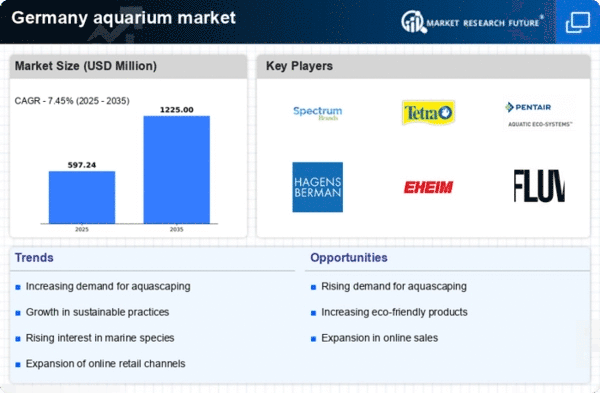
As per Market Research Future analysis, the Germany aquarium market Size was estimated at 555.83 USD Million in 2024. The Germany aquarium market is projected to grow from 597.24 USD Million in 2025 to 1225.0 USD Million by 2035, exhibiting a compound annual growth rate (CAGR) of 7.4% during the forecast period 2025 - 2035

Key Market Trends & Highlights

The Germany aquarium market is experiencing a notable shift towards sustainability and technological innovation.

  • The largest segment in the Germany aquarium market is the home aquarium segment, driven by a rising interest in aquatic pets.
  • Technological advancements are enhancing user experiences, making aquarium maintenance more efficient and accessible.
  • Aquascaping is gaining popularity, reflecting a growing trend towards aesthetic and artistic aquarium designs.
  • Key market drivers include the increased awareness of aquatic ecosystems and the expansion of e-commerce platforms, facilitating easier access to aquarium products.

Market Size & Forecast

2024 Market Size 555.83 (USD Million)
2035 Market Size 1225.0 (USD Million)
CAGR (2025 - 2035) 7.45%

Major Players

Spectrum Brands (US), Tetra GmbH (DE), Aquatic Eco-Systems (US), Hagen (CA), Eheim (DE), Fluval (CA), Marina (CA), Pondcare (US), Seachem (US), API (US)

Our Impact
Enabled $4.3B Revenue Impact for Fortune 500 and Leading Multinationals
Partnering with 2000+ Global Organizations Each Year
30K+ Citations by Top-Tier Firms in the Industry

Germany Aquarium Market Trends

The aquarium market in Germany is currently experiencing a dynamic evolution, driven by a growing interest in aquatic hobbies and sustainable practices. As more individuals seek to create serene environments in their homes, the demand for aquariums, fish, and related accessories is on the rise. This trend appears to be influenced by a broader societal shift towards nature-oriented lifestyles, where the presence of aquatic life is seen as a means to enhance well-being and relaxation. Furthermore, advancements in technology have led to the development of innovative products that cater to both novice and experienced aquarists, making the hobby more accessible and enjoyable. In addition, the aquarium market is witnessing a notable increase in the popularity of aquascaping, which involves designing aesthetically pleasing underwater landscapes. This artistic approach not only attracts enthusiasts but also encourages a deeper understanding of aquatic ecosystems. Retailers are responding to this trend by offering specialized products and resources to support aquascaping endeavors. Overall, the aquarium market in Germany is poised for continued growth, as consumer preferences shift towards more sustainable and visually appealing aquatic environments.

Sustainability Focus

There is a growing emphasis on sustainable practices within the aquarium market. Consumers are increasingly seeking eco-friendly products, such as biodegradable materials and energy-efficient equipment. This trend reflects a broader awareness of environmental issues and a desire to minimize ecological footprints.

Technological Advancements

Innovations in technology are transforming the aquarium market. Smart devices, such as automated feeding systems and water quality monitors, are becoming more prevalent. These advancements enhance the user experience and simplify aquarium maintenance, appealing to both beginners and seasoned hobbyists.

Aquascaping Popularity

The art of aquascaping is gaining traction among aquarium enthusiasts. This trend involves creating visually stunning underwater landscapes, which not only enhances the aesthetic appeal of aquariums but also fosters a deeper appreciation for aquatic ecosystems. Retailers are increasingly offering specialized products to support this creative pursuit.

Germany Aquarium Market Drivers

Expansion of E-commerce Platforms

The aquarium market in Germany is witnessing a substantial shift towards e-commerce, driven by the convenience and accessibility of online shopping. As consumers increasingly prefer to purchase aquarium supplies and fish online, businesses are adapting their strategies to enhance their digital presence. Recent statistics indicate that online sales in the aquarium market have grown by approximately 30% over the last year. This trend not only broadens the customer base but also allows for a more extensive range of products to be offered. Retailers are investing in user-friendly websites and efficient delivery systems to meet the rising demand, thereby transforming the landscape of the aquarium market.

Rising Interest in Home Aquariums

The aquarium market in Germany experiences a notable surge in interest as more individuals seek to create serene environments within their homes. This trend appears to be driven by a growing appreciation for the aesthetic and therapeutic benefits of aquariums. Recent data indicates that the market has expanded by approximately 15% over the past year, reflecting a shift in consumer preferences towards home-based leisure activities. As urban living spaces become more compact, the demand for smaller, stylish aquariums has increased. This shift not only enhances the appeal of the aquarium market but also encourages manufacturers to innovate in design and functionality, catering to a diverse range of consumer needs.

Growing Popularity of Aquatic Pets

The aquarium market in Germany is significantly impacted by the growing popularity of aquatic pets, particularly among younger demographics. This trend appears to be fueled by a desire for low-maintenance pets that still provide companionship and aesthetic appeal. Recent surveys indicate that households with aquariums have increased by 10% in the last year, suggesting a shift in pet ownership preferences. As a result, the demand for various fish species and aquarium accessories has surged. This growing interest not only benefits retailers but also encourages innovation in the aquarium market, as companies strive to meet the evolving needs of pet owners.

Increased Awareness of Aquatic Ecosystems

There is a rising awareness among German consumers regarding the importance of aquatic ecosystems, which significantly influences the aquarium market. Educational initiatives and environmental campaigns have heightened public consciousness about biodiversity and conservation. This awareness has led to a growing demand for aquariums that promote sustainable practices, such as using native species and eco-friendly materials. Market data suggests that products emphasizing sustainability have seen a sales increase of around 20% in recent months. Consequently, businesses within the aquarium market are adapting their offerings to align with these values, thereby attracting environmentally conscious consumers and fostering a more responsible industry.

Influence of Social Media and Online Communities

The aquarium market in Germany is increasingly influenced by social media and online communities, which play a crucial role in shaping consumer behavior. Platforms such as Instagram and YouTube have become vital for sharing aquarium setups, tips, and experiences, fostering a sense of community among enthusiasts. This trend appears to drive interest and engagement, leading to a rise in aquarium-related purchases. Market analysis indicates that products showcased on social media platforms often see a sales increase of up to 25%. Consequently, businesses within the aquarium market are leveraging these platforms for marketing and customer engagement, recognizing the potential for growth through digital channels.


Market Segment Insights

By Application: Recreational (Largest) vs. Educational (Fastest-Growing)

In the Germany aquarium market, the 'Recreational' segment holds the largest market share, catering to hobbyists and enthusiasts who maintain aquariums for personal enjoyment. This segment benefits from an established customer base that seeks a variety of aquatic life and aquarium setups, including freshwater and saltwater options. On the other hand, the 'Educational' segment is experiencing rapid growth as schools and institutions increasingly recognize the value of aquariums as educational tools for teaching biology and ecology. Growth trends indicate that the demand for educational aquariums is driven by rising investments in STEM (Science, Technology, Engineering, and Mathematics) programs and hands-on learning experiences. Research institutions are also exploring the use of aquariums for scientific studies, contributing to the segment's expansion. As environmental awareness grows, more initiatives are likely to integrate aquariums into educational curriculums, further sustaining this upward trajectory.

Recreational: Dominant vs. Educational: Emerging

The 'Recreational' segment is characterized by its robust customer base of hobbyists who invest in various aquarium products such as tanks, fish, and accessories. This segment dominates the market due to its established popularity, where individuals seek unique and aesthetically pleasing setups for enjoyment and relaxation. Conversely, the 'Educational' segment is emerging as a vital area for growth, tapping into the increasing demand for experiential learning tools in schools and institutions. Educational aquariums are designed not only for aesthetic appeal but also to facilitate hands-on learning experiences, with a diverse range of aquatic species incorporated to promote ecological understanding. As both segments evolve, their distinct characteristics shape the market dynamics within the Germany aquarium market.

By Product Type: Freshwater Aquariums (Largest) vs. Saltwater Aquariums (Fastest-Growing)

In the Germany aquarium market, the distribution of market share among the product types is notably diverse, with freshwater aquariums taking the lead as the most significant segment. This dominance can be attributed to their popularity among beginners and seasoned aquarists alike, offering a manageable and accessible entry point into the hobby. Saltwater aquariums, while a smaller share, are gaining traction among enthusiasts seeking specialized marine environments, contributing to their rapidly increasing market presence. Growth trends in the Germany aquarium market are heavily influenced by lifestyle changes, as more individuals are finding solace in aquascaping and maintaining aquariums at home. The rise of social media platforms showcasing aquarium designs has also fueled interest, particularly for saltwater aquariums, which are often perceived as a sophisticated choice. As buyers become more informed about the unique aspects of both freshwater and saltwater setups, they are increasingly investing in premium products and accessories, further driving market growth.

Freshwater Aquariums (Dominant) vs. Saltwater Aquariums (Emerging)

Freshwater aquariums hold a dominant position in the Germany aquarium market, appealing to a broad audience due to their easier maintenance and lower cost factors. They typically house a variety of freshwater species, making them a versatile option for hobbyists at all levels. Conversely, saltwater aquariums are emerging as a favored choice among serious aquarists looking to create vibrant marine ecosystems. These setups require more investment in terms of both time and safety measures but offer unique aesthetic and environmental benefits that attract a niche market willing to embrace their complexity.

By Component: Tank (Largest) vs. Filtration System (Fastest-Growing)

In the Germany aquarium market, the component segment showcases a diverse distribution of market shares among key categories, including Tanks, Filtration Systems, Substrates, Heaters, and Others. Tanks command the largest share of this segment, reflecting their essential role in aquarium setups. Filtration Systems, meanwhile, are gaining traction with growing awareness of water quality management, making them a significant contender in market dynamics. Looking ahead, trends indicate a robust growth trajectory for Filtration Systems driven by increasing consumer focus on sustainable aquaristics and the health of aquatic life. The popularity of technologically advanced filtration solutions is also contributing to this category’s emergence as the fastest-growing segment, propelled by innovations that enhance both functionality and ease of use for aquarium enthusiasts.

Tank (Dominant) vs. Filtration System (Emerging)

Tanks are the dominant component in the Germany aquarium market, serving as the foundation for all aquarium installations and significantly influencing the consumer's decision-making process. They come in various sizes and materials, catering to different aquatic environments. Filtration Systems, while currently considered emerging, are rapidly establishing themselves as vital for maintaining water quality, which is essential for fish health and overall aquarium success. These systems are becoming increasingly sophisticated, integrating features that simplify the maintenance process and improve efficiency. As consumers become more educated about the importance of water management, the market for Filtration Systems is expected to grow, potentially rivaling that of Tanks in terms of market significance.

By Distribution Channel: Online (Largest) vs. Offline (Fastest-Growing)

The distribution of the Germany aquarium market reveals that online channels have emerged as the largest segment, capturing a significant portion of overall sales. This shift towards digital platforms is influenced by changing consumer preferences, convenience, and the growing popularity of e-commerce among aquarists seeking a broader range of products available at their fingertips. Conversely, offline channels are rapidly gaining traction, exemplifying the fastest growth in the market. This trend is driven by the resurgence of physical retail, where consumers value hands-on experiences, expert advice, and direct interactions with products before purchasing. This dual-channel approach reflects the market's adaptation to diverse consumer behaviors and preferences, catering to both those who prefer online shopping and those who enjoy the in-store experience.

Online (Dominant) vs. Offline (Emerging)

The online segment stands out in the Germany aquarium market as the dominant distribution channel, catering to tech-savvy consumers who prioritize convenience and variety. Online retailers offer an extensive range of aquarium supplies, often with competitive pricing and the ability to shop from home. Features such as customer reviews, product comparisons, and home delivery options further enhance the appeal of online shopping. In contrast, the offline segment is emerging as a significant player, benefiting from the tactile engagement and personalized service that traditional stores provide. Consumers who visit offline stores often engage with knowledgeable staff and can assess products physically, fostering brand loyalty and enhancing the shopping experience. This dynamic interplay between online and offline channels shapes the evolving landscape of the market.

Get more detailed insights about Germany Aquarium Market

Key Players and Competitive Insights

The aquarium market in Germany exhibits a competitive landscape characterized by a blend of established players and emerging innovators. Key growth drivers include increasing consumer interest in aquascaping, a rising trend towards sustainable practices, and the growing popularity of aquariums as home decor. Major companies such as Tetra GmbH (DE), Eheim (DE), and Spectrum Brands (US) are strategically positioned to leverage these trends. Tetra GmbH focuses on innovation in product development, particularly in water care solutions, while Eheim emphasizes sustainability through eco-friendly manufacturing processes. Spectrum Brands, on the other hand, is enhancing its digital presence to cater to a tech-savvy consumer base, indicating a shift towards e-commerce and online engagement. Collectively, these strategies shape a competitive environment that is increasingly focused on sustainability and digital transformation.In terms of business tactics, companies are localizing manufacturing to reduce costs and improve supply chain efficiency. This approach is particularly evident in the moderately fragmented structure of the market, where several players vie for market share. The collective influence of key players is significant, as they not only drive innovation but also set industry standards that smaller competitors must follow. The emphasis on optimizing supply chains and local production is likely to enhance responsiveness to market demands, thereby strengthening competitive positions.

In October Tetra GmbH (DE) launched a new line of eco-friendly aquarium products aimed at reducing environmental impact. This strategic move aligns with the growing consumer demand for sustainable options and positions Tetra as a leader in environmentally conscious practices within the market. The introduction of these products is expected to attract environmentally aware consumers, potentially increasing market share and brand loyalty.

In September Eheim (DE) announced a partnership with a local startup specializing in smart aquarium technology. This collaboration aims to integrate IoT solutions into Eheim's product offerings, enhancing user experience through automation and real-time monitoring. Such a strategic alliance not only diversifies Eheim's product range but also reflects a broader trend towards digitalization in the aquarium market, catering to tech-savvy consumers who seek convenience and efficiency.

In August Spectrum Brands (US) acquired a smaller competitor focused on innovative aquarium lighting solutions. This acquisition is indicative of a broader trend towards consolidation in the market, as larger players seek to enhance their product portfolios and eliminate competition. By integrating these innovative lighting technologies, Spectrum Brands is likely to strengthen its market position and appeal to a wider audience, particularly those interested in advanced aquascaping techniques.

As of November current competitive trends in the aquarium market are heavily influenced by digitalization, sustainability, and the integration of AI technologies. Strategic alliances are increasingly shaping the landscape, allowing companies to pool resources and expertise to innovate more effectively. Looking ahead, competitive differentiation is expected to evolve, with a notable shift from price-based competition to a focus on innovation, technology, and supply chain reliability. Companies that can effectively leverage these trends are likely to secure a competitive edge in the dynamic aquarium market.

Key Companies in the Germany Aquarium Market include

Industry Developments

In recent developments within the Germany Aquarium Market, companies such as Aqua Medic, Oase, and Tetra are witnessing increasing demand due to a rising interest in home aquariums influenced by lifestyle changes during the pandemic. Current affairs indicate robust growth in market valuation, driven by innovations in aquarium technology and sustainable products, with consumers increasingly favoring brands like EHEIM and Fluval for their eco-friendly solutions. In terms of mergers and acquisitions, notable activity includes Oase's acquisition of specific production lines from a competitor in April 2023, enhancing their operational capabilities.

Meanwhile, in August 2022, Aquatic Nature expanded its product offerings through a strategic partnership with a tech firm to improve aquarium lighting solutions, enhancing its competitive edge. Over the past two to three years, the market has experienced significant growth, with a reported increase in market size estimated at approximately 15% year-on-year, indicating growing consumer investment in aquarium hobbyism. These dynamics reveal a vibrant landscape for both established brands and new entrants in the German aquarium supply sector.

Future Outlook

Germany Aquarium Market Future Outlook

The Aquarium Market in Germany is projected to grow at a 7.45% CAGR from 2025 to 2035, driven by increasing consumer interest and technological advancements.

New opportunities lie in:

  • Development of smart aquarium monitoring systems for enhanced user experience.
  • Expansion of eco-friendly aquarium products to meet sustainability demands.
  • Introduction of subscription-based aquarium maintenance services for recurring revenue.

By 2035, the aquarium market is expected to achieve robust growth, reflecting evolving consumer preferences and innovative solutions.

Market Segmentation

Germany Aquarium Market Component Outlook

  • Tank
  • Filtration System
  • Substrate
  • Heater
  • Others

Germany Aquarium Market Application Outlook

  • Recreational
  • Educational
  • Research

Germany Aquarium Market Product Type Outlook

  • Freshwater Aquariums
  • Saltwater Aquariums
  • Brackish Aquariums

Germany Aquarium Market Distribution Channel Outlook

  • Online
  • Offline

Report Scope

MARKET SIZE 2024 555.83(USD Million)
MARKET SIZE 2025 597.24(USD Million)
MARKET SIZE 2035 1225.0(USD Million)
COMPOUND ANNUAL GROWTH RATE (CAGR) 7.45% (2025 - 2035)
REPORT COVERAGE Revenue Forecast, Competitive Landscape, Growth Factors, and Trends
BASE YEAR 2024
Market Forecast Period 2025 - 2035
Historical Data 2019 - 2024
Market Forecast Units USD Million
Key Companies Profiled Spectrum Brands (US), Tetra GmbH (DE), Aquatic Eco-Systems (US), Hagen (CA), Eheim (DE), Fluval (CA), Marina (CA), Pondcare (US), Seachem (US), API (US)
Segments Covered Application, Product Type, Component, Distribution Channel
Key Market Opportunities Integration of smart technology in aquarium maintenance and monitoring systems.
Key Market Dynamics Rising consumer interest in sustainable aquaculture drives innovation and competition in the aquarium market.
Countries Covered Germany
Leave a Comment

FAQs

What is the expected market size of the Germany Aquarium Market in 2024?

The Germany Aquarium Market is expected to be valued at 664.5 million USD in 2024.

What will be the market value of the Germany Aquarium Market by 2035?

By 2035, the market value is projected to reach 1250.0 million USD.

What is the expected CAGR for the Germany Aquarium Market from 2025 to 2035?

The expected CAGR for the Germany Aquarium Market from 2025 to 2035 is 5.912 percent.

Which application segment has the largest market value in 2024?

The recreational segment holds the largest market value at 300.0 million USD in 2024.

What market value is projected for the educational segment of the Germany Aquarium Market by 2035?

The educational segment is projected to reach 375.0 million USD by 2035.

Who are the key players in the Germany Aquarium Market?

Major players include Aqua Medic, Oase, Sera, Hagen, Tetra, and Aquatic Nature.

What is the projected market size for the research application segment in 2024?

The research application segment is valued at 164.5 million USD in 2024.

How much is the recreational application segment expected to grow by 2035?

The recreational segment is expected to grow to 575.0 million USD by 2035.

What challenges could affect the growth of the Germany Aquarium Market?

Challenges may include market saturation and potential supply chain disruptions.

What opportunities exist for innovation in the Germany Aquarium Market?

Opportunities for innovation include new product developments and sustainable practices.

Download Free Sample

Kindly complete the form below to receive a free sample of this Report

Compare Licence

×
Features License Type
Single User Multiuser License Enterprise User
Price $4,950 $5,950 $7,250
Maximum User Access Limit 1 User Upto 10 Users Unrestricted Access Throughout the Organization
Free Customization
Direct Access to Analyst
Deliverable Format
Platform Access
Discount on Next Purchase 10% 15% 15%
Printable Versions