North America : Innovation and Investment Hub
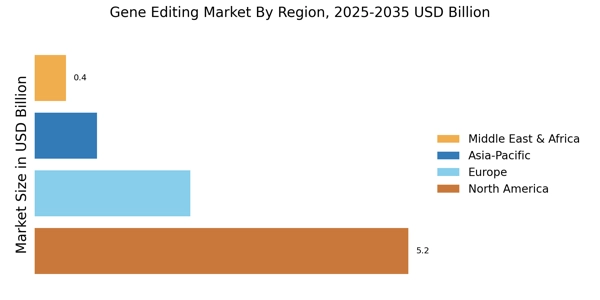
North America dominates the gene editing market, accounting for approximately 60% of the global share. The region benefits from robust investment in biotechnology, strong research institutions, and favorable regulatory frameworks. The demand for gene editing technologies is driven by advancements in CRISPR technology and increasing applications in therapeutics and agriculture.
Regulatory support from agencies like the FDA further catalyzes market growth, ensuring safety and efficacy in gene editing applications. The United States is the largest market, followed by Canada, which is emerging as a significant player.
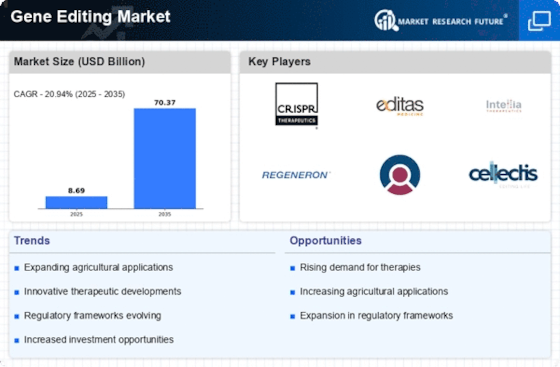
Key companies such as CRISPR Therapeutics, Editas Medicine, and Intellia Therapeutics are leading the charge, supported by a competitive landscape that fosters innovation. The presence of venture capital and public funding enhances the growth potential, making North America a focal point for gene editing advancements.
Europe : Regulatory Framework and Growth
Europe is rapidly evolving in the gene editing market, holding approximately 25% of the global share. The region's growth is propelled by increasing investments in biotechnology and a strong emphasis on ethical regulations surrounding gene editing.
Countries like Germany and the UK are at the forefront, with supportive policies that encourage research and development. The European Medicines Agency (EMA) plays a crucial role in establishing guidelines that facilitate market entry for innovative gene editing therapies.
Germany leads the market, followed closely by the UK and France, which are home to several key players like Cellectis and other emerging biotech firms. The competitive landscape is characterized by collaborations between academia and industry, fostering innovation.
The presence of established companies and startups alike contributes to a vibrant ecosystem, positioning Europe as a significant player in the global gene editing arena.
Asia-Pacific : Rapid Growth and Innovation
Asia-Pacific is witnessing significant growth in the gene editing market, accounting for around 10% of the global share. The region's expansion is driven by increasing investments in biotechnology, rising healthcare demands, and a growing number of research initiatives.
Countries like China and Japan are leading the charge, supported by government policies that promote innovation and research in gene editing technologies. The regulatory environment is evolving, with agencies working to establish frameworks that ensure safety and efficacy.
China is the largest market in the region, with Japan following closely. The competitive landscape is marked by a mix of established companies and startups, with key players like Beam Therapeutics and Precision BioSciences making strides.
The collaboration between research institutions and industry players is fostering a conducive environment for innovation, making Asia-Pacific a vital region for the future of gene editing.
Middle East and Africa : Emerging Market Potential
The Middle East and Africa are emerging as potential markets for gene editing, currently holding about 5% of the global share. The growth in this region is driven by increasing healthcare investments and a rising awareness of genetic disorders.
Countries like South Africa and the UAE are beginning to explore gene editing technologies, supported by government initiatives aimed at enhancing healthcare infrastructure. However, regulatory frameworks are still in development, which may impact the pace of market growth.
South Africa is leading the market, with a growing number of research institutions focusing on gene editing applications. The competitive landscape is still nascent, with few key players, but the potential for growth is significant.
As awareness and investment increase, the region is likely to see more players entering the market, paving the way for advancements in gene editing technologies.