×
Request Free Sample ×

Kindly complete the form below to receive a free sample of this Report

* Please use a valid business email

Leading companies partner with us for data-driven Insights

clients tt-cursor
Hero Background

GCC Hearing Aids Market

ID: MRFR/HC/43622-HCR
200 Pages
Garvit Vyas
February 2026

GCC Hearing Aids Market Research Report By Technology Type (digital hearing aids, analog hearing aids) and By Distribution Channel (retail stores, e-commerce, others) - Growth & Industry Forecast 2025 To 2035

Share:
Download PDF ×

We do not share your information with anyone. However, we may send you emails based on your report interest from time to time. You may contact us at any time to opt-out.

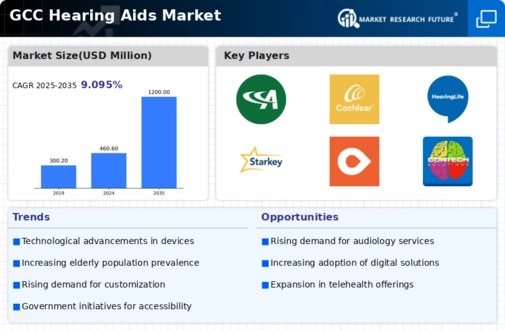
GCC Hearing Aids Market Infographic
Purchase Options

GCC Hearing Aids Market Summary

As per analysis, the Gcc hearing aids market is projected to grow from USD 0.347 Billion in 2025 to USD 0.733 Billion by 2035, exhibiting a compound annual growth rate (CAGR) of 7.74% during the forecast period (2025 - 2035).

Key Market Trends & Highlights

The GCC hearing aids market is poised for growth driven by technological advancements and increasing awareness of hearing health.

  • The hearing loss segment remains the largest in the GCC hearing aids market, reflecting a persistent demand for effective auditory solutions.
  • The music listening segment is the fastest-growing, indicating a shift towards lifestyle-oriented hearing aid products.
  • Digital hearing aids dominate the market, while Bluetooth-enabled devices are rapidly gaining traction among consumers.
  • Key market drivers include technological advancements in hearing aids and the aging population in the GCC, which collectively enhance market potential.

Market Size & Forecast

2024 Market Size 0.323 (USD Billion)
2035 Market Size 0.733 (USD Billion)
CAGR (2025 - 2035) 7.74%

Major Players

Sonova Holding AG (CH), Demant A/S (DK), GN Store Nord A/S (DK), Cochlear Limited (AU), WS Audiology A/S (DK), Amplifon S.p.A. (IT), Eargo, Inc. (US), Starkey Hearing Technologies (US)

Our Impact
Enabled $4.3B Revenue Impact for Fortune 500 and Leading Multinationals
Partnering with 2000+ Global Organizations Each Year
30K+ Citations by Top-Tier Firms in the Industry

GCC Hearing Aids Market Trends

The gcc hearing aids market is currently experiencing a notable transformation, driven by advancements in technology and an increasing awareness of hearing health. As the population ages, the demand for hearing aids is likely to rise, with more individuals seeking solutions to address hearing loss. This trend is further supported by government initiatives aimed at promoting hearing health awareness and improving access to audiological services. Additionally, the integration of smart technology into hearing aids appears to enhance user experience, making these devices more appealing to a broader audience. Moreover, the gcc hearing aids market is witnessing a shift towards personalized solutions, as manufacturers focus on tailoring products to meet individual needs. This customization is facilitated by innovations in digital technology, which allow for more precise fitting and adjustments. The growing acceptance of telehealth services also suggests that consumers may increasingly prefer remote consultations for hearing assessments and device fittings. Overall, the gcc hearing aids market is poised for growth, with a clear emphasis on technological advancements and personalized care.

Technological Advancements

The gcc hearing aids market is seeing rapid technological progress, with manufacturers incorporating features such as Bluetooth connectivity and artificial intelligence. These innovations enhance the functionality of hearing aids, allowing users to connect seamlessly with other devices and customize their listening experiences.

Increased Awareness of Hearing Health

There is a growing recognition of the importance of hearing health within the gcc region. Government campaigns and health initiatives are likely to promote regular hearing assessments, leading to higher demand for hearing aids among the population.

Personalized Solutions

The trend towards personalized hearing aids is becoming more pronounced, as companies focus on creating devices tailored to individual preferences and needs. This customization is supported by advancements in digital technology, enabling more accurate fittings and adjustments.

GCC Hearing Aids Market Drivers

Aging Population in the GCC

The demographic shift towards an aging population in the GCC region is a critical driver for the hearing aids market. As life expectancy increases, the prevalence of age-related hearing loss is also rising. Current estimates suggest that by 2030, nearly 20% of the GCC population will be over the age of 60, a demographic that typically requires hearing assistance. This trend indicates a substantial market opportunity for hearing aid manufacturers and suppliers. The GCC hearing aids market is likely to expand as healthcare providers and policymakers focus on improving the quality of life for the elderly, thereby increasing the accessibility and affordability of hearing aids.

Government Initiatives and Policies

Government initiatives and policies aimed at improving healthcare access are playing a pivotal role in the GCC hearing aids market. Several GCC countries have implemented programs to subsidize the cost of hearing aids for low-income individuals, thereby enhancing affordability. For example, initiatives in Saudi Arabia and the UAE have led to increased funding for hearing health services. These policies not only promote the use of hearing aids but also encourage manufacturers to innovate and provide a wider range of products. As a result, the GCC hearing aids market is likely to benefit from increased government support and investment in hearing health.

Increased Awareness of Hearing Health

There is a growing awareness regarding hearing health within the GCC hearing aids market, which is significantly influencing consumer behavior. Public health campaigns and educational initiatives are shedding light on the importance of early detection and intervention for hearing loss. As a result, more individuals are seeking hearing assessments and solutions. Recent statistics indicate that around 15% of the population in the GCC is affected by hearing loss, prompting a surge in demand for hearing aids. This heightened awareness is likely to continue driving market growth as more people recognize the benefits of addressing hearing issues promptly.

Technological Advancements in Hearing Aids

The GCC hearing aids market is experiencing a notable transformation due to rapid technological advancements. Innovations such as digital signal processing, Bluetooth connectivity, and artificial intelligence are enhancing the functionality of hearing aids. For instance, the integration of smartphone applications allows users to customize their hearing experience, which is particularly appealing to younger demographics. According to recent data, the adoption of smart hearing aids in the GCC region has increased by approximately 25% over the past year. This trend suggests that consumers are increasingly seeking devices that offer advanced features and improved user experience, thereby driving growth in the GCC hearing aids market.

Rising Disposable Income and Consumer Spending

The rise in disposable income across the GCC region is contributing to the growth of the hearing aids market. As economic conditions improve, consumers are more willing to invest in healthcare products, including hearing aids. Recent data indicates that consumer spending on healthcare in the GCC has increased by approximately 10% annually. This trend suggests that individuals are prioritizing their health and well-being, leading to a greater demand for high-quality hearing aids. Consequently, the GCC hearing aids market is poised for growth as consumers seek advanced solutions that enhance their quality of life.

Market Segment Insights

By Application: Hearing Loss (Largest) vs. Music Listening (Fastest-Growing)

In the GCC hearing aids market, the application segment is characterized by diverse use cases, with hearing loss management emerging as the largest segment. This segment addresses the needs of individuals experiencing varying degrees of hearing impairment, offering a range of solutions tailored to their specific requirements. Other notable applications include hearing enhancement, communication aids, television listening, and music listening, each with its unique contributions to the overall market share, reflecting the importance of auditory assistance in daily life.

Hearing Loss (Dominant) vs. Music Listening (Emerging)

The hearing loss application stands out as the dominant force in the GCC hearing aids market, driven by increasing awareness and diagnosis of hearing-related conditions. This segment is characterized by advanced technology that provides personalized support for users, enhancing their overall quality of life. In contrast, music listening represents an emerging segment, gaining traction among audiophiles and casual listeners alike. This application highlights the growing interest in high-fidelity hearing solutions that cater to individuals seeking a richer auditory experience beyond mere hearing assistance. As consumer preferences evolve, both segments are expected to shape the future landscape of hearing aids.

By Technology: Digital (Largest) vs. Bluetooth Enabled (Fastest-Growing)

The GCC hearing aids market has seen a significant distribution among various technology segments, notably with Digital hearing aids holding the largest share. Following closely, Bluetooth Enabled devices are rapidly gaining traction. This growth is attributed to their connectivity features, which appeal to a tech-savvy demographic looking for seamless integration with smart devices. Analog hearing aids and Rechargeable options, while present, lag behind in market share, primarily due to the advancements in digital technology and the convenience offered by modern solutions. In terms of growth trends, the market is influenced by increasing awareness of hearing health and technological advancements. Bluetooth Enabled hearing aids are particularly notable for their rapid adoption, as consumers prioritize convenience and connectivity in their choices. The transition from Analog to Digital models also reflects changing consumer preferences towards feature-rich products that enhance user experience, suggesting a robust demand for innovation in this sector.

Technology: Digital (Dominant) vs. Bluetooth Enabled (Emerging)

Digital hearing aids are leading the market due to their advanced capabilities, including enhanced sound processing and customization options for users. Their design allows for clearer sound quality and better user experiences compared to Analog models. In contrast, Bluetooth Enabled hearing aids are positioned as an emerging trend, appealing to younger, tech-savvy individuals seeking functionality that integrates with daily digital lives. These aids offer hands-free calling and streaming directly from smartphones, making them particularly attractive. The growth of Bluetooth technology alongside the increasing demand for smart features sets a promising future for this category, making them a significant contender in the GCC hearing aids market.

By End User: Elderly (Largest) vs. Adults (Fastest-Growing)

In the GCC hearing aids market, the distribution of market share among end users reveals a significant focus on the elderly demographic, who represent the largest portion of users. This segment benefits from increasing awareness and diagnosis of hearing loss amongst older adults, driving consistent demand for hearing aids. Adults also comprise a substantial share, but the growth trajectory for this group is accelerating as more individuals seek preventative solutions to potential hearing impairments due to lifestyle-related factors. The growth trends for the hearing aid market in the GCC are influenced by a combination of factors. Amongst the elderly, the rising prevalence of age-related hearing loss and the availability of technologically advanced devices are key drivers. Conversely, the adult segment is experiencing rapid growth, bolstered by rising health consciousness, increased accessibility to advanced hearing solutions, and the ready adoption of prescription hearing aids among working professionals and younger adults who recognize the need for early intervention in hearing health.

Elderly (Dominant) vs. Adults (Emerging)

The elderly segment in the GCC hearing aids market is characterized by its dominant position, primarily driven by a rising geriatric population and heightened awareness of hearing health. As older individuals face age-related hearing impairments, they increasingly seek effective solutions that improve their quality of life. This segment is favored for its ability to adapt to market innovations such as digital hearing aids, which cater specifically to the diverse needs of elderly users. On the other hand, the adult segment is emerging rapidly, fueled by growing recognition of hearing issues among younger demographics and professionals. This group leans towards audiological assessments and preventive measures, becoming receptive to modern hearing aid technologies that offer convenience and improved performance. Their increasing engagement signifies a shift towards inclusive hearing health care that encompasses all age groups.

By Distribution Channel: Online Retail (Largest) vs. Specialty Stores (Fastest-Growing)

The GCC hearing aids market showcases a diverse distribution channel landscape, where Online Retail holds the largest market share. As consumers increasingly embrace digital shopping, online platforms provide the convenience of purchasing hearing aids from the comfort of their homes. Specialty Stores, while not the largest, are the fastest-growing channel, as they offer a tailored shopping experience with trained professionals assisting customers in selecting the most suitable devices. These stores often feature a more personalized service, which continues to attract a segment of consumers seeking advice and fitting services. In recent years, the growth of Online Retail has been propelled by enhancements in e-commerce technology and increased internet penetration across the GCC region. Consumers' shift towards online shopping is further driven by the convenience of home delivery and extensive product selections. Meanwhile, the growth of Specialty Stores is driven by a rising demand for specialized services, as many customers prefer hands-on experiences when choosing hearing aids. With the aging population in the GCC, both channels are expected to thrive as more individuals seek hearing solutions, thereby shaping the market's future direction.

Retail: Online (Dominant) vs. Specialty Stores (Emerging)

In the GCC hearing aids market, Online Retail stands out as the dominant channel, benefiting from the increasing penetration of internet services and a growing acceptance of online transactions among consumers. This channel offers extensive product information, user reviews, and the convenience of purchasing from home, making it highly attractive. On the other hand, Specialty Stores are emerging as an essential player due to their ability to provide expert consultations, personalized fittings, and a hands-on approach. Customers visiting these stores often seek detailed advice, demonstrating a preference for experiential shopping. While Online Retail captures a broader audience, Specialty Stores cater to those requiring specialized guidance, creating a balanced growth trajectory in the overall market.

By Price Range: Economical (Largest) vs. Premium (Fastest-Growing)

In the GCC hearing aids market, the price segmentation reveals that the Economical segment commands the largest share, appealing to budget-conscious consumers seeking reliable hearing solutions. This segment has gained traction due to increased awareness of hearing health and the need for affordable options among the growing elderly population. On the other hand, the Premium segment is emerging as the fastest-growing sector, attracting consumers who prioritize advanced technology and premium features, indicating a shift towards higher willingness to invest in quality hearing aids. The growth trends within the price range segment are driven by various factors. The increasing prevalence of hearing loss in the GCC region has compelled stakeholders to introduce a diverse array of price options catering to different consumer needs. Moreover, technological advancements in hearing aids, particularly in the Premium and Luxury segments, are enhancing user experience, leading to increased adoption. The trend towards digitalization in healthcare and a greater emphasis on personalized auditory solutions also contribute significantly to the growth of these segments.

Economical (Dominant) vs. Luxury (Emerging)

The Economical segment represents the dominant force in the GCC hearing aids market, offering affordable options to a vast audience. This segment is characterized by basic functionalities that meet the essential hearing needs of users, making it particularly appealing to older adults who seek price-sensitive solutions. In contrast, the Luxury segment, though emerging and relatively niche, caters to a discerning clientele looking for superior quality, cutting-edge technology, and enhanced features such as smart connectivity and custom fitting. While the Economical segment thrives on volume driven by affordability, the Luxury segment is distinguished by its promise of exclusivity and high-end advancements, appealing to consumers willing to invest significantly in their auditory experience.

Get more detailed insights about GCC Hearing Aids Market

Key Players and Competitive Insights

The competitive dynamics within the hearing aids market are characterized by a blend of innovation, strategic partnerships, and regional expansion. Key growth drivers include an aging population, increasing awareness of hearing health, and advancements in technology. Major players such as Sonova Holding AG (CH), Demant A/S (DK), and GN Store Nord A/S (DK) are at the forefront, each adopting distinct strategies to enhance their market presence. Sonova, for instance, emphasizes innovation through its extensive R&D investments, while Demant focuses on digital transformation and user-centric solutions. GN Store Nord, on the other hand, is leveraging its strong brand reputation to expand its product offerings, thereby shaping a competitive environment that is both dynamic and multifaceted.

In terms of business tactics, companies are increasingly localizing manufacturing and optimizing supply chains to enhance efficiency and responsiveness to market demands. The market structure appears moderately fragmented, with a mix of established players and emerging entrants. This fragmentation allows for diverse offerings, yet the collective influence of key players like Sonova and Demant creates a competitive landscape where innovation and quality are paramount.

In December 2025, Sonova Holding AG (CH) announced the launch of its latest hearing aid model, which integrates advanced AI technology to provide personalized sound experiences. This strategic move not only reinforces Sonova's commitment to innovation but also positions the company to capture a larger share of the tech-savvy consumer segment. The integration of AI is likely to enhance user satisfaction and set a new benchmark for product capabilities in the market.

In November 2025, Demant A/S (DK) entered into a strategic partnership with a leading telehealth provider to enhance remote audiology services. This collaboration is significant as it aligns with the growing trend of digital health solutions, allowing Demant to expand its service offerings and improve accessibility for users. Such partnerships may prove crucial in addressing the evolving needs of consumers who prefer remote consultations and services.

In October 2025, GN Store Nord A/S (DK) completed the acquisition of a regional competitor, which is expected to bolster its market position in the GCC. This acquisition not only expands GN's product portfolio but also enhances its distribution capabilities across the region. The strategic importance of this move lies in the potential for increased market share and improved operational efficiencies, which could lead to a stronger competitive stance.

As of January 2026, current trends in the hearing aids market are increasingly defined by digitalization, sustainability, and the integration of AI technologies. Strategic alliances are shaping the landscape, enabling companies to leverage complementary strengths and enhance their offerings. Looking ahead, competitive differentiation is likely to evolve from traditional price-based competition to a focus on innovation, technological advancements, and supply chain reliability. This shift underscores the importance of adaptability and forward-thinking strategies in maintaining a competitive edge.


Key Companies in the GCC Hearing Aids Market include

Industry Developments

There have been significant developments in the GCC Hearing Aids Market recently. Companies such as Sonova Holding AG and WS Audiology A/S are focusing on enhancing their product lines to cater to the growing demand for advanced hearing solutions. The GCC region has witnessed an increased emphasis on healthcare accessibility, leading to more partnerships between healthcare providers and hearing aid manufacturers, which is fostering market growth. Notably, in April 2023, GN Store Nord A/S announced the launch of its cutting-edge hearing aid technology, leveraging artificial intelligence to improve user experience. 

Moreover, Acuity Brands Inc. has been exploring collaborative opportunities in the GCC, signaling an influx of innovation in the sector. The rise in the elderly population and awareness campaigns about hearing loss are driving market valuation upward. In terms of mergers and acquisitions, recent developments have seen Cochlear Limited acquiring a key local distributor as of March 2023, strengthening its foothold in the region. Such strategic moves are reflective of the competitive landscape, and the efforts of major entities like Starkey Hearing Technologies and Amplifon S.p.A. to secure market share in the GCC hearing aids market.

Future Outlook

GCC Hearing Aids Market Future Outlook

The GCC hearing aids market is projected to grow at a 7.74% CAGR from 2025 to 2035, driven by technological advancements, increasing awareness, and an aging population.

New opportunities lie in:

  • Expansion of telehealth services for remote fitting and support
  • Development of AI-driven hearing aid features for personalized user experience
  • Partnerships with healthcare providers for integrated hearing solutions

By 2035, the GCC hearing aids market is expected to be robust, driven by innovation and strategic partnerships.

Market Segmentation

GCC Hearing Aids Market End User Outlook

  • Adults
  • Children
  • Elderly
  • Professionals
  • Students

GCC Hearing Aids Market Technology Outlook

  • Analog
  • Digital
  • Bluetooth Enabled
  • Rechargeable
  • Directional Microphone

GCC Hearing Aids Market Application Outlook

  • Hearing Loss
  • Hearing Enhancement
  • Communication Aid
  • Television Listening
  • Music Listening

GCC Hearing Aids Market Price Range Outlook

  • Economical
  • Mid-Range
  • Premium
  • Luxury

GCC Hearing Aids Market Distribution Channel Outlook

  • Online Retail
  • Pharmacies
  • Specialty Stores
  • Hospitals
  • Direct Sales

Report Scope

MARKET SIZE 20240.323(USD Billion)
MARKET SIZE 20250.347(USD Billion)
MARKET SIZE 20350.733(USD Billion)
COMPOUND ANNUAL GROWTH RATE (CAGR)7.74% (2024 - 2035)
REPORT COVERAGERevenue Forecast, Competitive Landscape, Growth Factors, and Trends
BASE YEAR2024
Market Forecast Period2025 - 2035
Historical Data2019 - 2024
Market Forecast UnitsUSD Billion
Key Companies ProfiledSonova Holding AG (CH), Demant A/S (DK), GN Store Nord A/S (DK), Cochlear Limited (AU), WS Audiology A/S (DK), Amplifon S.p.A. (IT), Eargo, Inc. (US), Starkey Hearing Technologies (US)
Segments CoveredApplication, Technology, End User, Distribution Channel, Price Range
Key Market OpportunitiesIntegration of advanced digital technologies enhances accessibility in the gcc hearing aids market.
Key Market DynamicsRising demand for advanced hearing aids drives innovation and competition among manufacturers in the GCC region.
Countries CoveredGCC
Leave a Comment

FAQs

What is the current valuation of the GCC hearing aids market?

As of 2024, the overall market valuation was 0.323 USD Billion.

What is the projected market size for the GCC hearing aids market by 2035?

The market is projected to reach 0.733 USD Billion by 2035.

What is the expected CAGR for the GCC hearing aids market during the forecast period?

The expected CAGR for the market from 2025 to 2035 is 7.74%.

Which companies are the key players in the GCC hearing aids market?

Key players include Sonova Holding AG, Demant A/S, GN Store Nord A/S, Cochlear Limited, WS Audiology A/S, Amplifon S.p.A., Eargo, Inc., and Starkey Hearing Technologies.

What are the main application segments in the GCC hearing aids market?

The main application segments include Hearing Loss, Hearing Enhancement, Communication Aid, Television Listening, and Music Listening.

How does the market perform in terms of technology segments?

The technology segments encompass Analog, Digital, Bluetooth Enabled, Rechargeable, and Directional Microphone, with varying valuations.

What is the distribution channel breakdown for the GCC hearing aids market?

Distribution channels include Online Retail, Pharmacies, Specialty Stores, Hospitals, and Direct Sales.

What are the price range segments in the GCC hearing aids market?

The price range segments are Economical, Mid-Range, Premium, and Luxury.

Which end-user segments are prominent in the GCC hearing aids market?

Prominent end-user segments include Adults, Children, Elderly, Professionals, and Students.

What trends are expected to shape the GCC hearing aids market in the coming years?

Trends may include advancements in technology, increased awareness of hearing health, and a growing elderly population.

Download Free Sample

Kindly complete the form below to receive a free sample of this Report

Compare Licence

×
Features License Type
Single User Multiuser License Enterprise User
Price $4,950 $5,950 $7,250
Maximum User Access Limit 1 User Upto 10 Users Unrestricted Access Throughout the Organization
Free Customization
Direct Access to Analyst
Deliverable Format
Platform Access
Discount on Next Purchase 10% 15% 15%
Printable Versions