×
Request Free Sample ×

Kindly complete the form below to receive a free sample of this Report

* Please use a valid business email

Leading companies partner with us for data-driven Insights

clients tt-cursor
Hero Background

GCC Ayurvedic Products Market

ID: MRFR/HC/43409-HCR
200 Pages
Garvit Vyas
February 2026

GCC Ayurvedic Products Market Research Report By Product (Drugs, Hair Care Products, Health Care Products, Oral Care Products, Others) and By Distribution Channel (Supermarkets, Pharmacies, Departmental Stores, Beauty Spa/Salon, Others) - Growth & Industry Forecast 2025 To 2035

Share:
Download PDF ×

We do not share your information with anyone. However, we may send you emails based on your report interest from time to time. You may contact us at any time to opt-out.

GCC Ayurvedic Products Market Infographic
Purchase Options

GCC Ayurvedic Products Market Summary

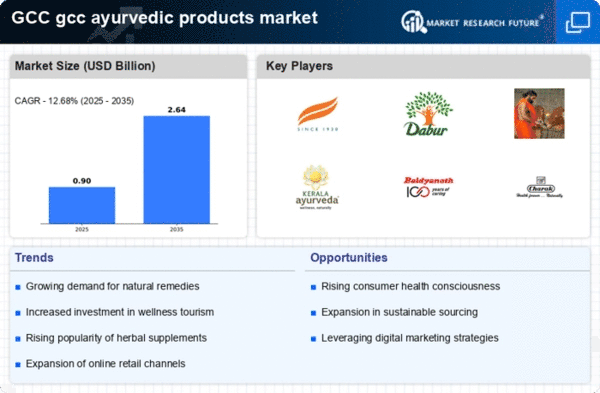
As per analysis, the GCC Ayurvedic Products Market is projected to grow from USD 0.903 Billion in 2025 to USD 2.64 Billion by 2035, exhibiting a compound annual growth rate (CAGR) of 11.46% during the forecast period (2025 - 2035).

Key Market Trends & Highlights

The GCC Ayurvedic Products Market is experiencing a robust growth trajectory driven by increasing consumer awareness and cultural acceptance.

  • The Personal Care segment remains the largest contributor to the market, reflecting a growing preference for natural beauty products.
  • In contrast, the Healthcare segment is the fastest-growing, driven by rising health consciousness and demand for holistic wellness solutions.
  • Herbal Supplements dominate the market, while Essential Oils are emerging rapidly as a preferred choice among consumers seeking natural remedies.
  • Key market drivers include the growing demand for natural products and regulatory support for traditional medicine, which bolster market expansion.

Market Size & Forecast

2024 Market Size 0.801 (USD Billion)
2035 Market Size 2.64 (USD Billion)
CAGR (2025 - 2035) 11.46%

Major Players

Himalaya Wellness (IN), Dabur India (IN), Patanjali Ayurved (IN), Zandu Realty (IN), Kerala Ayurveda (IN), Charak Pharma (IN), Baidyanath (IN), Sri Tattva (IN), Maharishi Ayurveda (IN)

Our Impact
Enabled $4.3B Revenue Impact for Fortune 500 and Leading Multinationals
Partnering with 2000+ Global Organizations Each Year
30K+ Citations by Top-Tier Firms in the Industry

GCC Ayurvedic Products Market Trends

The GCC Ayurvedic Products Market is currently experiencing a notable transformation, driven by a growing consumer inclination towards natural and holistic health solutions. This shift is largely influenced by an increasing awareness of the benefits associated with Ayurvedic practices, which emphasize balance and wellness through natural ingredients. As consumers in the GCC region become more health-conscious, there is a discernible rise in demand for Ayurvedic products, ranging from herbal supplements to skincare items. This trend appears to be supported by a cultural affinity for traditional medicine, which is deeply rooted in the region's history and practices. Moreover, the GCC Ayurvedic Products Market is likely to benefit from the region's strategic initiatives aimed at promoting health and wellness. Governments in the GCC are increasingly recognizing the potential of traditional medicine as a viable alternative to conventional treatments. This recognition may lead to enhanced regulatory frameworks that support the growth of Ayurvedic products. Additionally, the rise of e-commerce platforms is facilitating greater accessibility to these products, allowing consumers to explore and purchase Ayurvedic solutions conveniently. As a result, the market is poised for continued expansion, reflecting a broader trend towards sustainable and natural health options.

Rising Consumer Awareness

There is a growing awareness among consumers in the GCC regarding the benefits of Ayurvedic products. This trend is characterized by an increasing interest in natural remedies and holistic health solutions, which are perceived as safer alternatives to synthetic options. As educational initiatives proliferate, consumers are becoming more informed about the efficacy of Ayurvedic practices, leading to heightened demand.

Government Support for Traditional Medicine

Governments in the GCC are increasingly recognizing the value of traditional medicine, including Ayurveda, as part of their health strategies. This support may manifest in the form of regulatory frameworks that promote the use of Ayurvedic products, thereby enhancing their credibility and acceptance among consumers. Such initiatives could potentially foster a more favorable environment for market growth.

Expansion of E-commerce Platforms

The rise of e-commerce in the GCC is significantly impacting the Ayurvedic Products Market. Online platforms are providing consumers with easier access to a diverse range of Ayurvedic products, facilitating informed purchasing decisions. This trend is likely to enhance market penetration, as consumers can conveniently explore and acquire products that align with their health preferences.

GCC Ayurvedic Products Market Drivers

Rising Health Consciousness

The GCC Ayurvedic Products Market is significantly influenced by the rising health consciousness among consumers. As individuals become more aware of the benefits of preventive healthcare, there is a growing inclination towards Ayurvedic products that promote overall well-being. This shift in consumer behavior is evident in the increasing sales of dietary supplements and herbal remedies. Market data indicates that the demand for herbal supplements in the GCC region is expected to rise by approximately 10% annually. This trend suggests that the GCC Ayurvedic Products Market is well-positioned to capitalize on the health and wellness movement, as consumers seek natural solutions to enhance their quality of life.

Cultural Acceptance and Heritage

The GCC Ayurvedic Products Market benefits from a rich cultural heritage that embraces traditional medicine. The historical significance of Ayurveda in the region resonates with consumers, fostering a sense of trust and acceptance. This cultural alignment encourages the adoption of Ayurvedic practices and products, as they are often viewed as integral to holistic health. Furthermore, the GCC countries have been promoting their cultural heritage, which includes traditional healing practices. This initiative is likely to enhance the visibility and acceptance of Ayurvedic products, potentially leading to increased market penetration and consumer loyalty within the GCC Ayurvedic Products Market.

Growing Demand for Natural Products

The GCC Ayurvedic Products Market is witnessing a notable increase in demand for natural and organic products. Consumers are increasingly seeking alternatives to synthetic products, driven by a desire for healthier lifestyles and wellness. This trend is reflected in the rising sales of Ayurvedic products, which are perceived as safer and more effective. According to recent data, the market for natural personal care products in the GCC region is projected to grow at a compound annual growth rate (CAGR) of approximately 8% over the next five years. This growth is likely to bolster the GCC Ayurvedic Products Market, as consumers gravitate towards herbal remedies and natural ingredients, thereby enhancing the overall market landscape.

Regulatory Support and Standardization

The GCC Ayurvedic Products Market is experiencing a favorable regulatory environment that supports the growth of Ayurvedic products. Governments in the region are increasingly recognizing the importance of traditional medicine and are implementing policies to regulate and standardize Ayurvedic products. This regulatory framework aims to ensure product safety and efficacy, which is crucial for consumer confidence. For instance, the Saudi Food and Drug Authority has established guidelines for the registration of herbal products, which may enhance the credibility of Ayurvedic offerings. Such regulatory support is likely to facilitate market entry for new players and promote innovation within the GCC Ayurvedic Products Market.

Technological Advancements in Production

The GCC Ayurvedic Products Market is poised for growth due to technological advancements in production processes. Innovations in extraction techniques and formulation development are enhancing the quality and efficacy of Ayurvedic products. These advancements not only improve product consistency but also enable manufacturers to meet the increasing consumer demand for high-quality offerings. Additionally, the integration of technology in supply chain management is streamlining operations, reducing costs, and improving product availability. As a result, the GCC Ayurvedic Products Market is likely to benefit from enhanced competitiveness and the ability to cater to a broader audience, thereby driving market expansion.

Market Segment Insights

By Application: Personal Care (Largest) vs. Healthcare (Fastest-Growing)

The GCC Ayurvedic Products Market exhibits a diverse range of application segments. Among these, the Personal Care segment holds the largest share, driven by a growing consumer preference for natural and organic ingredients in beauty and skincare products. This segment benefits from increasing awareness about the harmful effects of synthetic chemicals, leading more consumers to seek out Ayurvedic alternatives for their personal hygiene and grooming needs. On the other hand, the Healthcare segment is rapidly evolving and is recognized as the fastest-growing area within the GCC Ayurvedic Products Market. The rising incidence of chronic diseases and a shift towards preventative healthcare are driving this growth. Consumers are increasingly turning to Ayurvedic solutions for their holistic health benefits, enhancing the segment's appeal and market presence.

Personal Care (Dominant) vs. Nutraceuticals (Emerging)

The Personal Care segment stands out as the dominant force in the GCC Ayurvedic Products Market, characterized by its wide array of offerings that include skincare, haircare, and cosmetics based on traditional Ayurvedic principles. This segment is fortified by the growing trend of consumers seeking sustainable and eco-friendly beauty products. In contrast, the Nutraceuticals segment is emerging, appealing to health-conscious consumers looking for functional foods and supplements that support wellness and vitality. Its growth is fueled by rising health awareness, the desire for natural ingredients, and the increasing prevalence of lifestyle-related health issues. While Personal Care maintains dominance, Nutraceuticals is carving out a significant niche that aligns with modern health trends.

By Product Type: Herbal Supplements (Largest) vs. Essential Oils (Fastest-Growing)

The GCC Ayurvedic Products Market showcases a diverse array of product types, with Herbal Supplements leading in market share due to their established consumer base and high demand. Essential Oils, while holding a smaller portion of the market share, are rapidly gaining traction driven by their therapeutic benefits and increasing popularity in wellness trends. Together, these product types reflect the growing interest in natural health solutions among consumers in the Gulf region.

Herbal Supplements (Dominant) vs. Essential Oils (Emerging)

Herbal Supplements dominate the GCC Ayurvedic Products Market, appealing largely to health-conscious consumers seeking natural remedies for various ailments. The extensive range of offerings, from multivitamins to specialized health products, caters to diverse health needs, making this segment a staple in households. In contrast, Essential Oils are emerging as a trending category, thanks to their versatility in applications from aromatherapy to skincare. The rising popularity of holistic wellness and natural beauty practices has propelled Essential Oils into the spotlight, attracting a younger demographic eager to explore their benefits.

By Distribution Channel: Online Retail (Largest) vs. Pharmacy (Fastest-Growing)

In the GCC Ayurvedic Products Market, the distribution channels demonstrate varied market share dynamics. Online retail has established itself as the largest channel, benefiting from the increasing trend of digital shopping among consumers. In contrast, pharmacies are gaining attention as a preferred destination for Ayurvedic products, contributing significantly to their overall market presence. The accessibility and trust associated with pharmacies have helped solidify their role in this growing market segment. Growth trends within distribution channels indicate a shift towards e-commerce platforms and brick-and-mortar pharmacies. Online retail is bolstered by the rising penetration of internet usage and the convenience it offers to consumers. Meanwhile, the pharmacy channel is emerging as a strong player, driven by consumers seeking professional advice and recommendations when choosing Ayurvedic products, thus solidifying their growth trajectory in the future.

Online Retail (Dominant) vs. Pharmacy (Emerging)

Online Retail in the GCC Ayurvedic Products Market has become a dominant force, thanks to its ability to cater to the modern consumer's preference for convenience and variety. The online platforms offer extensive product ranges, detailed health information, and customer reviews that empower consumer decisions. On the other hand, pharmacies are classified as the emerging segment, increasingly recognized for their role in facilitating consumer access to trusted Ayurvedic remedies. The personalized service and guidance provided by pharmacy professionals enhance consumer confidence in product selection, driving the growth of this channel. The interplay between these two channels reflects a dynamic market landscape, where traditional trust and modern convenience coexist and compete.

By Consumer Demographics: Age Group (Largest) vs. Income Level (Fastest-Growing)

In the GCC Ayurvedic Products Market, the age group segment plays a dominant role, with younger consumers under 35 showing the highest interest in Ayurvedic products, accounting for a significant portion of market share. Meanwhile, individuals in the 36-55 bracket continue to make substantial purchases, driven by health awareness and preventive care trends. Gender distribution reveals a balanced interest, though females show a slightly higher engagement with Ayurvedic beauty and health products.

Age Group: Under 35 (Dominant) vs. Income Level: Middle-Income (Emerging)

The under 35 age group emerges as the dominant demographic in the GCC Ayurvedic Products Market, driven by their inclination towards holistic health solutions and natural remedies. This age bracket is increasingly seeking products aligned with wellness trends, making them a critical consumer segment. On the other hand, the middle-income level segment is growing fast due to rising disposable incomes and greater awareness of Ayurvedic benefits. This group is characterized by a blend of traditional values and modern consumption habits, showing a strong preference for affordable and effective Ayurvedic solutions.

Get more detailed insights about GCC Ayurvedic Products Market

Key Players and Competitive Insights

The Ayurvedic Products Market is currently characterized by a dynamic competitive landscape, driven by increasing consumer awareness regarding health and wellness, alongside a growing preference for natural remedies. Key players such as Himalaya Wellness (IN), Dabur India (IN), and Patanjali Ayurved (IN) are strategically positioned to leverage these trends. Himalaya Wellness (IN) focuses on innovation, particularly in product development that aligns with modern consumer preferences, while Dabur India (IN) emphasizes regional expansion and digital transformation to enhance its market reach. Patanjali Ayurved (IN), on the other hand, is known for its aggressive marketing strategies and local sourcing, which resonate well with the ethos of Ayurvedic practices. Collectively, these strategies contribute to a competitive environment that is increasingly focused on differentiation through quality and authenticity.

In terms of business tactics, companies are localizing manufacturing to reduce costs and optimize supply chains, which is particularly relevant in the context of the GCC region. The market structure appears moderately fragmented, with several players vying for market share, yet the influence of major companies remains substantial. This competitive structure allows for a diverse range of products, catering to various consumer segments, while also fostering innovation as companies strive to stand out.

In December 2025, Himalaya Wellness (IN) launched a new line of herbal supplements aimed at enhancing immunity, which reflects a strategic pivot towards addressing contemporary health concerns. This move is significant as it not only broadens their product portfolio but also positions them as a proactive player in the wellness sector, potentially increasing their market share in a rapidly evolving landscape.

In November 2025, Dabur India (IN) announced a partnership with a leading e-commerce platform to enhance its online presence and distribution capabilities. This strategic alliance is crucial as it allows Dabur to tap into the growing trend of online shopping, thereby reaching a wider audience and improving customer engagement. Such initiatives are likely to bolster their competitive edge in the digital marketplace.

In October 2025, Patanjali Ayurved (IN) expanded its product offerings by introducing a range of organic skincare products, which aligns with the increasing consumer demand for natural and organic beauty solutions. This strategic expansion not only diversifies their product line but also reinforces their commitment to sustainability, appealing to environmentally conscious consumers.

As of January 2026, current competitive trends in the Ayurvedic Products Market are increasingly defined by digitalization, sustainability, and the integration of AI technologies. Strategic alliances are playing a pivotal role in shaping the landscape, enabling companies to enhance their operational efficiencies and market reach. Looking ahead, it is anticipated that competitive differentiation will evolve, shifting from traditional price-based competition to a focus on innovation, technological advancements, and supply chain reliability. This transition underscores the importance of adaptability and responsiveness to consumer needs in a market that is continuously evolving.


Key Companies in the GCC Ayurvedic Products Market include

Industry Developments

The GCC Ayurvedic Products Market has seen substantial developments recently, reflecting a growing consumer interest in traditional and holistic health solutions. Companies like Himalaya Wellness and Dabur India have expanded their product lines to cater to the increasing demand for natural remedies in the region, focusing on herbal supplements and personal care items. In October 2022, Kerala Ayurveda announced a significant partnership aimed at enhancing distribution channels across GCC nations, which has bolstered its market presence. 

Patanjali Ayurved and Zandu Pharmaceutical Works are also actively launching new products tailored to local preferences, contributing to a diversification in offerings. Furthermore, the market valuation for Ayurvedic products is on the rise, indicating a burgeoning acceptance of alternative medicine and wellness solutions within the GCC population. Over the last few years, several companies, such as Baidyanath and Charak Pharma, have reported impressive growth rates, solidifying the sector's potential.

As of September 2023, GMP International has been engaging in discussions for a strategic alliance with local distributors to fortify its foothold in the UAE and Oman, reflecting the ongoing trends towards mergers and strategic partnerships in this thriving market.

Future Outlook

GCC Ayurvedic Products Market Future Outlook

The GCC Ayurvedic Products Market is projected to grow at 11.46% CAGR from 2025 to 2035, driven by increasing consumer awareness and demand for natural remedies.

New opportunities lie in:

  • Expansion of e-commerce platforms for Ayurvedic products
  • Development of personalized Ayurvedic wellness programs
  • Strategic partnerships with health and wellness influencers

By 2035, the market is expected to solidify its position as a leader in holistic health solutions.

Market Segmentation

GCC Ayurvedic Products Market Application Outlook

  • Personal Care
  • Healthcare
  • Food and Beverage
  • Nutraceuticals

GCC Ayurvedic Products Market Product Type Outlook

  • Herbal Supplements
  • Essential Oils
  • Skin Care Products
  • Hair Care Products

GCC Ayurvedic Products Market Distribution Channel Outlook

  • Online Retail
  • Pharmacy
  • Supermarket
  • Health Stores

GCC Ayurvedic Products Market Consumer Demographics Outlook

  • Age Group
  • Gender
  • Income Level
  • Lifestyle

Report Scope

MARKET SIZE 20240.801(USD Billion)
MARKET SIZE 20250.903(USD Billion)
MARKET SIZE 20352.64(USD Billion)
COMPOUND ANNUAL GROWTH RATE (CAGR)11.46% (2024 - 2035)
REPORT COVERAGERevenue Forecast, Competitive Landscape, Growth Factors, and Trends
BASE YEAR2024
Market Forecast Period2025 - 2035
Historical Data2019 - 2024
Market Forecast UnitsUSD Billion
Key Companies ProfiledHimalaya Wellness (IN), Dabur India (IN), Patanjali Ayurved (IN), Zandu Realty (IN), Kerala Ayurveda (IN), Charak Pharma (IN), Baidyanath (IN), Sri Tattva (IN), Maharishi Ayurveda (IN)
Segments CoveredApplication, Product Type, Distribution Channel, Consumer Demographics
Key Market OpportunitiesGrowing consumer interest in natural remedies drives demand for GCC Ayurvedic Products Market expansion.
Key Market DynamicsRising consumer interest in natural remedies drives growth in the GCC Ayurvedic Products Market.
Countries CoveredGCC
Leave a Comment

FAQs

What is the current valuation of the GCC Ayurvedic Products Market?

As of 2024, the market valuation was 0.801 USD Billion.

What is the projected market size for the GCC Ayurvedic Products Market by 2035?

The market is expected to reach a valuation of 2.64 USD Billion by 2035.

What is the expected CAGR for the GCC Ayurvedic Products Market during the forecast period?

The market is projected to grow at a CAGR of 11.46% from 2025 to 2035.

Which segments are included in the GCC Ayurvedic Products Market?

The market segments include Personal Care, Healthcare, Food and Beverage, and Nutraceuticals.

What are the key product types in the GCC Ayurvedic Products Market?

Key product types encompass Herbal Supplements, Essential Oils, Skin Care Products, and Hair Care Products.

How is the distribution of Ayurvedic products structured in the GCC market?

Distribution channels include Online Retail, Pharmacy, Supermarket, and Health Stores.

What consumer demographics are targeted in the GCC Ayurvedic Products Market?

The market targets various demographics based on Age Group, Gender, Income Level, and Lifestyle.

Who are the leading players in the GCC Ayurvedic Products Market?

Key players include Himalaya Wellness, Dabur India, Patanjali Ayurved, and Kerala Ayurveda.

What was the valuation of the Personal Care segment in 2024?

In 2024, the Personal Care segment was valued at 0.2405 USD Billion.

What is the projected valuation for the Herbal Supplements segment by 2035?

The Herbal Supplements segment is expected to reach a valuation of 0.96 USD Billion by 2035.

Download Free Sample

Kindly complete the form below to receive a free sample of this Report

Compare Licence

×
Features License Type
Single User Multiuser License Enterprise User
Price $4,950 $5,950 $7,250
Maximum User Access Limit 1 User Upto 10 Users Unrestricted Access Throughout the Organization
Free Customization
Direct Access to Analyst
Deliverable Format
Platform Access
Discount on Next Purchase 10% 15% 15%
Printable Versions