×
Request Free Sample ×

Kindly complete the form below to receive a free sample of this Report

* Please use a valid business email

Leading companies partner with us for data-driven Insights

clients tt-cursor
Hero Background
English
Chinese
French
Japanese
Korean
German
Spanish

Fortified Cereal Market Trends

ID: MRFR/FnB/2514-HCR
128 Pages
Tejas Chaudhary
October 2025

Fortified Cereal Market Size, Share, Industry Trend & Analysis Global Information - by Cereal Type (Wheat, Rice, Barley, Oat, Corn and others), Nutrients Type (Minerals and Vitamins), Distribution Channel (Store Based & Non Store Based) and Region - Forecast to 2035

Share:
Download PDF ×

We do not share your information with anyone. However, we may send you emails based on your report interest from time to time. You may contact us at any time to opt-out.

Fortified Cereal Market Infographic
×
Fortified Cereal Market Infographic Full View
Purchase Options

Market Trends

Key Emerging Trends in the Fortified Cereal Market

The fortified cereal market is witnessing substantial growth and innovation fueled by changing consumer preferences, health consciousness, and advancements in food technology. One notable trend is the increasing demand for fortified cereals enriched with vitamins, minerals, fiber, and other essential nutrients to enhance their nutritional value. Consumers are seeking convenient and nutritious breakfast options that offer a complete and balanced start to their day, driving the popularity of fortified cereals as a convenient source of essential vitamins and minerals. These fortified cereals cater to consumers' desire for functional foods that contribute to their overall health and well-being.

Moreover, there's a growing interest in fortified cereals targeting specific health concerns and dietary needs. Manufacturers are developing fortified cereal varieties tailored to address common nutritional deficiencies, support specific health goals, and accommodate diverse dietary preferences. For example, cereals may be fortified with iron and folic acid to support healthy blood formation, calcium and vitamin D for bone health, or omega-3 fatty acids for heart health. Additionally, there's a market for fortified cereals designed for specific consumer demographics, such as children's cereals fortified with essential vitamins and minerals for growth and development, or cereals formulated for seniors with added nutrients to support healthy aging.

Furthermore, there's a trend towards natural fortification methods in the fortified cereal market. With increasing consumer demand for clean-label and minimally processed foods, manufacturers are exploring natural sources of fortification such as whole grains, nuts, seeds, and fruit extracts. Natural fortification allows manufacturers to enhance the nutritional profile of cereals while maintaining their natural flavors and textures without the need for synthetic additives or preservatives. This trend aligns with consumers' preference for wholesome and transparent food choices, driving innovation in natural fortification techniques and ingredient sourcing in the fortified cereal market.

In addition, there's a focus on fortification with plant-based ingredients in the fortified cereal market to appeal to the growing number of consumers adopting vegetarian, vegan, and plant-powered diets. Plant-based fortification offers an alternative to animal-derived nutrients, providing consumers with fortified cereals that align with their dietary preferences and ethical values. For example, cereals may be fortified with plant-based sources of protein, calcium, iron, and vitamin B12 derived from legumes, nuts, seeds, and fortified plant milks. This trend reflects the increasing popularity of plant-based eating and the demand for plant-powered nutrition in fortified cereal products.

Moreover, there's a trend towards fortification with functional ingredients in the fortified cereal market to offer added health benefits beyond basic nutrition. Manufacturers are incorporating bioactive ingredients with specific functional properties into fortified cereal formulations to target consumer wellness trends and lifestyle preferences. For example, cereals may be fortified with prebiotics and probiotics for digestive health, antioxidants for immune support, or adaptogens for stress relief. These functional fortification strategies cater to consumers seeking holistic approaches to health and well-being, driving the development of fortified cereals with added functional benefits.

Furthermore, there's a growing market for fortified cereals with reduced sugar and calorie content to meet consumer demand for healthier breakfast options. With increasing concerns about sugar consumption and its impact on health, manufacturers are developing fortified cereal products with lower sugar levels, natural sweeteners, and reduced-calorie formulations. These reduced-sugar fortified cereals offer consumers a nutritious breakfast choice without the excess calories and added sugars, catering to their desire for healthier and more balanced food options. This trend reflects the shift towards healthier eating habits and the demand for breakfast cereals that contribute to overall well-being.
Author
Tejas Chaudhary
Research Analyst Level II

I have a degree in Engineering (Civil), with masters in Business Administration (Marketing). With more than 4 years of experience in market research and consulting, I am involved in end-to-end process of market research, proposals, project kickoffs and delivery. I have research knowledge and expertise in consumer goods/packaging domain. Also I have worked for various other domains like construction & equipment. Effectively managed and delivered more than 60 report studies for regional as well as global clientele.

Leave a Comment

FAQs

Who are the leading key players of fortified cereal market?

Nestle S.A. (Switzerland), General Mills Inc. (U.S.), Kellogg Company (U.S.), Grape Nuts, Inc.(U.S.), Abbott Nutrition Limited (U.S.), Freedom Foods Group Limited (Australia), and Food For Life, Inc. (U.S.) are the leading key players of fortified cereal market.

How big will be the fortified cereal industry in 2032?

Fortified cereal industry size is estimated to reach USD 0.067 Billion by 2032.

What is the major driving factor of the global fortified cereal market?

Increasing health consciousness in people in developed economies is the major driving factor of the global fortified cereal market.

Which region is expected to lead the fortified cereal industry?

Europe is expected to lead the fortified cereal industry.

Market Summary

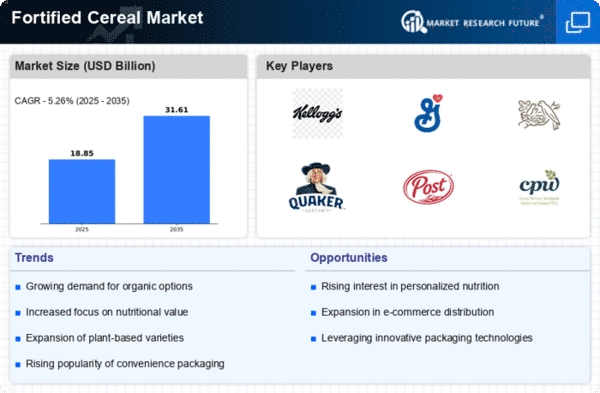
As per MRFR analysis, the Fortified Cereal Market Size was estimated at 17.91 USD Billion in 2024. The Fortified Cereal industry is projected to grow from 19.05 USD Billion in 2025 to 31.61 USD Billion by 2035, exhibiting a compound annual growth rate (CAGR) of 5.26 during the forecast period 2025 - 2035.

Key Market Trends & Highlights

The Fortified Cereal Market is experiencing a robust shift towards health-oriented products and e-commerce growth.

  • The North American market remains the largest, driven by a strong health and wellness focus among consumers.
  • In Asia-Pacific, the fortified cereal market is the fastest-growing, reflecting increasing health consciousness and demand for functional foods.
  • Whole grain cereals dominate the market, while oat-based cereals are emerging as the fastest-growing segment due to their perceived health benefits.
  • Rising health consciousness and innovative product development are key drivers propelling the market forward.

Market Size & Forecast

2024 Market Size 17.91 (USD Billion)
2035 Market Size 31.61 (USD Billion)
CAGR (2025 - 2035) 5.26%
Largest Regional Market Share in 2024 North America

Major Players

Kellogg's (US), General Mills (US), Nestle (CH), Quaker Oats (US), Post Holdings (US), Cereal Partners Worldwide (CH), Weetabix (GB), Sunrise Foods (IN), PepsiCo (US)

Market Trends

The Fortified Cereal Market is currently experiencing a notable transformation, driven by evolving consumer preferences and increasing awareness regarding health and nutrition. As individuals become more health-conscious, there is a growing demand for products that offer enhanced nutritional benefits. This shift is prompting manufacturers to innovate and diversify their offerings, incorporating a variety of vitamins and minerals into their cereals. Additionally, the rise of plant-based diets and clean-label products is influencing the types of ingredients used in fortified cereals, leading to a broader range of options for consumers seeking healthier choices. Moreover, the Fortified Cereal Market is witnessing a surge in online retail channels, as consumers increasingly turn to e-commerce for their grocery needs. This trend is reshaping the distribution landscape, allowing brands to reach a wider audience and cater to the convenience-driven shopper. As a result, companies are investing in digital marketing strategies to enhance their online presence and engage with consumers more effectively. The combination of health awareness, ingredient innovation, and the growth of online shopping is likely to shape the future trajectory of the Fortified Cereal Market, presenting both challenges and opportunities for stakeholders in this dynamic sector.

Health and Wellness Focus

There is a pronounced emphasis on health and wellness among consumers, leading to a preference for fortified cereals that provide essential nutrients. This trend reflects a broader societal shift towards healthier eating habits, with individuals seeking products that support their overall well-being.

Ingredient Transparency

Consumers are increasingly demanding transparency regarding the ingredients in their food. This trend is prompting manufacturers to adopt clean-label practices, ensuring that their fortified cereals contain recognizable and wholesome components, thereby fostering trust and loyalty among health-conscious buyers.

E-commerce Growth

The rise of e-commerce is significantly impacting the Fortified Cereal Market, as more consumers opt for online shopping. This shift is encouraging brands to enhance their digital presence and explore innovative marketing strategies to effectively reach and engage their target audience.

Fortified Cereal Market Market Drivers

Rising Health Consciousness

The Global Fortified Cereal Market Industry is experiencing a notable surge in demand driven by increasing health consciousness among consumers. As individuals become more aware of the nutritional value of their food, fortified cereals, which are enriched with vitamins and minerals, are gaining popularity. This trend is particularly evident in urban areas where busy lifestyles lead consumers to seek convenient yet nutritious breakfast options. The market is projected to reach 0.03 USD Billion in 2024, reflecting a growing preference for health-oriented products. The emphasis on balanced diets is likely to further propel the market as consumers prioritize wellness.

Innovative Product Offerings

Innovation plays a pivotal role in the Global Fortified Cereal Market Industry, with manufacturers continuously developing new products to cater to diverse consumer preferences. This includes the introduction of gluten-free, organic, and plant-based fortified cereals, which appeal to a broader audience. Such innovations not only attract health-conscious consumers but also those with dietary restrictions. The introduction of unique flavors and textures enhances the overall consumer experience, encouraging trial and repeat purchases. As a result, the market is expected to witness substantial growth, potentially reaching 0.08 USD Billion by 2035, driven by these innovative offerings.

Expansion of Distribution Channels

The Global Fortified Cereal Market Industry is witnessing an expansion of distribution channels, which is facilitating greater accessibility for consumers. Retailers are increasingly recognizing the demand for fortified cereals and are expanding their product offerings in supermarkets, health food stores, and online platforms. This diversification of distribution channels not only enhances visibility but also makes it easier for consumers to purchase fortified cereals. The growth of e-commerce, in particular, is reshaping how consumers access these products, allowing for convenient online shopping. This trend is likely to support the overall growth of the market as more consumers discover and purchase fortified cereals.

Increased Focus on Child Nutrition

The Global Fortified Cereal Market Industry is also benefiting from an increased focus on child nutrition. Parents are becoming more aware of the importance of providing their children with nutrient-rich foods to support their growth and development. Fortified cereals are often marketed specifically for children, featuring appealing flavors and packaging that attract young consumers. This targeted marketing strategy, coupled with the nutritional benefits of fortified cereals, is likely to drive sales in this segment. As families prioritize healthy breakfast options for their children, the market is expected to expand, reflecting a shift towards more health-conscious choices in family diets.

Growing Demand for Convenience Foods

The Global Fortified Cereal Market Industry is significantly influenced by the rising demand for convenience foods. As lifestyles become increasingly hectic, consumers are seeking quick and easy meal solutions that do not compromise on nutrition. Fortified cereals, often marketed as ready-to-eat breakfast options, fit this demand perfectly. The convenience factor, combined with the nutritional benefits of fortified cereals, positions them favorably in the market. This trend is anticipated to contribute to a compound annual growth rate (CAGR) of 9.39% from 2025 to 2035, indicating a robust growth trajectory as more consumers opt for convenient yet healthy food choices.

Market Segment Insights

By Product Type: Whole Grain Cereal (Largest) vs. Oat-based Cereal (Fastest-Growing)

The Fortified Cereal Market exhibits a diverse landscape of product types, with Whole Grain Cereal commanding a significant portion of market share due to its health benefits and consumer preference for natural ingredients. Oat-based Cereal, while smaller in market share, is rapidly gaining traction among health-conscious consumers seeking wholesome dietary options. As lifestyles shift towards healthier eating habits, both segments showcase their unique propositions in appealing to different demographics.

Whole Grain Cereal: Dominant vs. Oat-based Cereal: Emerging

Whole Grain Cereal is positioned as a dominant force within the Fortified Cereal Market, celebrated for its rich fiber content and nutritional value, appealing to health-conscious consumers. This segment encompasses a variety of options, making it versatile and widely acceptable. In contrast, Oat-based Cereal signals an emerging trend, bolstered by rising interest in superfoods and the popularity of oats as a natural ingredient. Oat-based options tend to focus on gluten-free labeling, catering to specific dietary needs and preferences, thus enhancing their market appeal.

By Nutritional Content: High Fiber (Largest) vs. High Protein (Fastest-Growing)

In the Fortified Cereal Market, the 'High Fiber' segment holds a significant share, appealing to health-conscious consumers. This segment caters to a growing desire for better digestive health and has gained traction among both young and older demographics. Meanwhile, 'High Protein' is emerging rapidly, driven by the increasing trend of protein-rich diets among fitness enthusiasts and those seeking healthier meal alternatives, gaining considerable market traction.

High Fiber (Dominant) vs. High Protein (Emerging)

The 'High Fiber' fortified cereals are characterized by their ability to promote digestive health and maintain satiety, making them a popular choice for consumers focused on weight management. They typically include added fibers from sources like oats, barley, or psyllium husk. In contrast, 'High Protein' options are tailored for those looking to increase their protein intake, especially among athletes and dieters. These products often replace traditional grains with protein-rich ingredients such as quinoa, pea protein, or whey, appealing to a growing segment of health-conscious consumers seeking convenience without sacrificing nutrition.

By Target Consumer: Children (Largest) vs. Health-conscious Individuals (Fastest-Growing)

In the Fortified Cereal Market, the distribution among target consumer segments reveals that children represent the largest share, appealing to parents seeking nutritious options for their kids. This segment's dominance is fueled by growing awareness of the importance of balanced diets in childhood development, leading to increased demand for cereals fortified with essential vitamins and minerals. In contrast, health-conscious individuals are emerging as a rapidly growing segment, driven by the trend towards healthier eating and an increased focus on wellness and nutrition. This shift reflects a broader societal move towards healthier lifestyles, impacting dietary choices across demographics.

Children (Dominant) vs. Health-conscious Individuals (Emerging)

The children segment in the Fortified Cereal Market remains dominant due to the consistent demand for nutritious breakfast options that cater to growing needs. Parents prioritize products that provide essential nutrients and appeal to the taste preferences of younger consumers. On the other hand, health-conscious individuals are regarded as an emerging segment, characterized by a preference for cereals that align with their active lifestyles and dietary goals. This group seeks products that not only enhance health but also offer convenience and clean label characteristics, reflecting a shift in consumer priorities towards transparency and natural ingredients. Brands are increasingly catering to both segments, recognizing the need for innovation that appeals to diverse consumer preferences.

By Distribution Channel: Supermarkets (Largest) vs. Online Retailers (Fastest-Growing)

In the Fortified Cereal Market, supermarkets dominate as the primary distribution channel, accounting for a significant portion of overall sales. Their widespread reach and established customer base provide them with a competitive advantage, making them the preferred choice for many consumers. Health food stores and convenience stores also play pivotal roles, catering to specific consumer preferences for health-conscious products and quick grab-and-go options, respectively. Online retailers are gaining traction, especially among millennials who prefer the convenience of shopping from home. As consumer preferences evolve, the online retail channel is becoming the fastest-growing segment in the Fortified Cereal Market. The COVID-19 pandemic accelerated this trend, pushing consumers towards e-commerce for grocery shopping. This shift is poised to continue due to technological advancements and increased comfort with online shopping. Additionally, health food stores are growing steadily, driven by rising consumer awareness of health and nutrition, making fortified cereals an appealing option for health-conscious shoppers.

Supermarkets: Dominant vs. Online Retailers: Emerging

Supermarkets are the dominant distribution channel for fortified cereals, benefiting from their extensive shelf space and ability to stock a wide variety of brands and flavors. They offer consumers the convenience of purchasing fortified cereals alongside their regular grocery items, significantly enhancing their market appeal. Additionally, supermarkets often run promotions and discounts, further incentivizing purchases. On the other hand, online retailers represent an emerging force in the market. Their ability to provide direct access to a diverse range of products, often unavailable in physical stores, makes them increasingly attractive to consumers. The convenience of home delivery and the ability to compare products effortlessly online are essential growth drivers for this segment, appealing particularly to tech-savvy and time-conscious shoppers.

Get more detailed insights about Fortified Cereal Market Global Research Report - Forecast to 2035

Regional Insights

North America : Market Leader in Fortified Cereals

North America continues to lead the fortified cereal market, holding a significant share of 8.95 in 2024. The growth is driven by increasing health consciousness among consumers, coupled with a rising demand for nutritious breakfast options. Regulatory support for health claims on food products further catalyzes market expansion, encouraging manufacturers to innovate and diversify their offerings. The trend towards organic and non-GMO cereals is also gaining traction, appealing to a broader consumer base. The competitive landscape in North America is robust, featuring key players such as Kellogg's, General Mills, and Quaker Oats. These companies are leveraging their strong brand recognition and extensive distribution networks to capture market share. The presence of innovative products, including gluten-free and high-protein cereals, is reshaping consumer preferences. As the market evolves, partnerships and acquisitions are expected to enhance product portfolios and expand market reach.

Europe : Emerging Market with Growth Potential

Europe's fortified cereal market is valued at 5.5, reflecting a growing trend towards healthier eating habits. The demand is driven by increasing awareness of nutrition and the benefits of fortified foods. Regulatory frameworks in the EU promote transparency in labeling and health claims, which encourages consumer trust and boosts market growth. The rise of e-commerce platforms has also made fortified cereals more accessible, further fueling demand across various demographics. Leading countries in this region include the UK, Germany, and France, where major players like Nestle and Weetabix dominate the market. The competitive landscape is characterized by a mix of established brands and emerging startups focusing on niche markets, such as organic and gluten-free options. The presence of diverse product offerings caters to varying consumer preferences, enhancing market dynamics. The European market is poised for continued growth as health trends evolve.

Asia-Pacific : Rapidly Growing Market Segment

The Asia-Pacific fortified cereal market, valued at 2.8, is experiencing rapid growth driven by urbanization and changing dietary patterns. Increasing disposable incomes and a shift towards convenience foods are significant factors contributing to this trend. Regulatory initiatives aimed at improving food safety and nutrition standards are also playing a crucial role in market expansion, encouraging local manufacturers to innovate and meet consumer demands for healthier options. Countries like India and China are leading the charge, with key players such as Sunrise Foods and Nestle expanding their footprints. The competitive landscape is evolving, with both multinational corporations and local brands vying for market share. The introduction of culturally relevant fortified cereals is helping to cater to diverse consumer preferences, making this region a focal point for future growth in the fortified cereal market.

Middle East and Africa : Emerging Market with Untapped Potential

The Middle East and Africa (MEA) fortified cereal market, valued at 0.66, presents significant growth opportunities driven by increasing health awareness and changing consumer lifestyles. The region is witnessing a gradual shift towards fortified foods as consumers become more health-conscious. Regulatory bodies are beginning to implement guidelines that promote the consumption of fortified products, which is expected to further stimulate market growth in the coming years. Countries like South Africa and the UAE are at the forefront of this market, with local and international brands competing to capture the emerging consumer base. Key players are focusing on product innovation and marketing strategies tailored to local tastes and preferences. The competitive landscape is characterized by a mix of established brands and new entrants, all aiming to leverage the growing demand for nutritious breakfast options in the region.

Key Players and Competitive Insights

The Fortified Cereal Market is characterized by a dynamic competitive landscape, driven by increasing consumer awareness regarding health and nutrition. Major players such as Kellogg's (US), General Mills (US), and Nestle (CH) are actively innovating their product lines to cater to the growing demand for fortified options. These companies are strategically positioned to leverage their extensive distribution networks and brand recognition, which collectively shape a competitive environment that is both robust and evolving. The focus on health benefits, coupled with the introduction of new flavors and formulations, appears to be a common thread among these key players, indicating a shift towards more health-conscious consumer preferences.In terms of business tactics, companies are increasingly localizing manufacturing to reduce costs and enhance supply chain efficiency. This approach not only minimizes transportation expenses but also allows for quicker response times to market demands. The market structure is moderately fragmented, with a mix of established brands and emerging players vying for market share. The collective influence of these key players fosters a competitive atmosphere where innovation and consumer engagement are paramount.In November 2025, Kellogg's (US) announced a partnership with a leading health technology firm to develop a personalized nutrition platform that integrates consumer data to tailor cereal offerings. This strategic move underscores Kellogg's commitment to innovation and consumer-centric product development, potentially setting a new standard in the fortified cereal segment. By leveraging technology, Kellogg's aims to enhance customer loyalty and drive sales through personalized marketing strategies.In October 2025, General Mills (US) launched a new line of organic fortified cereals, responding to the increasing consumer demand for organic products. This initiative not only aligns with current health trends but also positions General Mills as a leader in the organic segment of the fortified cereal market. The introduction of these products reflects a strategic pivot towards sustainability and health, which may attract a broader consumer base seeking cleaner label options.In September 2025, Nestle (CH) expanded its fortified cereal range by introducing a new product fortified with plant-based proteins. This move is indicative of Nestle's strategy to tap into the growing vegan and health-conscious consumer segments. By diversifying its product offerings, Nestle aims to capture market share in a niche that is rapidly gaining traction, thereby enhancing its competitive positioning in the market.As of December 2025, current trends in the Fortified Cereal Market are heavily influenced by digitalization, sustainability, and the integration of AI technologies. Strategic alliances among key players are shaping the landscape, fostering innovation and enhancing supply chain reliability. The competitive differentiation is likely to evolve from traditional price-based competition towards a focus on innovation, technology, and sustainable practices. This shift suggests that companies will need to prioritize not only product quality but also the overall consumer experience to maintain a competitive edge.

Key Companies in the Fortified Cereal Market include

Industry Developments

Future Outlook

Fortified Cereal Market Future Outlook

The Fortified Cereal Market is projected to grow at a 5.26% CAGR from 2024 to 2035, driven by rising health awareness, innovation in product formulations, and increasing demand for convenience foods.

New opportunities lie in:

  • Development of personalized nutrition solutions based on consumer health data.
  • Expansion into emerging markets with tailored marketing strategies.
  • Partnerships with health professionals to promote fortified cereals as dietary supplements.

By 2035, the Fortified Cereal Market is expected to achieve robust growth, reflecting evolving consumer preferences and health trends.

Market Segmentation

Fortified Cereal Market Product Type Outlook

  • Whole Grain Cereal
  • Oat-based Cereal
  • Corn-based Cereal
  • Rice-based Cereal
  • Multigrain Cereal

Fortified Cereal Market Target Consumer Outlook

  • Children
  • Adults
  • Seniors
  • Health-conscious Individuals
  • Athletes

Fortified Cereal Market Nutritional Content Outlook

  • High Fiber
  • High Protein
  • Vitamins and Minerals Fortified
  • Low Sugar
  • Gluten-free

Fortified Cereal Market Distribution Channel Outlook

  • Supermarkets
  • Health Food Stores
  • Online Retailers
  • Convenience Stores
  • Specialty Stores

Report Scope

MARKET SIZE 202417.91(USD Billion)
MARKET SIZE 202519.05(USD Billion)
MARKET SIZE 203531.61(USD Billion)
COMPOUND ANNUAL GROWTH RATE (CAGR)5.26% (2025 - 2035)
REPORT COVERAGERevenue Forecast, Competitive Landscape, Growth Factors, and Trends
BASE YEAR2024
Market Forecast Period2025 - 2035
Historical Data2019 - 2024
Market Forecast UnitsUSD Billion
Key Companies ProfiledKellogg's (US), General Mills (US), Nestle (CH), Quaker Oats (US), Post Holdings (US), Cereal Partners Worldwide (CH), Weetabix (GB), Sunrise Foods (IN), PepsiCo (US)
Segments CoveredProduct Type, Nutritional Content, Target Consumer, Distribution Channel
Key Market OpportunitiesGrowing consumer demand for health-oriented products drives innovation in the Fortified Cereal Market.
Key Market DynamicsRising consumer demand for health-oriented products drives innovation and competition in the fortified cereal market.
Countries CoveredNorth America, Europe, APAC, South America, MEA

FAQs

Who are the leading key players of fortified cereal market?

Nestle S.A. (Switzerland), General Mills Inc. (U.S.), Kellogg Company (U.S.), Grape Nuts, Inc.(U.S.), Abbott Nutrition Limited (U.S.), Freedom Foods Group Limited (Australia), and Food For Life, Inc. (U.S.) are the leading key players of fortified cereal market.

How big will be the fortified cereal industry in 2032?

Fortified cereal industry size is estimated to reach USD 0.067 Billion by 2032.

What is the major driving factor of the global fortified cereal market?

Increasing health consciousness in people in developed economies is the major driving factor of the global fortified cereal market.

Which region is expected to lead the fortified cereal industry?

Europe is expected to lead the fortified cereal industry.

  1. SECTION I: EXECUTIVE SUMMARY AND KEY HIGHLIGHTS
    1. | 1.1 EXECUTIVE SUMMARY
  2. SECTION II: SCOPING, METHODOLOGY AND MARKET STRUCTURE
    1. | 2.1 MARKET INTRODUCTION
    2. | 2.2 RESEARCH METHODOLOGY
  3. SECTION III: QUALITATIVE ANALYSIS
    1. | 3.1 MARKET DYNAMICS
    2. | 3.2 MARKET FACTOR ANALYSIS
  4. SECTION IV: QUANTITATIVE ANALYSIS
    1. | 4.1 Food, Beverages & Nutrition, BY Product Type (USD Billion)
    2. | 4.2 Food, Beverages & Nutrition, BY Nutritional Content (USD Billion)
    3. | 4.3 Food, Beverages & Nutrition, BY Target Consumer (USD Billion)
    4. | 4.4 Food, Beverages & Nutrition, BY Distribution Channel (USD Billion)
    5. | 4.5 Food, Beverages & Nutrition, BY Region (USD Billion)
  5. SECTION V: COMPETITIVE ANALYSIS
    1. | 5.1 Competitive Landscape
    2. | 5.2 Company Profiles
    3. | 5.3 Appendix

Fortified Cereal Market Segmentation

Market Segmentation Overview

  • Detailed segmentation data will be available in the full report
  • Comprehensive analysis by multiple parameters
  • Regional and country-level breakdowns
  • Market size forecasts by segment
Infographic

Free Sample Request

Kindly complete the form below to receive a free sample of this Report

Get Free Sample

Customer Strories

Compare Licence

×
Features License Type
Single User Multiuser License Enterprise User
Price $4,950 $5,950 $7,250
Maximum User Access Limit 1 User Upto 10 Users Unrestricted Access Throughout the Organization
Free Customization
Direct Access to Analyst
Deliverable Format
Platform Access
Discount on Next Purchase 10% 15% 15%
Printable Versions