Rising Health Consciousness
The increasing awareness of oral health among consumers appears to be a primary driver for the Fluoride Mouthwash Market. As individuals become more informed about the importance of dental hygiene, the demand for effective oral care products, including fluoride mouthwash, is likely to rise. Reports indicate that a significant percentage of the population now prioritizes preventive dental care, which includes the use of fluoride mouthwash to combat cavities and strengthen enamel. This trend is particularly evident among younger demographics, who are more inclined to adopt health-conscious habits. Consequently, manufacturers are responding by developing innovative fluoride mouthwash formulations that cater to this growing consumer base, thereby enhancing their market presence.
Regulatory Support for Fluoride Use
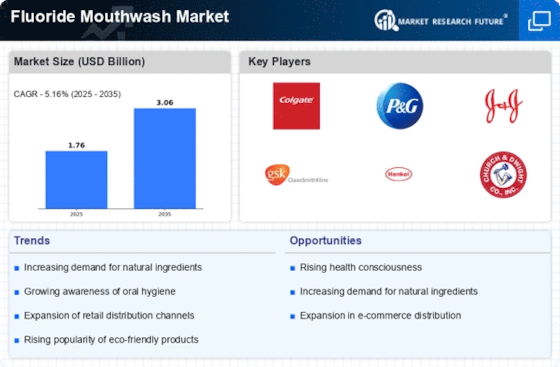
Regulatory bodies across various regions have established guidelines that endorse the use of fluoride in oral care products, which significantly influences the Fluoride Mouthwash Market. These regulations are designed to promote dental health and reduce the incidence of tooth decay, particularly in children and adolescents. For instance, the endorsement of fluoride mouthwash by dental associations has led to increased consumer trust and acceptance. As a result, the market has witnessed a steady growth trajectory, with projections indicating a compound annual growth rate (CAGR) of approximately 5% over the next few years. This regulatory support not only legitimizes fluoride mouthwash but also encourages manufacturers to invest in research and development, further expanding the product offerings available to consumers.
Growing E-commerce Distribution Channels
The expansion of e-commerce platforms is reshaping the distribution landscape for the Fluoride Mouthwash Market. As consumers increasingly turn to online shopping for convenience, the availability of fluoride mouthwash through various e-commerce channels has surged. This shift not only provides consumers with a wider selection of products but also facilitates access to niche brands that may not be available in traditional retail outlets. Data indicates that online sales of oral care products, including fluoride mouthwash, have seen a notable increase, with projections suggesting that e-commerce could account for a significant portion of total sales in the coming years. This trend is likely to encourage manufacturers to enhance their online presence and marketing strategies, thereby driving overall market growth.
Increased Focus on Preventive Healthcare
The rising emphasis on preventive healthcare is a crucial driver for the Fluoride Mouthwash Market. As healthcare systems worldwide shift towards preventive measures, consumers are becoming more proactive in managing their oral health. This trend is reflected in the growing popularity of fluoride mouthwash, which is recognized for its role in preventing dental issues before they arise. Market analysis indicates that consumers are increasingly willing to invest in products that promise long-term health benefits, including fluoride mouthwash. This shift in consumer behavior is likely to propel market growth, as individuals seek effective solutions to maintain their oral hygiene. Furthermore, educational campaigns promoting the benefits of fluoride mouthwash are expected to further enhance consumer adoption.
Technological Advancements in Formulation
Technological innovations in the formulation of fluoride mouthwash are driving the Fluoride Mouthwash Market forward. Advances in dental science have led to the development of more effective and appealing mouthwash products that enhance user experience. For example, the incorporation of natural flavors and ingredients has made fluoride mouthwash more palatable, particularly for children. Additionally, the introduction of specialized formulations targeting specific oral health issues, such as sensitivity or bad breath, has broadened the consumer base. Market data suggests that products with unique selling propositions, such as alcohol-free or organic options, are gaining traction, indicating a shift in consumer preferences. This trend is likely to continue as manufacturers strive to meet the evolving demands of health-conscious consumers.