Rise of Electric and Hybrid Vehicle Sales
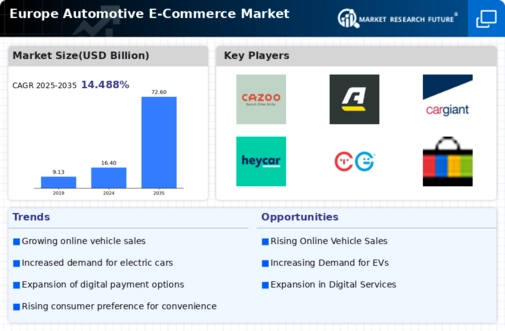
The growing emphasis on sustainability and environmental consciousness is driving the sales of electric and hybrid vehicles within the Europe Automotive Ecommerce Market Industry. As European governments implement stricter emissions regulations and provide incentives for electric vehicle purchases, consumers are increasingly inclined to explore these options online. Data from industry reports suggests that electric vehicle sales in Europe have surged by over 50% in the past year, indicating a robust market shift. This trend not only reflects changing consumer preferences but also presents a lucrative opportunity for e-commerce platforms to cater to the rising demand for eco-friendly vehicles, thereby enhancing their offerings in the Europe Automotive Ecommerce Market Industry.
Regulatory Support for Digital Transactions
The Europe Automotive Ecommerce Market Industry benefits from a favorable regulatory environment that encourages digital transactions. The European Union has implemented various policies aimed at promoting e-commerce, including the Digital Single Market strategy, which seeks to eliminate barriers to online trade. This regulatory support not only facilitates smoother transactions but also instills consumer confidence in online vehicle purchases. Furthermore, the introduction of stringent data protection laws, such as the General Data Protection Regulation (GDPR), ensures that consumer data is handled securely, thereby enhancing trust in the e-commerce ecosystem. Such regulatory frameworks are likely to bolster the growth of the Europe Automotive Ecommerce Market Industry.
Integration of Advanced Digital Technologies
The integration of advanced digital technologies is transforming the landscape of the Europe Automotive Ecommerce Market Industry. Innovations such as augmented reality (AR) and virtual reality (VR) are being utilized to enhance the online shopping experience, allowing consumers to visualize vehicles in a more immersive manner. Additionally, artificial intelligence (AI) is being employed to provide personalized recommendations based on consumer preferences and browsing history. These technological advancements not only improve user engagement but also facilitate informed purchasing decisions. As a result, automotive e-commerce platforms that leverage these technologies are likely to gain a competitive edge, thereby driving growth in the Europe Automotive Ecommerce Market Industry.
Expansion of Online Vehicle Financing Options
The availability of diverse online financing options is emerging as a crucial driver in the Europe Automotive Ecommerce Market Industry. Financial institutions are increasingly offering tailored financing solutions that can be accessed directly through e-commerce platforms. This trend is particularly significant as it allows consumers to secure loans and financing packages without the need for in-person visits to banks or dealerships. According to recent data, nearly 40% of online vehicle buyers in Europe utilize digital financing options, which streamlines the purchasing process and enhances customer satisfaction. Consequently, the expansion of these online financing solutions is likely to further stimulate growth in the Europe Automotive Ecommerce Market Industry.
Increased Consumer Preference for Online Shopping
The Europe Automotive Ecommerce Market Industry is witnessing a notable shift in consumer behavior, with an increasing number of customers preferring online platforms for vehicle purchases. Recent surveys indicate that approximately 60% of European consumers express a preference for online shopping due to its convenience and accessibility. This trend is further fueled by the proliferation of mobile devices and high-speed internet, enabling consumers to browse and compare vehicles from the comfort of their homes. As a result, automotive retailers are increasingly investing in robust e-commerce platforms to cater to this demand, thereby enhancing their market presence and competitiveness in the Europe Automotive Ecommerce Market Industry.