×
Request Free Sample ×

Kindly complete the form below to receive a free sample of this Report

* Please use a valid business email

Leading companies partner with us for data-driven Insights

clients tt-cursor
Hero Background
English
Chinese
French
Japanese
Korean
German
Spanish

Diabetes Market Trends

ID: MRFR/Pharma/2180-HCR
60 Pages
Kinjoll Dey
February 2026

India Diabetes Market information, by Type (Type 1, Type 2, and Gestational diabetes), by Test (Random blood sugar test, Fasting blood sugar test, Oral glucose tolerance test, Initial glucose challenge test and others), by Devices (Blood glucose monitoring devices, Diabetes management devices, and others) by Treatment (Medications, Insulin therapy, Transplantation, Bariatric surgery and others) - Growth & Industry Forecast 2025 To 2035

Share:
Download PDF ×

We do not share your information with anyone. However, we may send you emails based on your report interest from time to time. You may contact us at any time to opt-out.

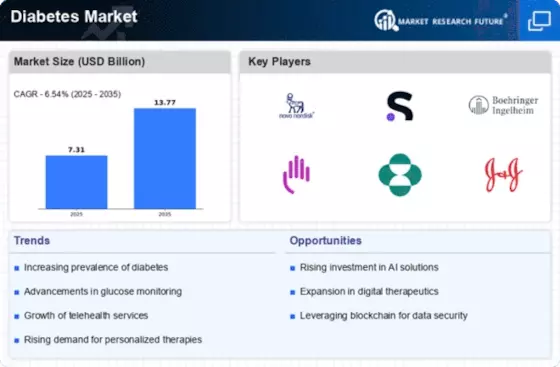
Diabetes Market Infographic
Purchase Options

Market Trends

Key Emerging Trends in the Diabetes Market

More and more people in India are getting diabetes, which is changing the market direction in that area. A larger number of people don't exercise, eat poorly, and have diabetes-prone DNA. This explains the rise in diabetes cases. Now, there is a huge market for things and services related to diabetes because of this. There is good news for the diabetes market in India: more people are learning about it and how important it is to found early. There has been a clear change toward stricter health management thanks to the work of drug companies, healthcare organizations, and government programs. And because of this, more people are being told they have diabetes earlier. There are big changes happening in the market for devices that check glucose levels. These devices are becoming more high-tech. Continuous glucose monitoring (CGM) and smart insulin pens simplify diabetes treatment. This is because they give patients more accurate data that is updated in real time. A lot of people are using this way because it fits with the trend around the world toward personalized and digital health care. New medicines are being made all the time to treat and prevent diabetes. This is a trend in the drug business. There are now more medicines on the market than ever before. These medicines work in more ways and are better at what they do. This new idea is a big step forward because it will make treatments work better and give patients and doctors more choices. A big trend in the Indian market right now is diabetes drugs that don't cost a lot of money. People who are afraid about how much it will cost to treat diabetes can get help from the government and from drug makers and healthcare groups working together. Getting these important diabetes drugs cheaper so that more people can get them is the main goal. The COVID-19 spread has made some people notice that telemedicine and online patient tracking are being used more often. With these tools, you can always keep an eye on your patients and check in on them often. This could make taking care of diabetes easy and better. This is very helpful for people who live in the country or a long way away. More and more, tech companies, healthcare services, and drug companies are likely to connect with each other and work together. The goal of these deals is to make better diabetic care by combining medical knowledge, new technology, and market reach to give people all the help they need. Indian government is trying hard to stop the spread of diabetes. This is clear from the many rules and programs it has set up. This includes efforts to teach people about diabetes, health care programs paid for by the government, and rules that make sure things and services connected to diabetes are of good quality and not too expensive. These things have a big impact on how market trends change over time. AI is being employed in diabetes care, specifically predictive analytics to detect diabetes early and provide personalized treatment programs. AI is being applied in healthcare, revolutionizing diabetic treatment. AI makes healthcare more personalized and effective for everyone.  
Author
Kinjoll Dey
Research Analyst Level I

He is an extremely curious individual currently working in Healthcare and Medical Devices Domain. Kinjoll is comfortably versed in data centric research backed by healthcare educational background. He leverages extensive data mining and analytics tools such as Primary and Secondary Research, Statistical Analysis, Machine Learning, Data Modelling. His key role also involves Technical Sales Support, Client Interaction and Project management within the Healthcare team. Lastly, he showcases extensive affinity towards learning new skills and remain fascinated in implementing them.

Leave a Comment

Market Summary

As per MRFR analysis, the Diabetes Market Size was estimated at 6.86 USD Billion in 2024. The Diabetes industry is projected to grow from 7.31 USD Billion in 2025 to 13.77 USD Billion by 2035, exhibiting a compound annual growth rate (CAGR) of 6.54 during the forecast period 2025 - 2035.

Key Market Trends & Highlights

The Diabetes Market is experiencing transformative growth driven by technological advancements and increasing awareness.

  • Technological advancements in treatment are reshaping diabetes management strategies across various demographics.
  • The rise of digital health solutions is enhancing patient engagement and self-management capabilities in North America.
  • A focus on preventive care and education is becoming increasingly prevalent, particularly in the Asia-Pacific region.
  • The increasing prevalence of diabetes and advancements in diabetes management technologies are major drivers of market growth.

Market Size & Forecast

2024 Market Size 6.86 (USD Billion)
2035 Market Size 13.77 (USD Billion)
CAGR (2025 - 2035) 6.54%
Largest Regional Market Share in 2024 North America

Major Players

<p>Novo Nordisk (DK), Sanofi (FR), Boehringer Ingelheim (DE), Bristol-Myers Squibb (US), Merck & Co. (US), Johnson & Johnson (US), Abbott Laboratories (US), Eli Lilly and Company (US), AstraZeneca (GB)</p>

Market Trends

The Diabetes Market is currently experiencing a dynamic evolution, driven by a confluence of factors including technological advancements, increasing prevalence of diabetes, and heightened awareness regarding disease management. Innovations in treatment modalities, such as continuous glucose monitoring systems and insulin delivery devices, appear to be reshaping patient care. Furthermore, the integration of digital health solutions, including mobile applications and telehealth services, seems to enhance patient engagement and adherence to treatment regimens. This shift towards personalized medicine indicates a potential transformation in how diabetes is managed globally. In addition to technological progress, the rising incidence of diabetes, particularly type two, is prompting stakeholders to explore novel therapeutic options. Public health initiatives aimed at prevention and education are gaining traction, suggesting a collective effort to mitigate the burden of this chronic condition. Moreover, the growing emphasis on lifestyle modifications, such as diet and exercise, indicates a holistic approach to diabetes management. As the Diabetes Market continues to evolve, it is likely that these trends will shape the future landscape of diabetes care, fostering improved outcomes for patients worldwide.

Technological Advancements in Treatment

Recent innovations in diabetes management technologies, such as smart insulin pens and automated insulin delivery systems, are revolutionizing patient care. These advancements facilitate better glycemic control and enhance the quality of life for individuals living with diabetes.

Rise of Digital Health Solutions

The increasing adoption of digital health tools, including mobile health applications and telemedicine platforms, is transforming diabetes management. These solutions promote patient engagement, enabling individuals to monitor their health and communicate with healthcare providers more effectively.

Focus on Preventive Care and Education

There is a growing emphasis on preventive strategies and educational programs aimed at reducing the incidence of diabetes. Public health campaigns and community initiatives are fostering awareness about lifestyle changes that can mitigate risk factors associated with the disease.

Diabetes Market Market Drivers

Increasing Prevalence of Diabetes

The rising incidence of diabetes is a primary driver in the Diabetes Market. According to recent estimates, approximately 537 million adults are living with diabetes, a figure projected to rise to 643 million by 2030. This alarming trend is attributed to factors such as sedentary lifestyles, unhealthy diets, and increasing obesity rates. As the number of diabetes cases escalates, the demand for effective management solutions, including medications, monitoring devices, and educational resources, intensifies. Consequently, healthcare providers and pharmaceutical companies are compelled to innovate and expand their offerings to cater to this growing patient population. The increasing prevalence of diabetes not only highlights the urgent need for comprehensive care but also presents lucrative opportunities for stakeholders within the Diabetes Market.

Government Initiatives and Support

Government initiatives aimed at combating diabetes are playing a crucial role in shaping the Diabetes Market. Various countries are implementing policies and programs to promote awareness, prevention, and management of diabetes. For instance, public health campaigns are being launched to educate citizens about the importance of healthy lifestyles and regular screenings. Additionally, funding for diabetes research and development is increasing, leading to the discovery of new treatments and technologies. In the United States, the National Institute of Diabetes and Digestive and Kidney Diseases allocates substantial resources to diabetes research, which fosters innovation within the industry. These government efforts not only enhance public awareness but also stimulate investment in the Diabetes Market, creating a more robust ecosystem for diabetes care.

Growing Demand for Personalized Medicine

The shift towards personalized medicine is significantly influencing the Diabetes Market. Patients are increasingly seeking tailored treatment options that consider their unique genetic, environmental, and lifestyle factors. This trend is prompting pharmaceutical companies and healthcare providers to develop individualized therapies and management plans. The market for personalized diabetes care is projected to grow substantially, as patients demand more effective and targeted solutions. Moreover, advancements in genomics and biotechnology are facilitating the development of precision medicine approaches, which are expected to enhance treatment efficacy and patient satisfaction. As the focus on personalized care intensifies, the Diabetes Market is likely to adapt and evolve, offering innovative solutions that cater to the diverse needs of patients.

Rising Awareness and Education on Diabetes

The increasing awareness and education surrounding diabetes are driving growth in the Diabetes Market. As more individuals become informed about the risks and complications associated with diabetes, there is a heightened demand for preventive measures and management solutions. Educational programs, workshops, and community initiatives are being implemented to empower patients and healthcare professionals alike. This surge in awareness is reflected in the growing market for diabetes education resources, which is expected to expand significantly in the coming years. Furthermore, the emphasis on self-management and lifestyle modifications is encouraging patients to actively participate in their care, leading to improved health outcomes. As awareness continues to rise, the Diabetes Market is poised for further growth, with an increasing number of stakeholders recognizing the importance of education in diabetes management.

Advancements in Diabetes Management Technologies

Technological innovations are reshaping the Diabetes Market, enhancing the management and treatment of diabetes. Continuous glucose monitoring systems, insulin pumps, and mobile health applications are becoming increasingly prevalent, providing patients with real-time data and improved control over their condition. The market for diabetes management devices is expected to reach USD 27 billion by 2026, driven by the demand for more efficient and user-friendly solutions. These advancements not only facilitate better patient outcomes but also empower individuals to take charge of their health. Furthermore, the integration of artificial intelligence and machine learning into diabetes management tools is anticipated to revolutionize personalized treatment plans, making them more effective and tailored to individual needs. As technology continues to evolve, the Diabetes Market is likely to witness significant growth and transformation.

Market Segment Insights

By Type of Diabetes: Type 2 Diabetes (Largest) vs. Type 1 Diabetes (Fastest-Growing)

<p>The diabetes market is predominantly led by Type 2 Diabetes, which accounts for a significant share of the overall cases globally. Type 2 Diabetes is not just more prevalent but also manifests in a larger number of patient demographics. In contrast, Type 1 Diabetes, while less common, is rapidly gaining attention as healthcare advancements make diagnosis and management more robust. Gestational diabetes, LADA, and MODY contribute to a smaller, yet crucial part of the market, each with unique treatment protocols.</p>

<p>Type 2 Diabetes (Dominant) vs. Type 1 Diabetes (Emerging)</p>

<p>Type 2 Diabetes remains the dominant segment in the diabetes market due to the increasing incidence linked to lifestyle factors and obesity. This segment shows comprehensive management options ranging from lifestyle changes to advanced drugs. Conversely, Type 1 Diabetes is emerging with swift advancements in management technology, such as insulin pumps and continuous glucose monitoring. The growth in Type 1 Diabetes awareness and innovation is evident, reflecting changes in treatment approaches that promise better quality of life for patients. As research continues, Type 1 Diabetes market strategies are becoming increasingly vital.</p>

By Treatment Method: Insulin Therapy (Largest) vs. Continuous Glucose Monitoring (Fastest-Growing)

<p>The diabetes market's treatment methods exhibit diverse strategies, with Insulin Therapy leading in market share due to its established efficacy and widespread adoption among patients. Oral Medications closely follow, leveraging their convenience and growing trust. Dietary Management and Physical Activity remain essential fundamentals in diabetes care, while Continuous Glucose Monitoring is rapidly gaining traction among tech-savvy consumers, reflecting an evolving approach to diabetes management. The overall distribution shows a preference for both traditional and innovative methods, catering to varied patient needs. Growth trends in the diabetes treatment segment are influenced by increasing diabetes prevalence and rising awareness of personalized treatment approaches. Insulin Therapy remains prominent due to ongoing advancements in formulation and delivery. Additionally, the demand for Continuous Glucose Monitoring is accelerating, driven by technological innovations and the integration of digital health solutions, enabling better lifestyle management for those living with diabetes.</p>

<p>Insulin Therapy (Dominant) vs. Continuous Glucose Monitoring (Emerging)</p>

<p>Insulin Therapy has firmly established itself as the dominant treatment method for diabetes, providing essential glucose regulation for many patients, particularly those with Type 1 diabetes. Its market positioning is supported by ongoing research to improve delivery methods and formulations, ensuring greater adherence. Conversely, Continuous Glucose Monitoring represents an emerging trend within the diabetes treatment landscape. As technology advances, these devices empower patients with real-time glucose data, enhancing self-management and individualization of treatment plans. This innovation is rapidly transforming patient engagement and care continuity, making it a compelling alternative for continuous diabetes monitoring. The synergy between traditional insulin therapies and modern monitoring solutions exemplifies the evolving nature of diabetes management.</p>

By Complications: Cardiovascular Disease (Largest) vs. Neuropathy (Fastest-Growing)

<p>In the diabetes market, complications such as cardiovascular disease, neuropathy, nephropathy, retinopathy, and foot ulcers play a significant role in shaping treatment strategies and patient outcomes. Among these, cardiovascular disease stands out as the largest segment, capturing a significant share of the market due to its direct association with diabetes and the rising incidence of heart-related issues among diabetic patients. Neuropathy, while smaller, is growing rapidly as awareness increases regarding its debilitating impact and the necessity for timely interventions.</p>

<p>Cardiovascular Disease (Dominant) vs. Neuropathy (Emerging)</p>

<p>Cardiovascular disease is a dominant complication of diabetes, emphasizing the urgent need for targeted cardiovascular monitoring and management in diabetic patients. This segment remains significant due to the high prevalence of cardiovascular comorbidities in diabetes. On the other hand, neuropathy is emerging as a critical focus area; its rapid growth is driven by increased diagnosis rates and heightened risk awareness among diabetic patients. Neuropathy, often leading to severe complications and impacting quality of life, highlights the need for innovative therapies. Together, these complications require comprehensive management addressing both cardiovascular risks and neuropathic pain.</p>

By Patient Demographics: Adults (Largest) vs. Elderly (Fastest-Growing)

<p>In the Diabetes Market, the patient demographics segment reveals that adults constitute the largest share, governing the market due to their prevalent lifestyle-related complications. On the other hand, the elderly population is witnessing a significant increase in diabetes cases, thus emerging as a critical segment driving market evolution. This demographic shift signifies the need for targeted interventions and market strategies to cater effectively to their unique requirements. Growth trends in the diabetes demographics indicate a robust rise among the elderly, spurred by longer life expectancies and growing awareness of diabetes management. This segment's rapid expansion is also driven by the increasing prevalence of chronic diseases, necessitating specialized diabetes care. Adult populations remain significant, yet the emerging elderly demographic invites innovative solutions to enhance management and improve life quality.</p>

<p>Adults (Dominant) vs. Elderly (Emerging)</p>

<p>The adult segment is dominant in the diabetes market, primarily because of the increasing rates of obesity and sedentary lifestyles that lead to Type 2 diabetes. Adults rely heavily on medication, lifestyle changes, and regular monitoring to manage their condition, making them a substantial focus for healthcare providers and pharmaceutical companies alike. In contrast, the elderly segment is considered emerging due to the rapid rise in diabetes diagnoses linked to aging populations and better screening practices. The elderly often face distinct challenges in diabetes management, including polypharmacy and cognitive decline, therefore representing a growing market requiring tailored interventions. As a result, companies are set to innovate products and services focusing on the elderly patient demographic.</p>

Get more detailed insights about India Diabetes Market Research Report - Forecast To 2035

Regional Insights

North America : Market Leader in Diabetes Care

North America holds a commanding market share of 3.43 in the diabetes sector, driven by increasing prevalence of diabetes and a robust healthcare infrastructure. The region benefits from advanced research and development, leading to innovative treatment options. Regulatory support, including favorable reimbursement policies, further fuels market growth, making it a hub for diabetes management solutions. The United States is the largest market, with significant contributions from key players like Novo Nordisk, Eli Lilly, and Merck & Co. The competitive landscape is characterized by a mix of established pharmaceutical giants and emerging biotech firms. The presence of advanced healthcare facilities and a high level of awareness among patients contribute to the region's dominance in diabetes care.

Europe : Emerging Market with Growth Potential

Europe's diabetes market, valued at 2.0, is experiencing significant growth due to rising diabetes cases and increasing healthcare investments. The region benefits from stringent regulations that ensure high-quality standards in diabetes care. Initiatives aimed at improving patient access to innovative therapies are also driving demand, supported by government health programs and public awareness campaigns. Leading countries like Germany, France, and the UK are at the forefront of this market, with major players such as Sanofi and Boehringer Ingelheim actively participating. The competitive landscape is marked by collaborations between pharmaceutical companies and healthcare providers, enhancing the availability of advanced treatment options. The European Medicines Agency continues to play a crucial role in regulating and approving new diabetes therapies.

Asia-Pacific : Rapidly Growing Diabetes Sector

The Asia-Pacific region, with a market size of 1.2, is witnessing rapid growth in diabetes care driven by increasing urbanization and lifestyle changes. The rising prevalence of diabetes, particularly in countries like China and India, is propelling demand for effective treatment options. Government initiatives aimed at enhancing healthcare infrastructure and promoting awareness are also contributing to market expansion. China and India are the leading countries in this region, with a growing presence of key players such as Abbott Laboratories and Johnson & Johnson. The competitive landscape is evolving, with local companies emerging alongside global giants. The region's diverse healthcare needs and varying regulatory environments present both challenges and opportunities for market participants, making it a dynamic area for diabetes solutions.

Middle East and Africa : Untapped Market with Challenges

The Middle East and Africa (MEA) region, with a market size of 0.23, presents an untapped opportunity in diabetes care. The rising incidence of diabetes, coupled with limited access to healthcare services, poses significant challenges. However, increasing awareness and government initiatives aimed at improving healthcare infrastructure are driving growth in this sector. Regulatory bodies are beginning to implement policies to enhance the availability of diabetes treatments. Countries like South Africa and the UAE are leading the way in diabetes management, with a growing number of healthcare providers entering the market. The competitive landscape is characterized by a mix of local and international players, including AstraZeneca and Bristol-Myers Squibb. As the region continues to develop, the demand for innovative diabetes solutions is expected to rise, creating opportunities for market expansion.

Key Players and Competitive Insights

The Diabetes Market is characterized by a dynamic competitive landscape, driven by increasing prevalence rates and a growing demand for innovative treatment options. Key players such as Novo Nordisk (DK), Sanofi (FR), and Eli Lilly and Company (US) are strategically positioned to leverage their extensive portfolios and research capabilities. Novo Nordisk (DK) focuses on innovation in insulin delivery systems and GLP-1 receptor agonists, while Sanofi (FR) emphasizes partnerships to enhance its diabetes care solutions. Eli Lilly and Company (US) is investing heavily in digital health technologies to improve patient engagement and outcomes. Collectively, these strategies contribute to a competitive environment that prioritizes innovation and patient-centric solutions.

In terms of business tactics, companies are increasingly localizing manufacturing to enhance supply chain resilience and reduce costs. The market structure appears moderately fragmented, with several players vying for market share. However, the collective influence of major companies like Merck & Co. (US) and Johnson & Johnson (US) suggests a trend towards consolidation, as these firms seek to optimize their operations and expand their global reach.

In January 2026, Novo Nordisk (DK) announced a strategic partnership with a leading technology firm to develop a next-generation insulin delivery device. This collaboration is expected to enhance patient adherence and streamline the management of diabetes, reflecting Novo Nordisk's commitment to innovation in diabetes care. The strategic importance of this partnership lies in its potential to set new standards in patient experience and treatment efficacy.

In December 2025, Sanofi (FR) launched a new digital platform aimed at providing personalized diabetes management solutions. This initiative underscores Sanofi's focus on integrating technology into its product offerings, thereby enhancing patient engagement and adherence. The launch is significant as it positions Sanofi as a leader in the digital transformation of diabetes care, potentially reshaping how patients interact with their treatment regimens.

In November 2025, Eli Lilly and Company (US) expanded its global footprint by acquiring a regional diabetes management company. This acquisition is likely to bolster Eli Lilly's market presence and enhance its capabilities in delivering comprehensive diabetes solutions. The strategic importance of this move lies in its potential to accelerate Eli Lilly's growth trajectory and diversify its product offerings in emerging markets.

As of February 2026, current competitive trends in the Diabetes Market are increasingly defined by digitalization, sustainability, and the integration of artificial intelligence (AI) into treatment protocols. Strategic alliances are becoming more prevalent, as companies recognize the value of collaboration in driving innovation. Looking ahead, competitive differentiation is expected to evolve, with a shift from price-based competition to a focus on technological advancements, innovative treatment solutions, and reliable supply chains. This transition may redefine market dynamics, emphasizing the importance of agility and responsiveness in meeting the needs of patients and healthcare providers.

Key Companies in the Diabetes Market include

Industry Developments

February 2024:In February 2024, Roche Diabetes Market Care Launched a new continuous glucose monitoring (CGM) system in India, aiming to improve diabetes management and glycemic control.

Study objectives of India Diabetes Market

  • To provide detailed analysis of the market structure along with forecast for the next 6 years of the various segments and sub-segments of the Indian Diabetes Market
  • To provide insights about factors affecting the market growth
  • To analyze the India Diabetes Market based on various factors - price analysis, supply chain analysis, Porters Five Forces analysis etc.
  • To provide historical and forecast revenue of the market segments and sub-segments
  • To provide detailed analysis of the market with respect to the current market size and future prospective
  • To provide detailed analysis of the market for segments by type, by test, by devices, by treatment, and its sub-segments.
  • To provide overview of key players and their strategic profiling in the market, comprehensively analyzing their core competencies, and drawing a competitive landscape for the market
  • To track and analyze competitive developments such as joint ventures, strategic alliances, mergers and acquisitions, new product developments, and research and developments in the Market

 Intended Audience

  • Hospitals and Clinics
  • Diabetes Market drugs and devices manufacturers
  • Diabetes Market drugs and devices suppliers
  • Government and Independent Regulatory Authorities
  • Research and Development (R&D) Companies
  • Market Research and Consulting Service Providers
  • Medical Research Laboratories
  • Potential Investors

Future Outlook

Diabetes Market Future Outlook

The Diabetes is projected to grow at a 6.54% CAGR from 2024 to 2035, driven by increasing prevalence, technological advancements, and rising healthcare expenditures.

New opportunities lie in:

  • Development of AI-driven diabetes management platforms
  • Expansion of telehealth services for diabetes care
  • Investment in personalized insulin delivery systems

By 2035, the Diabetes Market is expected to be robust, reflecting substantial growth and innovation.

Market Segmentation

Diabetes Market Complications Outlook

  • Cardiovascular Disease
  • Neuropathy
  • Nephropathy
  • Retinopathy
  • Foot Ulcers

Diabetes Market Treatment Method Outlook

  • Insulin Therapy
  • Oral Medications
  • Dietary Management
  • Physical Activity
  • Continuous Glucose Monitoring

Diabetes Market Type of Diabetes Outlook

  • Type 1 Diabetes
  • Type 2 Diabetes
  • Gestational Diabetes
  • LADA
  • MODY

Diabetes Market Patient Demographics Outlook

  • Children
  • Adults
  • Elderly
  • Pregnant Women
  • Obese Individuals

Report Scope

MARKET SIZE 20246.86(USD Billion)
MARKET SIZE 20257.31(USD Billion)
MARKET SIZE 203513.77(USD Billion)
COMPOUND ANNUAL GROWTH RATE (CAGR)6.54% (2024 - 2035)
REPORT COVERAGERevenue Forecast, Competitive Landscape, Growth Factors, and Trends
BASE YEAR2024
Market Forecast Period2025 - 2035
Historical Data2019 - 2024
Market Forecast UnitsUSD Billion
Key Companies ProfiledNovo Nordisk (DK), Sanofi (FR), Boehringer Ingelheim (DE), Bristol-Myers Squibb (US), Merck & Co. (US), Johnson & Johnson (US), Abbott Laboratories (US), Eli Lilly and Company (US), AstraZeneca (GB)
Segments CoveredType of Diabetes, Treatment Method, Complications, Patient Demographics
Key Market OpportunitiesIntegration of digital health solutions enhances patient engagement in the Diabetes Market.
Key Market DynamicsRising prevalence of diabetes drives demand for innovative treatments and technologies, reshaping competitive dynamics in the market.
Countries CoveredNorth America, Europe, APAC, South America, MEA

FAQs

  1. Report Prologue
  2. Introduction
    1. Definition
    2. Scope of the Study
      1. Research Objective
      2. Assumptions
      3. Limitations
    3. Market Structure
    4. Market Segmentation
  3. Research Methodology
    1. Research Process
    2. Primary Research
    3. Secondary Research
    4. Market Size Estimation
    5. Forecast Model
  4. Market Dynamics
    1. Drivers
    2. Restraints
    3. Opportunities
    4. Mega Trends
    5. Macroeconomic Indicators
  5. Market Factor Analysis
    1. Value Chain Analysis
    2. Porters Five Forces
    3. Demand & Supply: Gap Analysis
    4. Pricing Analysis
    5. Investment Opportunity Analysis
    6. Merger and Acquisition Landscape
    7. Upcoming trends
      1. Market trends
      2. Technological trends
      3. Insurance & Regulations
      4. Others
  6. India Diabetes Market by Type
  7. India Diabetes Market by Test
  8. India Diabetes Market by Devices
  9. India Diabetes Market by Treatment
  10. India Diabetes Market by Region
    1. Introduction
    2. Western region
    3. Eastern region
    4. Southern region
    5. Northern region
    6. Central region
  11. LIST OF TABLES
  12. INDIA DIABETES MARKET BY TYPE
  13. INDIA DIABETES MARKET BY TEST
  14. INDIA DIABETES MARKET BY DEVICES
  15. INDIA DIABETES MARKET BY TREATMENT
  16. INDIA DIABETES MARKET BY REGION
  17. LIST OF FIGURES
  18. RESEARCH PROCESS
  19. PORTERS FIVE FORCES MODEL
  20. INDIA DIABETES MARKET BY TYPE
  21. INDIA DIABETES MARKET BY TEST
  22. INDIA DIABETES MARKET BY DEVICES
  23. INDIA DIABETES MARKET BY TREATMENT
  24. INDIA DIABETES MARKET BY REGION
  25. INDIA DIABETES MARKET BY REGION: COMPANY SHARE ANALYSIS, 2020 (%)

India Diabetes Market Segmentation

Market Segmentation Overview

  • Detailed segmentation data will be available in the full report
  • Comprehensive analysis by multiple parameters
  • Regional and country-level breakdowns
  • Market size forecasts by segment
Infographic

Free Sample Request

Kindly complete the form below to receive a free sample of this Report

Get Free Sample

Customer Strories

Compare Licence

×
Features License Type
Single User Multiuser License Enterprise User
Price $4,950 $5,950 $7,250
Maximum User Access Limit 1 User Upto 10 Users Unrestricted Access Throughout the Organization
Free Customization
Direct Access to Analyst
Deliverable Format
Platform Access
Discount on Next Purchase 10% 15% 15%
Printable Versions