×
Request Free Sample ×

Kindly complete the form below to receive a free sample of this Report

* Please use a valid business email

Leading companies partner with us for data-driven Insights

clients tt-cursor
Hero Background

China Infertility Market

ID: MRFR/HC/43848-HCR
200 Pages
Garvit Vyas
February 2026

China Infertility Market Research Report: Size, Share, Trend Analysis By Sex (Males, Females, Unexplained), By Diagnosis (Men Diagnostic Tests, Women Diagnostic Tests, General Diagnostic Test), By Drugs (Clomiphene Citrate, Letrozole, Serophene, Hormone Treatment, Others) andBy Technology (Assisted Reproductive Technology, Intrauterine Insemination, Surgery) - Growth Outlook & Industry Forecast 2025 To 2035

Share:
Download PDF ×

We do not share your information with anyone. However, we may send you emails based on your report interest from time to time. You may contact us at any time to opt-out.

China Infertility Market Infographic
Purchase Options

China Infertility Market Summary

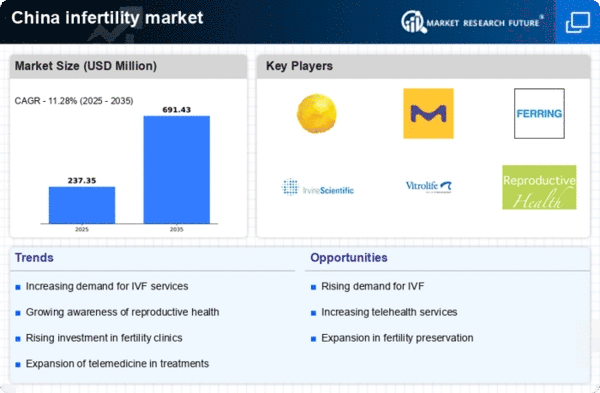
As per Market Research Future analysis, the China infertility market Size was estimated at 213.29 USD Million in 2024. The Infertility market is projected to grow from 237.35 USD Million in 2025 to 691.43 USD Million by 2035, exhibiting a compound annual growth rate (CAGR) of 11.2% during the forecast period 2025 - 2035

Key Market Trends & Highlights

The China infertility market is experiencing robust growth driven by increasing demand and technological advancements.

  • The market is witnessing a rising demand for fertility services, particularly in urban areas.
  • Technological advancements in reproductive treatments are enhancing success rates and patient experiences.
  • Government support and regulation are fostering a more favorable environment for fertility service providers.
  • Key market drivers include increasing awareness of infertility issues and the rising age of parenthood.

Market Size & Forecast

2024 Market Size 213.29 (USD Million)
2035 Market Size 691.43 (USD Million)
CAGR (2025 - 2035) 11.28%

Major Players

CooperSurgical (US), Merck KGaA (DE), Ferring Pharmaceuticals (CH), Irvine Scientific (US), Vitrolife (SE), Reproductive Health Technologies (US), OvaScience (US), Genea Limited (AU)

Our Impact
Enabled $4.3B Revenue Impact for Fortune 500 and Leading Multinationals
Partnering with 2000+ Global Organizations Each Year
30K+ Citations by Top-Tier Firms in the Industry

China Infertility Market Trends

The infertility market in China is currently experiencing notable transformations, driven by a combination of societal changes and advancements in medical technology. Increasing awareness regarding reproductive health has led to a rise in the number of individuals seeking assistance for infertility issues. This trend is further supported by the growing acceptance of assisted reproductive technologies, which are becoming more accessible to a broader segment of the population. As a result, healthcare providers are adapting their services to meet the evolving needs of patients, emphasizing personalized treatment plans and comprehensive care. Moreover, the regulatory environment surrounding the infertility market is evolving, with government initiatives aimed at improving access to fertility treatments. These initiatives may include financial support for couples undergoing treatment and the establishment of more specialized clinics. The integration of innovative technologies, such as artificial intelligence and telemedicine, is also likely to enhance patient experiences and outcomes. Overall, the landscape of the infertility market in China appears to be shifting towards a more patient-centered approach, reflecting broader trends in healthcare that prioritize quality and accessibility.

Rising Demand for Fertility Services

There is an increasing demand for fertility services in China, driven by changing societal norms and a growing awareness of reproductive health. Couples are more willing to seek medical assistance for infertility issues, leading to a surge in consultations and treatments. This trend indicates a shift towards proactive health management, where individuals prioritize their reproductive health.

Technological Advancements in Treatment

The infertility market is witnessing rapid technological advancements that enhance treatment efficacy. Innovations such as improved in vitro fertilization techniques and genetic screening are becoming more prevalent. These advancements not only increase success rates but also provide patients with more options tailored to their specific needs.

Government Support and Regulation

Government initiatives are playing a crucial role in shaping the infertility market. Policies aimed at increasing access to fertility treatments and financial support for couples are being implemented. This regulatory support is likely to foster a more robust market environment, encouraging the establishment of specialized clinics and services.

China Infertility Market Drivers

Rising Age of Parenthood

The trend of delayed parenthood in China is significantly impacting the infertility market. As individuals prioritize education and career advancement, many are choosing to start families later in life. This shift has resulted in a higher incidence of infertility, as fertility rates decline with age. Data indicates that women aged 30 and above are increasingly seeking fertility treatments, contributing to a growing market. The infertility market is responding to this demographic change by offering tailored services that cater to older parents. This trend not only highlights the need for advanced reproductive technologies but also suggests a potential for growth in the market as more individuals seek assistance in overcoming age-related fertility challenges.

Government Initiatives and Policies

Government initiatives and policies aimed at addressing infertility issues are playing a pivotal role in shaping the infertility market in China. Recent policies have focused on improving access to fertility treatments and supporting research in reproductive health. For example, the government has introduced subsidies for certain fertility treatments, making them more affordable for couples. This financial support is likely to increase the number of individuals seeking assistance, thereby expanding the market. Additionally, regulatory frameworks are being established to ensure the quality and safety of fertility services. As these initiatives continue to evolve, they are expected to further stimulate growth in the infertility market, creating a more supportive environment for those facing infertility challenges.

Cultural Shifts Towards Family Planning

Cultural shifts in China regarding family planning are influencing the infertility market. Traditionally, there has been a strong emphasis on having children, but changing societal values are leading to a more nuanced understanding of family dynamics. As couples navigate their personal and professional lives, the decision to seek fertility assistance is becoming more common. This cultural evolution is fostering an environment where infertility treatments are increasingly accepted and sought after. The infertility market is adapting to these changes by providing a range of services that align with modern family planning needs. This shift not only reflects changing attitudes but also indicates a potential for growth as more individuals recognize the importance of reproductive health.

Advancements in Reproductive Technologies

Technological innovations in reproductive health are transforming the infertility market in China. The introduction of advanced techniques such as in vitro fertilization (IVF), intracytoplasmic sperm injection (ICSI), and preimplantation genetic testing (PGT) has expanded treatment options for couples facing infertility. These advancements have led to improved success rates, making fertility treatments more appealing. For instance, the success rate of IVF has reportedly increased to around 50% for women under 35, which is a significant factor driving demand. As technology continues to evolve, the infertility market is likely to witness further enhancements in treatment efficacy and patient experience, thereby attracting more individuals seeking solutions to their fertility challenges.

Increasing Awareness of Infertility Issues

The growing awareness of infertility issues among the population in China is a crucial driver for the infertility market. As societal norms evolve, more individuals and couples are openly discussing their struggles with infertility. This shift in perception is leading to increased demand for fertility services and treatments. According to recent data, approximately 15% of couples in China experience infertility, which has prompted healthcare providers to enhance their offerings. The rise in awareness is also encouraging educational campaigns that inform the public about available options, thereby expanding the market. Furthermore, as more people seek assistance, the infertility market is likely to see a surge in both demand and innovation in treatment options.


Market Segment Insights

By Type: Assisted Reproductive Technology (Largest) vs. Hormone Therapy (Fastest-Growing)

In the China infertility market, the segment distribution showcases Assisted Reproductive Technology (ART) as the dominant player, holding a substantial market share. Following closely are Hormone Therapy, Surgery, and Fertility Preservation, each contributing to the overall market dynamics. ART's broad acceptance and advanced techniques have positioned it as a frontrunner, appealing to those seeking effective infertility solutions. Growth trends indicate a significant shift toward Hormone Therapy, which is emerging as the fastest-growing segment within this market. The rising awareness of fertility health and advancements in medical technologies are driving demand for both ART and Hormone Therapy. Moreover, increasing investments in fertility research and treatment options are expected to further enhance growth prospects across all segments, driven by the growing societal acceptance of assisted reproductive solutions.

Assisted Reproductive Technology (Dominant) vs. Hormone Therapy (Emerging)

Assisted Reproductive Technology (ART) represents the dominant force in the China infertility market, characterized by a wide array of procedures such as in vitro fertilization (IVF) and artificial insemination. This segment benefits from established practices and strong patient trust, resulting in high adoption rates. Meanwhile, Hormone Therapy is rapidly emerging, with treatments focused on hormonal imbalances being recognized as an effective solution for infertility. The increasing prevalence of hormonal disorders among the population and a greater emphasis on personalized medicine are propelling this segment into the spotlight. As both segments evolve, ART remains the standard for assisted reproductive methods, whereas Hormone Therapy is quickly gaining traction among those seeking innovative treatments.

By End User: Fertility Clinics (Largest) vs. Hospitals (Fastest-Growing)

In the China infertility market, Fertility Clinics hold a significant share of the market, making them the largest end user segment. Their specialized services and patient-focused approaches attract a larger patient base compared to other categories. Hospitals, although traditionally dominant in healthcare, are witnessing a shift as Fertility Clinics enhance their capabilities with advanced reproductive technologies and treatments. Growth trends in this segment are largely driven by increasing awareness of reproductive health and a rise in infertility issues. Fertility Clinics are expanding rapidly due to favorable regulations and improving technologies, making services more accessible. Meanwhile, Hospitals are adapting to these changes by integrating fertility services, positioning themselves as emerging players in this dynamic market landscape.

Fertility Clinics (Dominant) vs. Hospitals (Emerging)

Fertility Clinics are regarded as the dominant end users within the China infertility market due to their focus on specialized treatments such as IVF and ICSI. They cater primarily to individuals seeking advanced reproductive assistance, often providing personalized care that enhances patient satisfaction and outcomes. Conversely, Hospitals, while traditionally dominant in patient care, are emerging within this sector by gradually incorporating fertility treatment services into their broader healthcare offerings. This adaptation allows Hospitals to leverage their existing infrastructure and patient networks, although they still face competition from the more specialized and patient-centric approaches adopted by Fertility Clinics. As such, the landscape is evolving, with Fertility Clinics maintaining a strong lead.

By Gender: Female (Largest) vs. Male (Fastest-Growing)

In the China infertility market, the female segment commands a substantial share, reflecting the significant focus on women's health and reproductive services. This dominance is primarily attributed to societal norms and the increasing awareness of female infertility issues, leading to higher demand for treatments and support services. Conversely, the male infertility segment is emerging as the fastest-growing area, driven by rising awareness and acceptance regarding male fertility issues. As more couples seek fertility services, men are increasingly getting diagnosed and treated, which indicates a shift in the conversation around infertility and a growing market for male-targeted solutions.

Gender: Female (Dominant) vs. Male (Emerging)

The female segment in the China infertility market is characterized by a robust demand for a diverse range of reproductive health services, including fertility treatments, counseling, and preventive care. Women often take the initiative in seeking help, influenced by cultural expectations to have children. This segment remains dominant due to its established services and educational campaigns that target women's health. In contrast, the male segment is emerging as a key player, with an increasing number of men undergoing fertility assessments and treatments. This shift is motivated by improved awareness of male infertility, changing societal attitudes, and greater involvement of men in family planning, making it a crucial focus for future growth in the market.

By Cause of Infertility: Ovulatory Disorders (Largest) vs. Male Factor Infertility (Fastest-Growing)

In the China infertility market, the segment of Ovulatory Disorders continues to hold the largest market share due to its widespread prevalence among women facing infertility issues. This segment is significantly impacted by various factors such as hormonal imbalances and lifestyle choices, contributing to its substantial representation in the overall market. On the other hand, Male Factor Infertility, although currently smaller in share, is rapidly gaining recognition and attention as more studies highlight its impact on fertility rates, leading to an increase in diagnosis and treatment options. The growth trends in the China infertility market indicate a shifting focus towards addressing Male Factor Infertility, which is expected to become a larger part of the market share as awareness and acceptance improve. Factors such as increased male infertility screenings, advancements in reproductive technologies, and societal changes regarding male health contribute to this growth. Meanwhile, Ovulatory Disorders will continue to be a core area of treatment, driven by ongoing research and developments in fertility medication and therapies.

Ovulatory Disorders (Dominant) vs. Male Factor Infertility (Emerging)

Ovulatory Disorders represent the dominant segment in the China infertility market, primarily caused by conditions such as polycystic ovary syndrome (PCOS) and irregular menstrual cycles. The market for Ovulatory Disorders is characterized by a wide range of treatments, including hormonal therapies and lifestyle interventions, making it a focal point for many patients. Moreover, healthcare providers are increasingly adopting personalized treatment plans to enhance success rates. Conversely, Male Factor Infertility is an emerging segment that is gaining momentum as more men seek help for fertility issues. This emergence is fueled by greater awareness of male health issues and the stigma associated with infertility being acknowledged. As a result, advances in treatments like sperm retrieval techniques and in vitro fertilization (IVF) tailored to male factor issues are shaping this evolving landscape.

Get more detailed insights about China Infertility Market

Key Players and Competitive Insights

The infertility market in China is characterized by a dynamic competitive landscape, driven by increasing awareness of reproductive health and advancements in assisted reproductive technologies (ART). Key players such as CooperSurgical (US), Merck KGaA (DE), and Ferring Pharmaceuticals (CH) are strategically positioned to leverage these growth drivers. CooperSurgical (US) focuses on innovation in reproductive health solutions, while Merck KGaA (DE) emphasizes research and development to enhance its product offerings. Ferring Pharmaceuticals (CH) is actively pursuing partnerships to expand its market reach, collectively shaping a competitive environment that is increasingly focused on technological advancements and patient-centric solutions.The business tactics employed by these companies include localizing manufacturing and optimizing supply chains to enhance operational efficiency. The market structure appears moderately fragmented, with several key players exerting influence over various segments. This fragmentation allows for a diverse range of products and services, catering to the specific needs of consumers while fostering competition among established and emerging players.

In October Merck KGaA (DE) announced a strategic partnership with a leading Chinese fertility clinic to enhance its service offerings in the region. This collaboration is expected to facilitate the integration of advanced ART technologies, thereby improving patient outcomes and expanding Merck's footprint in the Chinese market. Such partnerships are indicative of a broader trend towards localized solutions that address specific regional needs.

In September Ferring Pharmaceuticals (CH) launched a new fertility treatment that utilizes cutting-edge gene editing technology. This innovative approach not only positions Ferring as a leader in the field but also reflects a growing trend towards personalized medicine in reproductive health. The introduction of such advanced therapies may significantly alter treatment paradigms and enhance patient satisfaction.

In August CooperSurgical (US) expanded its product line by acquiring a startup specializing in digital health solutions for fertility tracking. This acquisition underscores the increasing importance of digital tools in the infertility market, as patients seek more accessible and user-friendly options for managing their reproductive health. The integration of technology into traditional fertility treatments is likely to enhance patient engagement and improve overall treatment efficacy.

As of November current competitive trends in the infertility market include a pronounced shift towards digitalization, sustainability, and the integration of artificial intelligence (AI) in treatment protocols. Strategic alliances are becoming increasingly vital, as companies recognize the need to collaborate to stay competitive in a rapidly evolving landscape. Looking ahead, competitive differentiation is expected to evolve from traditional price-based competition to a focus on innovation, technological advancements, and supply chain reliability, ultimately enhancing patient care and outcomes.

Key Companies in the China Infertility Market include

Industry Developments

In recent developments within the China Infertility Market, organizations like Yinsheng Biotechnology and Fujian Medical University have noted distinct expansion in fertility treatment services, driven by increasing public awareness and support from governmental initiatives aimed at addressing declining birth rates. Beijing Chaoyang Hospital and Shandong Zhongke have also ramped up innovation in assisted reproductive technology, with government backing enhancing funding for cutting-edge research. In July 2023, it was announced that Hunan Dahu entered a collaborative agreement with Shanghai Ninth People's Hospital to enhance research into reproductive health, indicating a trend towards strategic partnerships in the sector.

Moreover, significant growth in the market valuation of artificial reproductive technologies is observed as companies like Guangzhou Huayuan and Beijing Eucare have integrated advancements in genetic screening and embryo analysis, bolstering their competitive edge. The period from late 2021 to 2022 saw a surge in demand for fertility treatments, attributed to greater societal acceptance. This reflects the imperative shift in public health priorities in China amidst demographic challenges, showcasing the resilience and responsiveness of the infertility market to evolving socio-economic dynamics.

Future Outlook

China Infertility Market Future Outlook

The Infertility Market in China is projected to grow at 11.28% CAGR from 2025 to 2035, driven by increasing awareness, technological advancements, and rising infertility rates.

New opportunities lie in:

  • Development of telehealth platforms for remote consultations
  • Investment in AI-driven fertility diagnostics
  • Expansion of fertility preservation services for cancer patients

By 2035, the infertility market is expected to achieve substantial growth and innovation.

Market Segmentation

China Infertility Market Type Outlook

  • Assisted Reproductive Technology
  • Hormone Therapy
  • Surgery
  • Fertility Preservation

China Infertility Market Gender Outlook

  • Female
  • Male

China Infertility Market End User Outlook

  • Hospitals
  • Fertility Clinics
  • Home Care Settings

China Infertility Market Cause of Infertility Outlook

  • Ovulatory Disorders
  • Uterine or Cervical Abnormalities
  • Tubal Factors
  • Male Factor Infertility

Report Scope

MARKET SIZE 2024213.29(USD Million)
MARKET SIZE 2025237.35(USD Million)
MARKET SIZE 2035691.43(USD Million)
COMPOUND ANNUAL GROWTH RATE (CAGR)11.28% (2025 - 2035)
REPORT COVERAGERevenue Forecast, Competitive Landscape, Growth Factors, and Trends
BASE YEAR2024
Market Forecast Period2025 - 2035
Historical Data2019 - 2024
Market Forecast UnitsUSD Million
Key Companies ProfiledCooperSurgical (US), Merck KGaA (DE), Ferring Pharmaceuticals (CH), Irvine Scientific (US), Vitrolife (SE), Reproductive Health Technologies (US), OvaScience (US), Genea Limited (AU)
Segments CoveredType, End User, Gender, Cause of Infertility
Key Market OpportunitiesEmerging technologies in assisted reproductive techniques enhance accessibility in the infertility market.
Key Market DynamicsRising demand for assisted reproductive technologies drives innovation and competition in the infertility market.
Countries CoveredChina
Leave a Comment

FAQs

What is the projected market size of the China Infertility Market in 2024?

The China Infertility Market is projected to be valued at 153.0 million USD in 2024.

What is the expected value of the China Infertility Market by 2035?

By 2035, the China Infertility Market is expected to reach a value of 1197.0 million USD.

What is the expected CAGR for the China Infertility Market from 2025 to 2035?

The expected CAGR for the China Infertility Market from 2025 to 2035 is 20.564%.

How is the male segment of the China Infertility Market valued in 2024?

In 2024, the male segment of the China Infertility Market is valued at 46.0 million USD.

What is the market size for the female segment in the China Infertility Market in 2035?

The female segment is expected to reach a value of 615.0 million USD in 2035.

What are some key players in the China Infertility Market?

Major players in the China Infertility Market include Yinsheng Biotechnology, Fujian Medical University, and Beijing Chaoyang Hospital.

What is the market size for the unexplained infertility segment in 2024?

The unexplained infertility segment is valued at 28.0 million USD in 2024.

What is the growth trend for the male infertility market segment by 2035?

By 2035, the male infertility market segment is forecasted to grow to 365.0 million USD.

What is a significant growth driver for the China Infertility Market?

Increasing awareness and advancements in infertility treatments drive growth in the China Infertility Market.

How does the unexplained segment's value change from 2024 to 2035?

The unexplained segment is expected to grow from 28.0 million USD in 2024 to 217.0 million USD by 2035.

Download Free Sample

Kindly complete the form below to receive a free sample of this Report

Compare Licence

×
Features License Type
Single User Multiuser License Enterprise User
Price $4,950 $5,950 $7,250
Maximum User Access Limit 1 User Upto 10 Users Unrestricted Access Throughout the Organization
Free Customization
Direct Access to Analyst
Deliverable Format
Platform Access
Discount on Next Purchase 10% 15% 15%
Printable Versions