×
Request Free Sample ×

Kindly complete the form below to receive a free sample of this Report

* Please use a valid business email

Leading companies partner with us for data-driven Insights

clients tt-cursor
Hero Background

China Astaxanthin Market

ID: MRFR/FnB/46605-HCR
200 Pages
Varsha More
February 2026

China Astaxanthin Market Size, Share, Industry Trend & Analysis Research Report By Source (Natural, Synthetic), By Form (Dry, Liquid) and By Application (Food and Beverages, Pharmaceutical and Nutraceuticals, Animal Feed, Personal Care, Others)-Forecast to 2035

Share:
Download PDF ×

We do not share your information with anyone. However, we may send you emails based on your report interest from time to time. You may contact us at any time to opt-out.

China Astaxanthin Market Infographic
Purchase Options

China Astaxanthin Market Summary

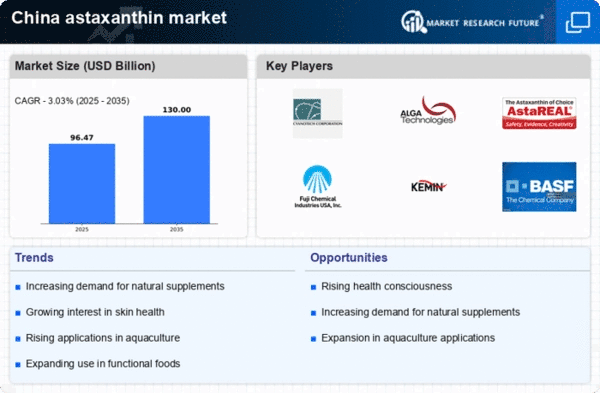
As per Market Research Future analysis, the China astaxanthin market Size was estimated at 93.63 USD Billion in 2024. The China astaxanthin market is projected to grow from 96.47 USD Billion in 2025 to 130.0 USD Billion by 2035, exhibiting a compound annual growth rate (CAGR) of 3.0% during the forecast period 2025 - 2035

Key Market Trends & Highlights

The China astaxanthin market is experiencing robust growth driven by health trends and technological advancements.

  • The demand for natural antioxidants is rising, reflecting a broader consumer shift towards health-conscious products.
  • The aquaculture sector is expanding, positioning itself as the largest segment for astaxanthin consumption in China.
  • Technological advancements in production are likely to enhance the efficiency and quality of astaxanthin, supporting market growth.
  • Growing health consciousness and the rising popularity in sports nutrition are key drivers propelling the market forward.

Market Size & Forecast

2024 Market Size 93.63 (USD Billion)
2035 Market Size 130.0 (USD Billion)
CAGR (2025 - 2035) 3.03%

Major Players

Cyanotech Corporation (US), Algatechnologies Ltd. (IL), AstaReal AB (SE), Fuji Chemical Industry Co., Ltd. (JP), Kemin Industries, Inc. (US), BASF SE (DE), Zhejiang Medicine Co., Ltd. (CN), Nutraceutical Corporation (US)

Our Impact
Enabled $4.3B Revenue Impact for Fortune 500 and Leading Multinationals
Partnering with 2000+ Global Organizations Each Year
30K+ Citations by Top-Tier Firms in the Industry

China Astaxanthin Market Trends

The astaxanthin market is currently experiencing notable growth, driven by increasing consumer awareness regarding health benefits associated with this carotenoid. Astaxanthin, recognized for its antioxidant properties, is gaining traction in dietary supplements, cosmetics, and functional foods. The rising demand for natural ingredients in various sectors, particularly in health and wellness, appears to be a significant factor influencing market dynamics. Furthermore, the expansion of the aquaculture industry in China is likely to bolster the utilization of astaxanthin in fish feed, enhancing the nutritional value of farmed seafood. In addition, the regulatory environment in China seems to be evolving, with authorities focusing on the safety and efficacy of health products. This regulatory scrutiny may lead to higher quality standards, which could benefit reputable manufacturers in the astaxanthin market. As consumers increasingly seek transparency and quality in their purchases, companies that adhere to stringent regulations may gain a competitive edge. Overall, the astaxanthin market is poised for continued expansion, driven by health trends and regulatory developments.

Rising Demand for Natural Antioxidants

There is a growing preference among consumers for natural ingredients, particularly antioxidants, in dietary supplements and cosmetics. This trend is likely to enhance the appeal of astaxanthin, as it is derived from natural sources such as microalgae. The shift towards clean label products may further support the market's growth.

Expansion in Aquaculture Sector

The aquaculture industry in China is expanding, leading to increased demand for astaxanthin as a feed additive. This carotenoid is essential for enhancing the color and nutritional value of farmed fish and shrimp. As aquaculture continues to grow, the need for quality feed ingredients like astaxanthin is expected to rise.

Evolving Regulatory Landscape

The regulatory framework surrounding health products in China is becoming more stringent. This evolution may result in higher quality standards for astaxanthin products, benefiting manufacturers that comply with these regulations. As consumers prioritize safety and efficacy, adherence to regulatory guidelines could enhance market competitiveness.

China Astaxanthin Market Drivers

Growing Health Consciousness

The increasing awareness of health and wellness among consumers in China appears to be a significant driver for the astaxanthin market. As individuals become more health-conscious, they are actively seeking natural supplements that offer antioxidant properties. Astaxanthin, known for its potential health benefits, is gaining traction among consumers looking to enhance their overall well-being. Market data indicates that the demand for dietary supplements in China has surged, with a growth rate of approximately 10% annually. This trend suggests that the astaxanthin market is likely to benefit from the rising inclination towards preventive healthcare and natural products, as consumers prioritize their health and seek out effective solutions.

Expansion of E-commerce Platforms

The growth of e-commerce platforms in China is transforming the way consumers access health products, including those in the astaxanthin market. With the increasing penetration of the internet and mobile devices, consumers are more inclined to purchase health supplements online. This shift towards digital shopping is facilitating greater accessibility to astaxanthin products, allowing consumers to compare options and make informed choices. Data indicates that online sales of health supplements have increased by over 30% in recent years. Consequently, the astaxanthin market is likely to benefit from this trend, as e-commerce provides a convenient avenue for consumers to explore and purchase astaxanthin products.

Rising Popularity in Sports Nutrition

The astaxanthin market is witnessing a notable increase in demand from the sports nutrition sector in China. Athletes and fitness enthusiasts are increasingly turning to natural supplements to enhance their performance and recovery. Astaxanthin is recognized for its potential to reduce exercise-induced oxidative stress and improve endurance. Market Research Future indicates that the sports nutrition segment is expanding rapidly, with a projected growth rate of around 12% annually. This trend suggests that the astaxanthin market could see a significant boost as more consumers incorporate astaxanthin into their fitness regimens, driven by the desire for improved athletic performance and recovery.

Technological Advancements in Production

Innovations in the production processes of astaxanthin are likely to play a crucial role in shaping the astaxanthin market in China. Advances in biotechnology and extraction methods have improved the efficiency and yield of astaxanthin production, making it more accessible to manufacturers. For instance, the development of fermentation technology has enabled the production of astaxanthin from microalgae, which is not only sustainable but also cost-effective. This shift towards more efficient production methods could potentially lower prices and increase the availability of astaxanthin products in the market. As a result, the astaxanthin market may experience enhanced growth as manufacturers capitalize on these technological advancements to meet the rising consumer demand.

Growing Interest in Preventive Healthcare

The astaxanthin market is being positively influenced by the rising interest in preventive healthcare among the Chinese population. As healthcare costs continue to rise, consumers are increasingly seeking ways to maintain their health and prevent chronic diseases. Astaxanthin, with its antioxidant properties, is perceived as a valuable supplement for supporting overall health and wellness. Market data suggests that the preventive healthcare segment is expanding, with a growth rate of approximately 8% annually. This trend indicates that the astaxanthin market may experience increased demand as consumers prioritize preventive measures and seek natural solutions to enhance their health.


Market Segment Insights

By Source: Natural (Largest) vs. Synthetic (Fastest-Growing)

In the China astaxanthin market, the source segment predominantly comprises natural astaxanthin, which captures a significant share of the market due to its health benefits and consumer preference for natural products. Natural astaxanthin is favored in the nutraceutical and cosmetic industries, making it a leading choice among manufacturers and consumers alike. Conversely, synthetic astaxanthin holds a smaller market share but is gaining traction as an affordable alternative, particularly in animal feed and aquaculture applications. This dynamic creates a diverse marketplace where both sources coexist, catering to different consumer needs and industry applications. The growth trajectory for the source segment is particularly influenced by rising health consciousness among consumers, along with an increase in applications of astaxanthin across various industries. The natural segment is driven by a boom in organic and natural product trends, while the synthetic segment is escalating due to advancements in production technologies and the need for cost-effective solutions in large-scale applications. As awareness of the benefits of astaxanthin expands, both segments are poised for growth, although natural astaxanthin is likely to maintain a leading position while synthetic astaxanthin emerges as a competitive alternative.

Natural (Dominant) vs. Synthetic (Emerging)

Natural astaxanthin is characterized by its extraction from algae and yeast, making it a preferred choice in the health supplement and cosmetic sectors where consumers prioritize natural ingredients. This dominance is reinforced by rigorous quality standards and the growing demand for organic certifications. Moreover, natural sources boast superior bioavailability, enhancing their appeal. On the other hand, synthetic astaxanthin, produced through chemical synthesis, is rapidly emerging due to its cost-effectiveness, particularly for bulk applications in aquaculture and animal feed. Although still considered a secondary option, advancements in synthetic production methods are improving its acceptance and market positioning. As trends evolve, the dynamic interplay between these sources will shape the future landscape of the segment.

By Form: Dry (Largest) vs. Liquid (Fastest-Growing)

In the China astaxanthin market, the dry form holds the largest market share, benefitting from its extended shelf life and ease of transport. The preference for dry astaxanthin is driven by its stable formulation, making it ideal for various food and dietary supplements. On the other hand, the liquid form, while currently a smaller segment, is rapidly gaining traction, especially among manufacturers who favor its versatility in applications ranging from cosmetic products to functional beverages. Growth trends in the form segment are notably influenced by changing consumer preferences, with a shift towards more natural and health-conscious products. The liquid segment is poised for growth due to increasing interest in innovative delivery forms that enhance bioavailability. Environmental considerations are also playing a role, as companies seek eco-friendly packaging solutions that align with liquid astaxanthin’s properties, making it appealing to a broader audience.

Dry (Dominant) vs. Liquid (Emerging)

The dry form of astaxanthin is dominating the market due to its advantages in stability and convenience. Manufacturers favor dry formulations for their ease of handling and incorporation into various products without compromising quality. On the other hand, the liquid form is emerging as a competitive alternative, particularly in niche markets focusing on premium and functional products. Liquid astaxanthin offers unique benefits like better absorption, attracting health-conscious consumers and innovative product developers. As the demand for diverse applications grows, both segments are likely to coexist, catering to different market needs and preferences.

By Application: Food and Beverages (Largest) vs. Pharmaceutical and Nutraceuticals (Fastest-Growing)

The application segment of the China astaxanthin market showcases a diverse distribution among its values, with 'Food and Beverages' leading in market share. This sector's preference for natural colors and health benefits contributes significantly to its dominance. Conversely, the 'Pharmaceutical and Nutraceuticals' segment is rapidly gaining traction, owing to increasing consumer awareness and demand for health supplements enriched with astaxanthin. Growth trends within the application segment are propelled by multifaceted drivers. The rising health consciousness among consumers fuels the demand for astaxanthin as a functional ingredient in food and beverages. Simultaneously, the pharmaceutical and nutraceutical sectors experience robust growth as they innovate with natural antioxidants, tapping into the growing wellness market, thus creating new opportunities for expansion and investment.

Food and Beverages: Dominant vs. Pharmaceutical and Nutraceuticals: Emerging

The 'Food and Beverages' application remains dominant within the China astaxanthin market, characterized by strong consumer preference for natural additives that enhance flavor and health benefits. This sector leverages astaxanthin for its antioxidant properties, primarily in beverages, snacks, and functional foods. Meanwhile, the 'Pharmaceutical and Nutraceuticals' segment is emerging as a pivotal player, driven by the increasing integration of astaxanthin in dietary supplements and health products aimed at improving overall wellness. This shift highlights a significant trend where consumers prioritize natural health solutions, indicating a promising future for both segments as they evolve to meet changing consumer demands.

Get more detailed insights about China Astaxanthin Market

Key Players and Competitive Insights

The astaxanthin market exhibits a dynamic competitive landscape characterized by a blend of innovation, strategic partnerships, and regional expansion. Key players such as Cyanotech Corporation (US), AstaReal AB (SE), and Zhejiang Medicine Co., Ltd. (CN) are actively shaping the market through their distinct operational focuses. Cyanotech Corporation (US) emphasizes sustainable production methods, leveraging its expertise in microalgae cultivation to enhance product quality. AstaReal AB (SE) positions itself as a leader in research and development, focusing on the health benefits of astaxanthin, which informs its marketing strategies. Meanwhile, Zhejiang Medicine Co., Ltd. (CN) is expanding its manufacturing capabilities to meet the growing domestic demand, indicating a shift towards localized production to enhance supply chain efficiency.The business tactics employed by these companies reflect a moderately fragmented market structure, where localized manufacturing and supply chain optimization are pivotal. The collective influence of these key players fosters a competitive environment that encourages innovation and responsiveness to market demands. As companies strive to differentiate themselves, the focus on sustainable practices and technological advancements becomes increasingly pronounced, shaping the overall market dynamics.

In September Cyanotech Corporation (US) announced a partnership with a leading health supplement brand to develop a new line of astaxanthin-based products. This collaboration is expected to enhance Cyanotech's market reach and leverage the partner's distribution network, thereby increasing product accessibility. The strategic importance of this partnership lies in its potential to tap into the growing consumer interest in natural health products, aligning with market trends towards holistic wellness.

In October AstaReal AB (SE) launched a new research initiative aimed at exploring the cognitive benefits of astaxanthin. This initiative not only reinforces AstaReal's commitment to scientific research but also positions the company at the forefront of emerging health trends. By focusing on cognitive health, AstaReal is likely to attract a new demographic of health-conscious consumers, thereby expanding its market share.

In August Zhejiang Medicine Co., Ltd. (CN) unveiled plans to invest in advanced extraction technologies to enhance the purity and efficacy of its astaxanthin products. This investment underscores the company's commitment to quality and innovation, which are critical in a market where consumers are increasingly discerning about product ingredients. By improving extraction processes, Zhejiang Medicine aims to solidify its competitive edge in the domestic market.

As of November the astaxanthin market is witnessing trends that emphasize digitalization, sustainability, and the integration of AI technologies. Strategic alliances are becoming a cornerstone of competitive strategy, enabling companies to pool resources and expertise. The shift from price-based competition to a focus on innovation and supply chain reliability is evident, suggesting that future differentiation will hinge on technological advancements and sustainable practices. Companies that can effectively navigate these trends are likely to emerge as leaders in the evolving landscape.

Key Companies in the China Astaxanthin Market include

Industry Developments

The China Astaxanthin Market has seen notable developments recently, driven by increasing health awareness and demand for natural supplements. Companies such as Haematococcus pluvialis and AstaReal are expanding their production capacities to accommodate growing consumer preferences for natural astaxanthin. In September 2023, Kemin Industries announced plans to enhance its product line targeting the nutraceutical sector in China, signifying increasing competition. Growth in market valuation is reflected in reports indicating a compound annual growth rate projected at around 12% from 2023 to 2026, significantly impacting investments in production technologies among companies like Shaanxi YiHua BioTech and Jiangsu Huayu Agrochemical.

Major happenings include the establishment of a joint venture in March 2022 between Cyanotech and a local firm, aiming to increase resource accessibility and market penetration in China. Furthermore, Hunan Mking Biotechnology is exploring partnerships to facilitate product distribution across Asian markets, reinforcing the importance of collaborative strategies in the region. With the government promoting health-oriented policies, the astaxanthin sector in China is poised for substantial growth, attracting both domestic and international players.

Future Outlook

China Astaxanthin Market Future Outlook

The Astaxanthin Market in China is projected to grow at a 3.03% CAGR from 2025 to 2035, driven by increasing health awareness and demand in nutraceuticals.

New opportunities lie in:

  • Develop premium astaxanthin supplements targeting athletes and fitness enthusiasts.
  • Expand distribution channels through e-commerce platforms for wider market reach.
  • Invest in R&D for innovative astaxanthin applications in cosmetics and skincare products.

By 2035, the astaxanthin market is expected to achieve robust growth, reflecting evolving consumer preferences.

Market Segmentation

China Astaxanthin Market Form Outlook

  • Dry
  • Liquid

China Astaxanthin Market Source Outlook

  • Natural
  • Synthetic

China Astaxanthin Market Application Outlook

  • Food and Beverages
  • Pharmaceutical and Nutraceuticals
  • Animal Feed
  • Personal Care
  • Others

Report Scope

MARKET SIZE 2024 93.63(USD Billion)
MARKET SIZE 2025 96.47(USD Billion)
MARKET SIZE 2035 130.0(USD Billion)
COMPOUND ANNUAL GROWTH RATE (CAGR) 3.03% (2025 - 2035)
REPORT COVERAGE Revenue Forecast, Competitive Landscape, Growth Factors, and Trends
BASE YEAR 2024
Market Forecast Period 2025 - 2035
Historical Data 2019 - 2024
Market Forecast Units USD Billion
Key Companies Profiled Cyanotech Corporation (US), Algatechnologies Ltd. (IL), AstaReal AB (SE), Fuji Chemical Industry Co., Ltd. (JP), Kemin Industries, Inc. (US), BASF SE (DE), Zhejiang Medicine Co., Ltd. (CN), Nutraceutical Corporation (US)
Segments Covered Source, Form, Application
Key Market Opportunities Rising demand for natural antioxidants in dietary supplements drives growth in the astaxanthin market.
Key Market Dynamics Rising demand for astaxanthin in dietary supplements drives competitive innovation and regulatory scrutiny in the market.
Countries Covered China
Leave a Comment

FAQs

What is the projected market size of the China Astaxanthin Market in 2024?

The China Astaxanthin Market is projected to be valued at 109.24 USD Billion in 2024.

What is the expected market size for the China Astaxanthin Market by 2035?

By 2035, the China Astaxanthin Market is expected to reach a valuation of 170.0 USD Billion.

What is the expected compound annual growth rate (CAGR) for the China Astaxanthin Market during the forecast period from 2025 to 2035?

The expected CAGR for the China Astaxanthin Market from 2025 to 2035 is 4.102%.

Which source contributes the most to the China Astaxanthin Market in terms of value in 2024?

In 2024, the synthetic source is valued at 64.24 USD Billion, making it the largest contributor to the China Astaxanthin Market.

What is the expected value of the natural source segment of the China Astaxanthin Market by 2035?

The natural source segment of the China Astaxanthin Market is projected to be valued at 70.0 USD Billion by 2035.

Who are some of the key players in the China Astaxanthin Market?

Major players in the China Astaxanthin Market include Haematococcus pluvialis, Kemin Industries, AstaReal, and Cyanotech.

What is the market size for the synthetic source segment in 2035?

The synthetic source segment of the China Astaxanthin Market is expected to reach 100.0 USD Billion by 2035.

What trends are expected to drive the growth of the China Astaxanthin Market?

Growing consumer demand for natural health products and increased awareness of astaxanthin's health benefits are key trends driving market growth.

How does the current market for China Astaxanthin compare to previous years?

The market for China Astaxanthin is experiencing growth due to rising demand for dietary supplements and functional foods.

What applications are driving the demand for astaxanthin in the market?

Astaxanthin is primarily used in dietary supplements, cosmetics, and aquaculture, driving its market demand.

Download Free Sample

Kindly complete the form below to receive a free sample of this Report

Compare Licence

×
Features License Type
Single User Multiuser License Enterprise User
Price $4,950 $5,950 $7,250
Maximum User Access Limit 1 User Upto 10 Users Unrestricted Access Throughout the Organization
Free Customization
Direct Access to Analyst
Deliverable Format
Platform Access
Discount on Next Purchase 10% 15% 15%
Printable Versions