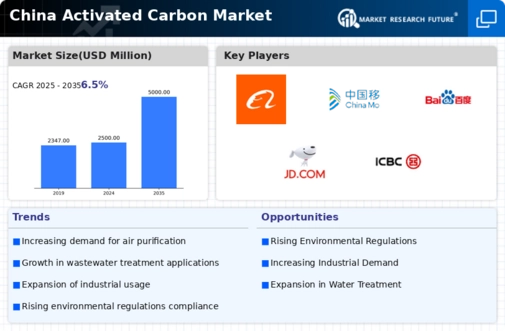
The activated carbon market in China is characterized by a dynamic competitive landscape, driven by increasing demand across various sectors such as water treatment, air purification, and industrial processes. Key players are actively pursuing strategies that emphasize innovation, sustainability, and regional expansion. For instance, Calgon Carbon Corporation (US) has positioned itself as a leader in the market by focusing on advanced manufacturing techniques and product development, which enhances its competitive edge. Similarly, Kuraray Co Ltd (JP) is leveraging its strong R&D capabilities to introduce high-performance activated carbon products, thereby catering to the growing needs of diverse applications. These strategic initiatives collectively contribute to a competitive environment that is increasingly focused on technological advancement and customer-centric solutions.In terms of business tactics, companies are localizing manufacturing to reduce costs and improve supply chain efficiency. This approach is particularly relevant in a moderately fragmented market where several players vie for market share. The collective influence of major companies, such as Cabot Corporation (US) and Haycarb PLC (LK), is shaping the market structure, as they optimize their operations to enhance service delivery and product availability. The emphasis on supply chain optimization is crucial, especially in a landscape where timely delivery and quality assurance are paramount.
In October Cabot Corporation (US) announced a strategic partnership with a leading Chinese water treatment firm to enhance its market presence in the region. This collaboration is expected to facilitate the development of innovative solutions tailored to local needs, thereby strengthening Cabot's foothold in the activated carbon sector. The strategic importance of this partnership lies in its potential to leverage local expertise and resources, which could significantly enhance product offerings and customer engagement.
In September Haycarb PLC (LK) launched a new line of sustainable activated carbon products aimed at reducing environmental impact. This initiative aligns with global trends towards sustainability and positions Haycarb as a forward-thinking player in the market. The introduction of eco-friendly products not only meets regulatory demands but also appeals to environmentally conscious consumers, thereby expanding the company's market reach.
In November Evoqua Water Technologies (US) unveiled a digital platform designed to optimize the performance of activated carbon systems in water treatment applications. This technological advancement reflects a broader trend towards digitalization within the industry, enabling real-time monitoring and management of carbon usage. The strategic significance of this development lies in its potential to enhance operational efficiency and reduce costs for end-users, thereby solidifying Evoqua's competitive position.
As of November the activated carbon market is witnessing trends that emphasize digitalization, sustainability, and the integration of advanced technologies such as AI. Strategic alliances are increasingly shaping the competitive landscape, allowing companies to pool resources and expertise to drive innovation. The shift from price-based competition to a focus on technological differentiation and supply chain reliability is becoming evident. Moving forward, companies that prioritize innovation and sustainability are likely to emerge as leaders in this evolving market.