×
Request Free Sample ×

Kindly complete the form below to receive a free sample of this Report

* Please use a valid business email

Leading companies partner with us for data-driven Insights

clients tt-cursor
Hero Background

Canada Used Serviceable Material (Usm) Market

ID: MRFR/AD/42733-HCR
128 Pages
Sejal Akre
February 2026

Canada Used Serviceable Material (USM) Market Size, Share, Industry Trend & Analysis Research Report By Product Type (Engine, Components, Airframe), By Provider Type (OEM, Non-OEM), and By Aircraft Type (Narrow Body, Wide Body, Turboprop)-Forecast to 2035 \n \n

Share:
Download PDF ×

We do not share your information with anyone. However, we may send you emails based on your report interest from time to time. You may contact us at any time to opt-out.

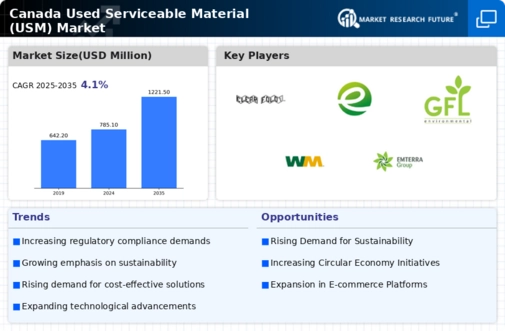
Canada Used Serviceable Material (Usm) Market Infographic
Purchase Options

Canada Used Serviceable Material (Usm) Market Summary

As per analysis, the Canada Used Serviceable Material Market is projected to grow from USD 0.817 Billion in 2025 to USD 1.17 Billion by 2035, exhibiting a compound annual growth rate (CAGR) of 3.72% during the forecast period (2025 - 2035).

Key Market Trends & Highlights

The Canada Used Serviceable Material Market is experiencing a shift towards sustainability and technological innovation.

  • The aerospace segment remains the largest contributor to the market, driven by stringent regulatory standards and sustainability initiatives.
  • The automotive segment is the fastest-growing, reflecting a rising demand for cost-effective and environmentally friendly solutions.
  • In the metals segment, technological advancements in material recovery are enhancing efficiency and reducing waste.
  • Regulatory support for recycling and increased awareness of environmental impact are key drivers propelling market growth.

Market Size & Forecast

2024 Market Size 0.785 (USD Billion)
2035 Market Size 1.17 (USD Billion)
CAGR (2025 - 2035) 3.72%

Major Players

Sierra Supply Chain Services (CA), GFL Environmental Inc. (CA), Waste Management Inc. (CA), Recipro (CA), Keenan Recycling (CA), Canadian Liquidation (CA), Bennett Environmental Inc. (CA), Enviro-Depot (CA)

Our Impact
Enabled $4.3B Revenue Impact for Fortune 500 and Leading Multinationals
Partnering with 2000+ Global Organizations Each Year
30K+ Citations by Top-Tier Firms in the Industry

Canada Used Serviceable Material (Usm) Market Trends

The Canada Used Serviceable Material Market is currently experiencing a notable evolution, driven by a growing emphasis on sustainability and resource efficiency. As industries increasingly recognize the value of reusing materials, there is a marked shift towards integrating used serviceable materials into production processes. This trend aligns with governmental initiatives aimed at reducing waste and promoting circular economy practices. Furthermore, the market is characterized by a diverse range of sectors, including construction, manufacturing, and automotive, all of which are actively seeking to incorporate used materials to minimize environmental impact. In addition, the regulatory landscape in Canada is evolving to support the responsible management of used serviceable materials. Policies encouraging recycling and reuse are becoming more prevalent, fostering an environment conducive to market growth. Stakeholders are likely to benefit from increased collaboration between public and private sectors, which may enhance the efficiency of material recovery systems. As awareness of the economic and environmental benefits of used serviceable materials continues to rise, the Canada Used Serviceable Material Market appears poised for further expansion, potentially leading to innovative practices and technologies that enhance material recovery and utilization.

Sustainability Initiatives

The Canada Used Serviceable Material Market is increasingly influenced by sustainability initiatives. Government policies are promoting the reuse of materials, encouraging industries to adopt practices that minimize waste. This trend reflects a broader commitment to environmental stewardship, as businesses seek to align with national goals for reducing carbon footprints.

Technological Advancements

Technological advancements are playing a crucial role in the Canada Used Serviceable Material Market. Innovations in material recovery and processing technologies are enhancing the efficiency of recycling operations. These developments may lead to improved quality and usability of recovered materials, making them more attractive to manufacturers.

Collaboration Across Sectors

Collaboration across various sectors is emerging as a key trend within the Canada Used Serviceable Material Market. Partnerships between government entities, private companies, and non-profit organizations are fostering a more integrated approach to material recovery. This collaborative effort is likely to enhance resource sharing and improve the overall effectiveness of recycling initiatives.

Canada Used Serviceable Material (Usm) Market Drivers

Regulatory Support for Recycling

The Canada Used Serviceable Material Market benefits from robust regulatory frameworks that promote recycling and the reuse of materials. The Canadian government has implemented various policies aimed at reducing waste and encouraging the recovery of used materials. For instance, the Canadian Environmental Protection Act emphasizes the importance of recycling and waste reduction, which has led to increased investments in recycling facilities. In 2021, Canada reported a recycling rate of approximately 30%, indicating a growing trend towards sustainable practices. This regulatory support not only enhances the market for used serviceable materials but also aligns with global sustainability goals, fostering a circular economy within the country.

Growing Demand for Cost-Effective Solutions

In the Canada Used Serviceable Material Market, there is a notable increase in demand for cost-effective solutions among businesses and consumers. As companies seek to optimize their operational costs, the utilization of used serviceable materials presents a viable alternative to new products. This trend is particularly evident in sectors such as construction and manufacturing, where the cost of raw materials has surged. According to recent data, the market for used serviceable materials in Canada is projected to grow at a compound annual growth rate (CAGR) of 5% over the next five years. This demand for affordability is likely to drive innovation and efficiency in the recycling and refurbishment processes.

Increased Awareness of Environmental Impact

There is a growing awareness among Canadian consumers and businesses regarding the environmental impact of waste and the importance of sustainable practices. This heightened consciousness is driving the Canada Used Serviceable Material Market as more stakeholders recognize the benefits of reusing materials. Educational campaigns and community initiatives have been instrumental in promoting recycling and the use of serviceable materials. As a result, many companies are adopting sustainable procurement policies, which prioritize the use of recycled and refurbished products. This shift in consumer behavior is likely to bolster the market for used serviceable materials, as demand for environmentally friendly options continues to rise.

Technological Innovations in Material Recovery

Technological advancements play a crucial role in enhancing the efficiency of the Canada Used Serviceable Material Market. Innovations in sorting and processing technologies have significantly improved the recovery rates of used materials. For example, the implementation of artificial intelligence and machine learning in recycling facilities has streamlined operations, allowing for better identification and separation of materials. This has resulted in higher quality recovered materials, which are essential for various industries. As technology continues to evolve, it is expected that the market will witness further improvements in material recovery processes, thereby increasing the availability of used serviceable materials for reuse.

Collaboration Between Public and Private Sectors

The Canada Used Serviceable Material Market is witnessing increased collaboration between public and private sectors, which is fostering innovation and efficiency in material recovery. Partnerships between government agencies, non-profit organizations, and private companies are essential for developing effective recycling programs and infrastructure. For instance, initiatives that bring together various stakeholders to share best practices and resources have proven successful in enhancing recycling rates. This collaborative approach not only improves the overall efficiency of the market but also encourages investment in new technologies and processes that can further advance the recovery of used serviceable materials.


Market Segment Insights

By Application: Aerospace (Largest) vs. Automotive (Fastest-Growing)

In the Canada Used Serviceable Material Market, the application segment showcases a diversified distribution of market share among aerospace, automotive, marine, industrial, and construction sectors. Aerospace holds the largest share, driven by strong demand for refurbished materials to comply with stringent safety and regulatory standards. Automotive, while second in terms of market share, is quickly gaining traction due to the rising adoption of sustainable practices and cost-effective sourcing of used components.

Aerospace: Dominant vs. Automotive: Emerging

The aerospace sector is characterized by its rigorous quality standards and regulations, which make the reliance on used serviceable materials particularly significant. Companies in this sector prioritize safety and longevity, investing in high-quality refurbishment processes. On the other hand, the automotive industry is marked as an emerging segment, experiencing rapid growth through innovations in recycling and remanufacturing techniques. Automotive players are capitalizing on the shift towards electric vehicles and sustainability initiatives, which demands an increase in the use of refurbished parts, making it a key area of growth within the Canadian market.

By Material Type: Metals (Largest) vs. Plastics (Fastest-Growing)

In the Canada Used Serviceable Material Market, the distribution of market share among different material types shows that metals hold the largest segment, attributed to their recycling value and widespread applications in various industries. Plastics, on the other hand, are rapidly gaining traction as the fastest-growing segment, driven by increasing environmental concerns and the push for sustainable practices in manufacturing and waste management. This trend reflects a shift towards enhancing the recyclability of plastics and developing innovative applications that reduce overall reliance on virgin materials. The growth drivers for the materials segment are fundamentally linked to the evolving regulatory landscape and rising awareness around sustainability. The Canadian government has been actively promoting recycling initiatives, which encourage the retrieval and repurposing of various materials, particularly metals and plastics. Moreover, advancements in recycling technologies are enhancing the efficiency and effectiveness of processing used materials. This shift presents significant opportunities for emerging areas such as rubber, glass, and textiles, which are expected to witness increased market activity as sustainability initiatives gain momentum across sectors.

Metals (Dominant) vs. Plastics (Emerging)

Metals have established themselves as a dominant force in the Canada Used Serviceable Material Market, primarily due to their high recycling rates and established infrastructure for collection and processing. The robustness and versatility of metals make them invaluable across myriad applications, fueling strong demand for recycled metal products. On the other hand, plastics represent an emerging segment characterized by a rapid evolution in recycling technologies and processes. With the ongoing emphasis on reducing plastic waste through innovative recycling methods, the market demand for recycled plastics is set to grow considerably. The contrasting positions of metals and plastics reflect a broader trend where traditional materials face competition from newer, more sustainable alternatives, thereby reshaping the dynamics of material utilization in the Canadian market.

By End Use: Repair (Largest) vs. Recycling (Fastest-Growing)

In the Canada Used Serviceable Material Market, the segment distribution is notably led by Repair, which continues to hold the largest share due to strong demand for cost-effective solutions amidst increased sustainability awareness. The Repair segment is favored by businesses and consumers alike looking to extend the lifecycle of products without investing heavily in new materials. On the other hand, Recycling has emerged as a vital force in the market, showing robust market share growth as environmental regulations tighten and recycling initiatives gain traction.

Repair (Dominant) vs. Recycling (Emerging)

The Repair segment is characterized by businesses and consumers focusing on maintaining and restoring existing materials and products, thereby promoting sustainability and cost efficiency. This segment thrives on skilled labor and specialized techniques that allow for the effective restoration of various equipment and materials. In contrast, Recycling represents an emerging paradigm shift where end-of-life materials are creatively repurposed. It is gaining momentum due to advancements in technology and greater public awareness of environmental issues, making it a critical component of the circular economy in Canada.

By Condition: Refurbished (Largest) vs. Reconditioned (Fastest-Growing)

In the Canada Used Serviceable Material Market, the segment values are diverse, with 'Refurbished' leading in market share due to its high quality and reliability. 'Used' materials also contribute significantly but face tough competition from refurbishing processes that enhance quality. 'Damaged' and 'Repaired' materials are less favored, appealing mainly to budget-conscious buyers looking for cost-effective options. Meanwhile, 'Reconditioned' materials are gaining traction as consumers recognize their value, effectively diversifying the market further.

Refurbished (Dominant) vs. Reconditioned (Emerging)

Refurbished materials are considered the dominant force in the Canada Used Serviceable Material Market, renowned for their high quality and reliability, which attracts a wide range of industries. These materials undergo thorough checks and renovations, ensuring they meet or exceed original specifications. On the other hand, reconditioned materials represent an emerging market segment, rapidly gaining popularity due to their affordability and environmental sustainability. Their appeal lies in the rising awareness of eco-friendly practices and corporate responsibility among businesses, which is driving demand. As industries increasingly prioritize sustainable sourcing, the market for reconditioned materials is expected to expand significantly, marking a transition towards more responsible procurement practices.

By Source: Consumer Returns (Largest) vs. Industrial Surplus (Fastest-Growing)

In the Canada Used Serviceable Material Market, the source segments are distinctly competitive, with Consumer Returns holding the largest market share. This segment benefits from increasing consumer awareness and sustainability trends, leading to a significant volume of goods being returned for resale. In contrast, Industrial Surplus has emerged as a key player, rapidly growing due to rising demand from manufacturers seeking to optimize their operations and cut costs by acquiring used materials.

Consumer Returns (Dominant) vs. Industrial Surplus (Emerging)

Consumer Returns is characterized by a robust infrastructure for receiving and processing returned goods, reflecting a growing consumer commitment to sustainability. This segment is bolstered by an increasing emphasis on circular economy principles, ensuring that quality used materials are effectively reused. Meanwhile, Industrial Surplus is gaining traction as businesses recognize the value of surplus materials that can be reintegrated into supply chains. This segment is propelled by economic pressures to minimize waste and lower procurement costs, making it a vital source of materials for various industries.

Get more detailed insights about Canada Used Serviceable Material (Usm) Market

Key Players and Competitive Insights

The Used Serviceable Material Market in Canada is characterized by a competitive landscape that is increasingly shaped by sustainability initiatives and technological advancements. Key players are actively engaging in strategies that emphasize innovation, operational efficiency, and strategic partnerships. Companies such as Sierra Supply Chain Services (CA), GFL Environmental Inc. (CA), and Waste Management Inc. (CA) are at the forefront, leveraging their capabilities to enhance service offerings and expand market reach. Their collective focus on integrating advanced technologies and sustainable practices appears to be a driving force behind the market's growth, fostering a dynamic environment where competition is not solely based on pricing but also on value-added services and environmental stewardship.

In terms of business tactics, localizing operations and optimizing supply chains are pivotal for these companies. The market structure is moderately fragmented, with several players vying for market share, yet the influence of major companies is substantial. This competitive structure allows for a diverse range of services and solutions, catering to various customer needs while also promoting innovation through competition. The interplay between established firms and emerging players is likely to intensify as the market evolves, with a focus on enhancing operational efficiencies and customer satisfaction.

In December 2025, GFL Environmental Inc. (CA) announced a strategic partnership with a leading technology firm to develop a new waste tracking system utilizing AI and IoT technologies. This initiative is expected to enhance operational transparency and efficiency, allowing for better resource management and waste reduction. The strategic importance of this move lies in GFL's commitment to sustainability and innovation, positioning the company as a leader in the digital transformation of waste management services.

In November 2025, Waste Management Inc. (CA) launched a new recycling program aimed at increasing the recovery rates of used materials in urban areas. This program is designed to educate consumers and businesses on proper recycling practices while providing incentives for participation. The significance of this initiative is twofold: it not only addresses environmental concerns but also enhances Waste Management's brand reputation as a responsible corporate citizen, potentially leading to increased customer loyalty and market share.

In October 2025, Sierra Supply Chain Services (CA) expanded its operations into the Atlantic provinces, focusing on providing comprehensive recycling solutions for industrial clients. This expansion reflects a strategic move to tap into new markets and diversify service offerings. The importance of this development is underscored by the growing demand for sustainable waste management solutions in these regions, suggesting that Sierra is well-positioned to capitalize on emerging opportunities.

As of January 2026, the competitive trends in the Used Serviceable Material Market are increasingly defined by digitalization, sustainability, and the integration of AI technologies. Strategic alliances among key players are shaping the landscape, fostering innovation and enhancing service delivery. The shift from price-based competition to a focus on technological advancements and supply chain reliability is evident, indicating that future competitive differentiation will hinge on the ability to innovate and provide sustainable solutions. Companies that can effectively leverage these trends are likely to emerge as leaders in the evolving market.

Key Companies in the Canada Used Serviceable Material (Usm) Market include

Industry Developments

The Canada Used Serviceable Material (USM) Market is witnessing notable developments, particularly with companies like Heartland Biogas and GFL Environmental Inc. focusing on sustainability and recycling initiatives. Recent trends show a growing demand for eco-friendly waste management solutions, driven by increased environmental awareness among consumers and businesses alike.

In March 2023, Waste Management Inc invested in advanced recycling technologies to enhance material recovery rates, reflecting commitment to innovation in the sector. Furthermore, in May 2023, Emterra Group announced a partnership with Cascade Recovery Inc for improved waste diversion strategies, aiming to mitigate landfill usage.

Additionally, the market has seen an upward valuation trend with Green Sky Services reporting an increase in revenue due to enhanced service offerings in USM collection and processing. Current regulations from the Canadian government support the reduction of waste heading to landfills, fostering a collaborative environment for companies like Tervita Corporation and Cleansweep Environmental to thrive.

Although there have been no recent mergers or acquisitions among these firms, the overall market dynamics continue to evolve, driven by technology and sustainability efforts across the industry over the past few years.

Future Outlook

Canada Used Serviceable Material (Usm) Market Future Outlook

The Canada Used Serviceable Material Market is projected to grow at a 3.72% CAGR from 2025 to 2035, driven by increasing sustainability initiatives and rising demand for cost-effective materials.

New opportunities lie in:

  • Development of advanced recycling technologies for efficient material recovery.
  • Expansion of e-commerce platforms for used serviceable material sales.
  • Partnerships with manufacturers for integrated supply chain solutions.

By 2035, the market is expected to be robust, reflecting sustainable practices and innovative business models.

Market Segmentation

Canada Used Serviceable Material (Usm) Market Source Outlook

  • Consumer Returns
  • Industrial Surplus
  • Government Auctions
  • Liquidation Sales
  • Trade-Ins

Canada Used Serviceable Material (Usm) Market End Use Outlook

  • Repair
  • Refurbishment
  • Recycling
  • Resale
  • Parts Manufacturing

Canada Used Serviceable Material (Usm) Market Condition Outlook

  • Refurbished
  • Used
  • Damaged
  • Repaired
  • Reconditioned

Canada Used Serviceable Material (Usm) Market Application Outlook

  • Aerospace
  • Automotive
  • Marine
  • Industrial
  • Construction

Canada Used Serviceable Material (Usm) Market Material Type Outlook

  • Metals
  • Plastics
  • Rubber
  • Glass
  • Textiles

Report Scope

MARKET SIZE 20240.785(USD Billion)
MARKET SIZE 20250.817(USD Billion)
MARKET SIZE 20351.17(USD Billion)
COMPOUND ANNUAL GROWTH RATE (CAGR)3.72% (2024 - 2035)
REPORT COVERAGERevenue Forecast, Competitive Landscape, Growth Factors, and Trends
BASE YEAR2024
Market Forecast Period2025 - 2035
Historical Data2019 - 2024
Market Forecast UnitsUSD Billion
Key Companies ProfiledSierra Supply Chain Services (CA), GFL Environmental Inc. (CA), Waste Management Inc. (CA), Recipro (CA), Keenan Recycling (CA), Canadian Liquidation (CA), Bennett Environmental Inc. (CA), Enviro-Depot (CA)
Segments CoveredApplication, Material Type, End Use, Condition, Source
Key Market OpportunitiesGrowing demand for sustainable practices drives innovation in the Canada Used Serviceable Material Market.
Key Market DynamicsGrowing emphasis on sustainability drives demand for used serviceable materials in Canada's circular economy.
Countries CoveredCanada
Leave a Comment

FAQs

What is the current valuation of the Canada Used Serviceable Material Market?

The market valuation was 0.785 USD Billion in 2024.

What is the projected market size for the Canada Used Serviceable Material Market by 2035?

The market is projected to reach 1.17 USD Billion by 2035.

What is the expected CAGR for the Canada Used Serviceable Material Market during the forecast period?

The expected CAGR for the market from 2025 to 2035 is 3.72%.

Which companies are the key players in the Canada Used Serviceable Material Market?

Key players include Sierra Supply Chain Services, GFL Environmental Inc., and Waste Management Inc.

What are the primary applications of used serviceable materials in Canada?

Primary applications include aerospace, automotive, marine, industrial, and construction.

How does the market perform in terms of material types?

The market segments by material type include metals, plastics, rubber, glass, and textiles.

What are the main end-use categories for used serviceable materials?

End-use categories encompass repair, refurbishment, recycling, resale, and parts manufacturing.

What conditions are used serviceable materials categorized by?

Materials are categorized by condition as refurbished, used, damaged, repaired, and reconditioned.

What sources contribute to the supply of used serviceable materials in Canada?

Sources include consumer returns, industrial surplus, government auctions, liquidation sales, and trade-ins.

How does the market's growth outlook appear for the next decade?

The market's growth outlook appears positive, with a projected increase to 1.17 USD Billion by 2035.

Download Free Sample

Kindly complete the form below to receive a free sample of this Report

Compare Licence

×
Features License Type
Single User Multiuser License Enterprise User
Price $4,950 $5,950 $7,250
Maximum User Access Limit 1 User Upto 10 Users Unrestricted Access Throughout the Organization
Free Customization
Direct Access to Analyst
Deliverable Format
Platform Access
Discount on Next Purchase 10% 15% 15%
Printable Versions