×
Request Free Sample ×

Kindly complete the form below to receive a free sample of this Report

* Please use a valid business email

Leading companies partner with us for data-driven Insights

clients tt-cursor
Hero Background

Canada Online Travel Market

ID: MRFR/ICT/44212-HCR
200 Pages
Aarti Dhapte
February 2026

Canada Online Travel Market Research Report By Platform Type (Mobile/Tablets Based, Desktop Based), By Mode of Booking (Online Travel Agencies, Direct Travel Facilitators) and By Service Type (Transportation, Accommodation, Vacation Packages)- Forecast to 2035

Share:
Download PDF ×

We do not share your information with anyone. However, we may send you emails based on your report interest from time to time. You may contact us at any time to opt-out.

Canada Online Travel Market Infographic
Purchase Options

Canada Online Travel Market Summary

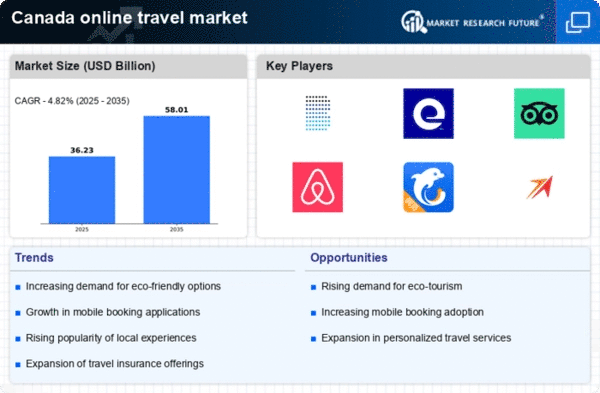
As per Market Research Future analysis, the Canada online travel market size was estimated at 34.56 USD Billion in 2024. The Canada online travel market is projected to grow from 36.23 USD Billion in 2025 to 58.01 USD Billion by 2035, exhibiting a compound annual growth rate (CAGR) of 4.8% during the forecast period 2025 - 2035

Key Market Trends & Highlights

The Canada online travel market is experiencing a transformative shift driven by technology and evolving consumer preferences.

  • Mobile booking continues to rise, indicating a shift towards convenience in travel planning.
  • Personalization through technology is becoming increasingly vital, enhancing customer experiences in the travel sector.
  • Sustainability initiatives are gaining traction, reflecting a growing consumer demand for eco-friendly travel options.
  • Technological advancements in travel booking and increased internet penetration are key drivers propelling market growth.

Market Size & Forecast

2024 Market Size 34.56 (USD Billion)
2035 Market Size 58.01 (USD Billion)
CAGR (2025 - 2035) 4.82%

Major Players

Booking Holdings (US), Expedia Group (US), Tripadvisor (US), Airbnb (US), Ctrip (CN), Travel Leaders Group (US), Trivago (DE), Skyscanner (GB), MakeMyTrip (IN)

Our Impact
Enabled $4.3B Revenue Impact for Fortune 500 and Leading Multinationals
Partnering with 2000+ Global Organizations Each Year
30K+ Citations by Top-Tier Firms in the Industry

Canada Online Travel Market Trends

The online travel market in Canada is currently experiencing a dynamic transformation, driven by technological advancements and changing consumer preferences. As digital platforms become increasingly integral to travel planning, consumers are gravitating towards online solutions that offer convenience and personalization. This shift is evident in the growing reliance on mobile applications and websites that facilitate seamless booking experiences. Furthermore, the integration of artificial intelligence and machine learning into these platforms enhances user engagement, providing tailored recommendations that align with individual travel desires. In addition to technological influences, the online travel market is also shaped by evolving demographic trends. Younger generations, particularly millennials and Gen Z, are more inclined to utilize online resources for travel arrangements, favoring experiences over material possessions. This demographic shift is prompting travel companies to adapt their marketing strategies, focusing on social media engagement and influencer partnerships to capture the attention of these tech-savvy consumers. As the market continues to evolve, it appears that the emphasis on sustainability and responsible travel will also play a crucial role in shaping future offerings, reflecting a broader societal shift towards environmental consciousness.

Rise of Mobile Booking

The trend towards mobile booking is becoming increasingly prominent within the online travel market. Consumers are increasingly using smartphones and tablets to make travel arrangements, leading to a surge in mobile-friendly platforms. This shift not only enhances convenience but also allows for real-time updates and notifications, improving the overall travel experience.

Personalization through Technology

Personalization is emerging as a key focus in the online travel market. Companies are leveraging data analytics to offer tailored recommendations based on user preferences and past behaviors. This trend enhances customer satisfaction and loyalty, as travelers receive suggestions that align closely with their individual interests.

Sustainability Initiatives

Sustainability is gaining traction as a significant consideration in the online travel market. Consumers are increasingly seeking eco-friendly travel options and accommodations. This trend is prompting companies to highlight their sustainability efforts, such as carbon offset programs and partnerships with environmentally responsible providers.

Canada Online Travel Market Drivers

Evolving Consumer Preferences

The online travel market in Canada is witnessing a shift in consumer preferences, particularly among younger generations who prioritize experiences over material possessions. This demographic is increasingly seeking unique travel experiences, such as adventure tourism and cultural immersion, which are often best accessed through online platforms. In 2025, it is projected that experiential travel will account for 60% of all travel bookings in Canada, indicating a significant transformation in consumer behavior. Additionally, the demand for flexible booking options and last-minute deals is on the rise, as travelers seek spontaneity in their travel plans. This evolution in preferences suggests that the online travel market must adapt to cater to these changing desires, potentially leading to innovative offerings and marketing strategies that resonate with modern travelers.

Increased Internet Penetration

The online travel market in Canada is significantly influenced by the increasing penetration of the internet across the country. As of 2025, approximately 95% of Canadians have access to high-speed internet, facilitating seamless online travel bookings. This widespread connectivity enables consumers to research, compare, and book travel options from the comfort of their homes. The rise in internet usage has also led to a growing trend of online reviews and social media influence, which play a crucial role in shaping consumer decisions. In fact, studies suggest that 80% of travelers consult online reviews before making travel arrangements. Consequently, the online travel market is poised for expansion as more Canadians embrace digital platforms for their travel needs, leading to a more competitive landscape among service providers.

Growth of Alternative Accommodation

The online travel market in Canada is increasingly characterized by the growth of alternative accommodation options, such as vacation rentals and home-sharing services. This trend is reshaping the landscape of travel accommodations, as consumers seek more personalized and cost-effective lodging solutions. In 2025, it is estimated that alternative accommodations will represent 30% of the total accommodation bookings in Canada, reflecting a shift away from traditional hotel stays. This growth is driven by the desire for unique experiences and the opportunity to connect with local cultures. As a result, the online travel market is adapting to include these options in their offerings, providing travelers with a wider array of choices that cater to diverse preferences and budgets. This diversification is likely to enhance competition and innovation within the market.

Focus on Health and Safety Standards

The online travel market in Canada is increasingly prioritizing health and safety standards as a key driver of consumer confidence. In 2025, travelers are more likely to choose services that demonstrate a commitment to cleanliness and safety protocols. This focus is particularly relevant in the context of heightened awareness surrounding health issues, leading to a demand for transparent communication regarding safety measures. Approximately 75% of Canadian travelers indicate that they consider health and safety information when making travel decisions. Consequently, the online travel market is responding by implementing and promoting enhanced safety protocols across various platforms. This emphasis on health and safety not only reassures consumers but also positions companies as responsible and trustworthy, potentially influencing their market share and customer loyalty.

Technological Advancements in Travel Booking

The online travel market in Canada is experiencing a surge in technological advancements that streamline the booking process. Innovations such as artificial intelligence and machine learning are enhancing user experiences by providing personalized recommendations and optimizing pricing strategies. In 2025, it is estimated that 70% of travelers in Canada will utilize mobile applications for booking, reflecting a shift towards convenience and efficiency. This trend indicates that the online travel market is adapting to consumer preferences, making it easier for users to compare prices and access real-time information. Furthermore, the integration of virtual reality in travel planning allows potential travelers to explore destinations before making decisions, thereby increasing engagement and satisfaction. As technology continues to evolve, the online travel market is likely to see further growth driven by these advancements.


Market Segment Insights

By Platform Type: Mobile/Tablets Based (Largest) vs. Desktop Based (Fastest-Growing)

In the Canada online travel market, the distribution of market share between mobile/tablet-based and desktop-based platforms showcases a significant preference for mobile and tablet use among consumers. This trend highlights the increasing reliance on handheld devices for travel bookings, reflecting lifestyle changes and the demand for convenience. Conversely, desktop usage while still relevant, has seen a relative decline, indicating a shift in consumer behavior favoring mobility. Growth trends in this segment are driven by advancements in mobile technology and app development, making travel booking more accessible than ever. The proliferation of mobile internet connectivity and user-friendly interfaces has propelled mobile/tablet-based platforms to the forefront, while desktop-based platforms are adapting by enhancing user experience to capture a growing segment. As travel increasingly integrates with technology, mobile-based solutions are expected to continue leading the way.

Platform Type: Mobile/Tablets Based (Dominant) vs. Desktop Based (Emerging)

Mobile/tablets based platforms dominate the Canada online travel market, appealing to a tech-savvy user base that values quick access to travel services from their devices. These platforms offer intuitive designs, personalized experiences, and strong integration with social media, enhancing user engagement and satisfaction. In contrast, desktop based platforms, while still emerging, are ramping up their efforts to attract users by enhancing their functionalities and usability. They focus on larger screen experiences and detailed information, catering to travelers who prefer thorough planning for their trips. Both segments are adapting to the fast-paced digital environment, ensuring they meet the evolving needs of travelers in a competitive market.

By Mode of Booking: Online Travel Agencies (Largest) vs. Direct Travel Facilitators (Fastest-Growing)

In the Canada online travel market, Online Travel Agencies (OTAs) hold a significant share, dominating the mode of booking landscape. Their widespread appeal and established platforms have made them the preferred choice for many travelers. Meanwhile, Direct Travel Facilitators, while currently smaller in market share, are rapidly gaining traction as consumers seek more personalized and streamlined booking experiences. The growth trends indicate a strong upward trajectory for Direct Travel Facilitators as travelers increasingly prefer direct interactions with service providers, especially post-pandemic. The shift towards digital solutions and technological advancements further drive this segment's expansion. As trust grows in direct communications and relationships with providers, this sector is anticipated to flourish in the coming years.

Online Travel Agencies (Dominant) vs. Direct Travel Facilitators (Emerging)

Online Travel Agencies have established themselves as the dominant force in the Canada online travel market, providing extensive options, convenience, and competitive pricing. Their platforms serve as one-stop shops for travelers, aggregating flights, accommodations, and experiences. This comprehensive approach not only saves time but also enhances the user experience. In contrast, Direct Travel Facilitators are emerging as a viable alternative, focusing on delivering personalized services and fostering customer loyalty through unique experiences. They leverage digital channels to connect directly with consumers, cultivating relationships that enhance market penetration. As both segments evolve, the balance between comprehensive offerings and personalized services will shape the landscape of travel bookings.

By Service Type: Transportation (Largest) vs. Vacation Packages (Fastest-Growing)

The Canada online travel market exhibits a diverse distribution among service types, with Transportation holding the largest market share. Accommodation follows closely, benefiting from the country's robust hospitality sector, while Vacation Packages, though smaller, are rapidly gaining traction. The growing preference for bundled services has led to an increase in consumers opting for all-in-one travel solutions, reflecting evolving traveler behavior. Growth trends in this segment are significantly influenced by rising consumer demand for personalized and seamless travel experiences. Vacation Packages are particularly experiencing dynamic growth due to their appeal in simplifying travel planning. Additionally, digitization has amplified competition among service providers, pushing them to innovate and enhance customer experience, thereby driving market growth across all service types.

Accommodation: Traditional (Dominant) vs. Vacation Packages (Emerging)

In the Canada online travel market, Accommodation stands out as the dominant service type characterized by a diverse range of options catering to various traveler preferences. Traditional lodging, including hotels and inns, continues to be the go-to choice for many. In contrast, Vacation Packages are emerging as an attractive alternative for travelers seeking convenience and value through bundled services. This shift indicates a growing consumer inclination towards services that offer comprehensive solutions, allowing for a more streamlined travel experience. The combination of flexibility in booking and increased options for tailored experiences highlights the evolving landscape where both traditional accommodation and innovative vacation packages coexist, catering to the needs of a diverse traveler demographic.

Get more detailed insights about Canada Online Travel Market

Key Players and Competitive Insights

The online travel market in Canada is characterized by a dynamic competitive landscape, driven by technological advancements and evolving consumer preferences. Major players such as Booking Holdings (US), Expedia Group (US), and Airbnb (US) are at the forefront, each adopting distinct strategies to enhance their market presence. Booking Holdings (US) focuses on expanding its portfolio through strategic acquisitions and partnerships, thereby enhancing its service offerings. In contrast, Expedia Group (US) emphasizes digital transformation, investing heavily in AI and machine learning to optimize customer experiences and streamline operations. Meanwhile, Airbnb (US) is pivoting towards sustainability, integrating eco-friendly practices into its platform to attract environmentally conscious travelers. Collectively, these strategies contribute to a competitive environment that is increasingly reliant on innovation and adaptability.
The business tactics employed by these companies reflect a nuanced understanding of market demands. For instance, localizing services and optimizing supply chains are critical for enhancing customer satisfaction and operational efficiency. The market structure appears moderately fragmented, with a mix of established players and emerging startups vying for market share. This fragmentation allows for diverse offerings, yet the collective influence of key players like Booking Holdings (US) and Expedia Group (US) shapes overall market dynamics significantly.
In October 2025, Booking Holdings (US) announced a strategic partnership with a leading AI firm to enhance its predictive analytics capabilities. This move is likely to bolster its competitive edge by providing personalized travel recommendations, thereby improving customer engagement and retention. Such advancements in technology are essential for maintaining relevance in a rapidly evolving market.
In September 2025, Expedia Group (US) launched a new initiative aimed at integrating sustainable travel options into its platform. This initiative not only aligns with global sustainability trends but also positions Expedia as a leader in responsible tourism. By offering eco-friendly accommodations and travel packages, the company is likely to attract a growing segment of environmentally conscious consumers, thereby enhancing its market share.
In August 2025, Airbnb (US) introduced a new feature that allows users to book carbon-neutral stays, reflecting its commitment to sustainability. This strategic action is indicative of a broader trend within the industry, where companies are increasingly prioritizing environmental responsibility. By appealing to eco-conscious travelers, Airbnb is likely to strengthen its brand loyalty and differentiate itself from competitors.
As of November 2025, the online travel market is witnessing significant trends such as digitalization, sustainability, and the integration of AI technologies. Strategic alliances among key players are shaping the competitive landscape, fostering innovation and collaboration. Looking ahead, it appears that competitive differentiation will increasingly hinge on technological advancements and sustainable practices, moving away from traditional price-based competition. Companies that prioritize innovation and reliability in their supply chains are likely to emerge as leaders in this evolving market.

Key Companies in the Canada Online Travel Market include

Industry Developments

The Canada Online Travel Market has seen significant developments recently, with key players like Expedia Group, Skyscanner, and Booking Holdings actively enhancing their platforms. In September 2023, Air Canada announced a partnership with Expedia to offer exclusive travel packages, responding to the rising demand for customized travel solutions. Moreover, in August 2023, Trivago released new tools for users to compare hotel prices more effectively, adapting to market competition and shifting consumer preferences.

The ongoing recovery from the pandemic has positively impacted the market, with a 15% growth in overall bookings reported in the first half of 2023 compared to the same period in 2022. In terms of mergers, in July 2023, Travelocity was integrated with the offerings of Booking Holdings, aimed at streamlining travel services for users across Canada. The market remains buoyant, with players like Ctrip and CheapOair exploring innovations to improve user experiences. Additionally, the Canadian government has indicated support for the tourism sector, acknowledging its importance to economic recovery, further fueling interest in online travel platforms.

Overall, the Canadian online travel landscape is rapidly evolving, driven by partnerships, technological advancements, and an increasing focus on consumer needs.


Future Outlook

Canada Online Travel Market Future Outlook

The online travel market in Canada is projected to grow at a 4.82% CAGR from 2025 to 2035, driven by technological advancements and changing consumer preferences.

New opportunities lie in:

  • Integration of AI-driven personalized travel planning tools.
  • Expansion of subscription-based travel services for frequent travelers.
  • Development of mobile-first booking platforms to enhance user experience.

By 2035, the online travel market is expected to be robust, reflecting sustained growth and innovation.

Market Segmentation

Canada Online Travel Market Service Type Outlook

  • Transportation
  • Accommodation
  • Vacation Packages

Canada Online Travel Market Platform Type Outlook

  • Mobile/Tablets Based
  • Desktop Based

Canada Online Travel Market Mode of Booking Outlook

  • Online Travel Agencies
  • Direct Travel Facilitators

Report Scope

MARKET SIZE 2024 34.56(USD Billion)
MARKET SIZE 2025 36.23(USD Billion)
MARKET SIZE 2035 58.01(USD Billion)
COMPOUND ANNUAL GROWTH RATE (CAGR) 4.82% (2025 - 2035)
REPORT COVERAGE Revenue Forecast, Competitive Landscape, Growth Factors, and Trends
BASE YEAR 2024
Market Forecast Period 2025 - 2035
Historical Data 2019 - 2024
Market Forecast Units USD Billion
Key Companies Profiled Booking Holdings (US), Expedia Group (US), Tripadvisor (US), Airbnb (US), Ctrip (CN), Travel Leaders Group (US), Trivago (DE), Skyscanner (GB), MakeMyTrip (IN)
Segments Covered Platform Type, Mode of Booking, Service Type
Key Market Opportunities Integration of artificial intelligence to enhance personalized travel experiences and streamline booking processes.
Key Market Dynamics Rising consumer preference for personalized travel experiences drives innovation in the online travel market.
Countries Covered Canada
Leave a Comment

FAQs

What is the expected market size of the Canada Online Travel Market in 2024?

The Canada Online Travel Market is expected to be valued at 69.13 USD Billion in 2024.

What will be the market value of the Canada Online Travel Market by 2035?

By 2035, the Canada Online Travel Market is projected to reach a value of 90.0 USD Billion.

What is the expected CAGR for the Canada Online Travel Market from 2025 to 2035?

The expected compound annual growth rate (CAGR) for the Canada Online Travel Market from 2025 to 2035 is 2.427%.

Which platform type dominates the Canada Online Travel Market?

In 2024, the Desktop Based platform type is expected to dominate the Canada Online Travel Market valued at 39.13 USD Billion.

What will be the market size for Mobile/Tablets Based platforms in 2035?

The market size for Mobile/Tablets Based platforms in the Canada Online Travel Market is anticipated to reach 38.0 USD Billion by 2035.

What is the estimated market value for Desktop Based platforms in 2035?

The estimated market value for Desktop Based platforms in the Canada Online Travel Market will be 52.0 USD Billion by 2035.

Who are the major players in the Canada Online Travel Market?

Key players in the Canada Online Travel Market include Skyscanner, Expedia Group, and Booking Holdings among others.

What are some emerging trends in the Canada Online Travel Market?

Emerging trends include the increasing use of mobile platforms and the demand for personalized travel experiences.

How has the overall market growth evolved post-2021?

The overall market growth has witnessed steady progress since 2021, with a consistent increase in online travel bookings.

What challenges does the Canada Online Travel Market face?

Challenges in the Canada Online Travel Market include fluctuating travel demands and competition among online travel agencies.

Download Free Sample

Kindly complete the form below to receive a free sample of this Report

Compare Licence

×
Features License Type
Single User Multiuser License Enterprise User
Price $4,950 $5,950 $7,250
Maximum User Access Limit 1 User Upto 10 Users Unrestricted Access Throughout the Organization
Free Customization
Direct Access to Analyst
Deliverable Format
Platform Access
Discount on Next Purchase 10% 15% 15%
Printable Versions