×
Request Free Sample ×

Kindly complete the form below to receive a free sample of this Report

* Please use a valid business email

Leading companies partner with us for data-driven Insights

clients tt-cursor
Hero Background

Canada Craft Beer Market

ID: MRFR/FnB/44917-HCR
128 Pages
Snehal Singh
February 2026

Canada Craft Beer Market Size, Share, Industry Trend & Analysis Research Report By Type (Ale, Lager, Stouts), By Ingredients (Malt, Yeast, Enzymes, Hops) and By Distribution channel (Store, Non-store) - Forecast to 2035

Share:
Download PDF ×

We do not share your information with anyone. However, we may send you emails based on your report interest from time to time. You may contact us at any time to opt-out.

Canada Craft Beer Market Infographic
Purchase Options

Canada Craft Beer Market Summary

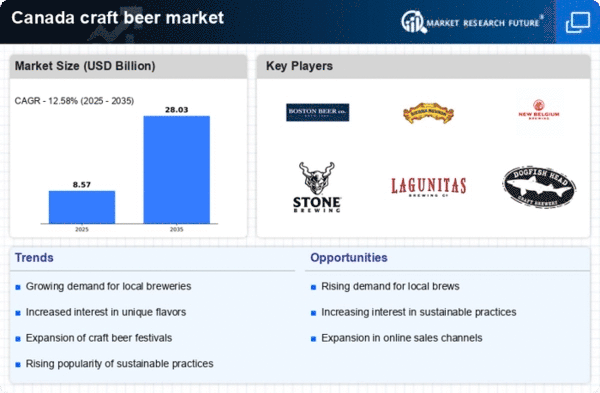
As per Market Research Future analysis, the Canada craft beer market Size was estimated at 7.62 USD Billion in 2024. The Canada craft beer market is projected to grow from 8.57 USD Billion in 2025 to 28.03 USD Billion by 2035, exhibiting a compound annual growth rate (CAGR) of 12.5% during the forecast period 2025 - 2035

Key Market Trends & Highlights

The Canada craft beer market is experiencing robust growth driven by evolving consumer preferences and innovative practices.

  • Local sourcing and sustainability initiatives are increasingly influencing consumer choices in the craft beer sector.
  • Health-conscious offerings, including low-calorie and gluten-free options, are gaining traction among consumers.
  • E-commerce and direct sales are expanding rapidly, providing craft breweries with new avenues for reaching customers.
  • Rising consumer preference for craft beers and innovative marketing strategies are key drivers propelling market growth.

Market Size & Forecast

2024 Market Size 7.62 (USD Billion)
2035 Market Size 28.03 (USD Billion)
CAGR (2025 - 2035) 12.58%

Major Players

Boston Beer Company (US), Sierra Nevada Brewing Co (US), New Belgium Brewing Company (US), Stone Brewing (US), Lagunitas Brewing Company (US), Dogfish Head Craft Brewery (US), Brooklyn Brewery (US), Deschutes Brewery (US)

Our Impact
Enabled $4.3B Revenue Impact for Fortune 500 and Leading Multinationals
Partnering with 2000+ Global Organizations Each Year
30K+ Citations by Top-Tier Firms in the Industry

Canada Craft Beer Market Trends

The craft beer market in Canada is experiencing a dynamic evolution, characterized by a growing consumer preference for unique and locally produced beverages. This shift is largely driven by an increasing awareness of the quality and diversity that craft breweries offer. As consumers become more discerning, they seek out distinctive flavors and artisanal brewing methods, which has led to a proliferation of microbreweries across the country. The emphasis on local sourcing and sustainability resonates with a demographic that values community engagement and environmental responsibility. Furthermore, the craft beer market is witnessing a rise in innovative brewing techniques, with many breweries experimenting with unconventional ingredients and styles, thereby expanding the traditional boundaries of beer production. In addition to flavor innovation, the craft beer market is also adapting to changing consumer habits, particularly among younger generations. The trend towards health-conscious choices has prompted breweries to explore lower-alcohol and gluten-free options, catering to a broader audience. Additionally, the rise of e-commerce and direct-to-consumer sales channels has transformed how craft beer is marketed and distributed, allowing consumers to access a wider range of products from the comfort of their homes. This shift not only enhances convenience but also fosters a deeper connection between consumers and local breweries, further solidifying the craft beer culture in Canada.

Local Sourcing and Sustainability

There is a notable trend towards local sourcing and sustainable practices within the craft beer market. Breweries are increasingly prioritizing locally sourced ingredients, which not only supports regional agriculture but also enhances the freshness and quality of the final product. This commitment to sustainability resonates with consumers who are more environmentally conscious and prefer products that reflect their values.

Health-Conscious Offerings

The craft beer market is witnessing a shift towards health-conscious offerings, with breweries developing lower-alcohol and gluten-free options. This trend caters to a growing demographic that seeks beverages aligning with their health and wellness goals, thereby broadening the appeal of craft beer beyond traditional consumers.

E-commerce and Direct Sales Growth

The rise of e-commerce and direct-to-consumer sales channels is transforming the craft beer market. Consumers now have greater access to a diverse range of products, allowing them to explore various breweries and styles without geographical limitations. This trend not only enhances convenience but also strengthens the relationship between consumers and local breweries.

Canada Craft Beer Market Drivers

Innovative Marketing Strategies

The craft beer market in Canada is witnessing a transformation in marketing strategies, as breweries adopt innovative approaches to reach consumers. Social media platforms and digital marketing are increasingly utilized to engage with a younger demographic, which is crucial for sustaining growth. Data suggests that breweries employing targeted online campaigns have seen a 25% increase in customer engagement. Additionally, collaborations between breweries and local artists or businesses are becoming more common, enhancing brand identity and community ties. This creative marketing landscape not only attracts new customers but also reinforces the loyalty of existing ones, thereby contributing to the overall expansion of the craft beer market.

Emphasis on Unique Flavor Profiles

The craft beer market in Canada is characterized by a strong emphasis on unique flavor profiles and experimental brewing techniques. Breweries are increasingly pushing the boundaries of traditional beer styles, incorporating unconventional ingredients and brewing methods. This trend not only caters to adventurous consumers but also positions craft beers as premium products in the market. Data indicates that craft beers with innovative flavors have seen a 30% increase in sales, reflecting consumer enthusiasm for diversity in their drinking experiences. As breweries continue to experiment and differentiate their offerings, the craft beer market is poised for sustained growth, appealing to a wide range of palates.

Regulatory Support for Craft Breweries

The regulatory environment surrounding the craft beer market in Canada has evolved to support the growth of small and independent breweries. Recent legislative changes have facilitated easier access to licensing and distribution channels, enabling new entrants to compete effectively. This supportive framework is crucial, as it allows craft breweries to innovate and expand their reach without being hindered by excessive regulations. Furthermore, government initiatives aimed at promoting local products have bolstered the visibility of craft beers, encouraging consumers to choose local options. As a result, the craft beer market is likely to continue flourishing, driven by a favorable regulatory landscape.

Impact of Craft Beer Festivals and Events

Craft beer festivals and events play a pivotal role in promoting the craft beer market in Canada. These gatherings not only provide a platform for breweries to showcase their products but also foster community engagement and education about craft brewing. Attendance at such events has been on the rise, with many festivals attracting thousands of visitors annually. This increased participation not only boosts sales for local breweries but also enhances brand visibility and consumer loyalty. Furthermore, these events often feature local food pairings, creating a holistic experience that appeals to a broader audience. The synergy between craft beer and local culture is likely to continue driving growth in the craft beer market.

Rising Consumer Preference for Craft Beers

The craft beer market in Canada is experiencing a notable shift in consumer preferences, with an increasing number of individuals gravitating towards locally produced and unique beer options. This trend is driven by a desire for authenticity and quality, as consumers seek to support local businesses and explore diverse flavors. Recent data indicates that craft beer sales have surged, accounting for approximately 40% of the total beer market in Canada. This growing inclination towards craft beers suggests that consumers are willing to pay a premium for distinctive products, thereby enhancing the craft beer market. As more breweries emerge, the competition intensifies, further stimulating innovation and variety in offerings.


Market Segment Insights

By Type: Ale (Largest) vs. Lager (Fastest-Growing)

In the Canada craft beer market, Ale continues to dominate with the largest market share among various types of beer, driven by its diverse flavor profiles and strong consumer loyalty. Lager, while historically popular, has seen a surge in craft variants that appeal to newer drinkers, thereby increasing its presence in the market. Growth trends indicate a rising preference for innovative and flavored options within the Ale segment, which caters to established craft beer enthusiasts. Meanwhile, Lagers are experiencing rapid growth as breweries introduce unique recipes and local ingredients, reflecting a broader shift towards craft offerings. This combination of innovation and tradition is essential for capturing the evolving tastes of Canadian consumers.

Ale (Dominant) vs. Lager (Emerging)

Ale represents the dominant segment in the Canada craft beer market, characterized by its wide variety of styles, including IPAs, pale ales, and sours, appealing to a broad consumer base. Through rich flavors and creative brewing techniques, Ale has secured a loyal following among craft beer aficionados. On the other hand, Lager is viewed as an emerging segment, gaining traction due to the introduction of craft Lagers that offer a refreshing twist on classic styles. This segment is appealing to a younger demographic seeking accessible yet flavorful options, and as breweries innovate within this category, Lager is poised to capture market share and attract new drinkers looking for unique experiences.

By Alcohol Content: Standard Alcohol (Largest) vs. Low Alcohol (Fastest-Growing)

In the Canada craft beer market, the alcohol content segment showcases diverse preferences among consumers. Standard Alcohol options hold the largest share, appealing to traditional beer enthusiasts who appreciate the classic experiences that this category offers. Low Alcohol variants are gaining traction as more consumers seek moderation without compromising on taste, indicating a significant shift in market dynamics toward healthier choices. Growth trends in this segment are primarily driven by the rising awareness of health and wellness in consumer behavior. The demand for Low Alcohol beers is being propelled by younger demographics prioritizing lower calorie options while still wishing to enjoy flavorful craft beers. Furthermore, innovative brewing techniques have enhanced the quality and appeal of these emerging products, making them a compelling choice in the Canada craft beer market.

Standard Alcohol (Dominant) vs. Low Alcohol (Emerging)

Standard Alcohol beers represent the backbone of the Canada craft beer market, characterized by robust flavors and traditional brewing methods that resonate with dedicated craft beer drinkers. These offerings often emphasize quality ingredients and distinct brewing styles, which contribute to their established appeal and market dominance. In contrast, Low Alcohol beers are emerging as a popular choice among health-conscious consumers. With innovative flavors and improved brewing technology, Low Alcohol options are attracting those who want the craft beer experience without higher alcohol content, indicating a shift toward inclusivity in the types of beverages available. Both segments showcase the dynamic nature of consumer preferences, reflecting changing lifestyles and tastes.

By Packaging: Bottles (Largest) vs. Cans (Fastest-Growing)

In the Canada craft beer market, the packaging segment reveals a diverse distribution among bottles, cans, and kegs. Bottles hold the largest share, favored by many consumers for their traditional appeal and ability to preserve flavor. Cans, while not as historically popular, have seen a significant increase in acceptance, especially among younger demographics who appreciate their convenience and recyclability. Kegs remain relevant, particularly in social settings and for bars, yet they trail both bottles and cans in market penetration. Growth trends indicate that cans are rapidly becoming the go-to choice for many breweries, driven by advancements in packaging technology and a shift towards eco-friendliness. Craft breweries are innovating with can designs, making them visually appealing for consumers. Furthermore, the increasing popularity of outdoor events and craft beer festivals has bolstered can sales, as they are easier to transport. Bottles, while still dominant, face competition, pushing manufacturers to enhance their offerings to retain market share.

Bottles: Dominant vs. Cans: Emerging

Bottles serve as the dominant packaging choice for the Canada craft beer market, appreciated for their classic aesthetic and optimal flavor preservation. They cater well to the higher-end segment of craft beer consumers who seek quality experiences. In contrast, cans are emerging strongly, appealing to a more environmentally conscious and younger audience. They offer portability and reduce spoilage, leading to increased adoption by new craft brewers. The shift towards cans is also marked by innovative branding and designs that resonate with the target market, thus presenting a unique challenge to the traditional dominance of bottles in the sector.

By Distribution Channel: On-trade (Largest) vs. E-commerce (Fastest-Growing)

The distribution of market share among the channels reveals that the on-trade sector holds a significant portion of the overall market, driven largely by social consumption in bars and restaurants. Off-trade sales also play a crucial role, yet the insatiable demand for convenience through retail outlets remains strong. E-commerce, though currently smaller in terms of market share, is becoming an increasingly important channel as more consumers opt to purchase craft beer online for home delivery. Growth trends in this segment indicate a shift in consumer preferences, particularly towards online shopping. The pandemic has accelerated the adoption of e-commerce as a primary shopping method, contributing to its status as the fastest-growing channel. Meanwhile, the on-trade channel continues to thrive, supported by social gatherings and events, despite disruptions. Off-trade remains a steady performer, catering to customers seeking craft experiences at home.

On-trade: Bar Sales (Dominant) vs. E-commerce (Emerging)

The on-trade channel, epitomized by bar sales, remains the dominant force in the distribution landscape due to its ability to offer immersive experiences and social interactions that craft beer enthusiasts crave. It thrives on the culture of social drinking, providing consumers with access to a diverse range of local craft offerings. In contrast, the emerging e-commerce sector is capitalizing on the trend of convenience, allowing consumers to purchase their favorite craft beers from the comfort of their homes. This segment is rapidly growing, fueled by advancements in technology and delivery services that enhance the overall shopping experience. As both channels evolve, their unique characteristics will dictate their market positions in the evolving Canada craft beer market.

Get more detailed insights about Canada Craft Beer Market

Key Players and Competitive Insights

The craft beer market in Canada exhibits a dynamic competitive landscape characterized by a blend of innovation, regional expansion, and strategic partnerships. Key players such as Boston Beer Company (US), Sierra Nevada Brewing Co (US), and New Belgium Brewing Company (US) are actively shaping the market through their distinct operational focuses. Boston Beer Company (US) emphasizes innovation in product offerings, particularly with its hard seltzer line, which has gained traction among younger consumers. Meanwhile, Sierra Nevada Brewing Co (US) is known for its commitment to sustainability, investing in renewable energy sources for its brewing processes. New Belgium Brewing Company (US) has adopted a strategy of regional expansion, targeting untapped markets in Canada, thereby enhancing its distribution network and brand presence. Collectively, these strategies contribute to a moderately fragmented market structure, where competition is driven by product differentiation and brand loyalty.In terms of business tactics, companies are increasingly localizing manufacturing to reduce supply chain vulnerabilities and enhance responsiveness to consumer preferences. This approach not only optimizes operational efficiency but also aligns with the growing consumer demand for locally sourced products. The competitive structure remains moderately fragmented, with numerous craft breweries vying for market share, yet the influence of major players is palpable as they set trends that smaller breweries often follow.

In August Boston Beer Company (US) announced a partnership with a Canadian craft brewery to co-develop a new line of beers that incorporate local ingredients. This strategic move is significant as it not only enhances Boston Beer Company's product portfolio but also strengthens its ties to the Canadian market, potentially increasing brand loyalty among local consumers. The collaboration reflects a broader trend of established companies leveraging local partnerships to enhance authenticity and appeal.

In September Sierra Nevada Brewing Co (US) launched a new initiative aimed at reducing water usage in its brewing process by 30% over the next five years. This commitment to sustainability is crucial, as consumers increasingly prioritize environmentally friendly practices. By positioning itself as a leader in sustainable brewing, Sierra Nevada is likely to attract environmentally conscious consumers, thereby enhancing its competitive edge.

In October New Belgium Brewing Company (US) expanded its distribution network into several provinces in Canada, aiming to capture a larger share of the craft beer market. This expansion is strategically important as it allows New Belgium to tap into new consumer bases and increase its brand visibility. The move indicates a proactive approach to market penetration, which could yield substantial returns in the long term.

As of November the craft beer market is witnessing trends that emphasize digitalization, sustainability, and technological integration. Companies are increasingly forming strategic alliances to enhance their competitive positioning, with a notable shift from price-based competition to a focus on innovation and supply chain reliability. This evolution suggests that future competitive differentiation will hinge on the ability to leverage technology and sustainable practices, ultimately reshaping the landscape of the craft beer market.

Key Companies in the Canada Craft Beer Market include

Industry Developments

The Canada Craft Beer Market has seen significant developments recently, with notable growth driven by a surge in consumer interest in local and unique brews. Companies like Alexander Keith's Brewery and Steam Whistle Brewery are expanding their offerings, while Big Rock Brewery has reported strong sales growth due in part to the rising trend of craft beer consumption. 

In terms of acquisitions, there have been no recent publicly known mergers specifically involving the listed companies; however, various craft breweries, including Quidi Vidi Brewery and Phillips Brewing and Malting Company, continue to innovate with new flavors and sustainable practices, reflecting a broader trend within the market. Between 2021 and 2023, the Canadian craft beer sector has experienced growth with total sales increasing, driven by the younger demographic's palates shifting towards craft options. 

The government of Canada is also supporting this sector through various grants aimed at promoting local businesses, stimulating economic growth in the beverage industry. As consumers increasingly seek out smaller, independent brands, companies like Ninkasi Brewing Company and Lagunitas Brewing Company are well-positioned to capitalize on these trends, indicating a vibrant future for the Canada Craft Beer Market.

Future Outlook

Canada Craft Beer Market Future Outlook

The Craft Beer Market is projected to grow at 12.58% CAGR from 2025 to 2035, driven by consumer demand for unique flavors, local sourcing, and innovative brewing techniques.

New opportunities lie in:

  • Expansion of e-commerce platforms for direct-to-consumer sales.
  • Development of craft beer subscription services for regular revenue streams.
  • Investment in sustainable brewing practices to attract eco-conscious consumers.

By 2035, the craft beer market is expected to be robust, reflecting strong consumer engagement and innovative growth strategies.

Market Segmentation

Canada Craft Beer Market Type Outlook

  • Ale
  • Lager
  • Stout
  • Porter
  • Wheat Beer

Canada Craft Beer Market Packaging Outlook

  • Bottles
  • Cans
  • Kegs

Canada Craft Beer Market Alcohol Content Outlook

  • Low Alcohol
  • Standard Alcohol
  • High Alcohol

Canada Craft Beer Market Distribution Channel Outlook

  • On-trade
  • Off-trade
  • E-commerce

Report Scope

MARKET SIZE 2024 7.62(USD Billion)
MARKET SIZE 2025 8.57(USD Billion)
MARKET SIZE 2035 28.03(USD Billion)
COMPOUND ANNUAL GROWTH RATE (CAGR) 12.58% (2025 - 2035)
REPORT COVERAGE Revenue Forecast, Competitive Landscape, Growth Factors, and Trends
BASE YEAR 2024
Market Forecast Period 2025 - 2035
Historical Data 2019 - 2024
Market Forecast Units USD Billion
Key Companies Profiled Boston Beer Company (US), Sierra Nevada Brewing Co (US), New Belgium Brewing Company (US), Stone Brewing (US), Lagunitas Brewing Company (US), Dogfish Head Craft Brewery (US), Brooklyn Brewery (US), Deschutes Brewery (US)
Segments Covered Type, Alcohol Content, Packaging, Distribution Channel
Key Market Opportunities Growing consumer preference for unique flavors and sustainable brewing practices in the craft beer market.
Key Market Dynamics Growing consumer preference for local craft beers drives competition and innovation within the Canadian craft beer market.
Countries Covered Canada
Leave a Comment

FAQs

What was the expected market size of the Canada Craft Beer Market in 2024?

The Canada Craft Beer Market was valued at 10.0 USD Billion in 2024.

What will the market valuation of the Canada Craft Beer Market be in 2035?

By 2035, the Canada Craft Beer Market is projected to reach a value of 40.0 USD Billion.

What is the expected compound annual growth rate (CAGR) for the Canada Craft Beer Market from 2025 to 2035?

The expected CAGR for the Canada Craft Beer Market from 2025 to 2035 is 13.431%.

Which segment is projected to dominate the market in 2035?

In 2035, the Lager segment is projected to dominate the market with a valuation of 16.0 USD Billion.

What was the market size for Ale in 2024?

The Ale segment was valued at 3.5 USD Billion in the Canada Craft Beer Market in 2024.

Who are the key players in the Canada Craft Beer Market?

Key players in the Canada Craft Beer Market include Alexander Keith's Brewery, Big Rock Brewery, and Sierra Nevada Brewing Co., among others.

What is the expected market size for Stouts in 2035?

The Stouts segment is expected to be valued at 10.0 USD Billion in 2035.

What are the growth drivers for the Canada Craft Beer Market?

The primary growth drivers include the increasing consumer preference for craft beer and innovation in brewing techniques.

What market opportunities exist for new entrants in the Canada Craft Beer Market?

New entrants can leverage the growing demand for unique flavors and local craft beers to gain market share.

How do emerging trends impact the Canada Craft Beer Market?

Emerging trends such as sustainable brewing practices and experimentation with flavors are significantly shaping the market dynamics.

Download Free Sample

Kindly complete the form below to receive a free sample of this Report

Compare Licence

×
Features License Type
Single User Multiuser License Enterprise User
Price $4,950 $5,950 $7,250
Maximum User Access Limit 1 User Upto 10 Users Unrestricted Access Throughout the Organization
Free Customization
Direct Access to Analyst
Deliverable Format
Platform Access
Discount on Next Purchase 10% 15% 15%
Printable Versions