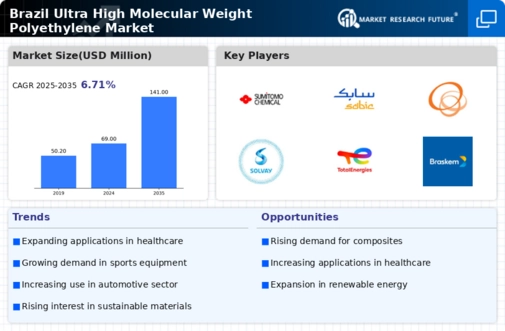
The ultra high-molecular-weight-polyethylene market in Brazil is characterized by a competitive landscape that is both dynamic and multifaceted. Key growth drivers include the increasing demand for lightweight and high-performance materials across various industries, such as automotive, medical, and industrial applications. Major players like Celanese Corporation (US), Mitsubishi Chemical Corporation (JP), and LyondellBasell Industries N.V. (NL) are strategically positioned to leverage these trends. Celanese Corporation (US) focuses on innovation and product development, aiming to enhance its portfolio with advanced materials. Meanwhile, Mitsubishi Chemical Corporation (JP) emphasizes regional expansion and sustainability initiatives, aligning its operations with environmental goals. LyondellBasell Industries N.V. (NL) is actively pursuing digital transformation strategies to optimize its manufacturing processes, thereby enhancing operational efficiency. Collectively, these strategies contribute to a competitive environment that is increasingly shaped by technological advancements and sustainability considerations.In terms of business tactics, companies are localizing manufacturing to better serve the Brazilian market, which is crucial for reducing lead times and transportation costs. Supply chain optimization remains a priority, as firms seek to enhance resilience and responsiveness to market fluctuations. The market structure appears moderately fragmented, with several key players exerting influence while also facing competition from smaller, specialized firms. This fragmentation allows for a diverse range of products and innovations, fostering a competitive atmosphere that benefits end-users.
In October Celanese Corporation (US) announced a strategic partnership with a local Brazilian firm to enhance its production capabilities in the region. This move is significant as it not only strengthens Celanese's market presence but also allows for greater customization of products to meet local demands. The partnership is expected to facilitate faster delivery times and improved customer service, thereby enhancing competitive positioning.
In September Mitsubishi Chemical Corporation (JP) launched a new line of ultra high-molecular-weight-polyethylene products specifically designed for the medical sector. This initiative underscores the company's commitment to innovation and its focus on high-growth sectors. By catering to the medical industry, Mitsubishi aims to capture a larger share of the market, which is increasingly prioritizing biocompatible and high-performance materials.
In August LyondellBasell Industries N.V. (NL) unveiled a digital platform aimed at streamlining its supply chain operations. This platform is designed to enhance transparency and efficiency, allowing for real-time tracking of materials and inventory. The strategic importance of this initiative lies in its potential to reduce operational costs and improve service delivery, positioning LyondellBasell as a leader in digital transformation within the market.
As of November current competitive trends are increasingly defined by digitalization, sustainability, and the integration of advanced technologies such as AI. Strategic alliances are becoming more prevalent, as companies recognize the value of collaboration in driving innovation and enhancing market reach. Looking ahead, competitive differentiation is likely to evolve from traditional price-based competition to a focus on innovation, technology, and supply chain reliability. This shift suggests that companies that prioritize these aspects will be better positioned to thrive in the evolving landscape of the ultra high-molecular-weight-polyethylene market.