×
Request Free Sample ×

Kindly complete the form below to receive a free sample of this Report

* Please use a valid business email

Leading companies partner with us for data-driven Insights

clients tt-cursor
Hero Background

Brazil Toothpaste Market

ID: MRFR/CG/44652-HCR
128 Pages
Garvit Vyas
February 2026

Brazil Toothpaste Market Size, Share, Industry Trend & Analysis Research Report: By Toothpaste Type (Sensitivity, Whitening, Children’s, Smokers, Herbal) andBy Toothpaste Distribution Channel (Store-Based, Non-Store-Based)- Forecast to 2035

Share:
Download PDF ×

We do not share your information with anyone. However, we may send you emails based on your report interest from time to time. You may contact us at any time to opt-out.

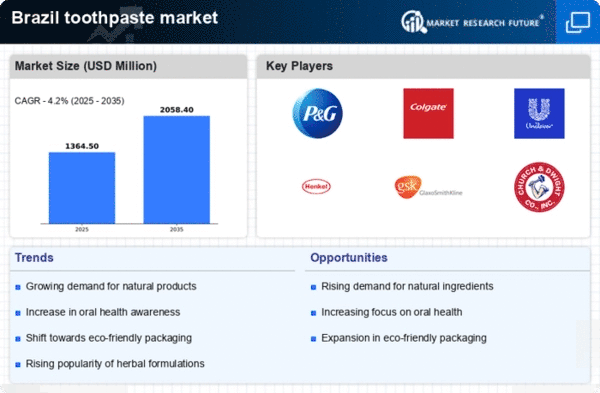
Brazil Toothpaste Market Infographic
Purchase Options

Brazil Toothpaste Market Summary

As per Market Research Future analysis, the Brazil toothpaste market Size was estimated at 1309.5 USD Million in 2024. The Brazil toothpaste market is projected to grow from 1364.5 USD Million in 2025 to 2058.4 USD Million by 2035, exhibiting a compound annual growth rate (CAGR) of 4% during the forecast period 2025 - 2035

Key Market Trends & Highlights

The Brazil toothpaste market is experiencing a notable shift towards natural ingredients and e-commerce growth.

  • The largest segment in the Brazil toothpaste market is the traditional fluoride toothpaste, while the fastest-growing segment is natural and organic toothpaste.
  • E-commerce is rapidly becoming a preferred channel for toothpaste purchases, reflecting broader retail trends.
  • There is an increasing focus on specialized products, such as whitening and sensitivity toothpaste, catering to diverse consumer needs.
  • Key market drivers include rising health awareness and the demand for eco-friendly products, influencing consumer preferences.

Market Size & Forecast

2024 Market Size 1309.5 (USD Million)
2035 Market Size 2058.4 (USD Million)
CAGR (2025 - 2035) 4.2%

Major Players

Procter & Gamble (US), Colgate-Palmolive (US), Unilever (GB), Henkel (DE), GlaxoSmithKline (GB), Church & Dwight (US), Crest (US), Kao Corporation (JP), L'Oréal (FR)

Our Impact
Enabled $4.3B Revenue Impact for Fortune 500 and Leading Multinationals
Partnering with 2000+ Global Organizations Each Year
30K+ Citations by Top-Tier Firms in the Industry

Brazil Toothpaste Market Trends

The toothpaste market in Brazil is currently experiencing a dynamic evolution, driven by changing consumer preferences and increasing awareness of oral health. As individuals become more conscious of their dental hygiene, there is a noticeable shift towards products that offer specialized benefits, such as whitening, sensitivity relief, and natural ingredients. This trend reflects a broader movement towards health and wellness, where consumers are seeking products that align with their lifestyle choices. Additionally, the rise of e-commerce platforms has transformed the way consumers purchase toothpaste, allowing for greater accessibility and convenience. This shift is particularly relevant in urban areas, where busy lifestyles demand quick and easy shopping solutions. Moreover, the competitive landscape of the toothpaste market is intensifying, with both established brands and new entrants vying for market share. Companies are increasingly investing in innovative marketing strategies to capture consumer attention, often emphasizing unique selling propositions that differentiate their products. Sustainability is also becoming a focal point, as brands explore eco-friendly packaging and formulations. This growing emphasis on environmental responsibility may influence purchasing decisions, as consumers are likely to favor brands that demonstrate a commitment to sustainability. Overall, the toothpaste market in Brazil appears poised for continued growth, driven by evolving consumer demands and a competitive marketplace.

Rise of Natural Ingredients

There is a noticeable trend towards the incorporation of natural ingredients in toothpaste formulations. Consumers are increasingly seeking products that are free from artificial additives and chemicals, favoring those that utilize herbal and organic components. This shift reflects a broader health-conscious movement, where individuals prioritize products that align with their values regarding wellness and sustainability.

E-commerce Growth

The expansion of e-commerce platforms is reshaping the purchasing landscape for toothpaste. Consumers are increasingly turning to online shopping for convenience and variety. This trend is particularly pronounced in urban areas, where busy lifestyles necessitate quick access to dental care products. Brands are adapting their strategies to enhance online visibility and cater to this growing demand.

Focus on Specialized Products

There is a growing emphasis on specialized toothpaste products that address specific dental concerns. Consumers are more inclined to choose toothpaste that offers targeted benefits, such as sensitivity relief, whitening, or gum health. This trend indicates a shift towards personalized oral care, where individuals seek solutions tailored to their unique needs.

Brazil Toothpaste Market Drivers

Increasing Health Awareness

The growing awareness of oral health among Brazilian consumers is a pivotal driver for the toothpaste market. As individuals become more informed about the importance of dental hygiene, there is a noticeable shift towards products that promote oral health. This trend is reflected in the rising demand for toothpaste that offers additional benefits, such as whitening, sensitivity relief, and cavity protection. According to recent data, the market for specialized toothpaste has seen an increase of approximately 15% in the last year alone. This heightened focus on health is likely to continue influencing consumer choices, pushing manufacturers to innovate and expand their product lines to meet these evolving preferences in the toothpaste market.

Regulatory Changes and Standards

Regulatory changes in Brazil are shaping the landscape of the toothpaste market. The government has implemented stricter guidelines regarding the ingredients used in oral care products, which has prompted manufacturers to reformulate their offerings. This shift towards compliance with health and safety standards is driving innovation, as companies seek to create products that not only meet regulatory requirements but also appeal to health-conscious consumers. The market is witnessing a trend towards transparency, with brands increasingly highlighting their ingredient lists and sourcing practices. This focus on regulation and safety is expected to enhance consumer trust and could potentially lead to a more competitive environment within the toothpaste market.

Urbanization and Lifestyle Changes

Urbanization in Brazil is significantly impacting consumer behavior, particularly in the toothpaste market. As more people move to urban areas, lifestyles are changing, leading to increased disposable income and a greater emphasis on personal care products. This demographic shift is associated with a growing preference for premium and specialized toothpaste options. Urban consumers are more likely to invest in products that align with their health and wellness goals, which has resulted in a surge in demand for organic and natural toothpaste variants. Market data indicates that urban areas account for over 60% of toothpaste sales, highlighting the importance of this trend in shaping the future of the toothpaste market.

Influence of Social Media and Marketing

The role of social media in shaping consumer preferences cannot be understated, particularly in the context of the toothpaste market. Brazilian consumers are increasingly influenced by online reviews, beauty influencers, and social media campaigns that promote specific toothpaste brands. This trend has led to a rise in brand loyalty and consumer engagement, as companies leverage digital platforms to reach their target audiences. Recent statistics suggest that brands with a strong social media presence have experienced a sales increase of up to 20% compared to those with minimal online engagement. As social media continues to evolve, its impact on purchasing decisions in the toothpaste market is likely to grow, driving innovation and competition among brands.

Rising Demand for Eco-Friendly Products

The increasing concern for environmental sustainability is emerging as a significant driver in the toothpaste market. Brazilian consumers are becoming more conscious of their ecological footprint, leading to a growing preference for eco-friendly and biodegradable toothpaste options. This trend is reflected in the rising sales of products that utilize sustainable packaging and natural ingredients. Market Research Future indicates that eco-friendly toothpaste sales have surged by approximately 25% over the past year, as consumers seek alternatives that align with their values. This shift towards sustainability is likely to influence product development and marketing strategies, as brands strive to meet the expectations of environmentally aware consumers in the toothpaste market.


Market Segment Insights

By Type: Sensitivity (Largest) vs. Whitening (Fastest-Growing)

The Brazil toothpaste market showcases a varied breakdown among the segments of sensitivity, whitening, children's, smokers, and herbal types. Sensitivity toothpaste commands the largest share of the market, favored for its effectiveness in alleviating discomfort among consumers with sensitive teeth. In contrast, the whitening segment has rapidly gained ground, appealing to consumers seeking enhanced aesthetics and self-confidence through whiter teeth. Other segments, while important, have not matched the prominence of these two categories. In recent years, the growth trends within the Brazil toothpaste market have been influenced significantly by changing consumer preferences and increased awareness regarding oral hygiene. The demand for whitening toothpaste has surged, driven by influential marketing and rising consumer interest in beauty trends. Meanwhile, sensitivity toothpaste continues to expand as dental health awareness grows, pushing consumers to seek products tailored to their specific needs. This dual demand signifies robust growth prospects for both segments in the coming years.

Sensitivity (Dominant) vs. Whitening (Emerging)

Sensitivity toothpaste is characterized by its specialized formulation aimed at providing relief for individuals experiencing tooth sensitivity. This segment has solidified its dominance in the Brazil toothpaste market due to a growing awareness and understanding of dental issues among the populace. Enhanced formulations and targeted marketing have made this product trustworthy for consumers. In contrast, the whitening segment is emerging rapidly, attracting consumers with its promise of aesthetic improvement and confidence boost. Market innovations, advanced whitening technologies, and enticing packaging have made these products appealing to a younger demographic. The competition between these segments typifies the diverse consumer needs, ensuring both hold significant importance in the overall market landscape.

By Distribution Channel: Store-Based (Largest) vs. Non-Store-Based (Fastest-Growing)

In the Brazil toothpaste market, the distribution of market share between store-based and non-store-based channels reveals a notable preference for store-based retailing. This segment dominates the landscape with a substantial share, leveraging well-established supply chains and physical presence to reach consumers effectively. Meanwhile, the non-store-based segment, which includes e-commerce and home delivery services, is rapidly gaining traction, reflecting a shift in consumer shopping behavior towards digital platforms. Growth trends indicate an increasing preference for convenient shopping experiences, propelling the non-store-based segment to become the fastest-growing distribution channel. This change is driven by the proliferation of e-commerce platforms and changing consumer lifestyles. Factors such as the COVID-19 pandemic have further accelerated the adoption of online shopping, as consumers seek the ease and convenience of home delivery, thereby reshaping the distribution dynamics in the market.

Store-Based (Dominant) vs. Non-Store-Based (Emerging)

The store-based segment in the Brazil toothpaste market is characterized by its widespread availability and consumer trust. Traditional retail outlets, supermarkets, and pharmacies primarily dominate this distribution channel, offering customers the advantage of immediate product access and a wide variety of brands. In contrast, the non-store-based segment is emerging as a significant player, characterized by its innovative approach to reaching consumers through online platforms. This shift is appealing particularly to tech-savvy younger demographics who prefer the convenience of purchasing products without visiting physical stores. The dynamic between these segments reflects evolving consumer habits, with both segments playing critical roles in shaping the future landscape of the Brazil toothpaste market.

Get more detailed insights about Brazil Toothpaste Market

Key Players and Competitive Insights

The toothpaste market in Brazil exhibits a dynamic competitive landscape characterized by a blend of established players and emerging brands. Key growth drivers include increasing consumer awareness regarding oral hygiene, a rising demand for natural and organic products, and the expansion of e-commerce platforms. Major companies such as Procter & Gamble (US), Colgate-Palmolive (US), and Unilever (GB) are strategically positioned to leverage these trends. Procter & Gamble (US) focuses on innovation and product differentiation, while Colgate-Palmolive (US) emphasizes sustainability and community engagement. Unilever (GB) is actively pursuing digital transformation to enhance customer engagement and streamline operations. Collectively, these strategies shape a competitive environment that is increasingly focused on consumer-centric approaches and sustainability initiatives.In terms of business tactics, companies are localizing manufacturing to reduce costs and improve supply chain efficiency. The market structure appears moderately fragmented, with a few dominant players holding substantial market shares. This fragmentation allows for niche brands to emerge, catering to specific consumer preferences, particularly in the natural and organic segments. The collective influence of these key players fosters a competitive atmosphere where innovation and sustainability are paramount.

In October Colgate-Palmolive (US) announced a partnership with a local Brazilian startup to develop a new line of eco-friendly toothpaste tubes made from biodegradable materials. This strategic move not only aligns with the growing consumer demand for sustainable products but also enhances Colgate's brand image as a leader in environmental responsibility. The collaboration is expected to strengthen Colgate's market position in Brazil, particularly among environmentally conscious consumers.

In September Procter & Gamble (US) launched a new digital marketing campaign aimed at promoting its Crest brand, focusing on personalized oral care solutions. This initiative leverages data analytics to tailor marketing messages to individual consumer needs, thereby enhancing customer engagement. The campaign signifies a shift towards more personalized marketing strategies, which could potentially increase brand loyalty and market share in the competitive landscape.

In August Unilever (GB) expanded its product line by introducing a new range of herbal toothpaste under its Signal brand, targeting the growing segment of health-conscious consumers. This launch reflects Unilever's commitment to innovation and responsiveness to market trends. By diversifying its product offerings, Unilever aims to capture a larger share of the market, particularly among consumers seeking natural alternatives.

As of November current competitive trends in the toothpaste market include a pronounced focus on digitalization, sustainability, and the integration of artificial intelligence in product development and marketing strategies. Strategic alliances are increasingly shaping the landscape, enabling companies to pool resources and expertise to innovate more effectively. Looking ahead, competitive differentiation is likely to evolve from traditional price-based competition to a focus on innovation, technology, and supply chain reliability. Companies that can effectively harness these trends will likely secure a competitive edge in the ever-evolving market.

Key Companies in the Brazil Toothpaste Market include

Industry Developments

In recent months, the Brazil Toothpaste Market has experienced notable developments, with several key players vying for market share amid changing consumer preferences. In September 2023, oral care companies saw increased demand for natural and eco-friendly toothpaste options, leading firms like Natura to expand their offerings focused on sustainable ingredients. Market growth is also evident with Colgate Palmolive and Procter and Gamble consistently innovating new products to cater to health-conscious consumers. Additionally, there was a recorded acquisition in April 2023 when Unilever acquired a local natural toothpaste brand, signaling a trend toward diversification in the product portfolio.

This acquisition has strengthened its presence in the Brazilian market, allowing it to tap into the growing trend of organic oral care. The overall market valuation indicates robust growth, driven by heightened consumer awareness surrounding dental hygiene and product efficacy. In the past 2-3 years, notable market shifts have occurred, with major players like Sensodyne and Crest investing in marketing strategies to appeal to a younger demographic seeking trendy and effective oral care solutions. The competitive landscape continues to evolve as companies emphasize innovation and sustainability to meet local consumer demands.

Future Outlook

Brazil Toothpaste Market Future Outlook

The Toothpaste Market in Brazil is projected to grow at a 4.2% CAGR from 2025 to 2035, driven by increasing health awareness and innovative product offerings.

New opportunities lie in:

  • Development of eco-friendly toothpaste packaging solutions
  • Expansion of subscription-based delivery services for oral care products
  • Introduction of specialized toothpaste for sensitive teeth targeting niche markets

By 2035, the market is expected to exhibit robust growth and diversification.

Market Segmentation

Brazil Toothpaste Market Type Outlook

  • Sensitivity
  • Whitening
  • Children's
  • Smokers
  • Herbal

Brazil Toothpaste Market Distribution Channel Outlook

  • Store-Based
  • Non-Store-Based

Report Scope

MARKET SIZE 2024 1309.5(USD Million)
MARKET SIZE 2025 1364.5(USD Million)
MARKET SIZE 2035 2058.4(USD Million)
COMPOUND ANNUAL GROWTH RATE (CAGR) 4.2% (2025 - 2035)
REPORT COVERAGE Revenue Forecast, Competitive Landscape, Growth Factors, and Trends
BASE YEAR 2024
Market Forecast Period 2025 - 2035
Historical Data 2019 - 2024
Market Forecast Units USD Million
Key Companies Profiled Procter & Gamble (US), Colgate-Palmolive (US), Unilever (GB), Henkel (DE), GlaxoSmithKline (GB), Church & Dwight (US), Crest (US), Kao Corporation (JP), L'Oréal (FR)
Segments Covered Type, Distribution Channel
Key Market Opportunities Growing demand for natural and organic ingredients in the toothpaste market presents significant opportunities.
Key Market Dynamics Rising consumer preference for natural ingredients drives innovation in Brazil's toothpaste market.

Countries Covered Brazil
Leave a Comment

FAQs

What is the expected market size of the Brazil Toothpaste Market in 2024?

The Brazil Toothpaste Market is expected to be valued at 611.1 million USD in 2024.

What is the projected market size for the Brazil Toothpaste Market by 2035?

By 2035, the Brazil Toothpaste Market is projected to reach a value of 896.0 million USD.

What is the anticipated CAGR for the Brazil Toothpaste Market from 2025 to 2035?

The anticipated compound annual growth rate (CAGR) for the Brazil Toothpaste Market from 2025 to 2035 is 3.54 percent.

What is the market size for sensitivity toothpaste in Brazil in 2024?

The market size for sensitivity toothpaste in Brazil is valued at 120.0 million USD in 2024.

What is the expected market size for whitening toothpaste in Brazil by 2035?

The expected market size for whitening toothpaste in Brazil is projected to be 220.0 million USD by 2035.

Who are the key players in the Brazil Toothpaste Market?

Key players in the Brazil Toothpaste Market include OralB, Colgate Palmolive, and Sensodyne among others.

What is the projected market size for herbal toothpaste in Brazil in 2024?

The projected market size for herbal toothpaste in Brazil is valued at 181.1 million USD in 2024.

What are the growth drivers for the Brazil Toothpaste Market?

Key growth drivers for the Brazil Toothpaste Market include increasing consumer awareness and demand for oral hygiene products.

What market segment is expected to see the highest growth from 2025 to 2035?

The herbal toothpaste segment is expected to witness significant growth from 2025 to 2035.

What is the expected market value for children's toothpaste in Brazil by 2035?

The expected market value for children's toothpaste in Brazil is projected to reach 130.0 million USD by 2035.

Download Free Sample

Kindly complete the form below to receive a free sample of this Report

Compare Licence

×
Features License Type
Single User Multiuser License Enterprise User
Price $4,950 $5,950 $7,250
Maximum User Access Limit 1 User Upto 10 Users Unrestricted Access Throughout the Organization
Free Customization
Direct Access to Analyst
Deliverable Format
Platform Access
Discount on Next Purchase 10% 15% 15%
Printable Versions