

×
Request Free Sample ×

Kindly complete the form below to receive a free sample of this Report

* Please use a valid business email

Leading companies partner with us for data-driven Insights

clients tt-cursor
Hero Background

Brazil Ethylene Market

ID: MRFR/CnM/43954-HCR
111 Pages
Chitranshi Jaiswal
February 2026

Brazil Ethylene Market Research Report: By Feedstock (Naphtha, Ethane, Propane, Butane, Others), By Application (Polyethylene, HDPE, LDPE, LLDPE, Ethylene Oxide, Ethylbenzene, Ethylene Dichloride, Vinyl Acetate, Others) andBy End Use Industry (Packaging, Automotive, BuildingConstruction, Agrochemical, Textile, Chemicals, RubberPlastics, SoapsDetergents, Others)- Forecast to 2035

Share:
Download PDF ×

We do not share your information with anyone. However, we may send you emails based on your report interest from time to time. You may contact us at any time to opt-out.

Brazil Ethylene Market Infographic
Purchase Options

Brazil Ethylene Market Summary

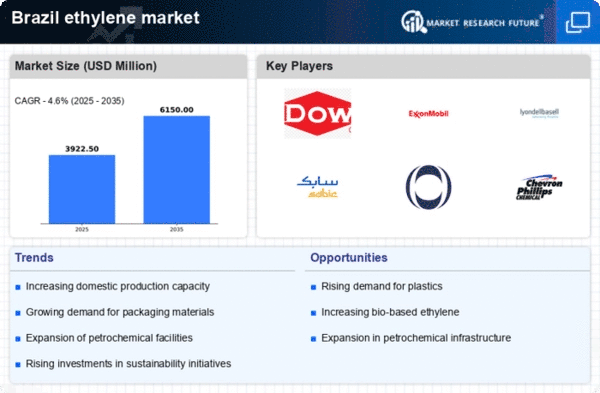
As per Market Research Future analysis, the Brazil ethylene market Size was estimated at 3750.0 USD Million in 2024. The Brazil ethylene market is projected to grow from 3922.5 USD Million in 2025 to 6150.0 USD Million by 2035, exhibiting a compound annual growth rate (CAGR) of 4% during the forecast period 2025 - 2035

Key Market Trends & Highlights

The Brazil ethylene market is experiencing a shift towards sustainable practices and technological advancements.

  • Sustainable production practices are increasingly being adopted across the Brazil ethylene market.
  • The automotive sector represents the largest segment, while the packaging sector is the fastest-growing segment in terms of demand.
  • Technological advancements in production processes are driving efficiency and reducing environmental impact.
  • Rising demand from the packaging sector and expansion of petrochemical infrastructure are key market drivers influencing growth.

Market Size & Forecast

2024 Market Size 3750.0 (USD Million)
2035 Market Size 6150.0 (USD Million)
CAGR (2025 - 2035) 4.6%

Major Players

Dow Chemical (US), ExxonMobil (US), LyondellBasell (US), SABIC (SA), INEOS (GB), Chevron Phillips Chemical (US), Formosa Plastics (TW), Reliance Industries (IN), Braskem (BR)

Our Impact
Enabled $4.3B Revenue Impact for Fortune 500 and Leading Multinationals
Partnering with 2000+ Global Organizations Each Year
30K+ Citations by Top-Tier Firms in the Industry

Brazil Ethylene Market Trends

The ethylene market in Brazil is currently experiencing a dynamic phase characterized by evolving demand and production capabilities. The country's strategic position as a leading producer of agricultural commodities drives the need for ethylene derivatives, particularly in the packaging and agricultural sectors. This demand is further fueled by the increasing focus on sustainable practices, which encourages the use of biodegradable materials derived from ethylene. Additionally, Brazil's robust petrochemical industry, supported by significant investments in infrastructure, enhances the overall production capacity of ethylene, positioning the nation as a key player in the regional market. Moreover, the regulatory landscape in Brazil is shifting towards stricter environmental standards, which may influence production methods and technologies in the ethylene market. Companies are likely to adapt by investing in cleaner technologies and processes to comply with these regulations. The interplay between domestic demand and international market trends suggests that Brazil's ethylene market could see substantial growth in the coming years, driven by innovation and sustainability initiatives. As the market evolves, stakeholders must remain vigilant to emerging trends and shifts in consumer preferences, which could shape the future landscape of the industry.

Sustainable Production Practices

There is a noticeable shift towards sustainable production methods within the ethylene market. Companies are increasingly adopting eco-friendly technologies to reduce emissions and waste. This trend aligns with global environmental goals and reflects the growing consumer demand for sustainable products.

Technological Advancements

Innovations in production technologies are transforming the ethylene market. Enhanced processes are leading to increased efficiency and reduced costs. These advancements may also facilitate the development of new ethylene derivatives, expanding the range of applications in various industries.

Regulatory Changes

The regulatory environment in Brazil is evolving, with stricter environmental regulations impacting the ethylene market. Companies are likely to face new compliance requirements, prompting them to invest in cleaner technologies and sustainable practices to meet these standards.

Market Segment Insights

By Feedstock: Naphtha (Largest) vs. Ethane (Fastest-Growing)

In the Brazil ethylene market, the feedstock segment shows a diverse distribution with Naphtha taking the lead as the largest contributor to overall production. Ethane follows as a significant contender, driven by advancements in extraction technologies and growing demands from the petrochemical sector. Other feedstocks, such as Propane and Butane, play supportive roles, while 'Others' encompass a range of inputs that still hold market relevance. The balance of supply and demand dynamics among these feedstocks paints a complex picture of production methodologies that cater to various consumer needs. Moreover, growth trends suggest that Ethane is emerging as the fastest-growing feedstock, fueled by environmental regulations favoring cleaner energy sources and a shift towards more sustainable production methods. As the market evolves, stakeholders are actively investing in Ethane infrastructure, anticipating increased market penetration. The overall feedstock landscape is characterized by a continual shift towards efficiency and environmental stewardship, aligning with global trends in the chemical industry.

Naphtha (Dominant) vs. Ethane (Emerging)

Naphtha, being the dominant feedstock in the Brazil ethylene market, is highly favored for its versatility and availability, providing an established pathway for ethylene production. Its extensive use in various applications underscores its central role in maintaining stable supply chains within the industry. On the other hand, Ethane is recognized as an emerging feedstock due to its growing potential for a more eco-friendly production process. As technological advancements reduce processing costs and improve efficiency, Ethane is gradually making inroads against traditional feedstocks. The market is witnessing a transition as companies look to balance the reliability of Naphtha while exploring the rapid growth and sustainability advantages of utilizing Ethane.

By Application: Polyethylene (Largest) vs. Ethylene Oxide (Fastest-Growing)

In the Brazil ethylene market, the application segment is primarily dominated by Polyethylene, which holds the largest share among all applications. Other significant components include Ethylene Oxide, Ethylbenzene, and Ethylene Dichloride, which collectively contribute to a diverse market landscape. The presence of Vinyl Acetate and other applications further enriches this segment, appealing to various industrial needs and consumer demands. The growth trends in this segment point towards a robust increase in the demand for Polyethylene due to its versatility in packaging and construction applications. Ethylene Oxide is emerging as the fastest-growing segment driven by rising applications in manufacturing antifreeze and detergents. Innovations in production technologies, coupled with increasing consumer awareness regarding sustainable materials, are likely to drive further growth in these applications.

Polyethylene (Dominant) vs. Ethylene Oxide (Emerging)

Polyethylene stands out as the dominant player in the Brazil ethylene market, largely due to its extensive use in packaging, containers, and construction materials. Its favorable properties, such as flexibility and resistance to chemicals, make it a preferred choice for manufacturers. On the other hand, Ethylene Oxide, while a smaller segment, is gaining traction as an emerging player, particularly in the production of industrial chemicals, antifreeze, and cleaning agents. Being a crucial intermediate in various chemical processes, its demand is expected to rise as industries evolve and the focus on specialty chemicals grows. Both these applications highlight the diverse applications of ethylene derivatives in the industrial landscape.

By End Use Industry: Packaging (Largest) vs. Automotive (Fastest-Growing)

In the Brazil ethylene market, the market share distribution indicates that the packaging segment holds the largest share, driven by increasing demand for packaged consumer goods. This segment has been consistently dominant, leveraging the rise in e-commerce and consumer products that require efficient and sustainable packaging solutions. On the other hand, the automotive sector is also significant, with its share increasing due to the automotive industry's transition towards lighter and more efficient materials. Growth trends in these segments are largely influenced by technological advancements and changing consumer preferences. The packaging segment is seeing innovations in biodegradable materials, which cater to sustainability trends. Meanwhile, the automotive segment is growing rapidly due to the electric vehicle boom, with ethylene-based products increasingly used in manufacturing components. These dynamics indicate a competitive landscape where both segments adapt to meet market demands.

Packaging (Dominant) vs. Automotive (Emerging)

The packaging segment in the Brazil ethylene market is characterized by its stronghold in providing materials that are essential for a variety of consumer goods. Dominating the market, it benefits from the rising trend toward environmental sustainability, which has prompted innovations in eco-friendly packaging solutions. Ethylene is a crucial component in producing versatile materials such as polyethylene, which is extensively used for packaging applications. Conversely, the automotive segment is emerging with rapid growth, fueled by the industry's shift towards sustainability and light-weighting initiatives, including the use of ethylene-based materials in electric vehicles and advanced composites. This contrast highlights the packaging segment's established presence versus the automotive segment's potential for explosive growth in the coming years.

Get more detailed insights about Brazil Ethylene Market

Key Players and Competitive Insights

The ethylene market in Brazil is characterized by a competitive landscape that is increasingly shaped by innovation, sustainability initiatives, and strategic partnerships. Key players such as Braskem (BR), Dow Chemical (US), and ExxonMobil (US) are actively pursuing strategies that emphasize regional expansion and technological advancements. Braskem, as the largest producer in Brazil, focuses on leveraging its local expertise to enhance production efficiency and reduce environmental impact. Meanwhile, Dow Chemical (US) is investing in digital transformation to optimize its operations, which appears to be a critical factor in maintaining competitive advantage. ExxonMobil (US) is also enhancing its operational focus on sustainability, indicating a collective shift among these companies towards environmentally responsible practices that could redefine market dynamics.In terms of business tactics, localizing manufacturing and optimizing supply chains are pivotal strategies employed by these companies. The market structure is moderately fragmented, with several players vying for market share, yet the influence of major companies remains substantial. This competitive environment fosters innovation and drives companies to adopt more efficient production methods, thereby enhancing overall market resilience.
In October Braskem (BR) announced a significant investment in a new ethylene production facility in the state of Bahia, aimed at increasing its capacity by 20%. This strategic move is expected to bolster its market position and meet the growing demand for ethylene derivatives in the region. The investment not only reflects Braskem's commitment to expanding its operational footprint but also underscores the importance of local production capabilities in a competitive landscape.
In September Dow Chemical (US) launched a new line of bio-based ethylene products, which aligns with the global trend towards sustainability. This initiative is likely to enhance Dow's product portfolio and appeal to environmentally conscious consumers, thereby positioning the company favorably in a market that increasingly values sustainable practices. The introduction of bio-based products may also serve as a differentiator in a crowded market, potentially attracting new customers.
In August ExxonMobil (US) entered into a strategic partnership with a Brazilian renewable energy firm to develop a new technology for carbon capture and storage. This collaboration is indicative of ExxonMobil's proactive approach to addressing environmental concerns while simultaneously enhancing its operational efficiency. The partnership may not only improve ExxonMobil's sustainability credentials but also provide a competitive edge in a market that is progressively leaning towards greener solutions.
As of November the ethylene market is witnessing trends that emphasize digitalization, sustainability, and technological integration. Companies are increasingly forming strategic alliances to enhance their competitive positioning, which suggests a shift towards collaborative innovation. The competitive differentiation is likely to evolve from traditional price-based competition to a focus on innovation, technology, and supply chain reliability. This transition may redefine how companies engage with customers and respond to market demands, ultimately shaping the future of the ethylene market.

Key Companies in the Brazil Ethylene Market include

Industry Developments

The Brazil Ethylene Market has seen significant developments recently, with companies like Braskem focusing on increasing production capacity to meet rising domestic and international demand. In August 2023, Braskem launched expanded services to enhance customer experience and market reach, emphasizing sustainability in its operations. Furthermore, Petrobras announced in July 2023 plans to revamp its ethylene production facilities, aiming to double output by 2025, which reflects a strategic push to strengthen its position within the regional market.

In terms of mergers and acquisitions, there have been no major recent consolidations among the key players such as SABIC, Chevron Phillips Chemical, and LG Chem reported in the Brazilian sector.

However, the growth in market valuation for companies like Dow and BASF is being driven by increased investments in petrochemicals, as well as advancements in catalytic technologies enhancing production efficiency. Additionally, Brazil's commitment to reducing carbon emissions has led companies to explore innovative practices, impacting the overall trends in the Ethylene Market as firms focus on compliance with environmental regulations. Overall, these developments reflect a dynamic shift in the Brazilian ethylene landscape as companies adapt to market demands and sustainability requirements.

Future Outlook

Brazil Ethylene Market Future Outlook

The ethylene market in Brazil is projected to grow at a 4.6% CAGR from 2025 to 2035, driven by rising demand in packaging and automotive sectors.

New opportunities lie in:

  • Investment in advanced ethylene production technologies to enhance efficiency. Development of bio-based ethylene products to meet sustainability goals. Expansion of distribution networks to improve market reach and customer access.

By 2035, the ethylene market in Brazil is expected to achieve robust growth and increased competitiveness.

Market Segmentation

Brazil Ethylene Market Feedstock Outlook

  • Naphtha
  • Ethane
  • Propane
  • Butane
  • Others

Brazil Ethylene Market Application Outlook

  • Polyethylene
  • Ethylene Oxide
  • Ethylbenzene
  • Ethylene Dichloride
  • Vinyl Acetate
  • Others

Brazil Ethylene Market End Use Industry Outlook

  • Packaging
  • Automotive
  • Building & Construction
  • Agrochemical
  • Textile
  • Chemicals
  • Rubber & Plastics
  • Soaps & Detergents
  • Others

Report Scope

MARKET SIZE 2024 3750.0(USD Million)
MARKET SIZE 2025 3922.5(USD Million)
MARKET SIZE 2035 6150.0(USD Million)
COMPOUND ANNUAL GROWTH RATE (CAGR) 4.6% (2025 - 2035)
REPORT COVERAGE Revenue Forecast, Competitive Landscape, Growth Factors, and Trends
BASE YEAR 2024
Market Forecast Period 2025 - 2035
Historical Data 2019 - 2024
Market Forecast Units USD Million
Key Companies Profiled Dow Chemical (US), ExxonMobil (US), LyondellBasell (US), SABIC (SA), INEOS (GB), Chevron Phillips Chemical (US), Formosa Plastics (TW), Reliance Industries (IN), Braskem (BR)
Segments Covered Feedstock, Application, End Use Industry
Key Market Opportunities Adoption of sustainable production methods in the ethylene market enhances competitiveness and meets regulatory demands.
Key Market Dynamics Rising demand for sustainable packaging drives innovation and competition in the ethylene market.
Countries Covered Brazil
Leave a Comment

FAQs

What is the expected market size of the Brazil Ethylene Market in 2024?

The Brazil Ethylene Market is expected to be valued at 7.93 USD Billion in 2024.

What will be the market size of the Brazil Ethylene Market by 2035?

By 2035, the Brazil Ethylene Market is projected to reach a value of 12.21 USD Billion.

What is the expected CAGR for the Brazil Ethylene Market from 2025 to 2035?

The expected CAGR for the Brazil Ethylene Market from 2025 to 2035 is 4.006%.

Who are the key players in the Brazil Ethylene Market?

Major players in the Brazil Ethylene Market include SABIC, Chevron Phillips Chemical, Reliance Industries, and Braskem.

What is the market value of Naphtha in the Brazil Ethylene Market in 2024?

Naphtha is valued at 2.8 USD Billion in the Brazil Ethylene Market in 2024.

What is the projected market value of Ethane in 2035?

The market value of Ethane in the Brazil Ethylene Market is expected to reach 3.4 USD Billion by 2035.

What are the market values for Propane in 2024 and 2035?

In 2024, the market value for Propane is estimated at 1.3 USD Billion, increasing to 2.1 USD Billion by 2035.

How much is the market for Butane expected to grow by 2035?

The market for Butane in the Brazil Ethylene Market is expected to grow from 0.9 USD Billion in 2024 to 1.4 USD Billion by 2035.

What is the market size for 'Others' feedstock in the Brazil Ethylene Market in 2024?

'Others' feedstock is valued at 0.73 USD Billion in 2024, with a projected growth to 0.91 USD Billion by 2035.

What are the growth opportunities influencing the Brazil Ethylene Market?

Growth opportunities in the Brazil Ethylene Market are driven by increasing demand for plastics and packaging applications.

Download Free Sample

Kindly complete the form below to receive a free sample of this Report

Compare Licence

×
Features License Type
Single User Multiuser License Enterprise User
Price $4,950 $5,950 $7,250
Maximum User Access Limit 1 User Upto 10 Users Unrestricted Access Throughout the Organization
Free Customization
Direct Access to Analyst
Deliverable Format
Platform Access
Discount on Next Purchase 10% 15% 15%
Printable Versions







