×
Hero Background
English
Chinese
French
Japanese
Korean
German
Spanish

Brain Ischemia Market Share

ID: MRFR/MED/0915-HCR
85 Pages
Kinjoll Dey
October 2025

Brain Ischemia Market Research Report Information by Condition Type (Focal Brain Ischemia and Global Brain Ischemia), Treatment [Angioplasty, Beta Blockers, Angiotensin-Converting Enzyme (ACE) Inhibitors and others], End User (Hospitals & Clinics, Research & Academic Institutes and others) and Region (the Americas, Europe, Asia-Pacific and the Middle East & Africa) - Global Forecast till 2035

Share:
Download PDF ×

We do not share your information with anyone. However, we may send you emails based on your report interest from time to time. You may contact us at any time to opt-out.

Brain Ischemia Market Infographic
Purchase Options

Market Share

Brain Ischemia Market Share Analysis

To correctly function inside the Brain ischemia market, corporations first need a complete know-how of the present-day market dynamics. This includes reading about the superiority of brain ischemia, identifying key players, and assessing the demand for present treatments. A successful market percentage positioning method calls for a clear identification of the target patient population. Companies have to verify elements together with age corporations, danger elements, and geographic prevalence to tailor their products or services to the particular wishes of various patient segments. To take advantage of an aggressive side within the Brain ischemia market, organizations have to be mindful of growing revolutionary treatment methods. This should contain novel medicinal drugs, advanced scientific gadgets, or groundbreaking healing procedures that deal with the basic causes of brain ischemia more efficaciously than existing answers. Building robust relationships with healthcare specialists is critical for market positioning. Engaging with neurologists, cardiologists, and other professionals guarantees that the business enterprise's merchandise is nicely acquired and recommended within the medical community, mainly to accelerate market percentage. Creating recognition of brain ischemia amongst healthcare professionals and the general public is vital. Companies can put in force educational projects, consisting of workshops, seminars, and online campaigns, to disseminate information about the condition and its to-be-had treatments. Pricing plays a pivotal role in market share positioning. Developing on-hand pricing trends for medicines or treatment options ensures that a broader affected person populace can come up with the money for the treatment, thereby growing the market reach and percentage. Companies need to explore possibilities for global market enlargement. This involves adapting merchandise to fulfill worldwide requirements, acquiring regulatory approvals in key markets, and establishing distribution channels to reach patients globally. Collaborating with different pharmaceutical companies, studies establishments, or healthcare groups can open avenues for synergies and shared sources. Strategic alliances can result in the development of comprehensive solutions and a stronger market function. To hold a competitive advantage, agencies have to spend money on ongoing studies and improvement. Staying abreast of medical advancements allows for the non-stop development of current remedies and the improvement of new, more powerful answers for brain ischemia. Putting the affected person in the middle of product improvement and advertising strategies is prime. Understanding patient wishes, possibilities, and remarks guarantees that products are designed and promoted in a way that resonates with the audience. Adhering to stringent regulatory requirements is non-negotiable within the healthcare enterprise. Ensuring that products meet all regulatory necessities not only safeguards patient safety but also builds agreement with healthcare companies and regulatory authorities, contributing to a superb market image.

Author
Kinjoll Dey
Research Analyst Level I

He is an extremely curious individual currently working in Healthcare and Medical Devices Domain. Kinjoll is comfortably versed in data centric research backed by healthcare educational background. He leverages extensive data mining and analytics tools such as Primary and Secondary Research, Statistical Analysis, Machine Learning, Data Modelling. His key role also involves Technical Sales Support, Client Interaction and Project management within the Healthcare team. Lastly, he showcases extensive affinity towards learning new skills and remain fascinated in implementing them.

Leave a Comment

Market Summary

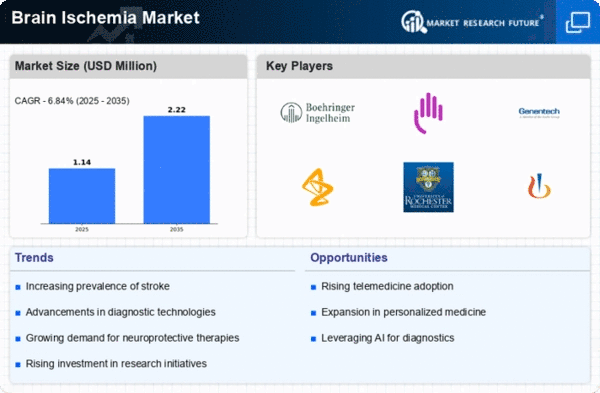
As per MRFR analysis, the Brain Ischemia Market Size was estimated at 1066.74 USD Million in 2024. The Brain Ischemia industry is projected to grow from 1151.92 USD Million in 2025 to 2218.21 USD Million by 2035, exhibiting a compound annual growth rate (CAGR) of 6.84 during the forecast period 2025 - 2035.

Key Market Trends & Highlights

The Brain Ischemia Market is poised for substantial growth driven by technological advancements and increasing awareness.

  • Technological advancements in diagnostics are enhancing the accuracy of brain ischemia detection in North America.
  • The focus on personalized medicine is gaining traction, particularly in the ischemic stroke segment, which remains the largest market.
  • Increased research funding is propelling innovation in treatment modalities across the Asia-Pacific region, the fastest-growing market.
  • Rising incidence of stroke and growing awareness initiatives are key drivers fueling market expansion in both global ischemia and focal ischemia segments.

Market Size & Forecast

2024 Market Size 1066.74 (USD Million)
2035 Market Size 2218.21 (USD Million)
CAGR (2025 - 2035) 6.84%
Largest Regional Market Share in 2024 North America

Major Players

<p>Boehringer Ingelheim (DE), Bristol-Myers Squibb (US), Genentech (US), AstraZeneca (GB), Roche (CH), Novartis (CH), Pfizer (US), Eli Lilly and Company (US), Sanofi (FR)</p>

Market Trends

The Brain Ischemia Market is currently experiencing a notable evolution, driven by advancements in medical technology and an increasing understanding of neurological disorders. As healthcare systems worldwide prioritize early diagnosis and effective treatment options, the demand for innovative therapies and diagnostic tools is on the rise. This shift is likely influenced by a growing awareness of the long-term impacts of brain ischemia, which can lead to severe cognitive impairments and reduced quality of life. Consequently, stakeholders in the Brain Ischemia Market are focusing on research and development to create more effective solutions that address the complexities of this condition. Moreover, the landscape of the Brain Ischemia Market is shaped by collaborative efforts among pharmaceutical companies, research institutions, and healthcare providers. These partnerships aim to enhance patient outcomes through the development of novel therapeutic agents and improved intervention strategies. The integration of artificial intelligence and machine learning into diagnostic processes also appears to be a significant trend, potentially streamlining patient assessment and treatment planning. As the market continues to evolve, it is essential for stakeholders to remain adaptable and responsive to emerging challenges and opportunities in the field of brain health.

Technological Advancements in Diagnostics

The Brain Ischemia Market is witnessing a surge in the adoption of advanced diagnostic technologies. Innovations such as neuroimaging techniques and biomarker identification are enhancing the accuracy of brain ischemia detection. These developments facilitate timely interventions, which are crucial for improving patient outcomes.

Focus on Personalized Medicine

There is a growing emphasis on personalized medicine within the Brain Ischemia Market. Tailoring treatment plans to individual patient profiles, including genetic and environmental factors, may lead to more effective management of brain ischemia. This trend reflects a broader shift towards patient-centered care.

Increased Research Funding

The Brain Ischemia Market is benefiting from increased funding for research initiatives. Governments and private organizations are investing in studies aimed at understanding the underlying mechanisms of brain ischemia. This influx of resources is likely to accelerate the development of new therapies and improve existing treatment protocols.

Brain Ischemia Market Market Drivers

Market Growth Projections

The Global Brain Ischemia Market Industry is projected to experience substantial growth over the next decade. The market is anticipated to reach a value of 0.29 USD Billion in 2024 and is expected to expand significantly, potentially reaching 1.99 USD Billion by 2035. This growth trajectory reflects a compound annual growth rate of 19.2% from 2025 to 2035, driven by factors such as increasing prevalence of neurological disorders, advancements in medical technology, and rising healthcare investments. These projections underscore the dynamic nature of the market and the ongoing efforts to improve brain ischemia management.

Growing Awareness and Education

There is a notable increase in awareness and education regarding brain health and ischemic conditions, which is driving the Global Brain Ischemia Market Industry. Public health campaigns and educational initiatives are informing individuals about the risk factors and symptoms associated with brain ischemia. This heightened awareness is likely to lead to earlier diagnosis and treatment, ultimately improving patient outcomes. As more individuals seek medical attention for symptoms related to brain ischemia, the market is poised for substantial growth, potentially reaching 1.99 USD Billion by 2035.

Advancements in Medical Technology

Technological innovations in medical devices and treatment methodologies are significantly influencing the Global Brain Ischemia Market Industry. The development of advanced imaging techniques, such as MRI and CT scans, allows for earlier detection and intervention in ischemic events. Additionally, the introduction of minimally invasive surgical procedures has improved patient outcomes and reduced recovery times. As these technologies continue to evolve, they are expected to contribute to a market growth rate of 19.2% CAGR from 2025 to 2035, reflecting the increasing reliance on sophisticated medical solutions in managing brain ischemia.

Regulatory Support for Innovative Therapies

Regulatory bodies are increasingly supporting the development and approval of innovative therapies for brain ischemia, which is a significant driver of the Global Brain Ischemia Market Industry. Initiatives aimed at expediting the approval process for new drugs and devices are encouraging pharmaceutical companies and researchers to invest in novel treatment options. This regulatory support is essential for bringing effective therapies to market more rapidly, thereby addressing the unmet medical needs of patients suffering from brain ischemia. As a result, the market is expected to experience robust growth in the coming years.

Rising Investment in Healthcare Infrastructure

Investment in healthcare infrastructure is a crucial factor propelling the Global Brain Ischemia Market Industry. Governments and private entities are increasingly allocating funds to enhance healthcare facilities, particularly in regions with high incidences of ischemic strokes. This investment facilitates the establishment of specialized centers for stroke care and rehabilitation, improving access to timely treatment. Enhanced healthcare infrastructure not only supports the delivery of advanced medical services but also fosters research and development in brain ischemia therapies, contributing to the overall growth of the market.

Increasing Prevalence of Neurological Disorders

The rising incidence of neurological disorders, including stroke and transient ischemic attacks, is a primary driver of the Global Brain Ischemia Market Industry. As the global population ages, the prevalence of these conditions is expected to escalate, leading to a projected market value of 0.29 USD Billion in 2024. This increase is indicative of the growing need for effective treatment options and preventive measures. Furthermore, the World Health Organization reports that stroke is one of the leading causes of disability worldwide, highlighting the urgent need for advancements in brain ischemia management.

Market Segment Insights

By Application: Ischemic Stroke (Largest) vs. Transient Ischemic Attack (Fastest-Growing)

<p>In the Brain Ischemia Market, the application segments exhibit varying market shares, with Ischemic Stroke commanding the largest share due to its high prevalence and significant healthcare burden. Transient Ischemic Attack follows, becoming increasingly notable due to growing awareness and advancements in diagnostic methods. Other applications, such as Cerebral Ischemia and Brain Injury, though important, occupy smaller niches, while Other Neurological Disorders play a crucial role in the broader understanding of brain ischemic conditions.</p>

<p>Ischemic Stroke (Dominant) vs. Transient Ischemic Attack (Emerging)</p>

<p>Ischemic Stroke remains the dominant force in the Brain Ischemia Market, attributed to its alarming incidence rates and the critical need for effective treatment strategies. This segment benefits from extensive research funding and established treatment protocols, driving its sustained relevance. Conversely, Transient Ischemic Attack represents an emerging segment, rapidly gaining recognition for its significance as a precursor to full-blown strokes. The increasing emphasis on preventive measures and early intervention strategies highlights this segment's growth potential, indicating a shift in focus towards managing risk factors associated with brain ischemia.</p>

By Type of Ischemia: Global Ischemia (Largest) vs. Focal Ischemia (Fastest-Growing)

<p>In the Brain Ischemia Market, the segment distribution reveals that The Brain Ischemia share due to its wide impact and prevalence in various demographics. On the other hand, Focal Ischemia, characterized by localized interruption of blood flow, is identified as the fastest-growing segment, driven by increasing awareness and advancements in diagnostic technologies. The ongoing research aimed at addressing this type of ischemia contributes significantly to its rapid growth.</p>

<p>Global Ischemia (Dominant) vs. Focal Ischemia (Emerging)</p>

<p>The Brain Ischemia, encompassing a vast array of cases where blood flow reduction affects larger regions of the brain. This segment’s dominance is attributed to its higher incidence rates and comprehensive recognition among healthcare providers. In contrast, Focal Ischemia is emerging rapidly, appealing to new treatment strategies and innovations in patient management, making it attractive to both investors and researchers. The shift toward personalized medicine and targeted interventions plays a crucial role in its growth potential.</p>

By Treatment Method: Pharmacological Therapy (Largest) vs. Surgical Intervention (Fastest-Growing)

<p>Within the Brain Ischemia market, treatment methods are crucial for patient recovery and management. Pharmacological Therapy dominates this segment, widely recognized for its accessibility and varied options to treat ischemic episodes. On the other hand, Surgical Intervention, while smaller in market share, is rapidly gaining attention due to advancements in technology and minimally invasive techniques that enhance patient outcomes. This demonstrates a clear division in treatment preferences among practitioners. The growth trends in this segment are driven by several factors, including an increasing incidence of ischemic strokes and a growing focus on innovative therapies. While Pharmacological Therapy remains a staple, Surgical Intervention is experiencing rapid growth as new surgical techniques are developed. Additionally, the focus on reducing recovery times and improving quality of life for patients plays a significant role in increasing the adoption of surgical treatments.</p>

<p>Pharmacological Therapy (Dominant) vs. Surgical Intervention (Emerging)</p>

<p>Pharmacological Therapy is the dominant treatment method in the Brain Ischemia market, offering a range of drug interventions that address the acute and chronic phases of ischemic events. This method encompasses antiplatelet agents, anticoagulants, and thrombolytic drugs, providing flexibility in patient management. Meanwhile, Surgical Intervention is emerging as a vital alternative, particularly as advancements in neurosurgery provide new options for patients who do not respond well to medication. Techniques such as thrombectomy are becoming more prevalent, highlighting an evolving landscape where surgical methods are seen as not just an option but a critical component in holistic ischemia management. This juxtaposition of traditional pharmacological approaches against innovative surgical techniques illustrates the dynamic nature of the Brain Ischemia market.</p>

Get more detailed insights about Brain Ischemia Market Research Report - Global Forecast till 2035

Regional Insights

North America : Market Leader in Innovation

North America continues to lead the Brain Ischemia market, holding a significant share of 533.37M in 2024. The region's growth is driven by advanced healthcare infrastructure, increasing prevalence of neurological disorders, and robust research initiatives. Regulatory support for innovative therapies and a strong focus on patient-centric care further catalyze market expansion. The demand for effective treatment options is rising, fueled by an aging population and heightened awareness of brain health. The competitive landscape in North America is characterized by the presence of major pharmaceutical companies such as Boehringer Ingelheim, Bristol-Myers Squibb, and Genentech. These key players are actively engaged in developing novel therapies and expanding their product portfolios. The U.S. remains the largest market, supported by significant investments in R&D and favorable reimbursement policies. This dynamic environment positions North America as a hub for innovation in the Brain Ischemia market.

Europe : Emerging Market with Growth Potential

Europe's Brain Ischemia market is valued at 319.96M, reflecting a growing demand for innovative treatments. The region benefits from a strong regulatory framework that encourages research and development, alongside increasing investments in healthcare. The rising incidence of stroke and other neurological conditions drives the need for effective therapies. Additionally, initiatives aimed at improving healthcare access and quality are expected to further boost market growth in the coming years. Leading countries in Europe include Germany, France, and the UK, where key players like Roche and Novartis are making significant contributions. The competitive landscape is evolving, with a focus on collaboration between pharmaceutical companies and research institutions. This synergy is essential for developing cutting-edge therapies that address unmet medical needs in the Brain Ischemia market. The European Medicines Agency continues to play a pivotal role in ensuring the safety and efficacy of new treatments.

Asia-Pacific : Rapidly Growing Healthcare Sector

The Asia-Pacific region, with a market size of 164.01M, is witnessing rapid growth in the Brain Ischemia sector. Factors such as increasing healthcare expenditure, rising awareness of neurological diseases, and a growing aging population are driving demand for effective treatments. Governments are implementing policies to enhance healthcare infrastructure, which is expected to further stimulate market growth. The region's diverse population presents unique challenges and opportunities for tailored therapeutic solutions. Countries like Japan, China, and India are at the forefront of this growth, with significant investments from both local and international pharmaceutical companies. The competitive landscape is becoming increasingly dynamic, with key players like Pfizer and Eli Lilly expanding their presence. Collaborations between industry and academia are fostering innovation, leading to the development of new therapies that cater to the specific needs of the region's population.

Middle East and Africa : Emerging Market with Challenges

The Middle East and Africa (MEA) region, valued at 49.4M, presents a unique landscape for the Brain Ischemia market. The growth is driven by increasing healthcare investments and a rising prevalence of neurological disorders. However, challenges such as limited access to advanced healthcare facilities and varying regulatory environments can hinder market expansion. Efforts to improve healthcare infrastructure and access are crucial for addressing these challenges and enhancing patient outcomes. Countries like South Africa and the UAE are leading the way in adopting innovative treatments, with a growing presence of international pharmaceutical companies. The competitive landscape is evolving, with local players also emerging to meet the specific needs of the region. Collaborative efforts between governments and healthcare providers are essential for fostering a conducive environment for market growth and improving healthcare delivery in the MEA region.

Key Players and Competitive Insights

The Brain Ischemia Market is characterized by a dynamic competitive landscape, driven by advancements in therapeutic solutions and a growing emphasis on early intervention strategies. Key players such as Boehringer Ingelheim (DE), Bristol-Myers Squibb (US), and Genentech (US) are actively engaged in innovation and strategic partnerships to enhance their market positioning. Boehringer Ingelheim (DE) focuses on developing novel therapies that target ischemic pathways, while Bristol-Myers Squibb (US) emphasizes its commitment to research and development, particularly in the realm of neuroprotective agents. Genentech (US) is leveraging its expertise in biologics to explore new treatment modalities, thereby shaping a competitive environment that prioritizes cutting-edge solutions and collaborative efforts.

In terms of business tactics, companies are increasingly localizing manufacturing and optimizing supply chains to enhance operational efficiency. The market appears moderately fragmented, with several players vying for market share. However, the collective influence of major companies is significant, as they drive innovation and set industry standards. This competitive structure fosters an environment where collaboration and strategic alliances are essential for success, allowing companies to pool resources and expertise.

In November 2025, Boehringer Ingelheim (DE) announced a strategic partnership with a leading research institution to accelerate the development of its ischemia-focused therapies. This collaboration is expected to enhance the company’s research capabilities and expedite the clinical trial process, thereby positioning it favorably in a rapidly evolving market. The strategic importance of this partnership lies in its potential to bring innovative treatments to market more swiftly, addressing unmet medical needs in brain ischemia.

In October 2025, Bristol-Myers Squibb (US) launched a new clinical trial aimed at evaluating the efficacy of its latest neuroprotective agent in patients experiencing acute ischemic strokes. This initiative underscores the company’s commitment to advancing treatment options and highlights its proactive approach to addressing critical health challenges. The trial's outcomes could significantly influence treatment protocols and establish Bristol-Myers Squibb as a leader in the field.

In September 2025, Genentech (US) received regulatory approval for a groundbreaking therapy designed to mitigate the effects of brain ischemia. This approval marks a pivotal moment for the company, as it not only expands its product portfolio but also reinforces its reputation as an innovator in the market. The introduction of this therapy is likely to reshape treatment paradigms and enhance patient outcomes, further solidifying Genentech's competitive edge.

As of December 2025, current trends in the Brain Ischemia Market are increasingly defined by digitalization, sustainability, and the integration of artificial intelligence (AI) in research and development processes. Strategic alliances are playing a crucial role in shaping the competitive landscape, enabling companies to leverage shared knowledge and resources. Looking ahead, competitive differentiation is expected to evolve, with a pronounced shift from price-based competition to a focus on innovation, technological advancements, and supply chain reliability. This transition may ultimately lead to improved patient outcomes and a more sustainable market environment.

Key Companies in the Brain Ischemia Market market include

Industry Developments

The rise in most chronic diseases such as cancer, diabetes, cardiovascular problems, and brain ischemia is due to sedentary lifestyles, bad diets, and lack of exercise but the various players in the market are working on it and taking a step forward.

The significant frequency of brain illnesses among the senior population is due to an increase in research and technical development of the brain ischemia market. The key market players are strategizing about the market growth.


Future Outlook

Brain Ischemia Market Future Outlook

<p>The Brain Ischemia Market is projected to grow at a 6.84% CAGR from 2024 to 2035, driven by advancements in treatment technologies and increasing patient awareness.</p>

New opportunities lie in:

  • <p>Development of telemedicine platforms for remote patient monitoring</p>
  • <p>Investment in AI-driven diagnostic tools for early detection</p>
  • <p>Expansion of rehabilitation services tailored for ischemic stroke patients</p>

<p>By 2035, the Brain Ischemia Market is expected to achieve substantial growth and innovation.</p>

Market Segmentation

Brain Ischemia Market Application Outlook

  • Ischemic Stroke
  • Transient Ischemic Attack
  • Cerebral Ischemia
  • Brain Injury
  • Other Neurological Disorders

Brain Ischemia Market Treatment Method Outlook

  • Pharmacological Therapy
  • Surgical Intervention
  • Rehabilitation Therapy
  • Neuroprotective Agents

Brain Ischemia Market Type of Ischemia Outlook

  • Global Ischemia
  • Focal Ischemia
  • Reversible Ischemia
  • Irreversible Ischemia

Report Scope

MARKET SIZE 20241066.74(USD Million)
MARKET SIZE 20251151.92(USD Million)
MARKET SIZE 20352218.21(USD Million)
COMPOUND ANNUAL GROWTH RATE (CAGR)6.84% (2024 - 2035)
REPORT COVERAGERevenue Forecast, Competitive Landscape, Growth Factors, and Trends
BASE YEAR2024
Market Forecast Period2025 - 2035
Historical Data2019 - 2024
Market Forecast UnitsUSD Million
Key Companies ProfiledBoehringer Ingelheim (DE), Bristol-Myers Squibb (US), Genentech (US), AstraZeneca (GB), Roche (CH), Novartis (CH), Pfizer (US), Eli Lilly and Company (US), Sanofi (FR)
Segments CoveredApplication, Type of Ischemia, Treatment Method
Key Market OpportunitiesAdvancements in neuroprotective therapies and diagnostic technologies enhance prospects in the Brain Ischemia Market.
Key Market DynamicsRising demand for innovative therapies drives competition and regulatory scrutiny in the Brain Ischemia Market.
Countries CoveredNorth America, Europe, APAC, South America, MEA

FAQs

  1. REPORT PROLOGUE
  2. MARKET INTRODUCTION
    1. Definition
    2. Scope of the Study
      1. Research Objective
      2. Assumptions
      3. Limitations
  3. RESEARCH METHODOLOGY
    1. Overview
    2. Primary Research
    3. Secondary Research
    4. Market Size Estimation
  4. MARKET DYNAMICS
    1. Overview
    2. Drivers
    3. Restraints
    4. Opportunities
  5. MARKET FACTOR ANALYSIS
    1. Porter’s Five Forces Analysis
      1. Bargaining Power of Suppliers
      2. Bargaining Power of Buyers
      3. Threat of New Entrants
      4. Threat of Substitutes
      5. Intensity of Rivalry
    2. Value Chain Analysis
  6. GLOBAL BRAIN ISCHEMIA MARKET, BY CONDITION TYPE
    1. Overview
    2. Focal Brain Ischemia
  7. Market Estimates & Forecast, by Region, 2020-2027
  8. Market Estimates & Forecast, by Country, 2020-2027
    1. Global Brain Ischemia
  9. Market Estimates & Forecast, by Region, 2020-2027
  10. Market Estimates & Forecast, by Country, 2020-2027
  11. GLOBAL BRAIN ISCHEMIA MARKET, BY TREATMENT
    1. Overview
    2. Angioplasty
  12. Market Estimates & Forecast, by Region, 2020-2027
  13. Market Estimates & Forecast, by Country, 2020-2027
    1. Beta Blockers
  14. Market Estimates & Forecast, by Region, 2020-2027
  15. Market Estimates & Forecast, by Country, 2020-2027
    1. Angiotensin-Converting Enzyme (ACE) Inhibitors
  16. Market Estimates & Forecast, by Region, 2020-2027
  17. Market Estimates & Forecast, by Country, 2020-2027
    1. Others
  18. Market Estimates & Forecast, by Region, 2020-2027
  19. Market Estimates & Forecast, by Country, 2020-2027
  20. GLOBAL BRAIN ISCHEMIA MARKET, BY END USER
    1. Overview
    2. Hospitals & Clinics
  21. Market Estimates & Forecast, by Region, 2020-2027
  22. Market Estimates & Forecast, by Country, 2020-2027
    1. Research and Academic Institutes
  23. Market Estimates & Forecast, by Region, 2020-2027
  24. Market Estimates & Forecast, by Country, 2020-2027
    1. Others
  25. Market Estimates & Forecast, by Region, 2020-2027
  26. Market Estimates & Forecast, by Country, 2020-2027
  27. GLOBAL BRAIN ISCHEMIA MARKET, BY REGION
    1. Overview
    2. Americas
      1. North America
      2. Latin America
    3. Europe
      1. Western Europe
      2. Eastern Europe
    4. Asia-Pacific
      1. Japan
      2. China
      3. India
      4. Australia
      5. South Korea
      6. Rest of Asia-Pacific
    5. Middle East & Africa
      1. Middle East
      2. Africa
  28. COMPANY LANDSCAPE
    1. Overview
    2. Competitive Analysis
    3. Market Share Analysis
    4. Major Growth Strategy in the Global Brain Ischemia Market
    5. Competitive Benchmarking
    6. Leading Players in terms of Number of Developments in the Global Brain Ischemia Market
    7. Key Developments and Growth Strategies
      1. New Product Launch/Service Deployment
      2. Mergers and Acquisitions
      3. Joint Ventures
    8. Major Players Financial Matrix & Market Ratio
      1. Sales & Operating Income 2020
      2. Major Players R&D Expenditure 2020
    9. Major Players Capital Market Ratio
  29. COMPANY PROFILES
    1. Taxus Cardium
      1. Company Overview
      2. Product Overview
      3. Financial Overview
      4. Key Developments
      5. SWOT Analysis
      6. Key Strategies
    2. Edwards Lifesciences Corporation
      1. Company Overview
      2. Product Overview
      3. Financial Overview
      4. Key Developments
      5. SWOT Analysis
      6. Key Strategies
    3. Boston Scientific Corporation
      1. Company Overview
      2. Product Overview
      3. Financial Overview
      4. Key Developments
      5. SWOT Analysis
      6. Key Strategies
    4. Merck KGaA
      1. Company Overview
      2. Product Overview
      3. Financial Overview
      4. Key Developments
      5. SWOT Analysis
      6. Key Strategies
    5. Medtronic
      1. Company Overview
      2. Product Overview
      3. Financial Overview
      4. Key Developments
      5. SWOT Analysis
      6. Key Strategies
    6. Cook Medical
      1. Company Overview
      2. Product Overview
      3. Financial Overview
      4. Key Developments
      5. SWOT Analysis
      6. Key Strategies
    7. Novartis AG
      1. Company Overview
      2. Product Overview
      3. Financial Overview
      4. Key Developments
      5. SWOT Analysis
      6. Key Strategies
    8. Boehringer Ingelheim International GmbH
      1. Company Overview
      2. Product Overview
      3. Financial Overview
      4. Key Developments
      5. SWOT Analysis
      6. Key Strategies
    9. Abbott
      1. Company Overview
      2. Product Overview
      3. Financial Overview
      4. Key Developments
      5. SWOT Analysis
      6. Key Strategies
    10. Becton, Dickinson and Company
      1. Company Overview
      2. Product Overview
      3. Financial Overview
      4. Key Developments
      5. SWOT Analysis
      6. Key Strategies
    11. Johnson & Johnson Services, Inc.
      1. Company Overview
      2. Product Overview
      3. Financial Overview
      4. Key Developments
      5. SWOT Analysis
      6. Key Strategies
    12. Bayer AG
      1. Company Overview
      2. Product Overview
      3. Financial Overview
      4. Key Developments
      5. SWOT Analysis
      6. Key Strategies
    13. AstraZeneca
      1. Company Overview
      2. Product Overview
      3. Financial Overview
      4. Key Developments
      5. SWOT Analysis
      6. Key Strategies
    14. Others
  30. APPENDIX
    1. References
    2. Related Reports
  31. LIST OF TABLES
  32. GLOBAL BRAIN ISCHEMIA MARKET SYNOPSIS, 2020-2027
  33. GLOBAL BRAIN ISCHEMIA MARKET ESTIMATES & FORECAST, 2020-2027 (USD MILLION)
  34. GLOBAL BRAIN ISCHEMIA MARKET, BY CONDITION TYPE, 2020-2027 (USD MILLION)
  35. GLOBAL BRAIN ISCHEMIA MARKET, BY TREATMENT, 2020-2027 (USD MILLION)
  36. GLOBAL BRAIN ISCHEMIA MARKET, BY END USER, 2020-2027 (USD MILLION)
  37. GLOBAL BRAIN ISCHEMIA MARKET, BY REGION, 2020-2027 (USD MILLION)
  38. NORTH AMERICA: BRAIN ISCHEMIA MARKET, BY CONDITION TYPE, 2020-2027 (USD MILLION)
  39. NORTH AMERICA: BRAIN ISCHEMIA MARKET, BY TREATMENT, 2020-2027 (USD MILLION)
  40. NORTH AMERICA: BRAIN ISCHEMIA MARKET, BY END USER, 2020-2027 (USD MILLION)
  41. US: BRAIN ISCHEMIA MARKET, BY CONDITION TYPE, 2020-2027 (USD MILLION)
  42. US: BRAIN ISCHEMIA MARKET, BY TREATMENT, 2020-2027 (USD MILLION)
  43. US: BRAIN ISCHEMIA MARKET, BY END USER, 2020-2027 (USD MILLION)
  44. CANADA: BRAIN ISCHEMIA MARKET, BY CONDITION TYPE, 2020-2027 (USD MILLION)
  45. CANADA: BRAIN ISCHEMIA MARKET, BY TREATMENT, 2020-2027 (USD MILLION)
  46. CANADA: BRAIN ISCHEMIA MARKET, BY END USER, 2020-2027 (USD MILLION)
  47. LATIN AMERICA: BRAIN ISCHEMIA MARKET, BY CONDITION TYPE, 2020-2027 (USD MILLION)
  48. LATIN AMERICA: BRAIN ISCHEMIA MARKET, BY TREATMENT, 2020-2027 (USD MILLION)
  49. LATIN AMERICA: BRAIN ISCHEMIA MARKET, BY END USER, 2020-2027 (USD MILLION)
  50. EUROPE: BRAIN ISCHEMIA MARKET, BY CONDITION TYPE, 2020-2027 (USD MILLION)
  51. EUROPE: BRAIN ISCHEMIA MARKET, BY TREATMENT, 2020-2027 (USD MILLION)
  52. EUROPE: BRAIN ISCHEMIA MARKET, BY END USER, 2020-2027 (USD MILLION)
  53. WESTERN EUROPE: BRAIN ISCHEMIA MARKET, BY CONDITION TYPE, 2020-2027 (USD MILLION)
  54. WESTERN EUROPE: BRAIN ISCHEMIA MARKET, BY TREATMENT, 2020-2027 (USD MILLION)
  55. WESTERN EUROPE: BRAIN ISCHEMIA MARKET, BY END USER, 2020-2027 (USD MILLION)
  56. EASTERN EUROPE: BRAIN ISCHEMIA MARKET, BY CONDITION TYPE, 2020-2027 (USD MILLION)
  57. EASTERN EUROPE: BRAIN ISCHEMIA MARKET, BY TREATMENT, 2020-2027 (USD MILLION)
  58. EASTERN EUROPE: BRAIN ISCHEMIA MARKET, BY END USER, 2020-2027 (USD MILLION)
  59. ASIA-PACIFIC: BRAIN ISCHEMIA MARKET, BY CONDITION TYPE, 2020-2027 (USD MILLION)
  60. ASIA-PACIFIC: BRAIN ISCHEMIA MARKET, BY TREATMENT, 2020-2027 (USD MILLION)
  61. ASIA-PACIFIC: BRAIN ISCHEMIA MARKET, BY END USER, 2020-2027 (USD MILLION)
  62. MIDDLE EAST & AFRICA: BRAIN ISCHEMIA MARKET, BY CONDITION TYPE, 2020-2027 (USD MILLION)
  63. MIDDLE EAST & AFRICA: BRAIN ISCHEMIA MARKET, BY TREATMENT, 2020-2027 (USD MILLION)
  64. MIDDLE EAST & AFRICA: BRAIN ISCHEMIA MARKET, BY END USER, 2020-2027 (USD MILLION)
  65. LIST OF FIGURES
  66. RESEARCH PROCESS
  67. MARKET STRUCTURE OF THE GLOBAL BRAIN ISCHEMIA MARKET
  68. MARKET DYNAMICS OF THE GLOBAL BRAIN ISCHEMIA MARKET
  69. GLOBAL BRAIN ISCHEMIA MARKET SHARE, BY CONDITION TYPE, 2020 (%)
  70. GLOBAL BRAIN ISCHEMIA MARKET SHARE, BY TREATMENT, 2020 (%)
  71. GLOBAL BRAIN ISCHEMIA MARKET SHARE, BY END USER, 2020 (%)
  72. GLOBAL BRAIN ISCHEMIA MARKET SHARE, BY REGION, 2020 (%)
  73. AMERICAS: BRAIN ISCHEMIA MARKET SHARE BY REGION, 2020 (%)
  74. NORTH AMERICA: BRAIN ISCHEMIA MARKET SHARE, BY COUNTRY, 2020 (%)
  75. EUROPE: BRAIN ISCHEMIA MARKET SHARE, BY REGION, 2020 (%)
  76. WESTERN EUROPE: BRAIN ISCHEMIA MARKET SHARE, BY COUNTRY, 2020 (%)
  77. ASIA-PACIFIC: BRAIN ISCHEMIA MARKET SHARE, BY COUNTRY, 2020 (%)
  78. MIDDLE EAST & AFRICA: BRAIN ISCHEMIA MARKET SHARE, BY COUNTRY, 2020 (%)
  79. GLOBAL BRAIN ISCHEMIA MARKET: COMPANY SHARE ANALYSIS, 2020 (%)
  80. TAXUS CARDIUM.: KEY FINANCIALS
  81. TAXUS CARDIUM: SEGMENTAL REVENUE
  82. TAXUS CARDIUM: REGIONAL REVENUE
  83. EDWARDS LIFESCIENCES CORPORATION: KEY FINANCIALS
  84. EDWARDS LIFESCIENCES CORPORATION: SEGMENTAL REVENUE
  85. EDWARDS LIFESCIENCES CORPORATION: REGIONAL REVENUE
  86. BOSTON SCIENTIFIC CORPORATION: KEY FINANCIALS
  87. BOSTON SCIENTIFIC CORPORATION: SEGMENTAL REVENUE
  88. BOSTON SCIENTIFIC CORPORATION: REGIONAL REVENUE
  89. MERCK KGAA: KEY FINANCIALS
  90. MERCK KGAA: SEGMENTAL REVENUE
  91. MERCK KGAA: REGIONAL REVENUE
  92. MEDTRONIC: KEY FINANCIALS
  93. MEDTRONIC: SEGMENTAL REVENUE
  94. MEDTRONIC: REGIONAL REVENUE
  95. COOK MEDICAL: KEY FINANCIALS
  96. COOK MEDICAL: SEGMENTAL REVENUE
  97. COOK MEDICAL: REGIONAL REVENUE
  98. NOVARTIS AG: KEY FINANCIALS
  99. NOVARTIS AG: SEGMENTAL REVENUE
  100. NOVARTIS AG: REGIONAL REVENUE
  101. BOEHRINGER INGELHEIM INTERNATIONAL GMBH: KEY FINANCIALS
  102. BOEHRINGER INGELHEIM INTERNATIONAL GMBH: SEGMENTAL REVENUE
  103. BOEHRINGER INGELHEIM INTERNATIONAL GMBH: REGIONAL REVENUE
  104. ABBOTT: KEY FINANCIALS
  105. ABBOTT: SEGMENTAL REVENUE
  106. ABBOTT: REGIONAL REVENUE
  107. BECTON, DICKINSON AND COMPANY: KEY FINANCIALS
  108. BECTON, DICKINSON AND COMPANY: SEGMENTAL REVENUE
  109. BECTON, DICKINSON AND COMPANY: REGIONAL REVENUE
  110. JOHNSON & JOHNSON SERVICES, INC.: KEY FINANCIALS
  111. JOHNSON & JOHNSON SERVICES, INC.: SEGMENTAL REVENUE
  112. JOHNSON & JOHNSON SERVICES, INC.: REGIONAL REVENUE
  113. BAYER AG: KEY FINANCIALS
  114. BAYER AG: SEGMENTAL REVENUE
  115. BAYER AG: REGIONAL REVENUE
  116. ASTRAZENECA: KEY FINANCIALS
  117. ASTRAZENECA: SEGMENTAL REVENUE
  118. ASTRAZENECA: REGIONAL REVENUE

Brain Ischemia Market Segmentation

Market Segmentation Overview

  • Detailed segmentation data will be available in the full report
  • Comprehensive analysis by multiple parameters
  • Regional and country-level breakdowns
  • Market size forecasts by segment
Infographic

Free Sample Request

Kindly complete the form below to receive a free sample of this Report

Get Free Sample

Customer Strories

Compare Licence

×
Features License Type
Single User Multiuser License Enterprise User
Price $4,950 $5,950 $7,250
Maximum User Access Limit 1 User Upto 10 Users Unrestricted Access Throughout the Organization
Free Customization
Direct Access to Analyst
Deliverable Format
Platform Access
Discount on Next Purchase 10% 15% 15%
Printable Versions