×
Request Free Sample ×

Kindly complete the form below to receive a free sample of this Report

* Please use a valid business email

Leading companies partner with us for data-driven Insights

clients tt-cursor
Hero Background

Argentina Coconut Milk Market

ID: MRFR/FnB/63945-HCR
128 Pages
Snehal Singh
February 2026

Argentina Coconut Milk Market Size, Share, Industry Trend & Analysis Research Report By Category (Conventional, Organic), By Form (Powder, Liquid), By Packaging Type (Bottles, Cans, Pouches, Others) and By Distribution Channel (Store-Based, Non-Store-Based) - Forecast to 2035

Share:
Download PDF ×

We do not share your information with anyone. However, we may send you emails based on your report interest from time to time. You may contact us at any time to opt-out.

Argentina Coconut Milk Market Infographic
Purchase Options

Argentina Coconut Milk Market Summary

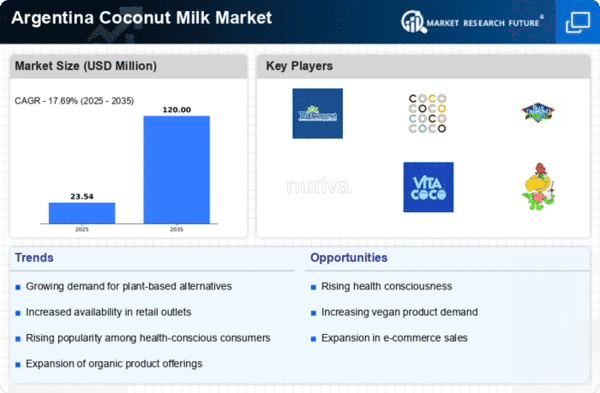
As per Market Research Future analysis, the Argentina coconut milk market Size was estimated at 20.0 USD Million in 2024. The Argentina coconut milk market is projected to grow from 23.54 USD Million in 2025 to 120.0 USD Million by 2035, exhibiting a compound annual growth rate (CAGR) of 17.6% during the forecast period 2025 - 2035

Key Market Trends & Highlights

The Argentina coconut milk market is experiencing robust growth driven by evolving consumer preferences and increasing health consciousness.

  • The demand for dairy alternatives is rising, reflecting a broader shift towards plant-based diets.
  • Product innovation is evident, with a growing variety of coconut milk options available to consumers.
  • There is a notable focus on organic and sustainable coconut milk products, aligning with consumer values.
  • Health consciousness and culinary trends favoring exotic ingredients are key drivers of market growth.

Market Size & Forecast

2024 Market Size 20.0 (USD Million)
2035 Market Size 120.0 (USD Million)
CAGR (2025 - 2035) 17.69%

Major Players

Thai Coconut Public Company Limited (TH), Coconut Dream (US), Blue Diamond Growers (US), Nutiva (US), Vita Coco (US), Coco Lopez (PR), Aroy-D (TH), Chaokoh (TH)

Our Impact
Enabled $4.3B Revenue Impact for Fortune 500 and Leading Multinationals
Partnering with 2000+ Global Organizations Each Year
30K+ Citations by Top-Tier Firms in the Industry

Argentina Coconut Milk Market Trends

The coconut milk market is experiencing notable growth, driven by increasing consumer awareness regarding health benefits and a shift towards plant-based diets. In Argentina, the demand for dairy alternatives has surged, as more individuals seek lactose-free options. This trend aligns with a broader global movement towards sustainable and ethical food choices. The rise in veganism and vegetarianism among the population further fuels the interest in coconut milk, as it is perceived as a nutritious substitute for traditional dairy products. Additionally, the versatility of coconut milk in various culinary applications enhances its appeal, making it a popular ingredient in both sweet and savory dishes. Moreover, the coconut milk market is witnessing innovation in product offerings, with brands introducing flavored and fortified variants to cater to diverse consumer preferences. The growing trend of health-conscious living has led to an increase in the availability of organic and natural coconut milk products. As consumers become more discerning about ingredient sourcing, the emphasis on quality and sustainability is likely to shape purchasing decisions. This evolving landscape suggests that the coconut milk market will continue to expand, driven by both health trends and culinary creativity, positioning it as a staple in many households across Argentina.

Rising Demand for Dairy Alternatives

There is a marked increase in the preference for plant-based products, particularly among health-conscious consumers. This shift is evident in the growing popularity of coconut milk as a dairy substitute, appealing to those seeking lactose-free options.

Product Innovation and Variety

Brands are actively diversifying their offerings, introducing flavored and fortified coconut milk products. This innovation caters to a wider range of tastes and dietary needs, enhancing consumer engagement and market growth.

Focus on Organic and Sustainable Options

Consumers are increasingly prioritizing organic and sustainably sourced products. This trend reflects a broader commitment to health and environmental responsibility, influencing purchasing behavior in the coconut milk market.

Argentina Coconut Milk Market Drivers

Health Consciousness Among Consumers

The increasing awareness of health and wellness among consumers in Argentina appears to be a significant driver for the coconut milk market. As individuals seek healthier dietary options, coconut milk, known for its low calorie content and absence of lactose, is gaining traction. Reports indicate that the demand for plant-based alternatives has surged, with a notable increase of approximately 30% in sales over the past year. This shift towards healthier lifestyles is likely to continue influencing purchasing decisions, as consumers prioritize products that align with their health goals. The coconut milk market is thus positioned to benefit from this trend, as more people opt for dairy-free alternatives that offer nutritional benefits without compromising taste.

Rising Vegan and Vegetarian Population

The growing population of vegans and vegetarians in Argentina is a crucial driver for the coconut milk market. As more individuals adopt plant-based diets, the demand for dairy alternatives has escalated. Recent statistics indicate that approximately 10% of the Argentine population identifies as vegan or vegetarian, a figure that continues to rise. This demographic shift is likely to sustain the coconut milk market, as consumers actively seek out non-dairy options for cooking and baking. The appeal of coconut milk as a versatile ingredient that can replace traditional dairy products in various recipes further enhances its market potential.

Growing Interest in Sustainable Products

The rising interest in sustainability among consumers in Argentina is influencing the coconut milk market. As environmental concerns become more prominent, consumers are increasingly seeking products that align with their values. Coconut milk, often marketed as a sustainable alternative to dairy, is likely to attract environmentally conscious buyers. Reports indicate that around 60% of consumers are willing to pay a premium for products that are sustainably sourced. This trend suggests that the coconut milk market may experience growth as brands emphasize their commitment to sustainable practices, appealing to a demographic that prioritizes eco-friendly choices.

Increased Availability in Retail Outlets

The expansion of retail outlets offering coconut milk products is a notable driver for the coconut milk market in Argentina. Supermarkets and health food stores are increasingly stocking a variety of coconut milk brands, making it more accessible to consumers. This increased availability is likely to contribute to a rise in sales, as convenience plays a crucial role in consumer purchasing behavior. Recent data suggests that the number of retail locations carrying coconut milk has increased by 40% over the last two years. The coconut milk market stands to benefit from this trend, as greater accessibility encourages trial and repeat purchases among consumers.

Culinary Trends Favoring Exotic Ingredients

Culinary trends in Argentina are increasingly favoring exotic and diverse ingredients, which is likely to bolster the coconut milk market. Chefs and home cooks alike are experimenting with coconut milk in various dishes, from curries to desserts, enhancing the appeal of this ingredient. The rise of social media platforms showcasing innovative recipes has further fueled interest, with a reported 25% increase in coconut milk usage in home cooking. This trend suggests that the coconut milk market may experience growth as consumers seek to incorporate unique flavors into their meals. The versatility of coconut milk in both savory and sweet applications positions it as a staple in modern Argentine kitchens.


Market Segment Insights

By Category: Conventional (Largest) vs. Organic (Fastest-Growing)

In the Argentina coconut milk market, Conventional products hold a significant share, driven by their widespread availability and established consumer base. This category attracts a diverse clientele, mostly due to its competitive pricing and familiarity among consumers. Conversely, Organic coconut milk is gaining traction as health-conscious consumers gravitate towards natural and organic options, thereby increasing its market presence. The growth of the Organic segment is primarily influenced by shifting consumer preferences towards healthier dietary choices and sustainable products. This trend is bolstered by rising awareness of the health benefits associated with organic foods and the clean label movement. As more retailers stock organic options and marketing efforts highlight these attributes, this segment is expected to grow rapidly, capturing the attention of both new and existing consumers.

Conventional: Dominant vs. Organic: Emerging

In the Argentina coconut milk market, Conventional coconut milk is regarded as the dominant segment, characterized by its affordability and widespread distribution. Its familiarity among consumers makes it a staple in many households. In contrast, the Organic segment is emerging as a notable alternative, appealing to health-oriented consumers looking for high-quality and sustainably sourced products. Organic coconut milk often features certifications that guarantee its organic status, which adds credibility and appeal. As consumer interest in health and wellness rises, the Organic segment is expected to continue its upward trajectory, gradually challenging the stronghold of Conventional products. The growth of this emerging segment is indicative of a broader trend towards healthier and more environmentally friendly options in the marketplace.

By Form: Liquid (Largest) vs. Powder (Fastest-Growing)

In the Argentina coconut milk market, the distribution of market share among the form segment values reveals that liquid coconut milk holds the largest share, driven by its versatility and consumer preference for ready-to-use products. In contrast, powdered coconut milk is gaining traction, appealing to consumers who prioritize convenience and extended shelf life, thereby carving out a notable position in the market. Growth trends in this segment indicate a rising demand for liquid coconut milk due to its widespread use in various culinary applications and health-conscious consumption. Meanwhile, powdered coconut milk is emerging as a fast-growing option, spurred by an increase in online sales and a surge in plant-based diets, attracting a new demographic of consumers seeking quick and nutritious alternatives.

Liquid (Dominant) vs. Powder (Emerging)

Liquid coconut milk has established itself as the dominant form in the Argentina coconut milk market, favored for its rich flavor and convenience in cooking and baking. It is often perceived as a healthier alternative to dairy, further boosting its appeal. Meanwhile, powdered coconut milk is rapidly emerging, appealing to consumers for its ease of storage and reconstitution. This form is particularly favored in recipes where consistency and portability are essential. Both segment values demonstrate distinct advantages, with liquid catering to immediate consumption needs and powdered providing versatility for long-term use in food preparation.

By Packaging Type: Bottles (Largest) vs. Pouches (Fastest-Growing)

In the Argentina coconut milk market, the packaging type plays a crucial role in consumer preferences and purchasing decisions. Bottles hold the largest share of the market, as they offer convenience and are often associated with premium products. Cans and pouches also contribute to the market but are less preferred overall. The diversity in packaging types caters to different consumer needs, with each type having its unique market share distribution. Growth trends in the packaging segment are shaped by evolving consumer preferences for eco-friendly and convenient packaging solutions. Pouches have emerged as the fastest-growing segment, driven by their lightweight nature and lower environmental impact. Innovative packaging solutions, such as resealable pouches and recyclable materials, are gaining traction, influencing consumer buying behavior and fostering a trend towards sustainability in the Argentina coconut milk market.

Bottles: Dominant vs. Pouches: Emerging

Bottles are the dominant packaging type in the Argentina coconut milk market, characterized by their sturdy design and ability to preserve product quality effectively. They are often used for premium brands, appealing to health-conscious consumers seeking quality. On the other hand, pouches represent an emerging segment, primarily due to their cost-effectiveness and convenience for on-the-go consumption. They are increasingly popular among younger consumers who favor portable options. The market positioning of these segments reflects a broader trend towards convenience and sustainability, with pouches catering to the desire for eco-friendly packaging solutions, while bottles continue to signify quality and premium branding.

By Distribution Channel: Store-based (Largest) vs. Non-store-based (Fastest-Growing)

In the Argentina coconut milk market, the distribution is predominantly skewed towards store-based channels, which encompass supermarkets, hypermarkets, and specialty stores. These outlets account for a significant share due to their accessibility and established consumer trust. On the other hand, non-store-based channels, including online platforms and direct-to-consumer sales, are emerging rapidly, capitalizing on the growing trend of e-commerce and consumer preference for convenience. The growth trends indicate a dynamic shift towards non-store-based channels, as more consumers embrace online shopping, particularly post-pandemic. The rising penetration of smartphones and improvements in digital payment systems are driving this segment's expansion. However, traditional store-based channels remain strong, bolstered by brand loyalty and the sensory experience they offer, such as physical product sampling and direct brand interactions.

Store-based (Dominant) vs. Non-store-based (Emerging)

Store-based distribution channels play a dominant role in the Argentina coconut milk market, leveraging their established presence and extensive reach. These channels provide consumers with immediate access to a wide variety of brands and products, fostering brand loyalty through experiential shopping. In contrast, non-store-based channels are emerging rapidly, gaining traction among tech-savvy consumers who prioritize convenience and time-saving. They appeal to a younger demographic that favors the ease of online purchases. Both segments demonstrate distinct characteristics; while store-based channels benefit from a loyal customer base, non-store-based channels continue to expand, catering to evolving consumer preferences and lifestyle changes.

Get more detailed insights about Argentina Coconut Milk Market

Key Players and Competitive Insights

The coconut milk market in Argentina exhibits a dynamic competitive landscape, characterized by a blend of local and international players vying for market share. Key growth drivers include the rising consumer preference for plant-based alternatives, health consciousness, and the increasing incorporation of coconut milk in culinary applications. Major companies such as Thai Coconut Public Company Limited (TH), Vita Coco (US), and Aroy-D (TH) are strategically positioned to leverage these trends. Thai Coconut Public Company Limited (TH) focuses on innovation in product development, while Vita Coco (US) emphasizes brand recognition and distribution expansion. Aroy-D (TH) appears to prioritize cost-effective production methods, which collectively shape a competitive environment that is both fragmented and dynamic.In terms of business tactics, companies are increasingly localizing manufacturing to reduce costs and enhance supply chain efficiency. The market structure is moderately fragmented, with several players holding significant shares, yet none dominating entirely. This fragmentation allows for diverse product offerings and competitive pricing strategies, which are essential in attracting a broad consumer base. The collective influence of these key players fosters a competitive atmosphere that encourages innovation and responsiveness to market demands.
In October Thai Coconut Public Company Limited (TH) announced a partnership with a local distributor to enhance its market penetration in Argentina. This strategic move is likely to bolster its distribution network, enabling the company to reach a wider audience and respond more effectively to local consumer preferences. Such partnerships may also facilitate the introduction of new product lines tailored to regional tastes, thereby strengthening its competitive position.
In September Vita Coco (US) launched a new line of organic coconut milk products aimed at health-conscious consumers. This initiative reflects a growing trend towards organic and natural food products, suggesting that Vita Coco is keen on capturing the health-oriented segment of the market. The introduction of these products may not only enhance brand loyalty but also attract new customers seeking healthier alternatives.
In August Aroy-D (TH) expanded its production capacity by investing in a new facility in Argentina. This expansion is indicative of the company's commitment to meeting increasing demand and optimizing its supply chain. By enhancing production capabilities, Aroy-D is likely to improve its market responsiveness and reduce lead times, which could provide a competitive edge in a rapidly evolving market.
As of November current competitive trends in the coconut milk market are increasingly defined by digitalization, sustainability, and the integration of advanced technologies. Companies are forming strategic alliances to enhance their market presence and operational efficiency. The shift from price-based competition to a focus on innovation, technology, and supply chain reliability is becoming evident. This evolution suggests that future competitive differentiation will hinge on the ability to adapt to consumer preferences and leverage technological advancements.

Key Companies in the Argentina Coconut Milk Market include

Industry Developments

Recent developments in the Argentina Coconut Milk Market indicate a growing demand as health-conscious consumers increasingly prefer plant-based alternatives. Companies such as Vita Coco and Coconut Cloud have reported a significant increase in sales, captivating a market that has witnessed a rise in coconut milk's popularity for its nutritional benefits.

Notably, in October 2022, Coconut Cloud expanded its product line in Argentina to include flavored coconut milk drinks, leveraging the increasing trend toward diversification. Additionally, in February 2023, AroyD announced its collaboration with local distributors to enhance its market penetration within Argentina, aiming to cater to the diverse consumer preferences for organic and health-oriented products. Despite challenges due to sourcing and logistics, the market valuation of coconut milk-related companies in Argentina continues to grow, reflecting increased consumer engagement and competitive offerings.

In recent years, major players like Kara and Coco Blue have invested in marketing campaigns to highlight the environmental and health benefits of coconut milk, thus influencing consumer purchasing behavior. This vibrant marketplace reflects an evolving consumer landscape and is reinforced by growing awareness surrounding the benefits of coconut-based products.

Future Outlook

Argentina Coconut Milk Market Future Outlook

The Coconut Milk Market in Argentina is projected to grow at a 17.69% CAGR from 2025 to 2035, driven by rising health consciousness and demand for plant-based alternatives.

New opportunities lie in:

  • Expansion of coconut milk product lines in retail chains Development of premium organic coconut milk variants Investment in sustainable coconut sourcing and production practices

By 2035, the coconut milk market is expected to achieve substantial growth and increased market penetration.

Market Segmentation

Argentina Coconut Milk Market Form Outlook

  • Powder
  • Liquid

Argentina Coconut Milk Market Category Outlook

  • Conventional
  • Organic

Argentina Coconut Milk Market Packaging Type Outlook

  • Bottles
  • Cans
  • Pouches
  • Others

Argentina Coconut Milk Market Distribution Channel Outlook

  • Store-based
  • Non-store-based

Report Scope

MARKET SIZE 2024 20.0(USD Million)
MARKET SIZE 2025 23.54(USD Million)
MARKET SIZE 2035 120.0(USD Million)
COMPOUND ANNUAL GROWTH RATE (CAGR) 17.69% (2025 - 2035)
REPORT COVERAGE Revenue Forecast, Competitive Landscape, Growth Factors, and Trends
BASE YEAR 2024
Market Forecast Period 2025 - 2035
Historical Data 2019 - 2024
Market Forecast Units USD Million
Key Companies Profiled Thai Coconut Public Company Limited (TH), Coconut Dream (US), Blue Diamond Growers (US), Nutiva (US), Vita Coco (US), Coco Lopez (PR), Aroy-D (TH), Chaokoh (TH)
Segments Covered Category, Form, Packaging Type, Distribution Channel
Key Market Opportunities Growing demand for plant-based alternatives drives innovation in the coconut milk market.
Key Market Dynamics Rising consumer demand for plant-based alternatives drives innovation and competition in the coconut milk market.
Countries Covered Argentina
Leave a Comment

FAQs

What is the expected market size of the Argentina Coconut Milk Market in 2024?

The Argentina Coconut Milk Market is expected to be valued at 38.82 USD Million in 2024.

What is the projected market size for the Argentina Coconut Milk Market in 2035?

By 2035, the Argentina Coconut Milk Market is projected to reach a value of 98.4 USD Million.

What is the expected CAGR for the Argentina Coconut Milk Market from 2025 to 2035?

The projected CAGR for the Argentina Coconut Milk Market from 2025 to 2035 is 8.822 %.

Which category holds the larger market share in the Argentina Coconut Milk Market?

The Conventional category accounts for a larger market share, valued at 30.0 USD Million in 2024.

What is the market value for the Organic category in the Argentina Coconut Milk Market in 2024?

The Organic category is valued at 8.82 USD Million in 2024.

What will be the value of the Conventional category by 2035?

The Conventional category is expected to reach 73.0 USD Million by the year 2035.

What is the projected market value for the Organic category by 2035?

The Organic category is anticipated to grow to 25.4 USD Million by 2035.

Who are the key players in the Argentina Coconut Milk Market?

Major players in the market include Coconut Cloud, AroyD, Kara, and Naked Coconut among others.

What are some of the key growth drivers for the Argentina Coconut Milk Market?

Key growth drivers include increasing consumer awareness of health benefits and demand for plant-based alternatives.

What challenges may affect the growth of the Argentina Coconut Milk Market?

Challenges may include fluctuations in raw material prices and competition from other dairy alternatives.

Download Free Sample

Kindly complete the form below to receive a free sample of this Report

Compare Licence

×
Features License Type
Single User Multiuser License Enterprise User
Price $4,950 $5,950 $7,250
Maximum User Access Limit 1 User Upto 10 Users Unrestricted Access Throughout the Organization
Free Customization
Direct Access to Analyst
Deliverable Format
Platform Access
Discount on Next Purchase 10% 15% 15%
Printable Versions