Changing Consumer Preferences
Consumer preferences in APAC are evolving, with a growing inclination towards digital solutions in real estate transactions. The rise of tech-savvy millennials and Gen Z is driving demand for user-friendly platforms that facilitate property searches, virtual tours, and online transactions. This shift in consumer behavior is prompting real estate companies to invest in proptech solutions that enhance user experience. As a result, the proptech market is likely to see a significant increase in adoption rates, with estimates suggesting that over 60% of property transactions could be conducted online by 2028. This trend underscores the importance of aligning real estate offerings with consumer expectations in the digital age.
Government Initiatives and Support
Government initiatives aimed at promoting digital transformation in the real estate sector are significantly influencing the proptech market in APAC. Various governments are implementing policies to encourage the adoption of technology in property transactions and management. For example, initiatives that provide funding for proptech startups or tax incentives for technology adoption are becoming more common. These measures not only stimulate innovation but also enhance the overall efficiency of the real estate market. The support from governmental bodies is likely to foster a conducive environment for the growth of the proptech market, potentially leading to a market valuation exceeding $10 billion by 2027.
Investment in Smart Infrastructure
The push for smart infrastructure in urban areas is a critical driver of the proptech market in APAC. As cities strive to become more efficient and sustainable, investments in smart buildings and infrastructure are on the rise. These developments often incorporate advanced technologies such as energy management systems, automated building controls, and integrated communication networks. The market for smart buildings is projected to grow at a CAGR of around 30% over the next five years, reflecting the increasing demand for innovative real estate solutions. This trend indicates that the proptech market is likely to benefit from the integration of smart technologies, enhancing property value and operational efficiency.
Urbanization and Population Growth
Rapid urbanization in APAC is a significant driver of the proptech market. As urban populations continue to swell, the demand for housing and commercial spaces is escalating. According to recent estimates, urban areas in APAC are expected to house over 1 billion additional residents by 2030. This demographic shift necessitates innovative solutions to manage real estate effectively, leading to increased investment in proptech. The need for smart city initiatives and efficient property management systems is becoming paramount, as urban planners and developers seek to accommodate growing populations while minimizing environmental impact. This trend indicates a strong correlation between urbanization and the expansion of the proptech market.
Technological Advancements in Real Estate
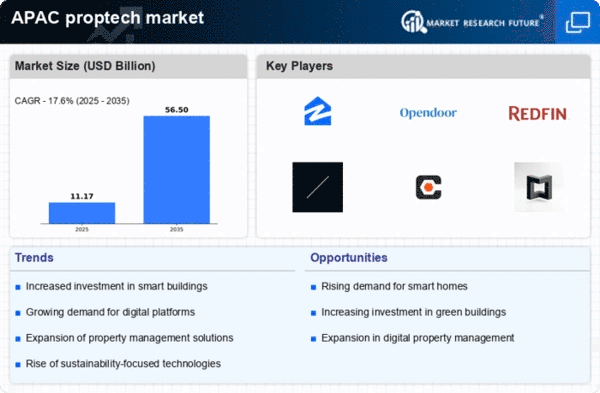
The proptech market in APAC is experiencing a surge in technological advancements, which are reshaping the real estate landscape. Innovations such as artificial intelligence, blockchain, and the Internet of Things (IoT) are being integrated into property management and transactions. For instance, AI-driven analytics are enhancing property valuation processes, while blockchain is streamlining transactions, reducing fraud risks. The market is projected to grow at a CAGR of approximately 25% from 2025 to 2030, indicating a robust demand for tech-driven solutions. This trend suggests that stakeholders in the proptech market are increasingly prioritizing technology to improve efficiency and transparency in real estate operations.